





 Portuguese
  English
  Spanish
  5 min of reading
  0 comments


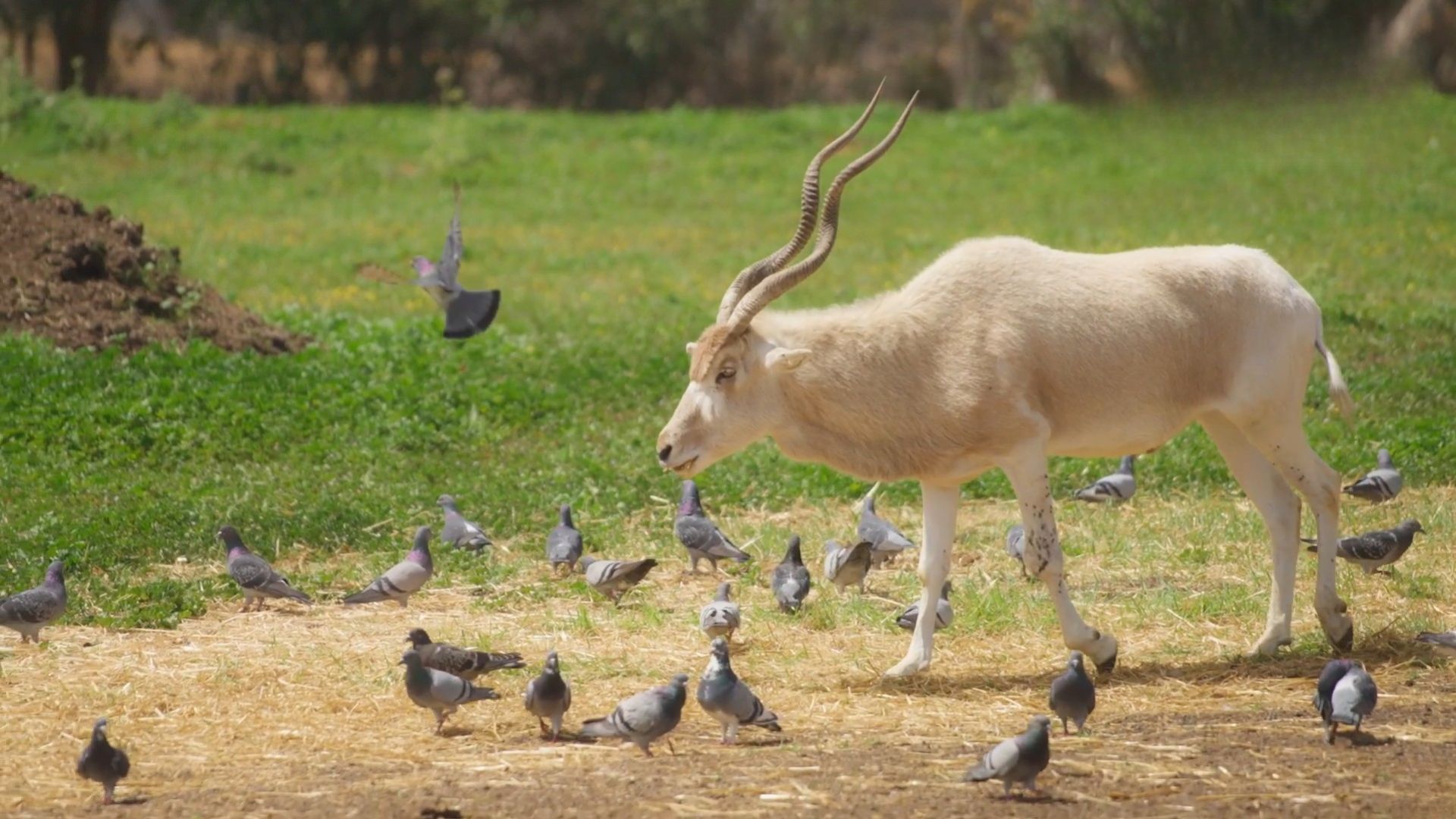
Reintroduction of Addax in the Ennedi Reserve Marks the Return of a Sahara Antelope to a Protected Area of Chad, with Translocation, Intensive Monitoring and Goal to Establish a Viable Population, in a Project that Brings Together Government, International Conservation and Field Monitoring.
A group of addax antelopes, one of the most endangered species of the Sahara Desert, has returned to roam in a region of northern Chad where they had not been observed.
The release took place within the Ennedi Natural and Cultural Reserve, a protected area of rocky landscapes and arid plains, and marked the beginning of an attempt to reestablish a viable population in an area where the animal was considered locally extinct.
The release involved ten individuals and was described as a pilot project conducted in partnership between the government of Chad, the organization African Parks and Sahara Conservation.
-
Home environment can influence the brain, mood, and well-being: studies indicate an increase of up to 15% in productivity, a reduction of 12% in stress with plants, and a direct impact of the circadian rhythm on the 24 hours of the day.

-
A Brazilian millionaire couple restores a farm over 150 years old in the interior of São Paulo and transforms the historic property with Portuguese tiles, antique furniture, and new spaces into a refuge that blends tradition, comfort, and sophistication.
-
Submerged city in a lake in Minas reveals intact streets, preserved vehicles, and houses after more than 60 years, impressing divers.

-
Yellowstone has started to rise again in an area of the caldera, and the movement rekindles fears surrounding the U.S. supervolcano, as scientists monitor the deformation and try to understand what is happening underground.

According to the official communication of the program, the animals underwent a period of intensive monitoring after arriving at the reserve, with constant monitoring and veterinary care before being released into an open environment.
Addax, Sahara Antelope and Adaptation to the Desert
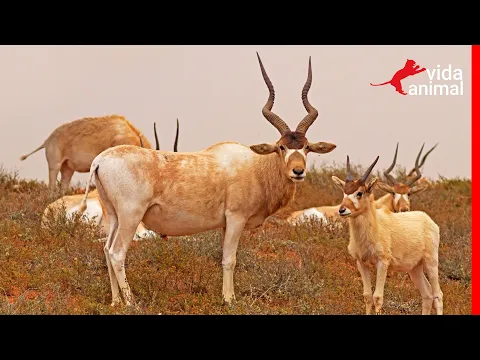
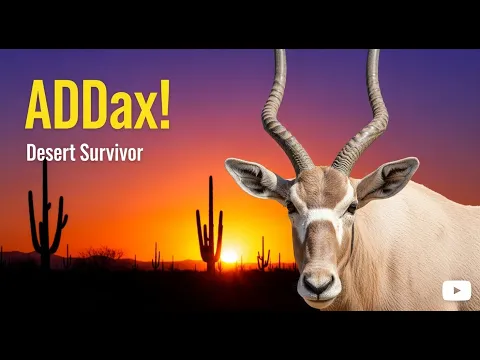
The addax is an antelope highly adapted to conditions of heat and water scarcity, known for its light-colored coat that helps reflect solar radiation and for its wide hooves that facilitate movement on loose sand.
The species, classified as critically endangered, has become a symbol of a recent collapse of the Sahelian-Saharan fauna, as it once occupied vast areas of the Sahara and today is reduced to a few nuclei, with heavy hunting pressure and human disturbance in remote areas.

Ennedi Reserve and the Fauna Restoration Plan
In Ennedi, the goal presented by the institutions involved is to reintroduce the addax as part of a strategy for restoring desert fauna and protecting species historically associated with the region.
The reserve is cited by African Parks as a sanctuary for mammals adapted to the arid environment and for hundreds of bird species, as well as concentrating natural and cultural heritage, including sandstone formations, canyons, and rock art sites.
Translocation in Chad and International Partnership
The operation described in African Parks’ statement included the translocation of addax from another reintroduction program already underway in Chad, at the Ouadi Rimé–Ouadi Achim Wildlife Reserve.
The transfer was presented as a step to expand the distribution of the animals within the country and reduce reliance on a single nucleus, a common strategy in reintroducing endangered species when seeking to increase population resilience.
The plan cited by the Chad Ministry of Environment, Fisheries and Sustainable Development in the official note established a long-term goal: to establish a healthy population of over 500 individuals.
This reference appears as a parameter of demographic viability since very small populations tend to be more vulnerable to extreme weather events, resource scarcity, diseases, and human impacts.
Field Monitoring and Care Before Release

The reintroduction was not considered an isolated act of release but rather an operational process involving logistics, screening, adaptation, and monitoring.
The addax arrived at the reserve on November 8, 2023, according to African Parks, and remained under continuous supervision for over a month before the release, a stage described as necessary to observe behavior, physical condition, and ability to integrate into the environment and the group.
Funding and Structure of the Conservation Project
The funding for the project was attributed, in public communication, to support from the European Union, Fondation Segré and Dutch Postcode Lottery, with operational execution and coordination among local and international institutions.
The partnership format was highlighted as part of a larger effort to rehabilitate protected areas in Chad, with the expectation of combining biodiversity conservation and sustainable socioeconomic development in desert and semi-arid zones.
Desert Herbivores and Signs of Ecological Functioning
The choice of addax as the target species is also related to the role of large herbivores in arid environments.
Throughout their movements, these animals remove and disperse seeds caught in their fur or ingested with vegetation, in addition to leaving organic matter on the ground through feces, which can enrich microenvironments in nutrient-poor landscapes.
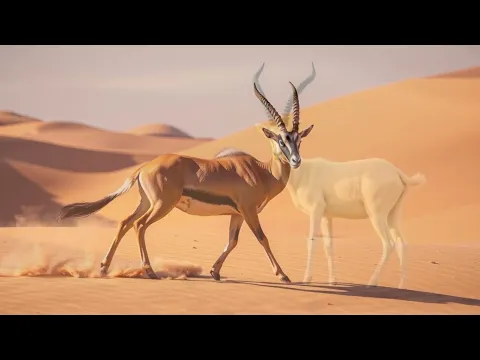
In deserts, effects of this type tend to be distributed in a fragmented manner, but are observed in reintroductions as signs that an ecosystem is regaining a lost functional component.
Sahara Conservation Strategy and Expansion of Populations
Sahara Conservation, which works on projects for recovering Sahelian and Saharan fauna, describes addax as part of a broader plan to reestablish the species in areas of historical occurrence in Chad and other points in North Africa.
On institutional pages, the organization links reintroductions to management actions, combating poaching, and technical support for maintaining populations in remote areas, where human pressure can be high even in seemingly empty landscapes.
Next Translocations and Continuity of the Program
The case of Ennedi gains relevance for occurring in an environment of low population density and high operational demand.
The distance from urban centers, the presence of extensive terrain, and the variability of resources make monitoring a constant challenge.
Therefore, initiatives of this type often rely on field teams, minimum support infrastructure, and monitoring systems capable of recording movement and presence in large areas.
African Parks itself describes the release as a first step, with plans to translocate more animals in the following years.
In reintroduction programs, this strategy is typically applied to avoid a sudden introduction of a large number of individuals into an environment where the carrying capacity still needs to be monitored.
The gradual formation of groups also facilitates the adjustment of patrol routes, monitoring, and protection measures.
The reintroduction of addax in Ennedi is part of a sequence of initiatives aimed at restoring emblematic species of the Sahara and the Sahel through translocation, managed reproduction, and return to the wild in protected areas.
By expanding the presence of addax in regions where it had disappeared, the program becomes dependent on the continuity of monitoring, control of poaching, and local conditions that allow for survival and reproduction, elements that determine whether the release translates into an established population.
If such a rare species can return to occupy a region of the Sahara after being considered locally extinct, what other desert animals could have their return facilitated through similar projects in North Africa?








-

2 pessoas reagiram a isso.