





 Portuguese
  English
  Spanish
  4 min of reading
  0 comments


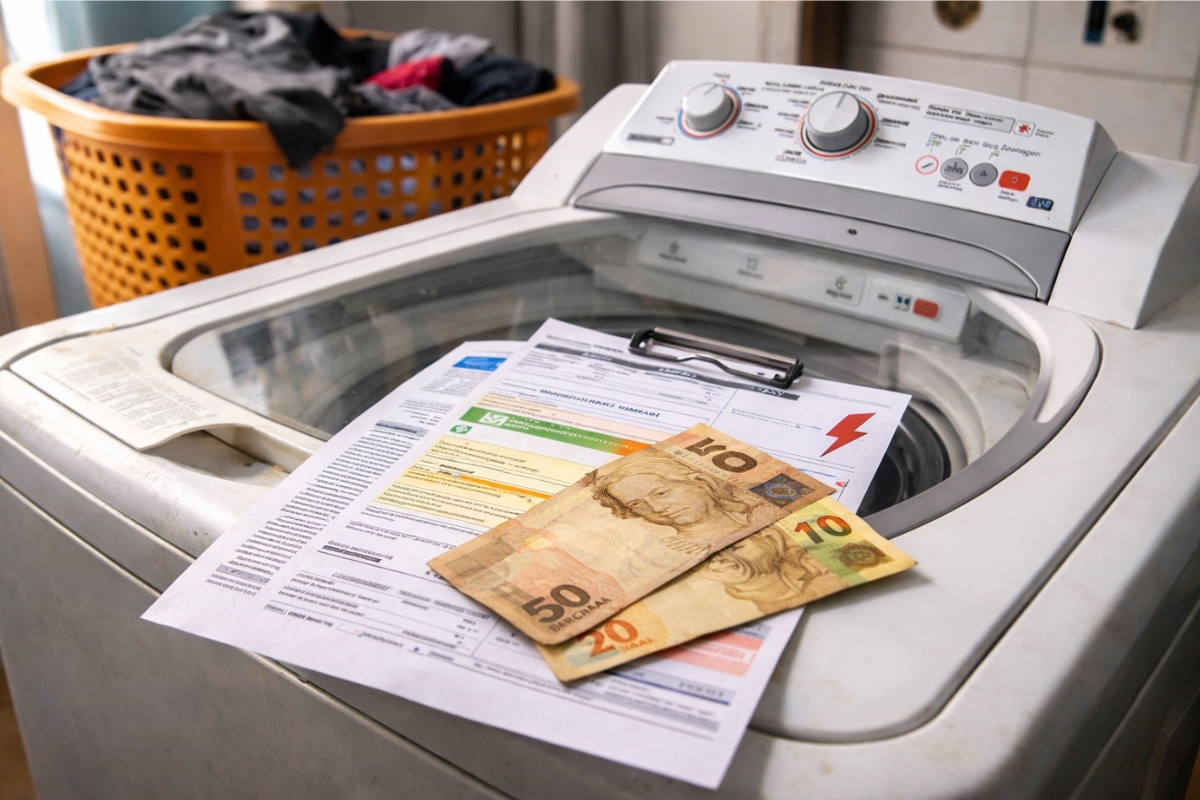
Understand How the Consumption of Old Washers Affects Your Wallet and What to Do to Reduce the Impact Without Changing Your Routine, Focusing on Savings on Your Electricity Bill.
The old washing machine can raise the electricity bill by up to R$ 70 per month, even when it still seems to work well. The extra expense often goes unnoticed and accumulates over time.
The issue gains traction in 2025, with higher energy costs and tighter household budgets. Small daily choices can reduce consumption, and in some cases, replacing the appliance becomes a financial decision.
Washers over 10 or 15 years old tend to consume more due to having less efficient motors, fewer energy-saving features, and worn-out parts. The result shows up on the bill, without clear warning.
-
What if the Sun disappeared suddenly? Simulation shows Earth in darkness within minutes, extreme cold, and rapid collapse of life on the planet.

-
A 2,400-year-old iron foundry has been discovered in Senegal with 100 tons of slag, 35 furnace bases, and signs of nearly eight centuries of continuous metallurgical activity.

-
Four humans are flying towards the Moon inside the Orion capsule launched by the SLS rocket, and on April 6, Artemis II will disappear behind the far side of the Moon without communication with Earth for nearly an hour.

-
Worlds covered by water, atmospheres filled with hydrogen, and the possibility of life beyond Earth: ocean planets are rewriting the map of cosmic search and forcing scientists to rethink where to look.


Warning About Old Washers: Appliance May Maintain Performance but Lose Efficiency
The warning about old washers reinforces an important point: appliances can maintain apparent performance but lose efficiency over time. This means more energy to deliver the same result.
An old machine may work harder, use longer cycles, and maintain consumption standards that have already been surpassed by more modern models. The impact weighs on your wallet month after month.
In addition to energy, there are cases where water usage also increases. When the water bill accompanies this increase, the total cost of washing becomes even higher.
Why Old Machines Tend to Consume More Energy
Old motors usually have inferior efficiency, and natural wear worsens this scenario. When internal components lose performance, the equipment needs more time and power to complete the cycle.
Energy-saving features also make a difference. Many old models do not offer modern functions to reduce consumption, which increases the cost per wash over the month.
The type of use also has a big influence. Long cycles, intensive programs, and hot water raise consumption, especially in old equipment.
Signs That the Washer May Be Weighting on Your Electricity Bill
Age helps raise suspicion, but some practical signs may indicate loss of efficiency. One of them is a sudden increase in the bill without a change in the household routine.
Unusual noises, excessive vibration, and increasingly longer cycles may also indicate motor wear. These symptoms deserve attention to avoid continuous waste.
When the machine takes longer to complete the same program, consumption tends to grow. This is especially true for frequent washes, which multiply the impact over the month.
How to Calculate the Impact of the Old Machine on Your Electricity Bill
A simple way to assess the weight of the washer is to track the average consumption over a few months while maintaining the usage pattern. This makes it easier to notice if there is unexpected variation.
With this data in hand, it is possible to compare current spending with the estimated cost of a more efficient new equipment. To do this, the price of kilowatt-hour charged in your area comes into play.
Consumption calculators offered by utility companies and consumer protection agencies help in making the simulation. This makes the decision more objective, without relying solely on impressions.
What to Do in Practice to Spend Less and Get a Lower Electricity Bill
When buying a more economical washing machine, it’s worth prioritizing models with Procel A label or higher and appropriate capacity for the family size. A machine larger than necessary can increase consumption without real benefit.
In daily use, consumption decreases when washes are concentrated and the chosen programs match the level of dirt. Quick or economical cycles, when sufficient, reduce energy and water.
It also helps to avoid unnecessary pre-washing, keep maintenance up to date with filter cleaning and removal of objects from the basket, and prioritize washing with cold water. Heating water tends to significantly increase consumption, especially in old machines.
Noticing signs of efficiency loss, calculating the impact, and adjusting usage habits can reduce consumption. In some cases, switching to a model with Procel A label accelerates savings and decreases monthly costs.
Have you noticed an increase in your electricity bill due to the washing machine at your home and are thinking of buying a new one? Let us know in the comments if your equipment is old, how long you’ve been using it, and if you’ve noticed a difference in energy consumption. Your experience can help other readers save and make more informed decisions in their daily lives.










-

2 pessoas reagiram a isso.