





 Portuguese
  English
  Spanish
  5 min of reading
  0 comments


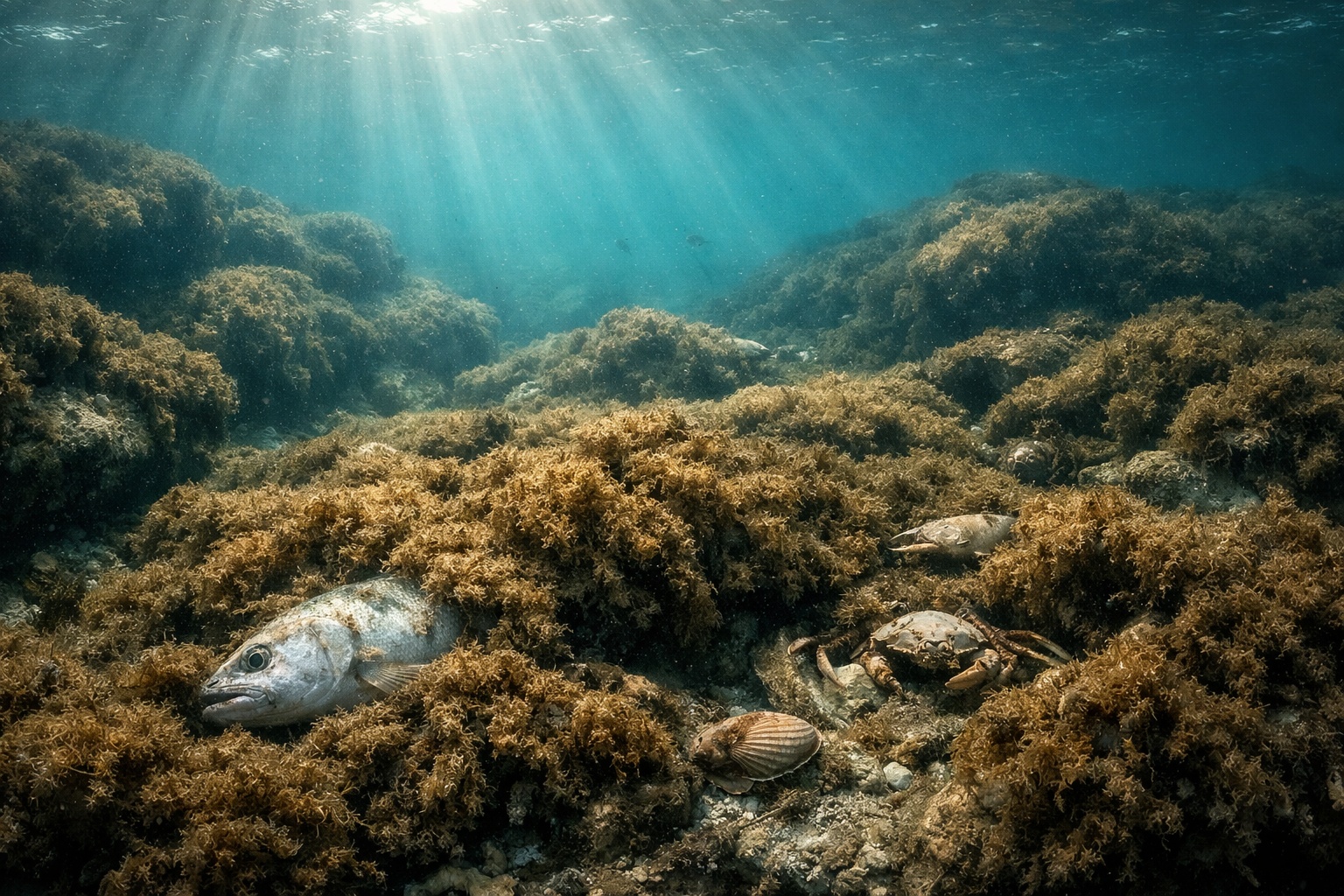
Asian Alga Rugulopteryx Okamurae Spreads by Fragmentation, Forms Mats in the Mediterranean, Suffocates Marine Fauna, and Already Provokes Ecological and Fishing Crisis.
The Rugulopteryx okamurae, a brown alga native to the northwest Pacific, has become one of the biggest environmental problems in the Mediterranean in recent decades. Accidentally introduced, likely through ballast water from ships or activities related to aquaculture, the species found an ideal environment to expand along the European coast. The result is a phenomenon that scientists are already describing as the formation of true “dead mats” on the seafloor, capable of altering entire ecosystems in just a few years.
What makes this alga especially dangerous is not just its exotic origin, but the combination of accelerated growth, reproduction by fragmentation, and the absence of effective natural predators in the Mediterranean.
What Is the Alga Rugulopteryx Okamurae and Where Did It Come From
The Rugulopteryx okamurae is a brown alga from the Dictyotaceae family, native to the coasts of Japan, Korea, and China. In its original environment, it is part of a balanced ecosystem, controlled by herbivores and competing with other algae.
-
China approves the 15th Five-Year Plan 2026-2030 to become a global power: prioritizes brain implants, 6G with AI, humanoid robots, flying cars, quantum technology, and nuclear fusion, while strengthening defense and the economy.

-
HONOR X80i arrives with a massive 7,000 mAh battery, a 120 Hz AMOLED display with a brightness of 6,500 nits, and the new Dimensity 6500 Elite chip, promising up to 22 hours of video playback and impressive performance in casual gaming.

-
Xiaomi TV Stick HD 2 is announced with Google TV and dual-band Wi-Fi, offering 38% superior performance, HDR10+, Dolby Atmos, a quad-core chip, Mali-G31 GPU, 1 GB RAM, and support for 1080p at 60 Hz.

-
Brazil joins the select group of countries by producing a supersonic fighter that reaches 2,400 km/h with advanced electronic warfare technology, US$ 4 billion in investments, 36 units planned, 350 trained engineers, and unprecedented national production by 2032.


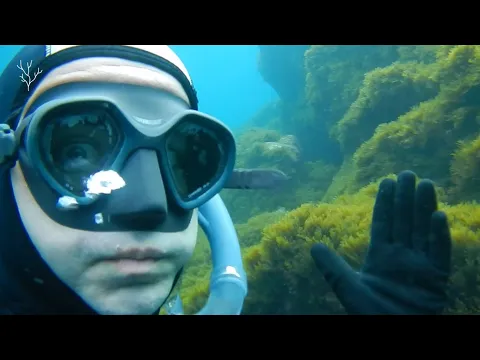

In the Mediterranean, however, this balance does not exist. The species was first detected on a large scale in the Strait of Gibraltar around 2015. Since then, it has rapidly spread along the coast of Spain, northern Africa, southern France, and parts of Italy.
According to research from the CSIC (Spanish National Research Council), the alga found ideal conditions: relatively warm waters, abundant rocky substrates, and low biological pressure against its expansion.
Reproduction by Fragmentation of the Asian Alga Rugulopteryx: The Secret of the Invasion
Unlike many algae that depend on specific reproductive cycles, the Rugulopteryx okamurae spreads primarily by fragmentation. Small pieces of the alga, torn away by waves, currents, or human activities, are sufficient to generate new colonies.
This mechanism transforms storms, boat propellers, fishing nets, and even divers into unwitting vectors of dispersion. A single fragment can attach itself to another point along the coast and, within a few weeks, form a new dense patch.
Studies indicate that this strategy allows for expansion rates far superior to native algae, making it virtually impossible to contain the spread through manual removal alone.
‘Dead Mats’: How the Alga Suffocates the Seafloor
The most visible impact of Rugulopteryx okamurae is the formation of extensive continuous mats on the seafloor. These dense layers cover rocks, sand, and reefs, blocking light and preventing the settlement of other algae and benthic organisms.
Native species of algae, sponges, mollusks, and small crustaceans simply disappear beneath this cover. The loss of biodiversity is rapid and profound, affecting the entire food chain.
Research published by the CSIC shows drastic reductions in benthic diversity in areas dominated by the alga, with direct effects on fish that depend on these habitats for feeding and reproduction.
Direct Impact on Artisanal and Commercial Fishing
The invasion of Rugulopteryx okamurae has already ceased to be just an environmental problem and has become a socioeconomic crisis. Fishermen report nets returning from the sea almost exclusively filled with algae, making it impossible to catch fish and crustaceans.
In regions of southern Spain, such as Andalusia, there have been significant declines in fishing productivity. Furthermore, the cost of cleaning nets and equipment has increased, reducing the profitability of the activity.
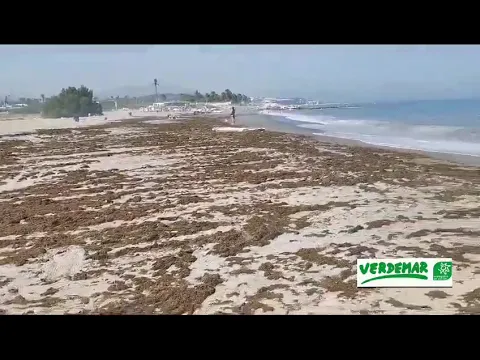
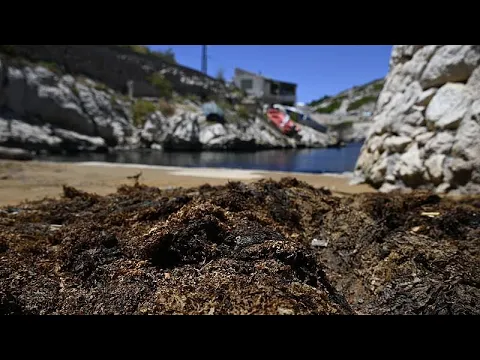
In some beaches, tons of algae accumulate after storms, requiring removal operations funded by local governments. Even so, land removal does not address the problem at the source.
Why Is It So Difficult to Eradicate the Species
One of the biggest concerns among scientists is that there is currently no effective eradication strategy. Mechanical removal may even reduce the local biomass but also generates new fragments, fueling dispersion.
The use of natural herbivores is not viable, as introducing new species could cause even greater impacts. Chemical methods are ruled out due to risks to native fauna and water quality.
The IUCN (International Union for Conservation of Nature) already classifies Rugulopteryx okamurae as a high ecological risk invasive species, recommending efforts focused on monitoring, containment, and mitigation of impacts, rather than total eradication.
Long-Term Ecological Consequences
If the advance continues at the current pace, scientists warn of a structural transformation of the coastal ecosystems of the Mediterranean. Diverse environments may be replaced by homogeneous landscapes dominated by the alga.
This means less biodiversity, lower ecological resilience, and greater vulnerability to climate change and extreme events. Simplified ecosystems tend to collapse more easily in the face of additional disturbances.
Moreover, habitat loss affects not only marine species but also human activities dependent on the sea, such as tourism, fishing, and aquaculture.
The Mediterranean as a Laboratory for Biological Invasions
The case of Rugulopteryx okamurae reinforces the role of the Mediterranean as one of the world’s most vulnerable seas to biological invasions. The intense circulation of ships, the connection to other seas, and the warming waters create perfect conditions for the arrival and establishment of exotic species.
Scientists see the situation as a global warning. What happens today in the Mediterranean could be repeated in other semi-closed seas if stricter measures for maritime transport control and environmental monitoring are not adopted.
Rugulopteryx okamurae has already shown that it is not a common invader. Its ability to fragment, rapid growth, and profound ecological impact place it among the most problematic species ever recorded in the Mediterranean.
The challenge now is to learn to coexist with the presence of the alga, reducing harm, protecting sensitive areas, and preventing the problem from worsening even further. For scientists, this case serves as a clear reminder that, in the marine environment, an invisible introduction can lead to irreversible consequences.







-

-

-

3 pessoas reagiram a isso.