





 Portuguese
  English
  Spanish
  5 min of reading
  110 comments


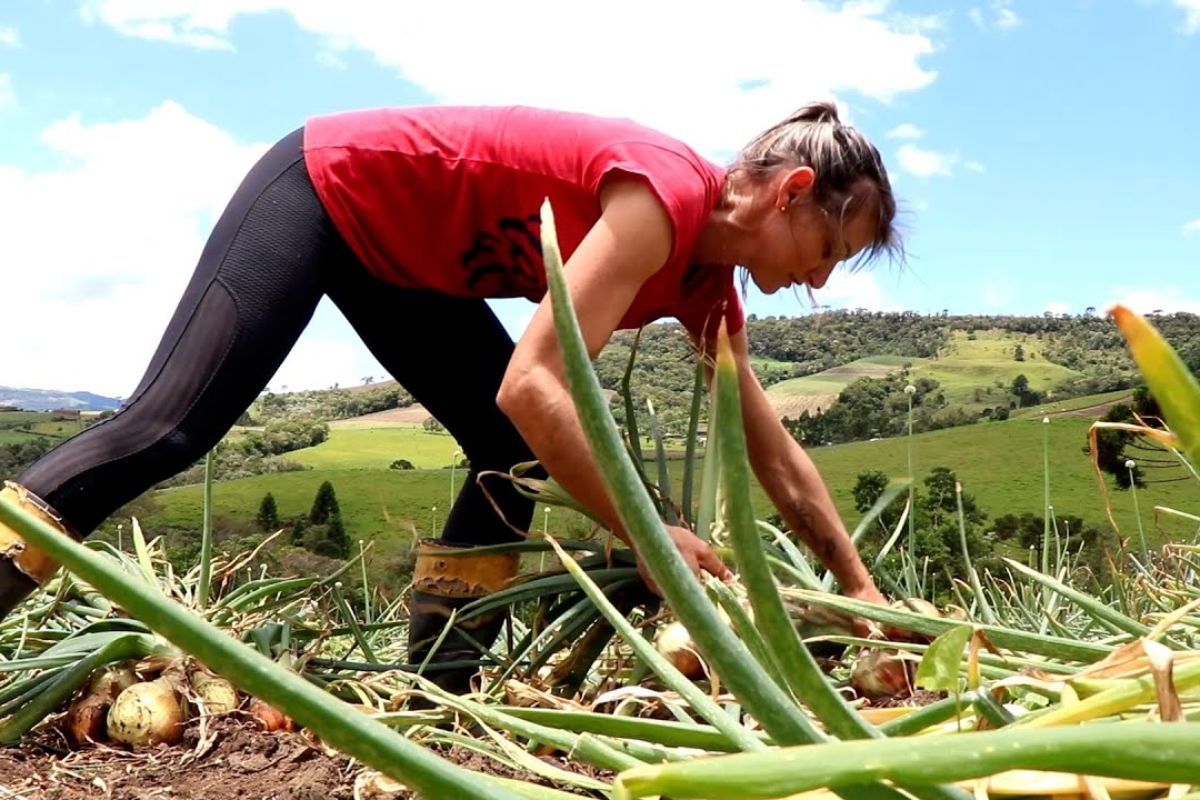


After The Divorce, Farmer Katiane Decided Not To Abandon The Farm, Took Over The Onion Crop From Scratch, Learned To Operate Tractor, Control Diseases, And Organize The Harvest, Until Reaching Sixty Tons Per Hectare And Transforming Overcoming Into Pride For The Family, While Raising Her Daughter Alone With The Support Of Her Parents.
At 36 years old, farmer Katiane could have left the farm after the divorce and restarted her life far from the land. Instead, she chose the harder and more beautiful path: she remained on the property located in the municipality of Alfredo Wagner (SC), decided to raise her 8-year-old daughter right there, and took over the onion crop, which was previously managed by her ex-husband.
Amid tears, fears, and uncertainties, the farmer was learning in practice what she had never done: taking care of the crop every day, making technical decisions, observing the weather, going into the field after the rain, and not putting anything off. The result of this complete immersion in the farm was a historic harvest of about 60 tons of onions per hectare, more than double the average of many producers in the region.
Farmer Swaps Fear For Courage And Takes Everything On Her Own

When the relationship ended, Katiane’s first reaction was fear. Fear of not being able to handle the work, fear of not being able to maintain the crop, fear of failing her daughter. She herself says that she cried a lot, that she thought she wouldn’t be able to make it, but she decided to try.
-
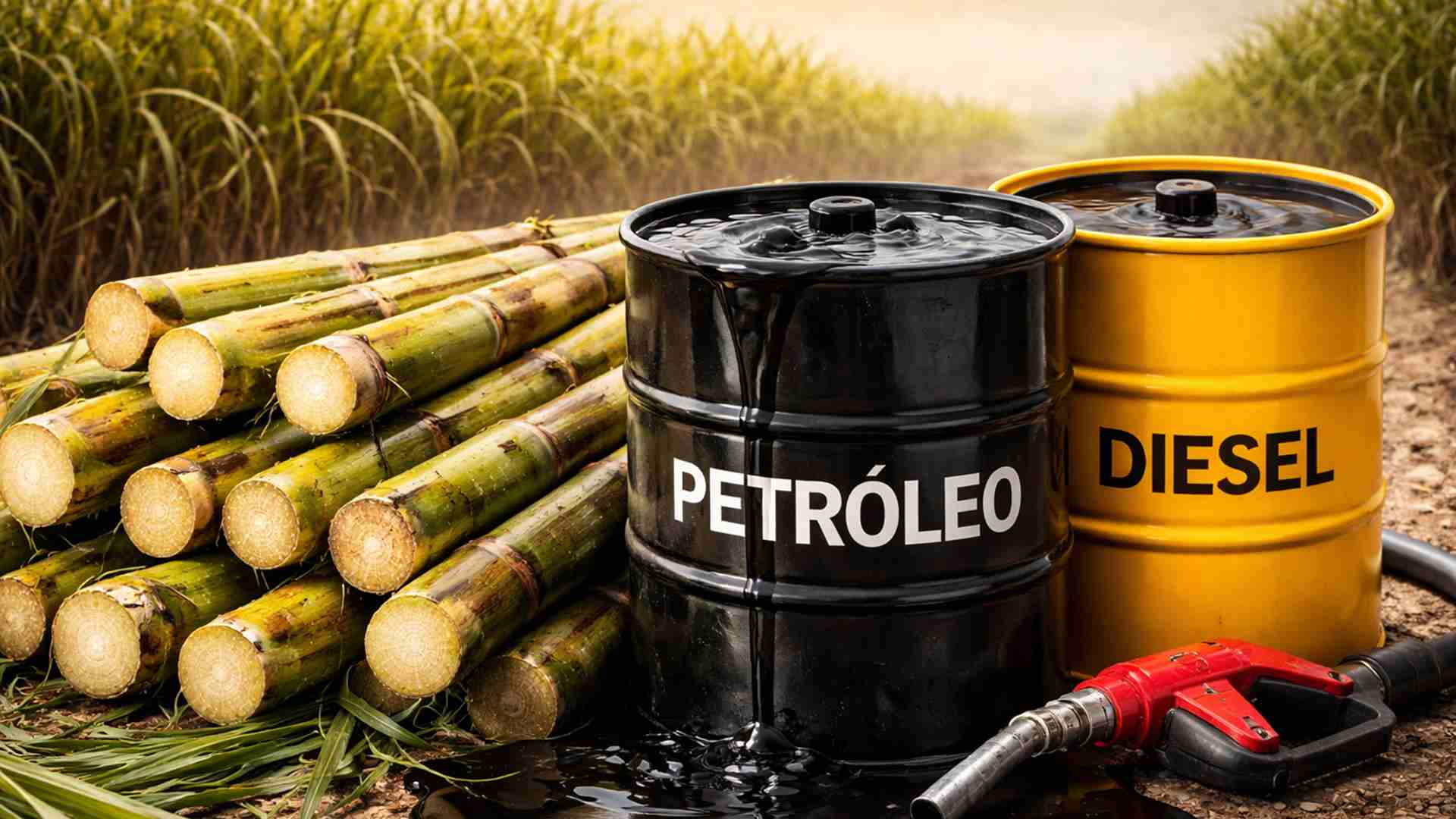
The rise in oil prices in the Middle East is already affecting Brazilian sugar: mills in the Central-South are seeing their margins shrink just as ethanol gains strength.
-
Rain gains strength in April, potentially exceeding 150 mm, placing the North, Northeast, and the coasts of the South and Southeast at the center of the heaviest forecast of the week.

-
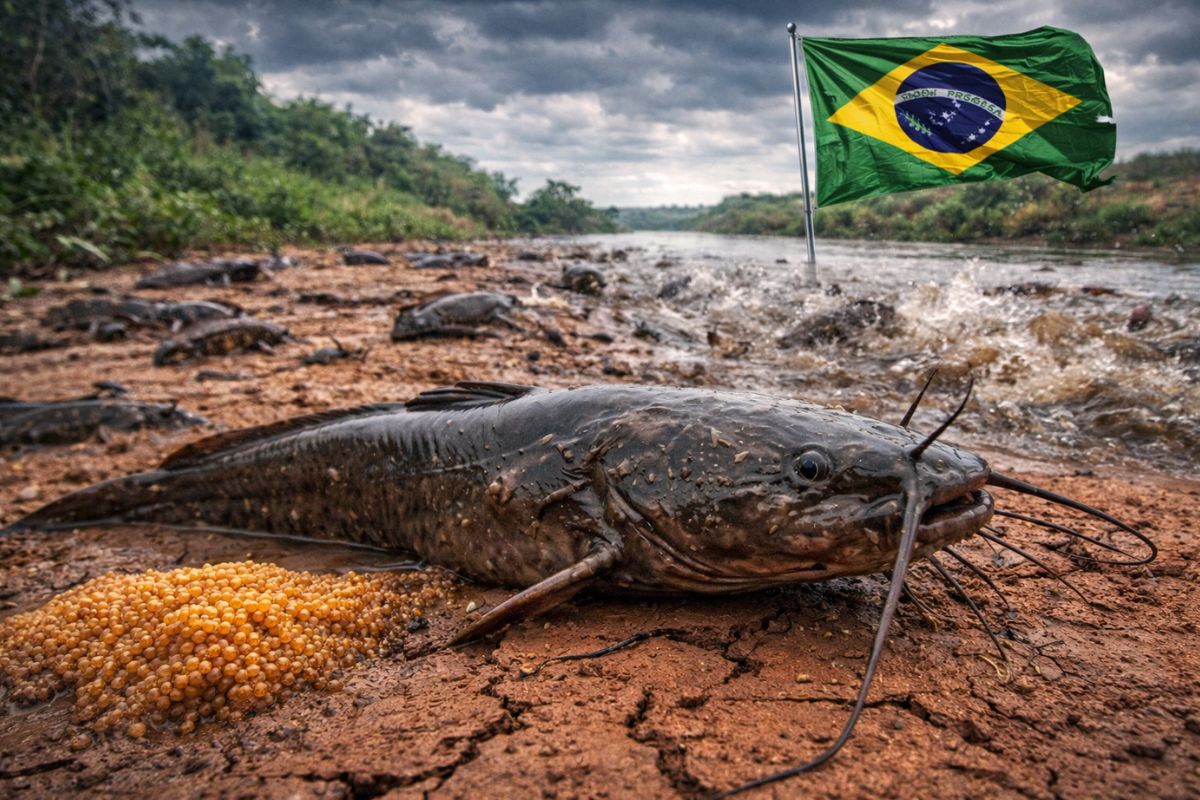
A fish that survives out of water, crawls on land until it finds another river, and whose female lays 80,000 eggs at once is infesting rivers and lakes in Brazil, and no one can stop this invasion.
-
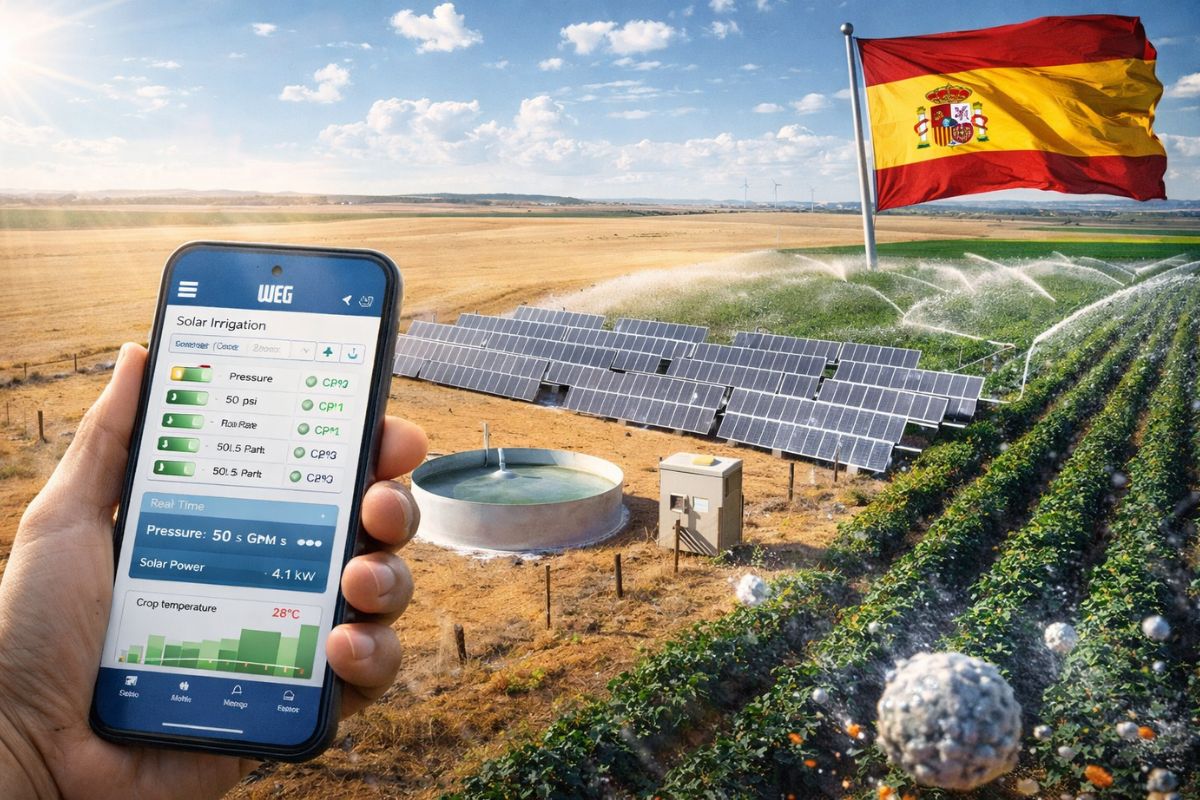
WEG took its technology to Spain to create a solar irrigation system that operates independently without needing an electrical grid, and now farmers control everything remotely via their mobile phones.

From then on, the farmer stopped being just an assistant to become the protagonist. She took 100% charge of the crop, from planting to harvesting, without hiding behind anyone.
While keeping her daughter close to her father and balancing the routine of a single mother, she also began to write a new story in the field.
From Theory To Dirt On The Boot: Learning The Hard Way

Previously, her ex-husband was the one who understood tractors, spraying, and nozzle adjustments. Katiane virtually didn’t handle that part. After the separation, the farmer needed to learn everything from scratch.
With technical support from a consultant who was already assisting the family, she began to ask absolutely everything: type of nozzle, gear of the tractor, amount of water, ideal pressure.
The guidance was clear: test with water first, without any product, to learn to cover the right area. Thus, the farmer trained until she was able to apply about 800 liters of water on the three hectares evenly.

Along the way, not everything went right. Twice the tractor slipped, showing that learning also involves scares and risks. Still, Katiane did not back down. She adjusted, repeated, corrected, until she mastered the routine of the crop.
Giant Onion, Clean Crop And Production Above Average

While many producers in the region harvest between 25 and 45 tons per hectare, the farmer was already seeing a completely different result in her crop.
The size of the onions was impressive: most of the production fell into boxes 3 and 4, the more valued standard, with large and beautiful bulbs.

She herself compares with previous years and remembers that in other harvests, this farm would reach a maximum of 100 thousand kilos.
Now, with daily dedication and more careful management, the expectation has drifted far past 150 thousand kilos. The main difference was not a miraculous product, but constant presence in the crop.
Instead of spending more on herbicide for the entire area, the farmer saved and used a hoe where needed. After the rains, she would go to the field, evaluate leaf by leaf, and wouldn’t wait for the disease to appear to take action.
She always worked preventively, without letting the problem grow to the point of requiring high doses of pesticides.
Family, Onion And Daughter: The Routine Of The Farmer Who Does Not Stop

Even though it is a technically challenging crop, Katiane was not completely alone. Her parents, bean and corn farmers, came from another region to help as much as they could, even without much experience with onions.
They participated in planting, helped with harvesting, and provided support on days when fatigue seemed greater than courage.
They also provided financial support when money became tight, never leaving the daughter without assistance. Their pride is assumed: they see in her a hardworking, determined woman who doesn’t wait for anyone to do what needs to be done.
At the same time, the farmer organized the routine so her daughter could stay close, with a relationship with her father and a childhood preserved in the field. Between school, household chores, and the farm, life goes on simply but full of purpose.
Three Hectares, Feet On The Ground And Future In Feminine Hands
After the harvest, looking at the sea of red sacks filled with onions, almost all sold, the farmer does not talk about growing without limits. She knows exactly where she stands.
Her plan is clear: to maintain three hectares of onions, an area she can take care of well, without depending on large teams for daily management.
More than numbers, Katiane believes that the message of her own story is different. For her, there needs to be more women in the fight in the field, without depending on the “yes” or “no” of a man to decide the course of their lives. Hard work still exists, but the idea that women can’t handle it is already outdated.
Ultimately, the farm that was born from fear became a symbol of courage. The harvest of 60 tons per hectare is important, but it’s just the visible part.
What no one sees is the sum of silent tears, faith, cold mornings, hoe in hand, and the daily decision not to give up.
And you, reading the story of this farmer who started from scratch and doubled the production, do you believe that women are still underestimated in the field or is it time to truly see this protagonism in farming?






Já passou da hora de reconhecer o mérito dessas trabalhadores, elas podem sim serem as protagonistas. Parabéns a todas essas estrelas que são exemplos de garra e superação
Fantástica decisão desta jovem de SC! Determinada, corajosa e focada!
O objetivo claro, preciso criar a minha filha!!❤️
Gostei demais da atitude dela que Deus a abençoe?