





 Portuguese
  English
  Spanish
  6 min of reading
  4 comments


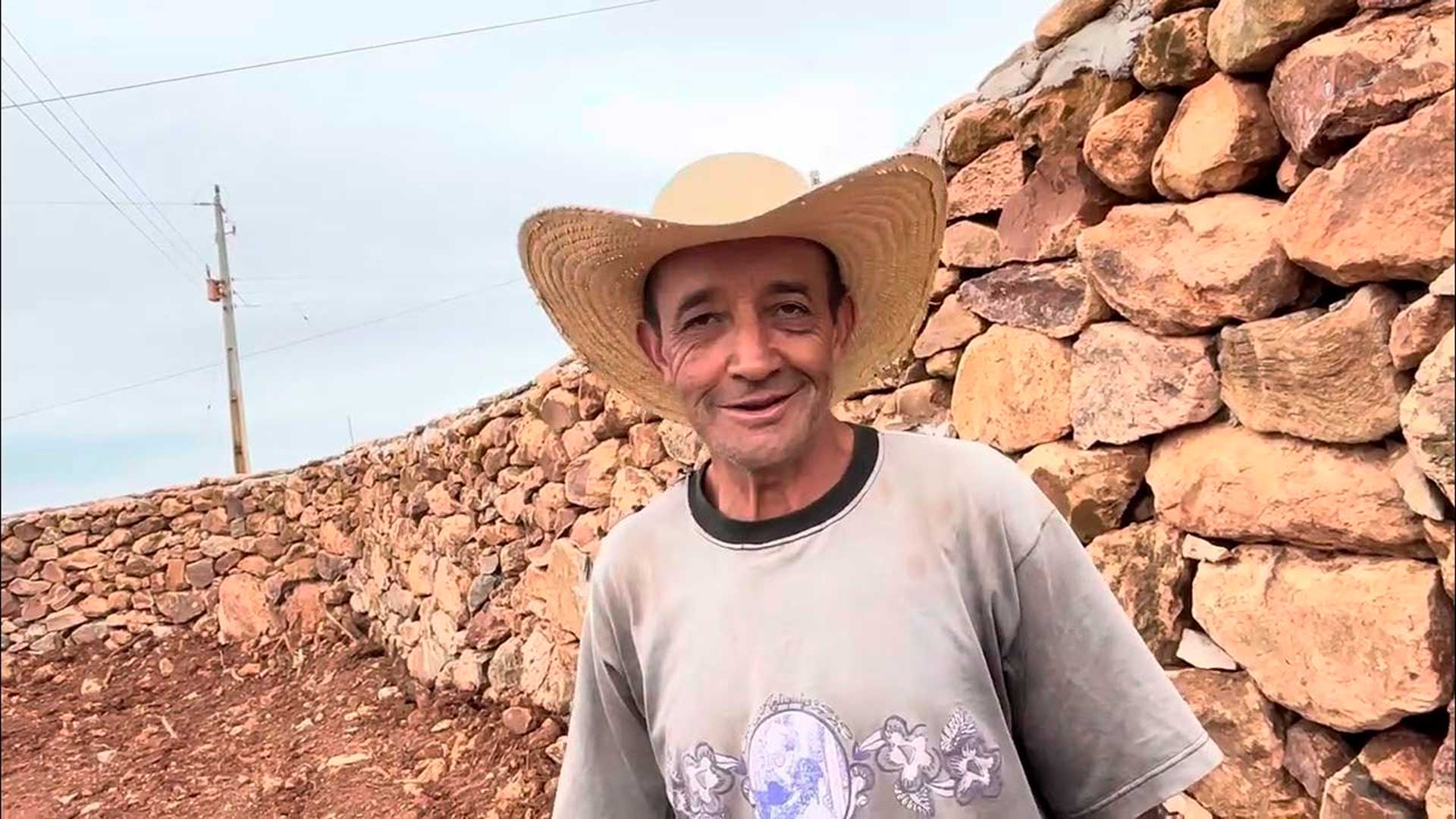


A 65-Year-Old Stoneworker Is Closing a Condominium Near the Dam in Passo Fundo with 2,000 m² of Stone Wall Made Piece by Piece. The Technique Known in the South as Taipa Disregards Mortar and Requires Precise Fittings to Gain Stability and Durability.
In a dam area in the Passo Fundo region of Rio Grande do Sul, a stone wall made in the old way is once again drawing attention by surrounding an entire condominium using the technique of taipa. The work is conducted by Mr. Giovane, 65, who has been using the method for decades and appears in a video from the JJ88 channel showing the step-by-step construction.
According to the account in the video, the project amounted to around 2,000 m² of taipa, with sections approximately 1.70 m high and even taller points at the entrance of the condominium. The stoneworker explains that it took six months of actual work, but he spent almost a year on-site due to the rainy weather, common in the region.
In the South of Brazil, the term “taipa” can have a different meaning than many people imagine. Research on the cultural landscape of Campos de Cima da Serra records that taipas are walls made with stones without the use of any binding material, very common between Rio Grande do Sul and Santa Catarina.
-
Tourists on Everest were poisoned by guides who mixed substances in food to provoke false symptoms of altitude sickness while helicopter operators and hospitals charged inflated rescue fees to insurance companies.

-
Few people know this, but Neil Armstrong, one of the most famous NASA astronauts in history, survived the Korean War after jumping from the plane during his seventh combat mission aboard the USS Essex aircraft carrier of the United States.

-
Diving with a camera in Lake Furnas reveals a submerged city with an entire street, almost intact houses, a preserved bridge, a wood stove, a Kombi, and even a bus at the bottom of the largest lake in the Southeast.

-
Iceland accidentally drilled into a magma pocket at 2,100 meters and revealed that the extreme heat beneath the crust could pave the way for a new source of continuous energy.


The scene of a professional fitting stone by stone, with line, plumb, and a lot of practice, helps to understand why this type of construction remains relevant. In other parts of the world, the art of building with stone without binders is treated as traditional knowledge that relies on mastery of geometry and physics applied to the terrain.
A 65-Year-Old Stoneworker Who Turns Stone into Wall; Watch the Video

Mr. Giovane says he has been doing taipa for about 35 years and learned the trade in his family, also passing on the technique to younger people who work with him. In the video, he comments that not everyone wants to learn because it is a heavy and repetitive job.
The routine starts early, with arrival around 6 AM in the summer and later in the winter, taking advantage of the longer day to work into the late afternoon. He describes a hearty breakfast and a workday that can go until early evening, especially when the job is far from home.
The central point, however, is physical endurance and the technique acquired over time. The stoneworker asserts that he remains active, without severe back pain, and attributes this to practice and the correct way of lifting and fitting the stones, reducing unnecessary effort.
How a Taipa Stone Wall Is Born in Practice
The base of the wall is where everything begins, and it needs to be wider to provide stability. Studies on stone taipas describe the shape with wider base and narrower top, a design intended to support weight and lock the structure securely.

In the Passo Fundo construction, Mr. Giovane details similar measurements, with greater width at the bottom and closure at the top, in addition to a process that resembles a puzzle. He explains that some stones do not “obey” the cut and can break irregularly, which changes the fitting and requires constant adaptation.
The assembly logic is simple to understand and difficult to execute well. The wall forms with two faces of selected and locked stones, while the core receives smaller filling stones to eliminate voids and increase locking, a practice described in field records about dry stone walls.
Another detail from the video is the choice of material according to the region. He notes that each place offers a type of stone, and that it is not always possible to make a “straight” and thinner wall, because the result depends on the shape, hardness, and how the stone behaves when being broken and laid.
In higher sections, the method gains reinforcement. In the condominium, he mentions a concreted core at part of the height and a top cover to protect the top, seeking to ensure durability and reduce movement over the years.
Why Dry Stone Walls Still Make Sense
Besides the rustic aesthetics, dry stone walls behave favorably in humid areas and variable soil conditions. Technical texts describe that stability comes from weight and friction between stones, and that the permeability of the structure favors natural drainage and reduces water pressure behind the wall.
In the case of the condominium, the construction occurs near a dam and water’s edge, which increases concern about rain, mud, and machine access. The stoneworker himself states that the weather “doesn’t help” and that rain determines the pace of delivery, reinforcing the idea that terrain and climate dictate the project.
Rural Heritage of the South and the Risk of Becoming a Rarity
Walls known as taipa also appear as a cultural mark of the southern mountains. Records indicate that they are common structures in the hills of Santa Catarina and Rio Grande do Sul, used to divide properties and contain cattle, associated with historical processes and the way of life in the region.
Academic research on stone taipas in Rio Grande do Sul describes uses such as fencing, property division, and protection, and reminds that many were built with rocks available in the fields. They also warn that changes in land use and lack of maintenance can lead to deterioration and loss of these structures.
This scenario helps explain why Mr. Giovane’s statement draws attention when he says there are few stoneworkers and that he is teaching younger people. The work is manual, repetitive, and requires patience, which tends to deter those seeking lighter or quicker occupations.
Outside Brazil, dry stone construction is treated as a social practice and knowledge transmission between generations, precisely because it relies on community, learning, and continuity. When the trade weakens, what is lost is not just a wall, but a way of building and reading the territory.
How Much It Costs and What Impacts the Price According to Those Who Do It
In the video, Mr. Giovane states that he is doing the work for R$ 600 per square meter, maintaining an old price due to the large contract. He also mentions a different price for the renovation of old taipa, calculated differently, and comments that he intends to adjust it in the future.
In practice, the cost is not just for stones and cement. He mentions transportation, lost time due to rain, reliance on the client’s machine to place stones in position, and the work of selection and fitting that cannot be rushed without losing quality.
There is also a confusing factor that arises in conversations about the subject. In many regions of Brazil, “taipa” is used for techniques with earth, like taipa de pilão, which are compacted walls in molds, which is different from the taipa de pedra shown in the South.
Do you think that handmade stone walls are still worth it in today’s Brazil, or have they become a luxury for condominiums? Would you trust concrete and block more, even knowing that taipa can last decades when well made? Leave your comment.





No interior de Garibaldi e toda serra gaúcha muitos muros seculares de taipa resistem ao tempo. Ainda há algumas casas de pedras
Parabens,,fora,de,,serieu
Parabéns, bom e bonito.