





 Portuguese
  English
  Spanish
  6 min of reading
  0 comments


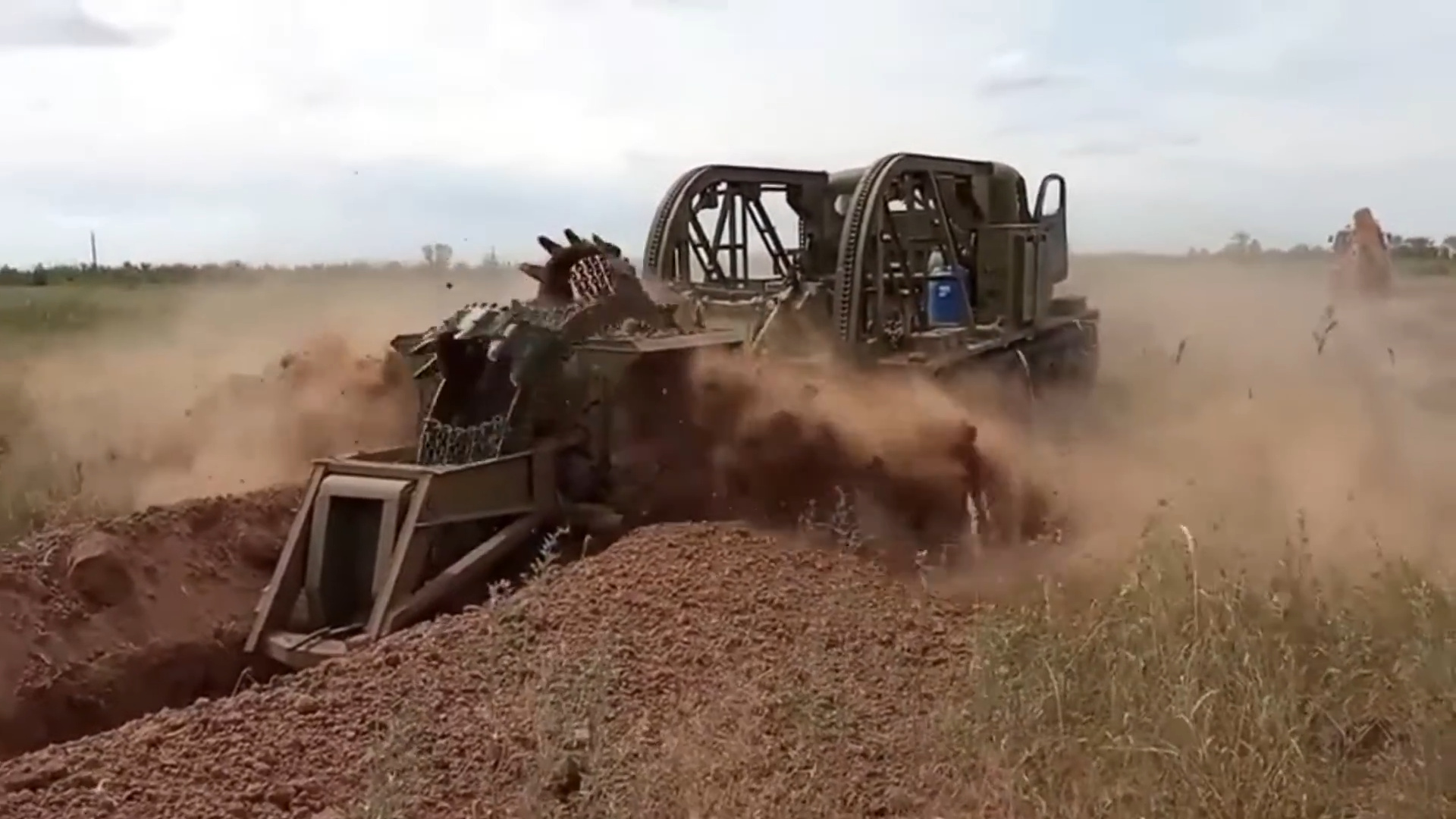
With Almost 30 Tons and Digging Up to 900 Meters Per Hour, the BTM-3 Shows How the USSR Militarized Heavy Engineering Machinery for Nuclear Wars.
During the Cold War, while the world watched ballistic missiles, nuclear warheads, and strategic submarines, the Soviet Union was quietly developing another type of weapon, less visible but equally decisive: heavy engineering machines capable of reshaping the battlefield in a matter of hours. Among them, the BTM-3 holds a unique place. It was neither a tank, nor a civil vehicle adapted for military use, nor a common excavator. It was a machine designed from the outset to dig deep, wide, and continuous trenches at extreme speed, even under the threat of nuclear attack.
The BTM-3 was born out of a brutal and pragmatic logic. In a total war scenario, whoever could bury troops, vehicles, command centers, and supply lines faster would survive longer. Excavation ceased to be a rear-guard task and became directly integrated into Soviet military doctrine. It was not just about digging defensive ditches but creating entire infrastructures for protection and mobility before the enemy could react.
An Excavator Designed as a Weapon of War
The BTM-3 was developed as a dedicated military engineering vehicle, not as an adaptation of civilian equipment. Its design was based on the principle that the vehicle would need to operate in hostile terrain, under enemy fire, in frozen, clayey, or compacted soils, while still maintaining high productivity.
-
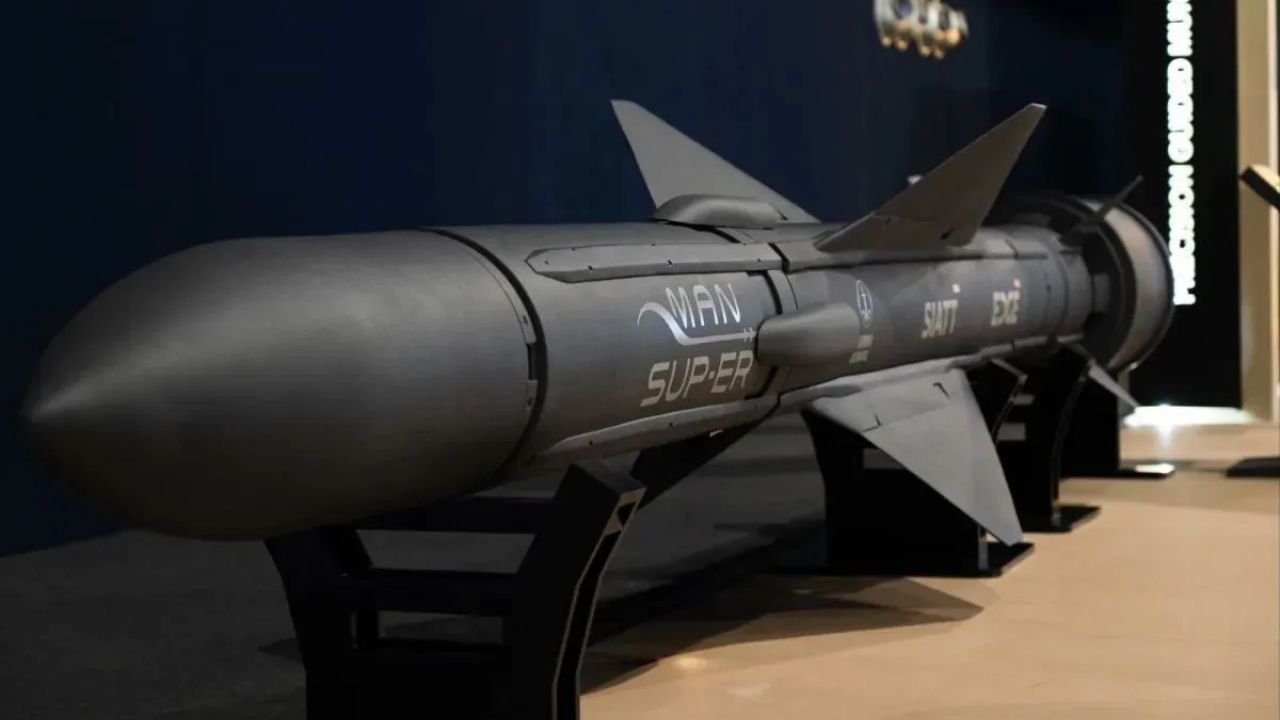
Brazil accelerates the evolution of the MANSUP missile, designing an air-surface version with a range exceeding 200 km, advanced guidance, and precision strike capability against land and naval targets, paving the way for a new generation of national armaments with global potential.
-
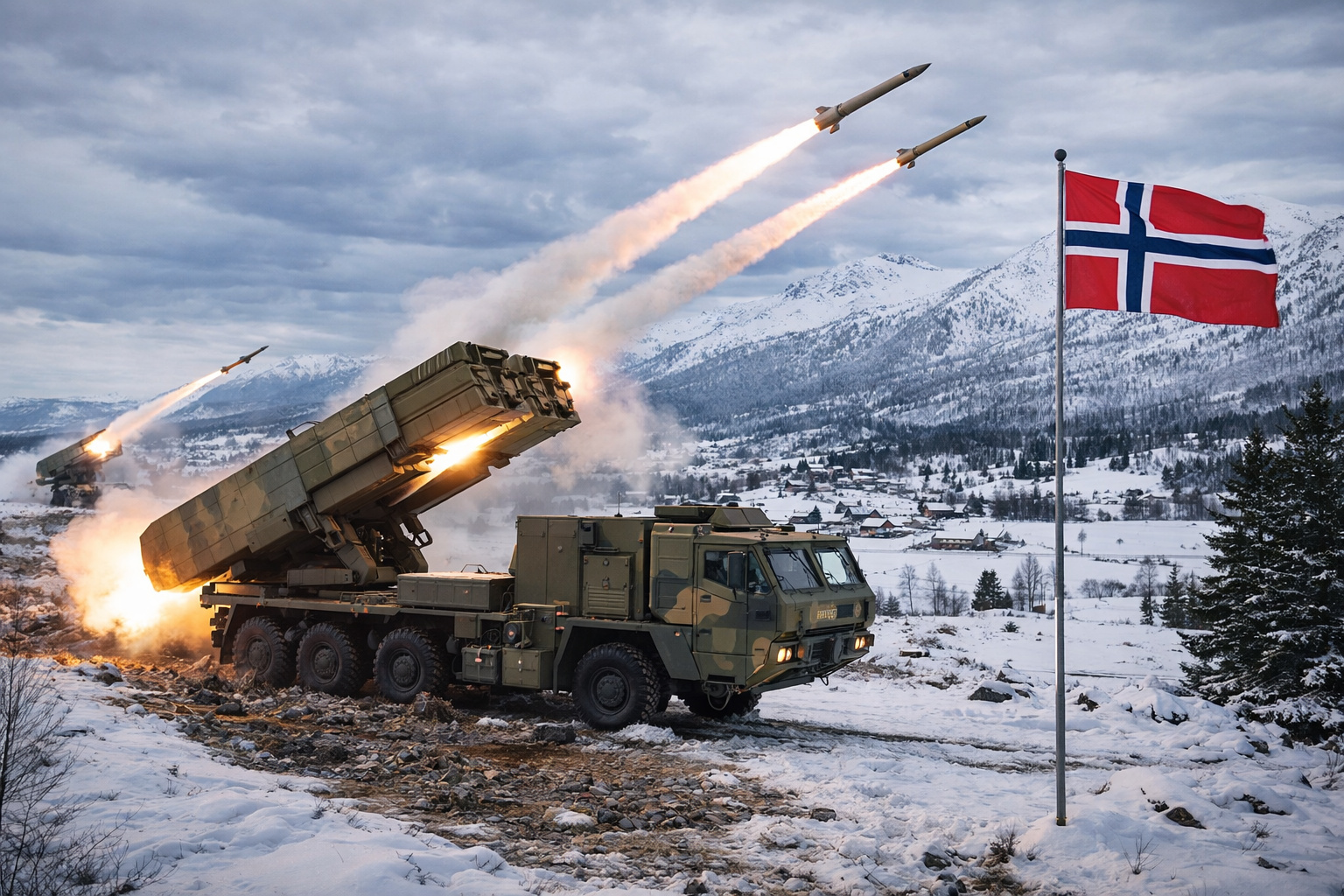
South Korea signs a $922 million deal with Norway, bringing Chunmoo launchers capable of firing guided missiles up to 290 km with an accuracy of 15 meters to Europe and turning the system into a key component of the new global race for precision artillery.
-
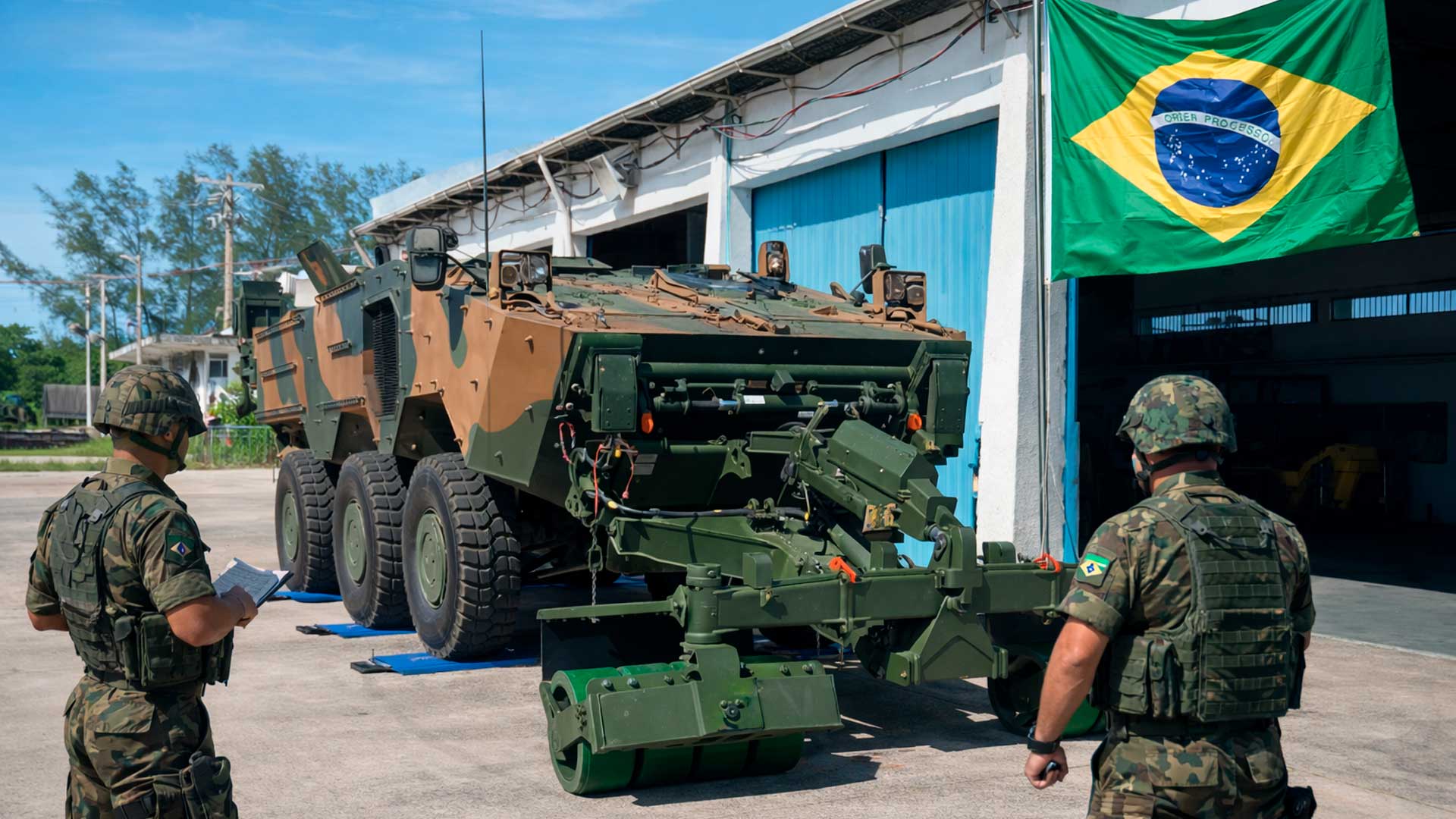
Brazil advances with decisive tests until June, the 6×6 Guarani armored vehicle with engineering equipment enters the most important phase and can enhance the operational capability of the Army.
-
Furnas Airport is handed over to the Navy and becomes a strategic base with complete military operations, attack drones, and international mobilization at Furnas Lake.

To achieve this, Soviet engineers mounted the BTM-3 on a robust military-derived chassis, with mobility similar to that of armored vehicles.
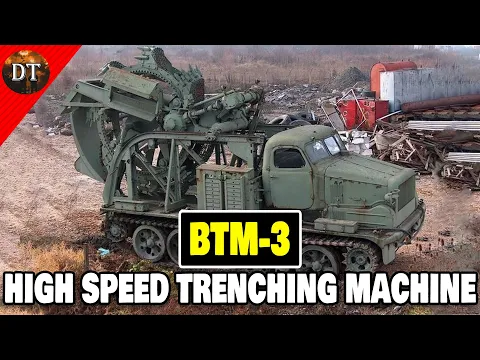

The operational weight was around 30 tons, a significant value for a machine that needed to move quickly between work fronts. This mass was not excessive by coincidence: it ensured stability during continuous excavation and allowed the use of mechanical components sized for extreme effort.
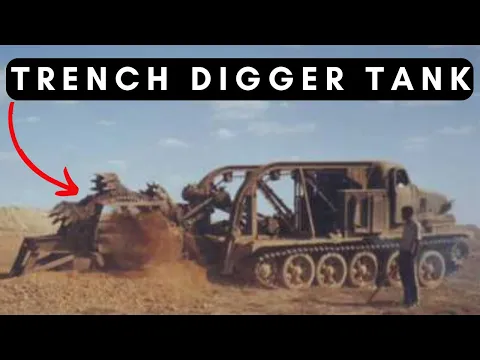
Unlike traditional excavators, which work in cycles of digging, turning, and unloading, the BTM-3 utilized a continuous linear excavation system, specifically designed for standardized military trenches. The result was impressive: up to 900 meters of trench per hour, a figure that, even decades later, still draws attention in the heavy engineering world.
Military-Scale Excavation: Dimensions and Performance
The great differential of the BTM-3 was not only its speed but also the standardization and scale of what was produced. The excavated trenches had sufficient width and depth to accommodate troops, cables, pipes, light vehicles, and even protected firing positions.
In a single operational shift, a unit equipped with the BTM-3 could create kilometers of continuous defensive lines, something that, manually, would require hundreds of soldiers and days of work. This capability completely transformed the dynamics of the battlefield.
A position that in the morning was exposed could, by the end of the day, be buried, protected, and connected to a network of shelters.
Furthermore, the machine was designed to operate in frozen soils, an essential requirement for the Soviet theater of operations. Eastern Europe and Central Asia have layers of extremely compacted soil in winter, something that renders common civilian equipment unviable. The BTM-3 incorporated mechanical power and cutting systems capable of breaking through these layers without the need for prior ground preparation.
Integration with Soviet Nuclear Doctrine
One of the most impressive aspects of the BTM-3 is the role it played in nuclear strategy. Unlike the Western view, which emphasized dispersion and air mobility, the Soviet Union strongly invested in physical protection through burial.
The logic was simple: nuclear explosions produce heat, radiation, and devastating shock waves, but the ground remains one of the best shields known. The faster it was possible to bury troops, equipment, and command centers, the greater the chances of survival after an attack.

In this context, the BTM-3 functioned as a strategic survival machine. It allowed for the rapid creation of deep trenches, partially buried shelters, and protected corridors. These systems not only protected against shrapnel and heat but also significantly reduced exposure to initial radiation.
The machine was not designed to operate after a nuclear explosion, but before, preparing the ground to absorb the impact. This difference is crucial to understanding why heavy engineering occupied a central role in Soviet doctrine.
Mobility and Logistics on the Battlefield
Despite its size, the BTM-3 was not a static piece of equipment. It was designed to accompany mechanized units, moving quickly between excavation areas. This allowed for the creation of dynamic defensive lines, adapted to the advance or retreat of troops.
Logistics were also thought out for prolonged war scenarios. The fuel consumption, while high, was compatible with the standard of heavy military vehicles of the time. Maintenance prioritized robustness and simplicity, avoiding excessively complex systems that could fail far from specialized workshops.
This combination transformed the BTM-3 into something rare: a piece of engineering machinery that could operate on the front lines, and not just behind the combat. Its presence changed the geography of the battlefield in real time.
Comparison with Civil and Western Equipment
When compared to civilian excavators or even Western engineering machines from the same period, the BTM-3 stands out for its extreme specialization. While civilian equipment prioritizes versatility, the Soviet machine focused on a single function: to open long, deep, and continuous trenches in the shortest possible time.
In the West, similar functions were typically performed by a combination of excavators, tractors, and manual labor. This made the process more flexible, but much slower. The USSR opted for the opposite path: less flexibility, more speed, and standardization.
This choice reveals a deep difference in mindset. For the Soviets, the battlefield should be shaped like a production line, where each machine performed a specific task with maximum efficiency.
Why Machines Like the BTM-3 Are Almost Unknown
Despite its importance, the BTM-3 remains practically unknown outside specialized circles. This happens for several reasons. First, because engineering machines do not generate the same symbolic impact as missiles or fighter jets. Second, because much of the documentation remained classified for decades.
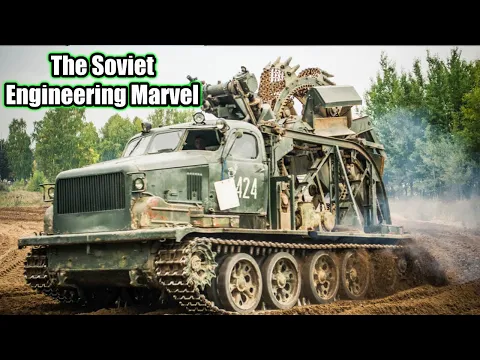
Moreover, many of these machines were never exported or displayed at international fairs. They existed to fulfill a specific function within the Soviet military apparatus, away from the limelight. Even today, detailed information about production, number of units, and actual operations is scarce.
Nonetheless, what is known is enough to assert that the BTM-3 represents one of the clearest examples of the total militarization of heavy engineering in the 20th century.
The Silent Legacy of Soviet Military Engineering
The BTM-3 is not just a historical curiosity. It symbolizes an approach that continues to influence modern projects: the direct integration of civil engineering, logistics, and military strategy. In contemporary conflicts, the ability to rapidly excavate, protect troops, and create infrastructure in record time remains a critical factor.
Although machines like the BTM-3 have largely been retired or replaced by more modern equipment, the concept lives on. Today, automated technologies, sensors, and remote systems fulfill part of this role, but the principle is the same: controlling the terrain is controlling the war.
In the end, the BTM-3 shows that during the Cold War, the Soviet Union did not only invest in weapons that destroyed. It also invested in machines that buried, protected, and survived. And, in a world on the brink of nuclear apocalypse, that difference could mean everything.









-

-

-

-

-

-

172 pessoas reagiram a isso.