





 Portuguese
  English
  Spanish
  5 min of reading
  0 comments


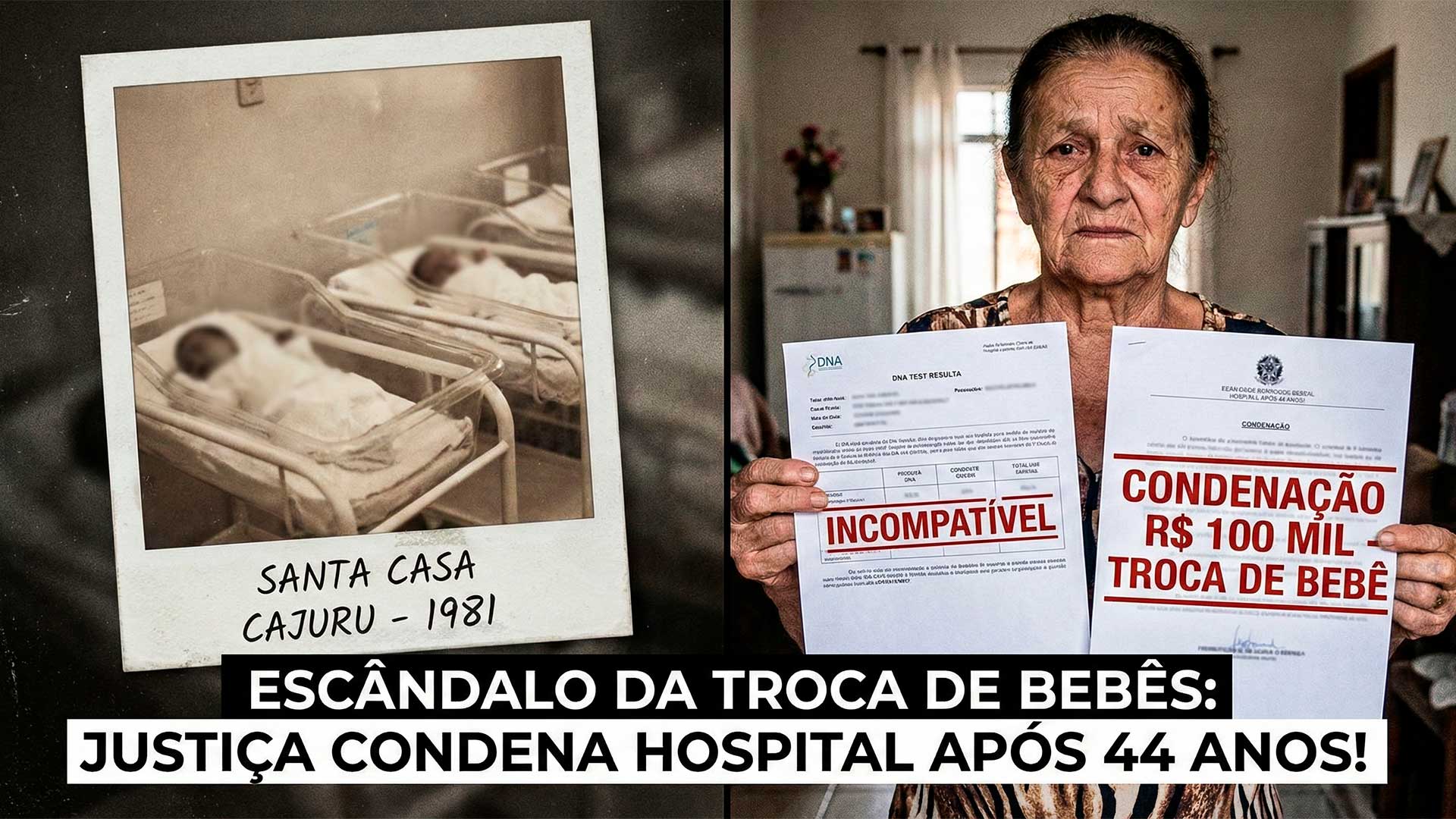
Court Recognized Failure in Maternity, Set Compensation of R$ 100 Thousand, and Ordered Correction with Interest Since Delivery, While Hospital Denies Negligence and Appeals.
The Santa Casa de Cajuru, in the interior of São Paulo, was ordered to compensate Fátima Aparecida Ferrari in R$ 100 thousand after the court acknowledged the baby swap that occurred during delivery in 1981. The decision was rendered in October and determined that the amount be updated with interest since the date of delivery, which may increase the total over time.
The case only came to light in 2017 when a DNA test requested by the child she raised indicated he was not her biological descendant. The confirmation ended decades of family certainty but opened a long and sensitive legal dispute.
In the ruling, the presiding judge classified the situation as a serious violation of fundamental rights, highlighting the suffering caused by the late discovery. The judicial conclusion also pointed out failures in security and control at the maternity of that time.
-
The noise law will no longer be in effect at 10 PM starting in June with a new rule valid during the 2026 World Cup.

-
The Chamber opens a debate on driver’s licenses at 16 years old as part of a reform that includes around 270 proposals to change the Brazilian Traffic Code and may redesign rules for licensing, enforcement, and circulation in the country.

-
The new Civil Code could revolutionize marriages in Brazil with “express divorce” and changes that could exclude spouses from inheritance.

-
Banco do Brasil sues famous influencer for million-dollar debt and intensifies debate on delinquency, risks of seizure, and direct impact on Gkay’s credibility.


The institution, in turn, denies that a swap took place, claims it has always followed best practices, and has already filed an appeal. Nevertheless, the decision reinforces the discussion on civil liability of hospitals, traceability, and newborn identification protocols.
Ruling Sets Compensation and Reinforces Duty of Care in Maternity
The conviction established a compensation for moral damages of R$ 100 thousand, with monetary adjustment and interest counted since 1981. In practice, this recognizes that the damage began at the moment of delivery, even though the family only became certain decades later.
By accepting the argument of failure in security procedures, the court treated the episode as a consequence of a service that should be essentially reliable. In maternity care, the expected standard is that the identification of the baby is continuous and verifiable, precisely to avoid irreversible mistakes.
As this is a judicial decision subject to appeal, the amount can still be discussed in higher courts. Nonetheless, the ruling signals that the lack of adequate control can result in significant penalties, even many years after the event.
DNA Test in 2017 Undermined Family Narrative and Started the Dispute
The turning point began when the child raised by Fátima requested a genetic test, according to the case report. The result indicated the absence of biological ties, raising the suspicion that something had gone wrong at the maternity.
From then on, the family sought answers about how the swap could have occurred and what records existed of the delivery and hospitalization. In such cases, evidence usually relies on documents, testimonies, and administrative inconsistencies, as there is no way to “go back in time” to reconstruct the moment of the error.
Documents, Late Pain, and Discussion of Statute of Limitations Influenced Judicial Understanding
In its rationale, the court pointed to signs of disorganization and fragility in the controls of the time, which supported the conclusion of institutional failure. In cases of newborn swap, responsibility tends to fall on those who had the duty to safeguard and identify during the critical postpartum period.
A central point in old disputes is the statute of limitations, that is, whether time would prevent the action. In similar decisions, courts have considered that the deadline begins when the victim has unequivocal knowledge of the damage, which typically occurs with confirmation by DNA.
This logic is relevant because it acknowledges that many families did not have access to tests, information, or means to prove their suspicions in the past. Thus, the court avoids allowing the difficulty of proof to become an automatic impediment to liability.
Beyond the legal aspect, the case involves a direct impact on identity, personal history, and family ties. Even when life goes on, the late discovery can provoke emotional and social conflicts, and this is usually taken into account in awarding moral damages.
The result is that the compensation functions as an attempt at reparation, without erasing the loss of biological companionship and the time that cannot be regained. The ruling reinforces the idea that the healthcare system must ensure maximum safety where errors have permanent consequences.
Santa Casa Challenges the Swap and Seeks to Overturn the Conviction in Court
The defense of Santa Casa de Cajuru claims that there was no negligence and asserts that the institution followed best practices. The argument includes the denial of the swap and the challenge regarding where the alleged confusion occurred.
With the appeal, the process enters a stage where the case can be reevaluated, whether to uphold, alter amounts, or even reform the decision. In such disputes, the focus of the debate usually centers on documentary evidence and the consistency between records, hospital routines, and facts revealed by DNA.
As the proceedings continue, the case also exposes a social dilemma: to what extent should an institution be held accountable for past failures when control standards were weaker. However, the judicial trend is to demand responsibility whenever it is demonstrated that the service failed in the basics.
Case Reignites Debate on Traceability and Identification Protocols in Paulista Interior
Cajuru has an estimated population of 24,233 people by 2025, and local hospitals usually serve the needs of an entire community. When an event occurs with the potential to shake collective trust, the effect can extend beyond the family involved.
Today, protocols such as identification bracelets, cross-checks, redundant records, and tracking of newborn movements are part of the safety standard. The case underscores why these routines need to be auditable and consistent, especially in maternity care.
There is also increasing pressure for transparency in document preservation and for clear responses when families raise doubts. In such a sensitive issue as baby swaps, the lack of information tends to amplify the pain, and legal action becomes the most likely path.
In your place, do you think that financial compensation, even if high and with interest since 1981, can compensate for a lifetime built on a false truth? Share your thoughts: Would you seek only reparation, or would you demand public changes and harsher punishments to prevent this from happening again?










-

-

-

-

8 pessoas reagiram a isso.