





 Portuguese
  English
  Spanish
  2 min of reading
  1 comment


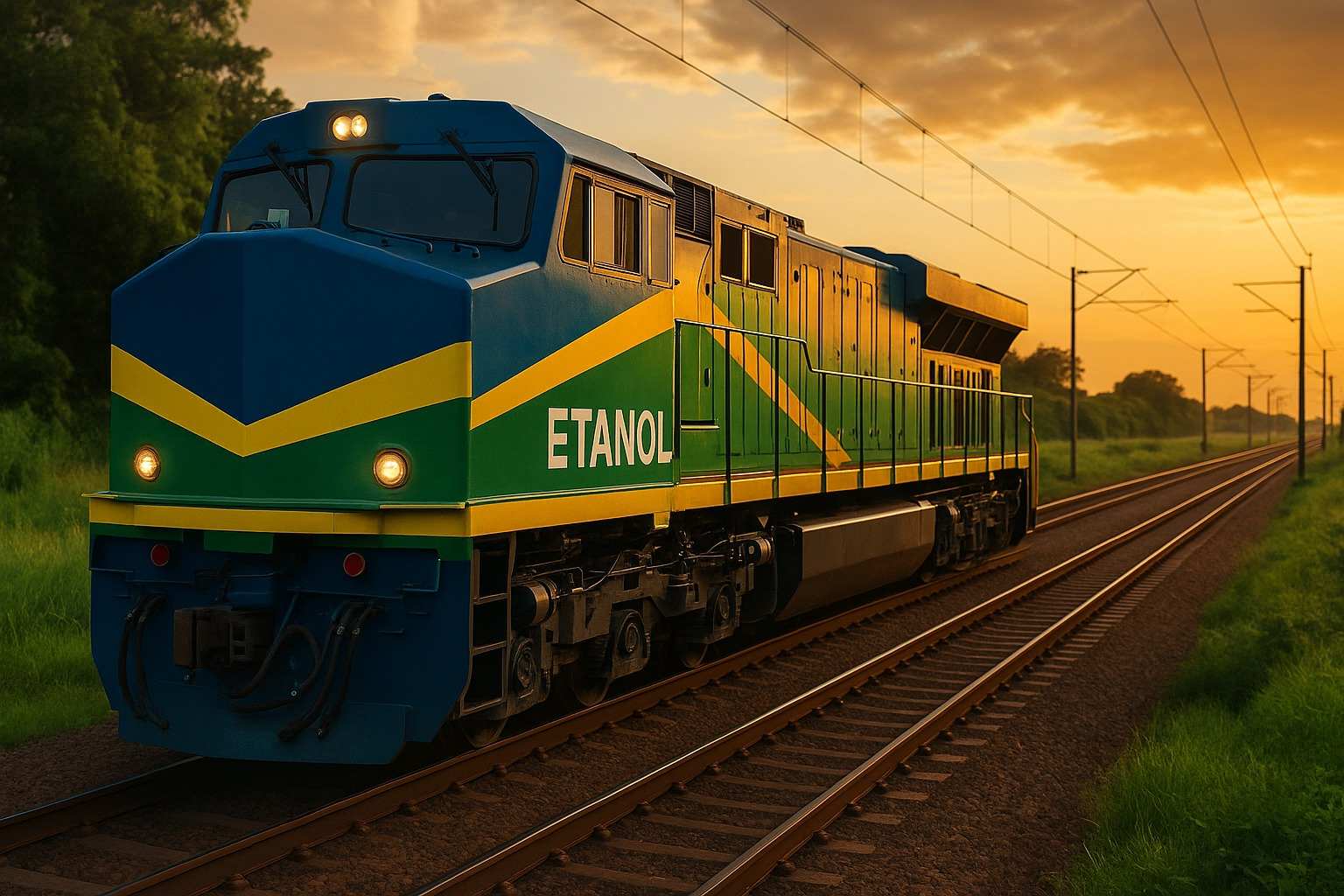

Tests Conducted In Brazil, United States, And Austria Confirm The Advancement Of Technology That Will Allow The Replacement Of Diesel With Ethanol In Vale Locomotives, Scheduled To Begin In 2028
A new technology is in the testing phase in Brazil and promises to transform the rail sector: the ethanol-powered train. The goal is to replace diesel with a cleaner and more sustainable fuel, reducing pollutant gas emissions.
The tests are underway and, starting in 2028, the change is expected to become a reality in trains operated by Vale, which transport ore from Minas Gerais to Espírito Santo, as well as passenger trains.
The technology is considered unprecedented in the railway world. The initial testing phase is taking place in laboratories in the United States, Austria, and Brazil.
-
With a cost per shot close to zero, the DragonFire laser could change naval warfare in 2027 and provide British ships with nearly unlimited defense against drones.

-
A British startup creates tires that generate electricity in electric vehicles when passing over potholes, speed bumps, and cracks.

-
Scientists have created robots made with living cells that have their own nervous system, swim on their own, explore the environment, and self-organize without any genetic engineering, and now they want to do the same with human cells.

-
Students create a solar-powered ambulance that operates without a plug, without fuel, and still keeps medical equipment running in remote areas.

Studies indicate that, initially, it will be possible to replace up to 50% of diesel with ethanol, with the goal of eventually achieving a 100% biofuel-powered engine.
Adaptations And Advantages Of The Technology
To enable the use of ethanol, locomotives will undergo adaptations and will operate with flex engines, also known as dual-field, that accept alternative fuels.
According to Daniela Ornelas, Vice President of Product at Wabtec, the modifications include adjustments to the injection system and possible changes to the fuel tank, which is currently designed for diesel.
In addition to reducing pollutant emissions, the new system maintains train performance.
João Turchetti, Director of Decarbonization Engineering at Vale, explains that the choice of ethanol follows a clear logic: as the biofuel is already widely used in gasoline, its expansion to railway diesel is a natural step.
Brazil has ample availability of ethanol in the Central-West and Southeast regions, facilitating initial implementation and paving the way for future expansions.








Etanol com baterias elétricas recarregável já que temos ônibus elétrico de viagem hibrido para para viagem de longo curso e elétrico para o urbano, novas baterias q poderia ser do tamanho de um vagão, recarregável e movido a etanol…é o mundo se modernizando….