





 Portuguese
  English
  Spanish
  6 min of reading
  2 comments


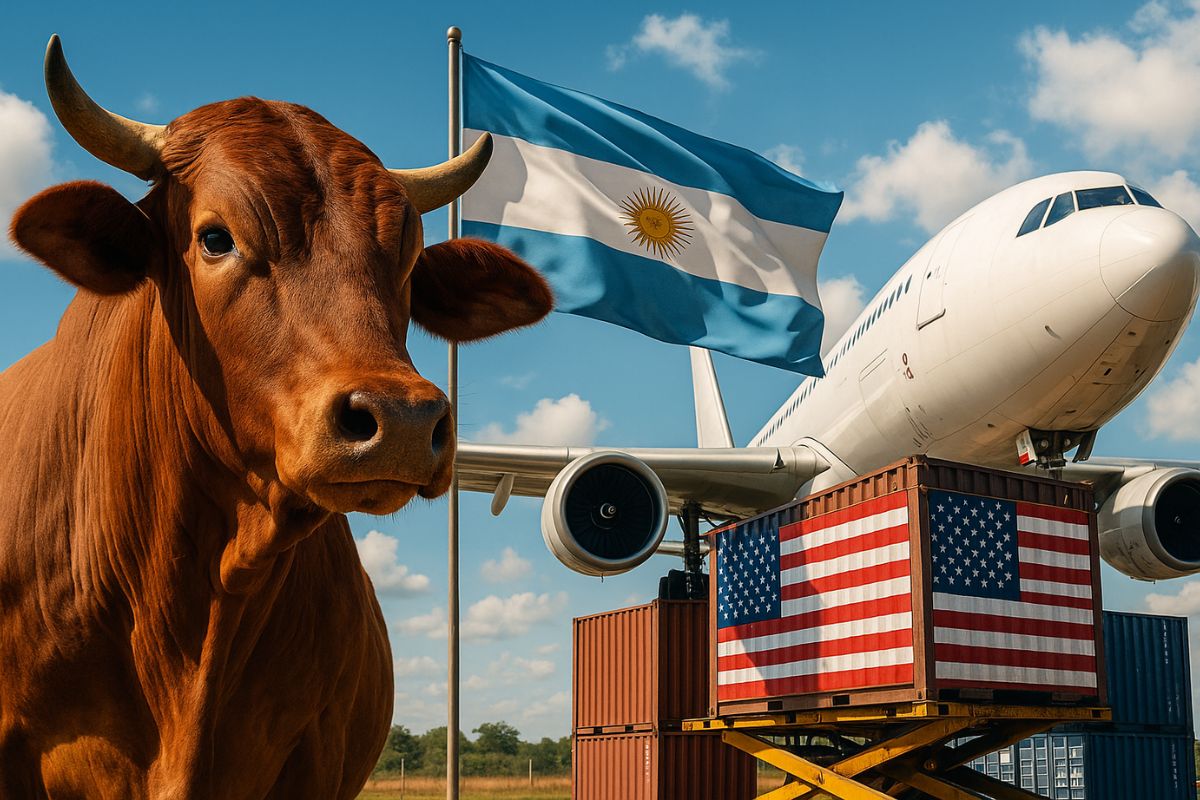


In Ten Months, Beef Exports Total 11 Thousand Tons Sent to the Neighboring Country, More Than Twenty Times the Volume of 2024, Boosted by American Tariffs, Prolonged Drought in Argentina, Milei’s Incentives for Foreign Sales, Lack of Local Supply, and More Competitive Brazilian Beef in the Regional Market.
Brazil’s beef exports to Argentina exploded in 2025. From January to October, the neighboring country purchased 11 thousand tons of Brazilian product, a volume more than 20 times greater than the 526 tons shipped in the same period last year, according to the Ministry of Agriculture. Although Argentina still accounts for less than 1% of all that China imports from Brazil, the jump in sales caught the market’s attention.
Experts point to a combined effect of the U.S. tariff on Brazil, a decline in Argentine production, and cheaper Brazilian beef in the international market. The reconfiguration of trade routes, along with the drought and economic policy decisions made in recent years in Buenos Aires, opened up space for national beef to gain ground, and all indications are that it will continue to advance in 2026.
U.S. Tariff Pushes Argentina Toward Brazilian Beef
The first engine of this change was the tariff imposed by the United States on Brazilian beef starting in April. Prior to that, the U.S. had already announced a 10% surcharge that impacted the national product. Later, the Trump administration raised that surcharge to 50%, a measure that was only lifted in November.
-
An Indian tree that grows in the Brazilian Northeast produces an oil capable of acting against more than 200 species of pests and interrupting the insect cycle, gaining ground as a natural alternative in soybean, cotton, and vegetable crops.

-
The rise in oil prices in the Middle East is already affecting Brazilian sugar: mills in the Central-South are seeing their margins shrink just as ethanol gains strength.

-
Rain gains strength in April, potentially exceeding 150 mm, placing the North, Northeast, and the coasts of the South and Southeast at the center of the heaviest forecast of the week.

-
A fish that survives out of water, crawls on land until it finds another river, and whose female lays 80,000 eggs at once is infesting rivers and lakes in Brazil, and no one can stop this invasion.

With Brazil partially out of the American market, Argentina began exporting more beef to the United States and, to avoid domestic shortages, turned to Brazilian products. The movement is clear in the data: the peak of Brazilian beef purchases by Argentines occurred in September, a month after the tariff increased to 50%.
Meanwhile, from January to October, Argentine beef exports fell 10.5% in volume compared to the same period in 2024, driven by lower demand from China.
Conversely, Argentine sales to the U.S. grew 7.5% in the same timeframe, occupying part of the space left by Brazil in the American market.
Even with the recent relief for beef, the tariff still applies to other Brazilian products, such as instant coffee, grapes, honey, and fish, which maintains competitive pressure on different fronts of agribusiness.
Decline in Argentine Production Began Before Tariffs
Argentina’s purchases, however, did not start to rise only after the American tariffs. The advance was already visible in the data as early as February, two months before the first 10% surcharge announced by the U.S. against Brazilian beef.
According to Fernando Henrique Iglesias, a consultant at Safras & Mercados, beef production in Argentina has been declining for at least two years.
The combination of droughts, associated with the effects of the La Niña phenomenon, and high production costs led to a reduction in the herd.
At the beginning of this decade, adverse weather affected the pregnancy rate of cows, increased the costs of fattening animals, and ultimately encouraged the culling of breeding stock, which shrank the number of available cattle.
Data from the United States Department of Agriculture (USDA) shows that, from 2023 to 2025, the Argentine herd fell from 68.8 million to 67 million head.
The projection for 2025 is a further decline of 100 thousand tons in beef production compared to 2024, repeating the decrease recorded in the previous year. With less beef available, the need to import to meet domestic consumption increases.
Fernández’s Economic Policy Dissuades Cattle Ranchers
In addition to the drought, economic measures from former Argentine president Alberto Fernández helped drive producers away from the activity.
Four days after taking office in 2019, Fernández implemented a 9% tax on beef exports, extending the charge to various other agricultural products.
In May 2021, the Argentine government went further and completely suspended beef exports for 30 days. For many cattle ranchers, the message was one of insecurity and unpredictability.
With more risk and less return, the trend was to reduce investments, decrease herd sizes, and, in some cases, shift to other agricultural activities.
This environment of distrust combined with the drought and rising costs, reinforcing the downward trajectory of local production.
The result is a domestically tighter market, in a country that has the highest beef consumption per capita in the world, which exacerbates the need to rely on imported beef to balance supply and demand.
Milei Lifts Export Restrictions and Aggravates Internal Market Shortage
The liberal government of Javier Milei took the opposite direction of Fernández. In an attempt to unlock shipments and attract foreign currency, he reduced export tax on beef and even eliminated it between September 22 and October 31, 2025.
According to Thiago Bernardino de Carvalho, responsible for the livestock sector at Cepea USP, these measures stimulated an increase in Argentine exports, further decreasing the supply in the internal market.
With less beef available for Argentine consumers, prices rise and it becomes more advantageous to import from Brazil, which can deliver large and regular volumes at lower costs.
In practice, the strategy of freeing exports and reducing the presence of local beef on store shelves created direct space for Brazilian products, which began to be used to supplement Argentina’s domestic supply.
Triangulation Is Not Illegal and Brazil Becomes a Backup Supplier
Lygia Pimentel, CEO of the consultancy Agrifatto, explains that the partial withdrawal of Brazilian beef from the American market opened space for countries like Paraguay, Argentina, and Australia.
These large exporters began directing more of their own production to the United States while simultaneously increasing purchases of beef from Brazil to keep their internal markets supplied.
According to Pimentel, this does not constitute illegal triangulation. Illegal triangulation would involve buying beef in Brazil, sending it to a third country, and then re-exporting it to the U.S. as if it were local product.
What is actually occurring is a reorganization of trade routes, where each country uses its own production to serve more valued markets and turns to Brazilian beef as a backup for internal consumption.
This arrangement reinforces Brazil’s role as a major supplier of replacement beef, especially during times of tight supply and regulatory changes in other countries.
Brazilian Beef Is the Cheapest Among Large Exporters
Another central factor for the increase in Brazilian beef exports to Argentina is price. According to data from Agrifatto, beef in Brazil costs an average of 61 dollars, below the 74.8 dollars practiced in Argentina.
In Uruguay, the price reaches 75.7 dollars, while in Paraguay it stands at 64.5 dollars.
According to Thiago Carvalho from Cepea, this helps explain why, besides being a neighboring country, Brazil has become the cheapest option for Argentines when it comes to completing meat supply.
With local production declining and a strong consumption environment, the combination of geographic proximity, available volume, and competitive pricing makes Brazilian product especially attractive.
Although Argentine purchases declined in October compared to the peak in September, the level still remained well above what was recorded a year earlier, and the data for November was not available when experts were consulted.
Outlook: Trend Is for Continued Advancement in 2026
For Fernando Henrique Iglesias from Safras & Mercados, the outlook is that Brazil will continue to increase sales to Argentina.
With Argentine production expected to remain depressed in 2026, the need for imports tends to remain high, especially if the country maintains its policy of stimulating exports.
In this scenario, Brazil’s beef exports to the Argentine market should remain on the rise, even though Argentina’s share of the total exported by Brazil continues to be small compared to China.
The episode, however, reinforces how climatic, economic, and trade decisions can reshape the global beef flow map in a matter of months.
Given this scenario of tariffs, drought in Argentina, and cheaper Brazilian beef gaining ground abroad, do you think that Brazil should take advantage of the moment to further solidify beef exports to Argentina or focus on diversifying other strategic markets?








O Brasil deve diversificar o máximo possível seus mercados consumidores.
Acredito que o Brasil deve continuar diversificando seus mercados consumidores e não depender unicamente de um mercado principal, pois depender do bom humor de governantes de países é muito arriscado. Hoje os Estados Unidos boicotam os produtos brasileiros e o Brasil recorre a China. E amanhã ou depois se os chineses boicotarem os produtos brasileiros? A quem vamos recorrer?
Daí a importância da diversificação de mercados.