





 Portuguese
  English
  Spanish
  6 min of reading
  0 comments


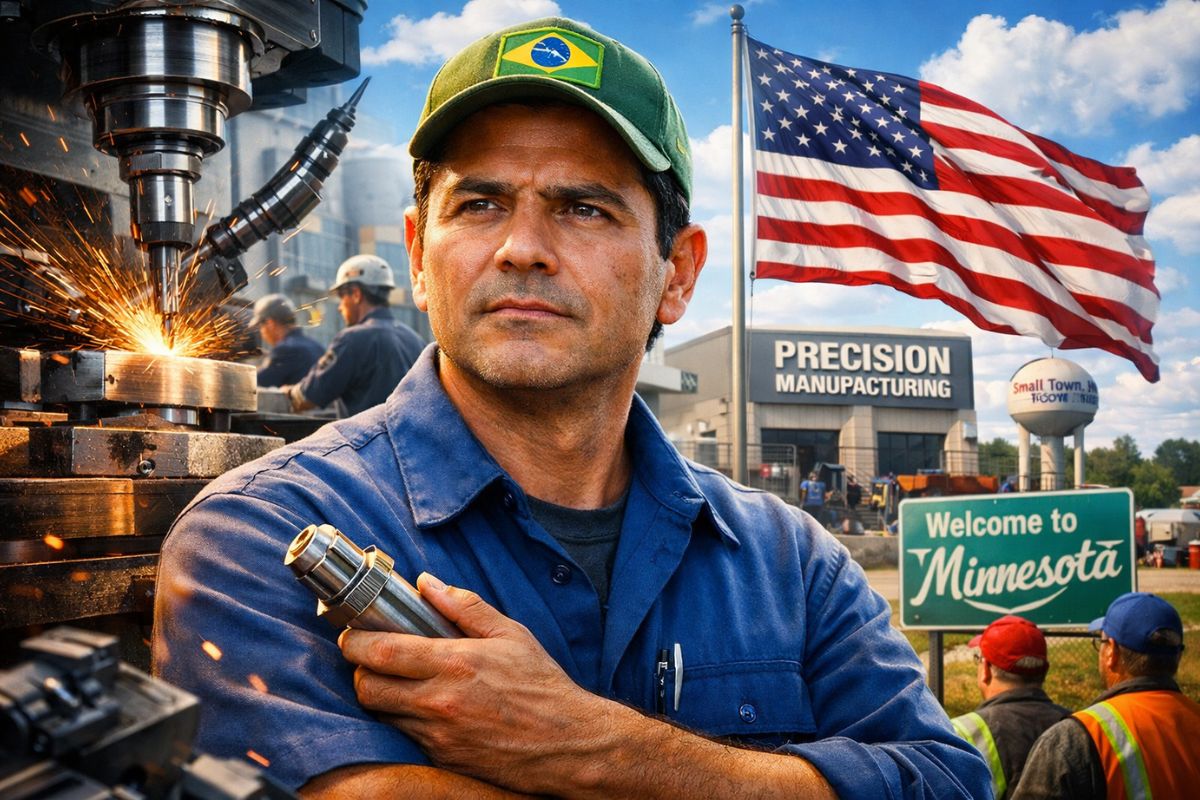
In Small Rothsay, Minnesota, A Brazilian Immigrant Founded Galaxy Enterprises Precision Manufacturing, Creating Local Jobs And Showing How Immigration Policy Does Not Help Those Who Legally Entrepreneur.
In small Rothsay, Minnesota, a Brazilian immigrant transformed a garage and a bench drill into a precision manufacturing factory that bills more than US$ 1 million a year, employs nine people, and fuels the local economy.
At the same time that he creates jobs for Americans and pays taxes, this Brazilian immigrant claims that the United States immigration policy has not helped at all in opening the business, exposes a gap for legal entrepreneurs, and raises an uncomfortable question: why is it so hard to entrepreneur while following all the rules?
From Visitor to Brazilian Immigrant in Minnesota
The story begins in the 1990s when Roque Rossetti traveled to visit his brother in Minnesota and ended up falling in love with the region.
-
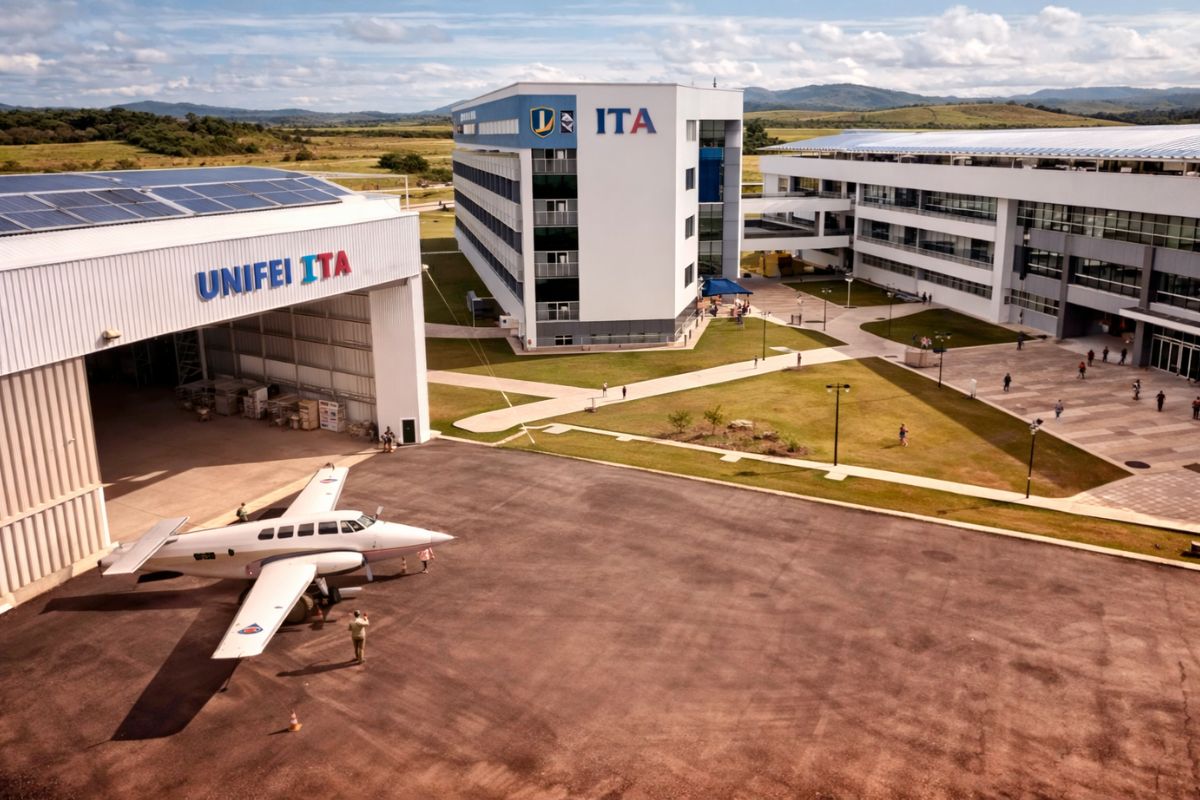
The institute that trained the greatest aerospace engineers in Brazil has just opened its first campus outside São Paulo after 75 years: ITA Ceará will have R$ 445 million, new courses in energy and systems, and classes are expected to start in 2027.
-
Luciano Hang, owner of Havan, goes to Juiz de Fora after the tragedy in February, brings R$ 1 million, hands out R$ 2,000 cards, and donates up to R$ 15,000 to victims in the region.

-
The Brazilian passport allows legal residence in dozens of countries without the need for a prior visa, and most Brazilians are unaware that they can apply for residency directly upon arriving in nations in South America, Africa, and even Europe.

-
Petrobras sends a message to Brazilian truck drivers after fuel collapse and reveals plan to have 100% domestic diesel.


The landscape, lifestyle, and work environment made the Brazilian immigrant see there a place where he could build a future. Shortly after, he secured a spot in a work exchange program that allowed him to stay a year in the United States working as a mechanic.
When the program ended, Rossetti returned to Brazil, but the return was brief. Less than a year later, a job offer at a manufacturing company in Minnesota gave him the opportunity to return.
At that moment, his background already included experience with CNC machines, water jet operation, custom plastic manufacturing, and customer service. The desire to entrepreneur was already clear, but the visa kept him bound to the status of an employee of a sponsoring company.
The Brazilian Immigrant Who Opened A Business Working At Night And On Weekends

Unable to quit his formal job due to the visa, the Brazilian immigrant decided to make the only possible move: open his own business in his spare time.
Thus, Galaxy Enterprises, LLC was born while he continued working full-time in the industry that had sponsored his stay in the country.
He says that all the initial money for the business came from overtime worked in the evenings, weekends, and holidays. At the beginning, Galaxy had no machines of its own.
Rossetti acted as an intermediary: he listened to what the client needed, found someone who could manufacture, asked for several quotes, chose the most competitive one, added a margin, and delivered the piece. This way, the Brazilian immigrant kept the company alive until he raised enough capital to buy the first equipment.
The turning point was a simple Craftsman bench drill costing US$ 375. With it, Rossetti took on a rework job of 5,000 defective pieces produced in China for an American client. Charging one dollar per piece, he billed US$ 5,000 in a single contract and paid for the investment in the tool in the first year. The drill is still in the factory today, used weekly for smaller operations.
From A Bench Drill To Six CNC Machines
Gradually, the order flow increased, the reputation for quality consolidated, and the Brazilian immigrant reinvested each profit into physical structure and technology.
Over time, Galaxy Enterprises stopped relying on outsourcing and began producing in-house with precision manufacturing machines.
Recently, Rossetti acquired the sixth CNC milling machine, equipment costing around US$ 110,000. This technological leap allows competing for larger contracts, including government bids to supply parts to the United States Armed Forces, something he sees as an opportunity to generate even more jobs in the community.
Today, Galaxy Enterprises specializes in producing parts for high-demand sectors: medical, aerospace, agricultural, naval, and oil industries.
In a town of just 600 residents, the business is considered “large”: it has nine employees, eight of whom are American, and an annual revenue exceeding US$ 1 million.
Rothsay, 600 Inhabitants And A Factory That Sustains The Local Economy

In Rothsay, almost everyone knows where Galaxy is located. For many residents, the company created by a Brazilian immigrant represents one of the main sources of employment and income. In addition to maintaining the payroll and paying taxes, Rossetti has taken an active role in community life.
He served for three years as a volunteer firefighter and medic, helps to raise funds for families with sick children, and donates to the local public school, including around US$ 4,000 just in 2016 for sports programs.
The factory is not just a place of production; it has also become a vector of social support in a tiny town in rural Minnesota.
Rossetti also tries to influence the future of the local workforce. He takes high school students from Rothsay to visit Galaxy’s facilities and get practical experience with tool machine technology.
In his view, precision manufacturing offers good salaries, stability, and a solid technical career, with salary ranges between US$ 40,000 and US$ 70,000 in Minnesota, reaching US$ 100,000 to US$ 120,000 in states like California.
For him, the shortage of machinists is no coincidence. Outsourcing production overseas has eliminated many jobs over the years, pushing some of this workforce into other areas.
Recovering this base takes time, investment, and, in the view of the Brazilian immigrant, also a more aligned immigration policy for those who want to produce within the country.
When Immigration Does Not Follow Those Who Want To Entrepreneur
Despite the success story, Rossetti is direct: “My experience with immigration is that it did not help me at all in opening a business.” In practice, while the business grew, the immigration status remained an obstacle. He needed to maintain a formal link with the sponsoring company, even having his own expanding operation.
Looking at other paths, such as investment-based visas, the scenario was even further from the reality of a small entrepreneur.
Programs that require US$ 500,000 or US$ 1 million in investment to start a business and seek a green card simply do not fit the budget of most foreign entrepreneurs.
The Brazilian immigrant himself emphasizes that almost no “average” immigrant entrepreneur meets these criteria, even when they have the technical ability and willingness to generate jobs.
His central criticism is clear: the immigration policy was designed for profiles with substantial capital or workers tied to employers, and not for those who want to build a business from scratch, following the rules and creating local jobs.
The Brazilian Immigrant Who Became A Citizen, But Did Not Forget The Barriers
Over time, Rossetti and his family stabilized in Minnesota, adapted to the lifestyle, and identified with the local culture. He eventually became an American citizen, reinforcing his permanent bond with the country he chose as his home.
Even so, the Brazilian immigrant remains dissatisfied with the design of immigration policy. In his view, the United States loses economic potential by making life difficult for qualified immigrants who want to entrepreneur legally, while investing resources in fronts that do not always yield jobs, taxes, and productive development.
He advocates for the creation of specific visa models for promising entrepreneurs, allowing them to start and run their businesses without the obligation to work full-time for another company until their own business takes off.
In other words, a path that recognizes that financial capital is not the only indicator of value: technical experience, willingness to work, and the impact generated in the community should also count in the equation.
An Isolated Case Or A Portrait Of Something Bigger?
Looking at the trajectory of Galaxy Enterprises, it is hard to ignore the contradiction: a Brazilian immigrant who started with a bench drill, turned being an “intermediary” into a precision factory, created jobs for Americans, donated to the school, helped maintain emergency services, and still feels that immigration policy has never been on his side.
In the end, the question Rossetti leaves echoing is larger than the story of a single factory in Minnesota. If more flexible rules for foreign entrepreneurs had existed before, how many more businesses could have emerged? How many additional jobs would have been created, how much more tax would have been collected, and how many small towns could have their own “Galaxy” changing the local economy?
And you, looking at this trajectory of a Brazilian immigrant who built a precision factory in a tiny town, do you think the US should make life easier for those who want to entrepreneur legally or that the current rules are hard enough and do not need to change?









-

-

-

5 pessoas reagiram a isso.