





 Portuguese
  English
  Spanish
  6 min of reading
  0 comments


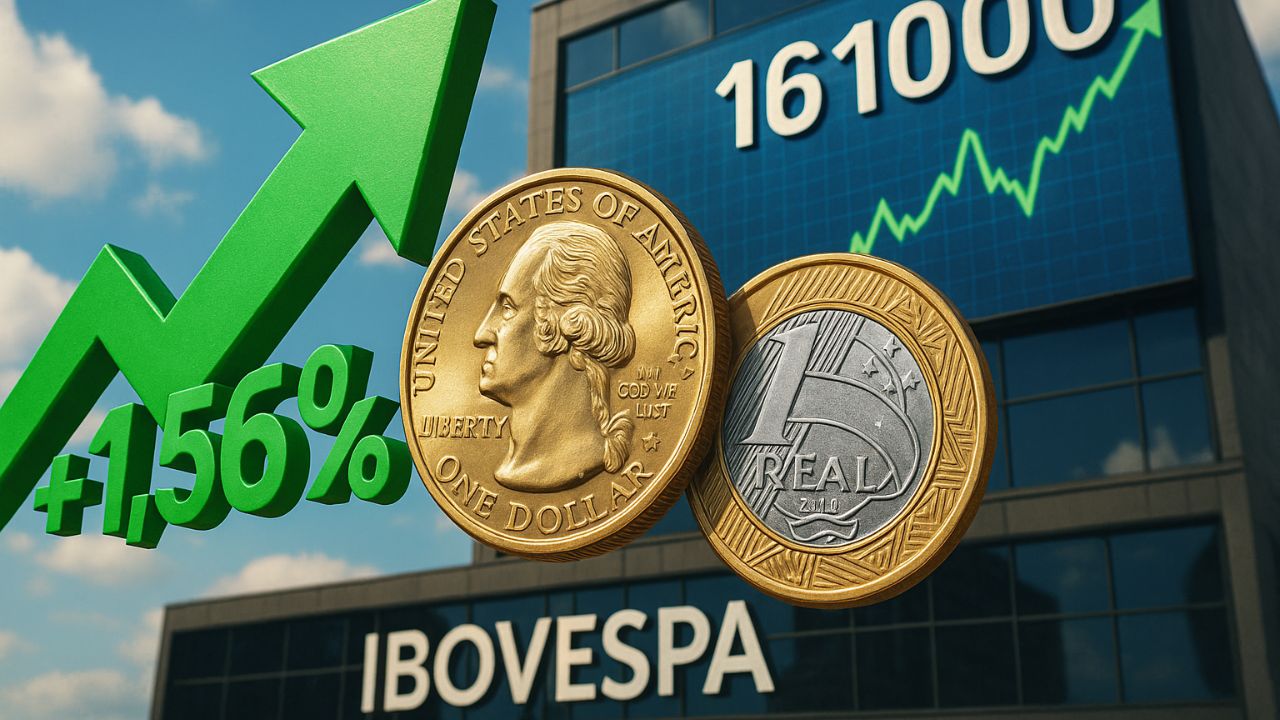
With The Stock Market Rising, Ibovespa Closes at Historic High, Dollar Falls on Day of Bets on Rate Cuts in The US and CVC Shares Lead Gains of The Session
The Brazilian stock market renewed its historical record this Tuesday (2), in a session marked by external optimism and strong risk appetite. With Ibovespa rising 1.56%, the main index of the stock market closed at 161,092.25 points, surpassing the 161,000-point mark for the first time, while the dollar fell 0.57%, to R$ 5.3303 at selling, amid bets on rate cuts in the US still in December. In the corporate field, CVC shares were among the biggest gainers of the day.
The stock market’s performance was supported by expectations of easing US monetary policy and a scenario of widespread appreciation of risk assets. Investors increased the probability of a rate cut in the US by 25 basis points at the next Federal Reserve meeting, while also tracking the weakening of the dollar against various global currencies. Amid this environment, CVC shares advanced with news of new reference investors entering, contributing to the stock market rally during the session.
Ibovespa Renews High and Consolidates Stock Market Rally
The Ibovespa rose 1.56% and ended the day at 161,092.25 points, reaffirming the positive trend of the stock market after a volatile start to the month. The movement renewed both the closing high and the intraday high of the index.
-
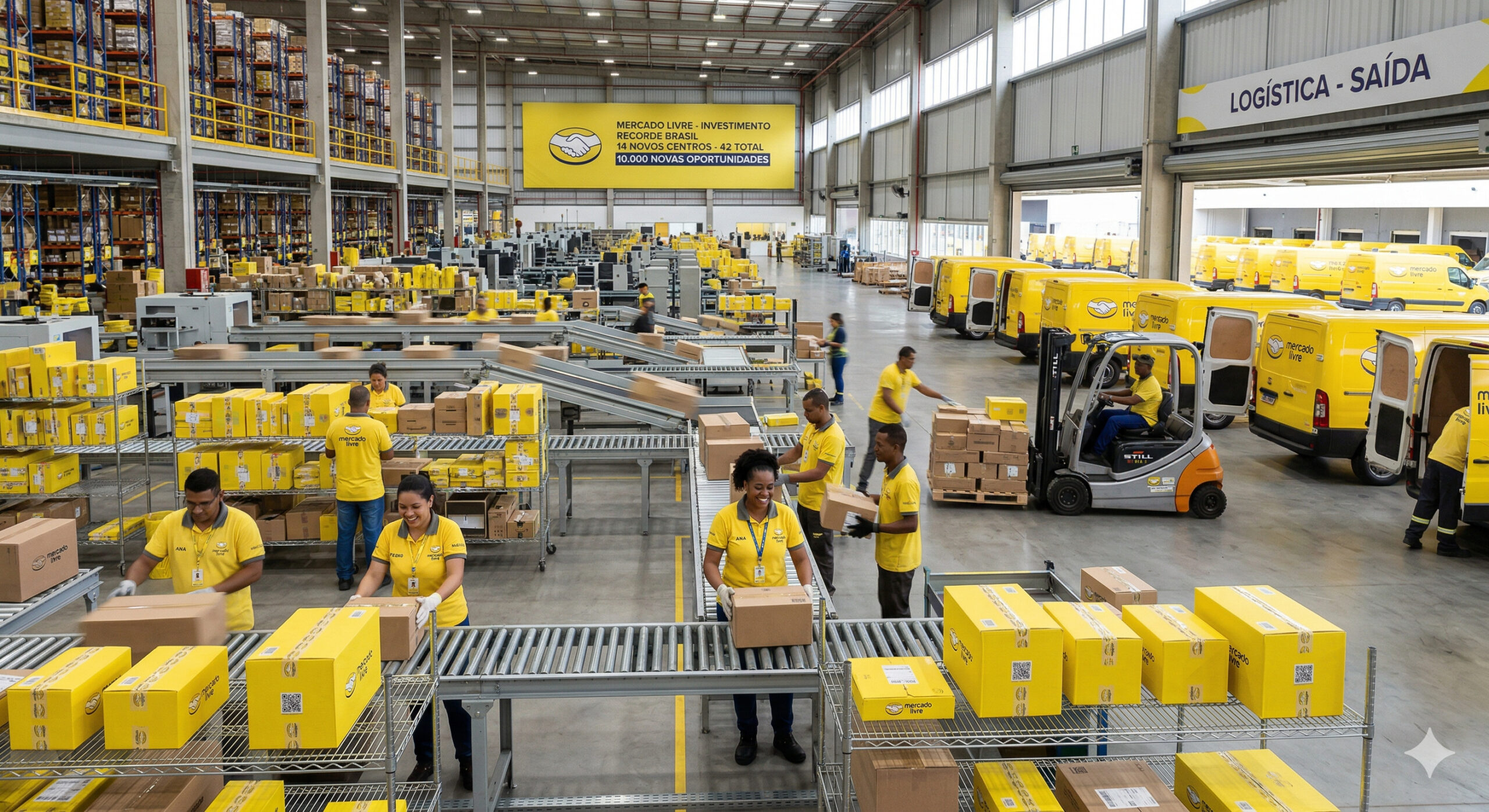
Mercado Livre “opens the vault” and announces a record investment of R$ 57 billion in Brazil in 2026, a value 50% higher than the previous year, with an expansion plan that includes 14 new logistics centers, totaling 42 units in the country and hiring an additional 10,000 employees.
-
How investment in technology can revolutionize the national economy and enhance industrial gains, according to a study that highlights the direct impact on productivity, innovation, and wealth retention within Brazil.

-
The largest food company on the planet, JBS, has just opened a 4,000 square meter laboratory in Florianópolis to develop customized proteins that modulate muscle mass gain, immune response, and metabolic performance.

-
After nearly 30 bids and competition among industry giants, a Spanish company purchases one of the largest airports in Brazil for almost R$ 3 billion and takes over the management of Galeão in a concession that will last until 2039.


According to traders, the rise of the Ibovespa mainly reflected the combination of external flow, expectation of rate cuts in the US, and the fall of the dollar against the real, factors that usually favor emerging markets. In a context of still high interest rates in Brazil, the stock market’s performance was interpreted as an adjustment to the perspective of less global monetary tightening.
Throughout the day, the stock market fluctuated in positive territory, following the more constructive tone of the New York stock exchanges. The indication that US industrial activity remains weak reinforced the perception that the Fed may have room for a first rate cut in the US, which tends to sustain the rally of the Ibovespa if the scenario is confirmed.
Dollar Falls with External Scenario and Focus on Rate Cuts in The US
The dollar fell 0.57% and closed at R$ 5.3303 at selling, following the global trend of weakening of the American currency. The dollar’s drop occurred on a day when the major global currencies also appreciated, following the release of weak data from the US industry.
The ISM Manufacturing Index indicated contraction for the ninth consecutive month, with the PMI dropping from 48.7 in October to 48.2 in November. This result reinforced bets on rate cuts in the US, reducing upward pressure on the dollar and contributing to the positive performance of the Brazilian stock market.
In the probability models tracked by the market, investors began pricing in a chance near 87.6% of a rate cut in the US of 25 basis points at the Fed meeting on December 9 and 10, according to a market tracking tool mentioned in the report. This combination of a weaker dollar and potentially lower global interest rates created a more favorable environment for risk assets, including the Brazilian stock market.
Stock Markets in New York Rise and Reinforce Risk Appetite
On Wall Street, the main stock indices ended the day slightly higher, after a first December session marked by declines. The session was influenced by fluctuations in Treasuries and the cryptocurrency market, but finished with a moderately positive tone.
The scenario of weak industrial activity in the US and expectation of rate cuts in the US helped sustain risk appetite. For analysts, this environment directly contributed to the performance of the stock market in Brazil and the advance of the Ibovespa, even though the external agenda remains laden with uncertainties regarding the trajectory of inflation and growth in the American economy.
CVC Shares Lead Gains on Strong Stock Market Day
Among the corporate highlights of the session, CVC shares led gains after the disclosure of a relevant fact informing that the Apex Fund and other investors now hold 10% of the company’s share capital.
According to the statement, the new shareholders acquired more than 23,000 common shares and stated that the participation is for investment purposes, with the intention of acting as reference shareholders, without the aim of altering control or the administrative structure of the company.
The news was well received by the market and reinforced buying movement in CVC shares, which began to be among the most traded stocks of the day. In a scenario of a rising stock market and a gradual recovery perspective for the tourism sector, the stock stood out as one of the symbols of the Ibovespa rally this Tuesday.
Vamos Reacts After Recommendation and Reinforces Stock Market Rally
The shares of Vamos were also among the largest gainers of the Ibovespa. The movement was driven by a buy recommendation from BTG Pactual, which indicated a potential appreciation close to 300% for the stock.
In the report, analysts highlighted the company’s operational improvement, although the short term remains challenging. The bank reaffirmed a price target of R$ 15, well above the level of about R$ 3.80 considered as a reference in estimates, which helped attract flow to the stock on a day already favorable to the stock market.
Ultrapar Rises with Announcement of Billion-Dollar Dividends
Another highlight among the stocks of the day was Ultrapar. The company’s shares rose about 3% after the announcement of intermediate dividend distribution totaling R$ 1.08 billion, equivalent to R$ 1.00 per common share, with payment scheduled starting December 16, 2025.
The indication of relevant return to shareholders pleased investors and contributed to the positive performance of the shares, in line with the general movement of the stock market. In an environment of high interest rates in Brazil, news of robust dividends tend to carry even more weight in market pricing.
Vale Projects Production Increase in 2026
In the mining sector, Vale maintained projections for iron ore production and indicated a possibility of an increase of up to 3% in 2026 compared to the forecast for this year. The company also reiterated the estimate of reaching about 360 million tons by 2030.
The projections were disclosed with the indication that the company continues in the process of recovering productive capacity lost after the dam collapse in Brumadinho in 2019. The behavior of the mining company’s shares was influenced by both these estimates and the global mood regarding commodities, in a context of a strong stock market and the Ibovespa at a historic high.
Brazilian Industry Still Shows Weakness
Despite the good performance of the stock market, data from the Brazilian industry released by IBGE showed growth below expectations in October. Industrial production advanced 0.1% compared to September, below the expected increase of 0.4% in a Reuters survey.
Compared to the same month of the previous year, there was a decrease of 0.5% in production, contrary to the projected increase of 0.2%. With this, the industry remains 14.8% below the peak registered in May 2011.
Industrial activity remains pressured by restrictive monetary policy, with the basic interest rate at 15%, making credit more expensive and impacting investment decisions. The Central Bank will meet again next week for the last monetary policy decision of the year, with a majority expectation of maintenance of the Selic, a scenario that remains on the radar of those monitoring the stock market and the behavior of the Ibovespa.
In your opinion, has the stock market fully reflected the impact of a potential rate cut in the US or is there still room for new highs in the Ibovespa?







Seja o primeiro a reagir!