





 Portuguese
  English
  Spanish
  5 min of reading
  1 comment





Judicial Decisions Based on New WHO Guidelines Recognize Burnout as an Occupational Accident, Ensuring 100% of Average Salary.
Recent decisions from the Federal Regional Court of the 4th Region (TRF-4) and other federal judges are consolidating a crucial understanding for worker health in Brazil: the Burnout Syndrome is an occupational disease equated to an accident at work. This classification, based on Law No. 8,213 of July 24, 1991, opens a precedent for INSS insured individuals to receive benefits for incapacity at full value, as well as guaranteeing labor rights such as job stability and FGTS contributions during the absence.
The impact of this change is profound and goes beyond the doctor’s office, establishing new responsibilities for companies and strengthening worker protection. The foundation for this legal consolidation came from the scientific recognition of the World Health Organization (WHO), which, through the International Classification of Diseases (ICD-11), validated burnout as an “occupational phenomenon.” This validation gave judges the technical assurance needed to apply social security legislation more assertively, transforming the diagnosis into a concrete right.
What Does the Law Say About Burnout?
The turning point for the legal treatment of burnout was its official classification by the World Health Organization (WHO), which came into effect in 2022. In the ICD-11, the syndrome is defined as resulting from “chronic stress in the workplace that has not been successfully managed.” This recognition was the missing piece to connect the mental health condition directly to the corporate environment, providing the scientific basis that Brazilian Justice needed to act with greater security. With around 30% of Brazilian workers affected, according to the National Association of Occupational Medicine (Anamt), the issue has become a public health and social security challenge rather than an individual problem.
-
The noise law will no longer be in effect at 10 PM starting in June with a new rule valid during the 2026 World Cup.

-
The Chamber opens a debate on driver’s licenses at 16 years old as part of a reform that includes around 270 proposals to change the Brazilian Traffic Code and may redesign rules for licensing, enforcement, and circulation in the country.

-
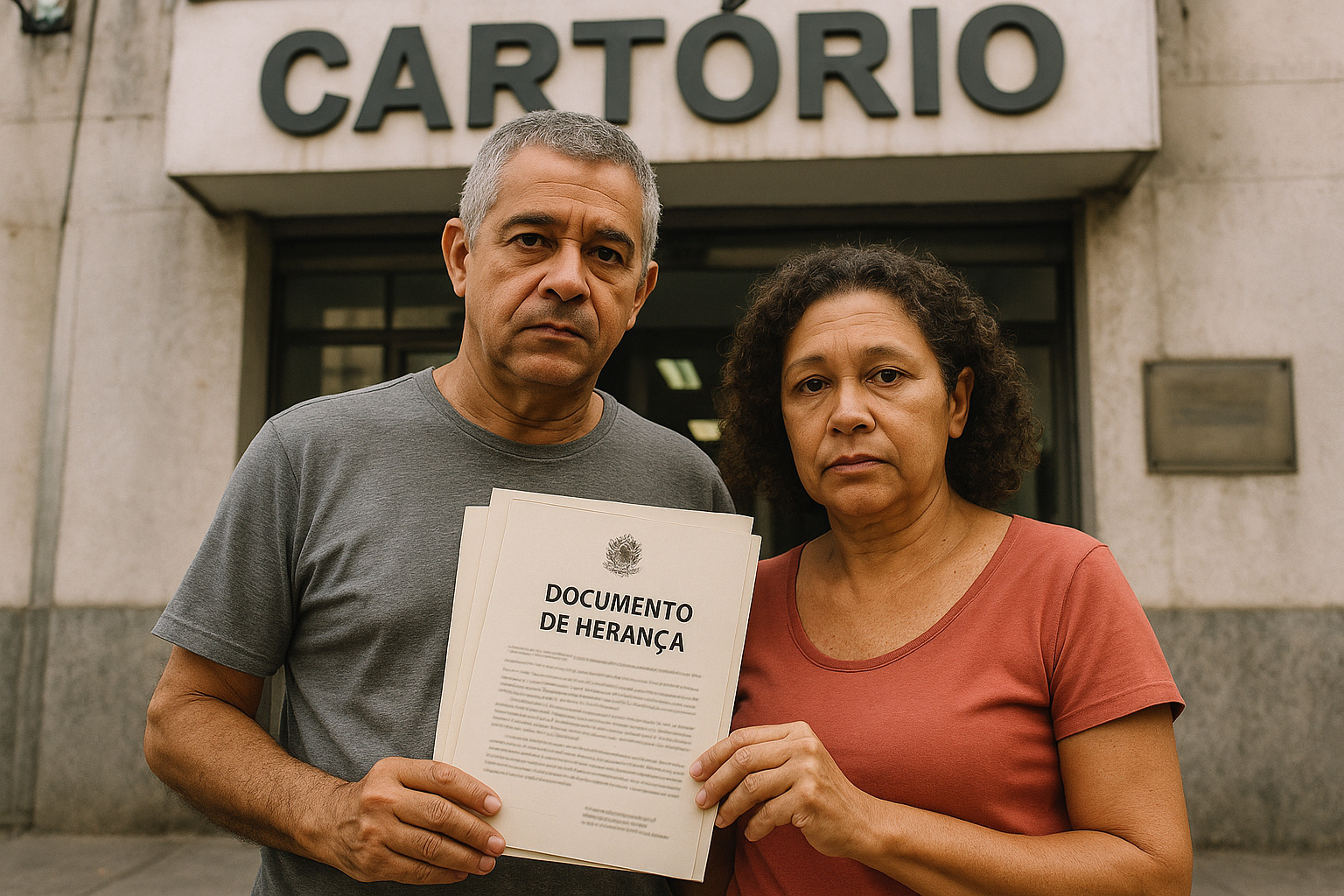
The new Civil Code could revolutionize marriages in Brazil with “express divorce” and changes that could exclude spouses from inheritance.
-
Banco do Brasil sues famous influencer for million-dollar debt and intensifies debate on delinquency, risks of seizure, and direct impact on Gkay’s credibility.

The legal framework to protect workers, however, is not new. Law No. 8,213/91, known as the Social Security Benefits Law, already equated occupational diseases to accidents at work in its articles 20 and 21. The challenge has always been proving that the mental disorder was directly linked to working conditions. The WHO’s ICD-11 did not create a right, but rather scientifically validated the causal nexus, allowing existing law to be applied with much stronger and more frequent force in the courts for burnout cases.
Full Benefit: The Crucial Difference Between B-31 and B-91
When a worker is absent due to an illness, the INSS can grant incapacity benefits in two distinct ways, and the difference between them is enormous. The “social security” benefit (B-31) is for common illnesses unrelated to work. On the other hand, the “accident” benefit (B-91) is granted when the illness is caused or aggravated by the work environment, as is the case with burnout. Granting B-91 exempts the worker from the 12-month contribution requirement and, more importantly, guarantees 12 months of provisional job stability after medical discharge and the obligation for the company to continue making FGTS deposits during the entire absence period, rights provided for in Article 118 of the aforementioned Law No. 8,213/91.
The term “full benefit” gained even more relevance after the Social Security Reform of 2019. If the permanent incapacity retirement is of a common nature (non-accidental), the benefit amount will be 60% of the average of all salaries of the insured. However, if the retirement is of an accidental nature, as in the cases of burnout recognized by the courts, the amount rises to 100% of the average salary. This substantial financial difference is what has motivated many workers to seek recognition of their condition in court as a direct consequence of work.
TRF-4 and the Path to Judicial Recognition
Judicial decisions, especially from TRF-4, are not an isolated fact but a trend that is consolidating. The jurisprudence of the Regional Courts (TRF-4 and others) has shown that, once the connection between the illness and the work environment is proven, the right to accident benefits is guaranteed. In one of the analyzed rulings, concerning case No. 0012529-56.2025.8.16.0001, the judicial analysis focused precisely on demonstrating that the working conditions triggered the burnout condition, strictly applying what the social security legislation dictates.
The central point for the success of these actions, however, is the proof of the causal nexus. It is not enough to present a medical report with the diagnosis of burnout. The worker needs to objectively demonstrate that the work environment was toxic, abusive, or overloaded. For judges, the decision depends on a set of evidence linking the work routine to the onset of symptoms. Without this proof, the tendency is for the request to be denied, as the diagnosis alone is not sufficient to characterize the illness as occupational.
How to Prove Burnout in Court?
The main battle in a burnout case is proving that the illness was caused or at least aggravated by work. For this, the worker and their lawyer need to build a robust file of evidence. Detailed medical and psychological reports are the starting point. However, it is crucial to complement these documents with material proof of the work environment.
This proof includes emails with excessive demands or after hours, WhatsApp messages with moral harassment, testimonials from coworkers that can describe the pressure-filled routine, and time records that prove exhausting work hours. It is worth remembering that Law No. 8,213/91 provides for the figure of “concausa,” meaning that work does not need to be the only culprit for the illness. If it is proven that working conditions directly contributed to worsening a health condition, the right to accident benefits can be established.
The consolidation of burnout as an occupational disease is a significant advancement in protecting mental health. This change forces companies to pay more attention to people management and the creation of healthier work environments.
Do you agree with this change? Do you think it impacts the market? Leave your opinion in the comments; we want to hear from those who experience this firsthand.






Great article, thank you for sharing these insights! I’ve tested many methods for building backlinks, and what really worked for me was using AI-powered automation. With us, we can scale link building in a safe and efficient way. It’s amazing to see how much time this saves compared to manual outreach.