





 Portuguese
  English
  Spanish
  3 min of reading
  0 comments


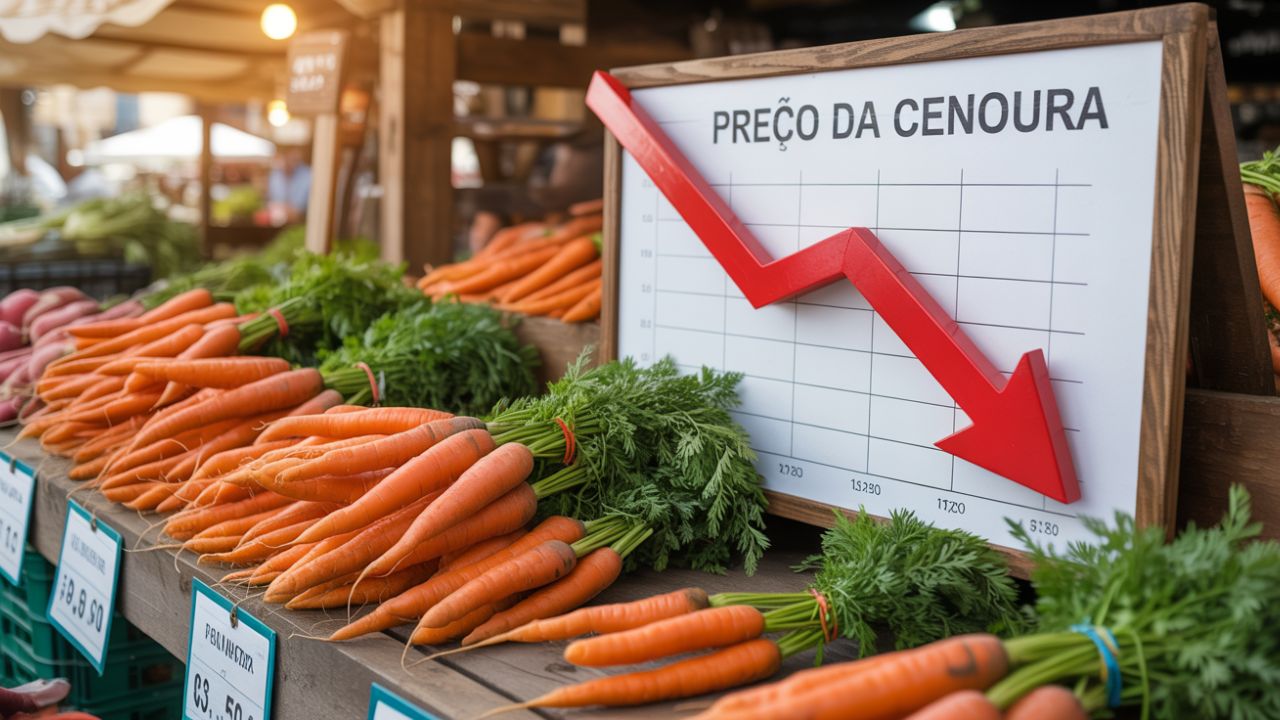
Carrot Prices Fell At Major Ceasas In November, According To Conab. Find Out Why High Supply Reduced Prices And How It Affects Consumers And Merchants.
At the beginning of November 2025, carrot prices registered a decline at the main Supply Centers in the country, according to a survey by the National Supply Company (Conab).
The reduction was detected in the first fifteen days of the month in several regions, reflecting the increase in the offered volume, especially coming from Minas Gerais — the largest national producer of the root.
The survey is part of the 11th Bulletin of the horticultural monitoring program, which shows how supply flows directly affect carrot prices.
-
The water that almost everyone throws away after cooking potatoes carries nutrients released during the preparation and can be reused to help in the development of plants when used correctly at the base of gardens and pots, at no additional cost and without changing the routine.

-
The sea water temperature rose from 28 to 34 degrees in Santa Catarina and killed up to 90% of the oysters: producers who planted over 1 million seeds lost practically everything and say that if it happens again, production is doomed to end.

-
An Indian tree that grows in the Brazilian Northeast produces an oil capable of acting against more than 200 species of pests and interrupting the insect cycle, gaining ground as a natural alternative in soybean, cotton, and vegetable crops.

-
The rise in oil prices in the Middle East is already affecting Brazilian sugar: mills in the Central-South are seeing their margins shrink just as ethanol gains strength.

The result is of direct interest to consumers: with the drop in prices, carrots tend to become more affordable at markets and supermarkets.
This retraction also indicates how the supply logistics, harvest, and offered volume influence the final retail price.
Decline In Carrot Prices In November Reflects Strong Supply
According to Conab’s bulletin, the decline in carrot prices is related to the high volume of shipments to the country’s Ceasas, especially those originating from Minas Gerais — the main production hub for the vegetable.
The greater availability of the root in wholesale reduces price pressure, benefiting merchants and consumers.
As a result, the trend is that carrots will become more accessible at retail.
In addition, in October, wholesale markets showed varying behaviors: while some Ceasas registered price increases, others had decreases.
By November, most indicate stability or decrease — a scenario that favors consumers.
What Explains The Fluctuation In Carrot Prices?
There are several factors that influence carrot prices in wholesale and retail. One of the main ones is the supply volume.
When the production and shipment of the root increase, as occurred this month, stocks rise and there is less pressure for price increases.
On the other hand, periods of lower supply, logistical problems, or more expensive transportation — common situations in off-seasons or in regions with adverse weather — can cause price fluctuations.


Another important point is the concentration of shipments: in the recent case, Minas Gerais concentrated significant shipments, helping to balance the national market. When the supply is diversified, competition tends to keep prices steady.
With the decline in carrot prices, there are good chances that the vegetable will become more present on Brazilian family tables — which can represent savings in household budgets, especially for frequent consumers.
For street vendors and fruit and vegetable merchants, the drop may mean increased demand, as the root becomes more competitive compared to other vegetable options.
Thus, the trend of lower prices can help healthy foods like carrots return to the menu more frequently, strengthening consumption habits that benefit health.
Conab’s Warning: Supply Can Change And Prices Too
Although the recovery of supply has generated a drop in carrot prices, the scenario can change rapidly.
Harvests, weather, demand, and logistics are variables that influence supply and consequently prices.
In other words: consumers and merchants should follow the upcoming Conab bulletins, as price stability is not guaranteed forever.
Experts emphasize that agricultural seasonality and transportation costs can cause reversals in values.
Recent Price History
At different times in 2025, the vegetable had already shown variations: for example, in May, one of the bulletins indicated a drop in prices in wholesale, motivated by good supply at the Ceasas.
This history shows that the vegetable market — especially for carrots — remains sensitive to factors such as harvest, regional supply, and distribution logistics.
For buyers, this reinforces the importance of monitoring prices periodically.
To take advantage of the drop in carrot prices without falling into traps, it’s worth observing the quality of the root: even at a lower price, it’s important to check if the color, texture, and appearance are appropriate, avoiding products with signs of wilting, stains, or excess moisture.
Additionally, comparing prices between different locations — markets, supermarkets, and wholesalers — can yield extra savings, as price fluctuations often vary according to the region and local availability.
With information from Revista Cultivar








Seja o primeiro a reagir!