





 Portuguese
  English
  Spanish
  4 min of reading
  92 comments


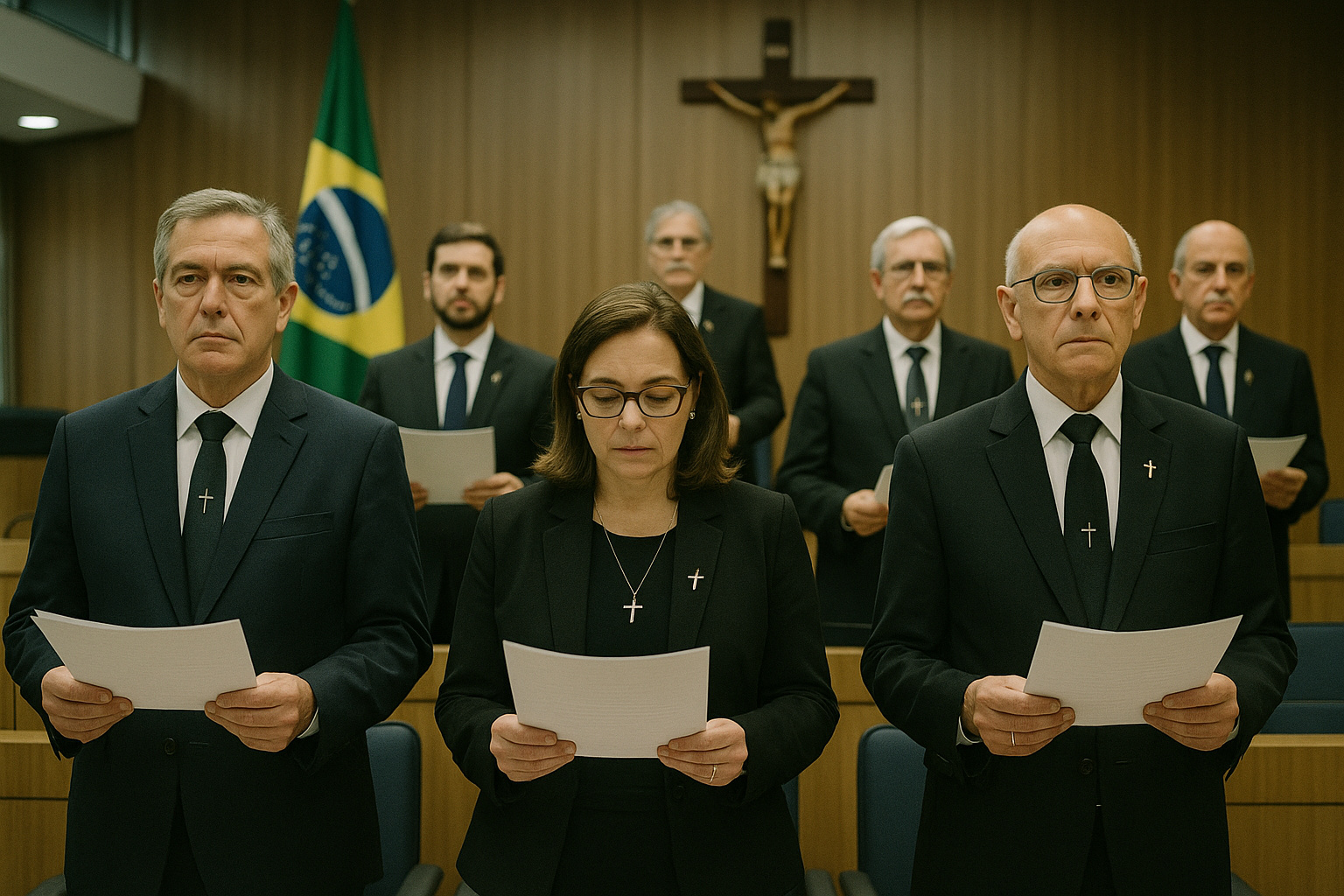


The Brazilian Union of Catholic Jurists Claims That the Project Led by Rodrigo Pacheco Imposes Profound Changes Without Public Debate and Threatens to Widen the Social Divide in the Country by Altering Historical Concepts of Family Law
The Brazilian Union of Catholic Jurists (Ubrajuc) published a public manifesto this Wednesday (15) calling for inclusion in the debate on the new Civil Code. The organization states that the proposed reform, conducted in the Senate under the leadership of Rodrigo Pacheco (PSD-MG), is being handled in an imposing manner, with no room for broad discussion with society.
According to the document, if dialogue is not ensured, Catholic organizations “declare their commitment to promoting, by all legitimate and peaceful means, a broad campaign for the shelving of the Civil Code Reform Project.” The tone of the manifesto reflects the growing dissatisfaction of religious entities in light of the structural changes proposed in the text.
Pacheco’s Project Proposes Profound Changes in Family Law
The Bill No. 4/2025, presented by Senator Rodrigo Pacheco, aims to update the rules governing Civil Law in Brazil, which is currently governed by the 2002 version. However, religious and conservative groups argue that the text brings radical changes, especially on issues related to family, marriage, and divorce.
-
The noise law will no longer be in effect at 10 PM starting in June with a new rule valid during the 2026 World Cup.

-
The Chamber opens a debate on driver’s licenses at 16 years old as part of a reform that includes around 270 proposals to change the Brazilian Traffic Code and may redesign rules for licensing, enforcement, and circulation in the country.

-
The new Civil Code could revolutionize marriages in Brazil with “express divorce” and changes that could exclude spouses from inheritance.

-
Banco do Brasil sues famous influencer for million-dollar debt and intensifies debate on delinquency, risks of seizure, and direct impact on Gkay’s credibility.


Among the main changes is the introduction of unilateral divorce, allowing one spouse to end the marriage regardless of the other’s consent. Additionally, the project proposes the end of mandatory separation of assets, a rule currently applied to marriages in which one partner is over 70 years old.
Another notable aspect is the legal recognition of parental family, a concept that encompasses both blood ties and socio-affective and affinity bonds. For its proponents, the measure reflects the plurality of modern family relationships; for critics, it represents a break with the traditional foundations of the Brazilian family institution.
“Changes Without Debate Deepen the Social Divide,” Says Ubrajuc
In a statement, Ubrajuc asserts that “such a radical change to our main legal document cannot be made without a truly democratic debate.” The group warns that the country is experiencing a moment of intense polarization, and that passing a new Civil Code without hearing all parties “does not help pacify Brazil – on the contrary, it deepens the social rift.”
The organization asks the Senate to hold public hearings with representatives from different segments of society, including religious groups, before proceeding with the text. According to Ubrajuc, the exclusion of debate generates legal insecurity and risk of loss of legitimacy for the new code.
What Changes in the New Civil Code and Why Is There So Much Controversy
The discussions about the new Brazilian Civil Code focus particularly on the changes involving the legal concept of marriage. The text replaces the term “man and woman” with “two people”, explicitly recognizing same-sex marriage. This point has been one of the most sensitive in the debate, as religious groups point to it as an attempt to redefine the traditional structure of the family.
Another contentious point is the redefinition of parents’ responsibilities. The proposal establishes a “collaborative” responsibility between both, determining even the duty to supervise children’s access to the internet and electronic devices. Supporters of the project argue that these measures aim to update Civil Law to contemporary realities, but critics contend that the text was drafted without consulting experts from various fields.
According to a report from Gazeta do Povo, Ubrajuc’s criticisms reflect a larger movement within the legal and religious community, demanding transparency and social participation in the formulation of laws that directly impact Brazilian families’ lives. The organization emphasizes that it is not opposed to modernization, but rather to the lack of dialogue and the speed at which the project is advancing in the Senate.
Project Under Review in the Senate
Currently, Bill No. 4/2025 is under review by a specific thematic committee, responsible for examining the proposed provisions. Nevertheless, reports of obstacles to civil entities’ participation have been recurrent. For Ubrajuc, the process needs urgent reevaluation, risking the legitimacy of one of the country’s most important laws.
The institution’s statement concludes by reaffirming its commitment to the Democratic Rule of Law and peaceful dialogue but maintains the alert for national mobilization if the doors to debate remain closed. “We are ready to defend, in a legitimate and peaceful manner, the principles that sustain Family Law and Brazilian society,” the document concludes.
In seeking to update Civil Law for modern times, Congress risks ignoring essential voices in the debate — but to what extent is it possible to advance on sensitive issues without hearing the society that will be directly impacted by them?
The team at the CPG portal thanks all readers for their contributions sent in. The feedback was so impactful that we selected three comments to compose this new article. The debate is always welcome and enriches the construction of plural, well-founded journalism open to dialogue.









A equipe do portal CPG agradece a todos os leitores pelas contribuições enviadas. A repercussão foi tão expressiva que selecionamos três comentários para compor esta nova matéria. O debate é sempre bem-vindo e enriquece a construção de um jornalismo plural, fundamentado e aberto ao diálogo. Clique no link abaixo.
https://en.clickpetroleoegas.com.br/advogados-lancam-ofensiva-em-defesa-de-juristas-catolicos-e-acusam-reforma-do-codigo-civil-de-romper-valores-cristaos-ampliar-poder-de-juizes-e-ameacar-a-protecao-a-familia-a-propr-fpsv/
JUSTIFICATIVA TÉCNICA
Sugestao: JUSTIFICATIVA TECNICA.
A presente proposta tem por finalidade reafirmar a importância da manutenção do cônjuge ou companheiro no rol de herdeiros necessários, evitando distorções que possam fragilizar a proteção jurídica da entidade familiar. A família, como núcleo de afeto, cooperação e solidariedade, não pode ser reduzida a um vínculo meramente biológico para fins sucessórios.
A experiência de vida de cada indivíduo, refletida no patrimônio constituído ao longo dos anos, resulta de esforço pessoal, trabalho contínuo e lutas individuais e coletivas no âmbito familiar. Embora os conhecimentos adquiridos não possam ser transferidos materialmente, o patrimônio representa o legado concreto decorrente dessa trajetória, devendo ser preservado e transmitido de forma justa e equilibrada.
É necessário reconhecer que a construção patrimonial durante a vida conjugal decorre, em maior ou menor grau, do esforço comum. Suprimir totalmente o direito sucessório do cônjuge significaria ignorar a participação afetiva, moral e muitas vezes econômica que sustentou o casal durante a convivência, afrontando princípios fundamentais como a dignidade da pessoa humana, a solidariedade e a comunhão plena de vida.
Contudo, a proteção patrimonial também deve abranger situações em que um dos parceiros ingressa em união estável ou casamento já possuindo bens próprios. A fim de evitar fraudes, abusos ou uniões estabelecidas com finalidade exclusivamente patrimonial, propõe-se que tais bens pré-existentes não se comuniquem. A sucessão somente deveria incidir quando demonstrada convivência efetiva por período mínimo de 10 (dez) anos, especialmente nos casos em que um dos cônjuges possua 70 (setenta) anos ou mais, considerando-se a data do registro notarial como marco inicial.
Mesmo após preenchido o período mínimo, a sucessão do cônjuge sobrevivente deve limitar-se a, no máximo, 50% (cinquenta por cento) do patrimônio adquirido durante a convivência, assegurando-se que a parcela restante seja destinada aos filhos, preservando sua linha sucessória direta.
A medida equilibra o reconhecimento do esforço comum do casal com a proteção da herança devida aos descendentes, assegura segurança jurídica, fortalece a instituição familiar e impede distorções sucessórias decorrentes de uniões constituídas sem comunhão real de vida.
Diante do exposto, a presente justificativa sustenta a necessidade de aperfeiçoamento legislativo que mantenha o cônjuge como herdeiro necessário, mas com regras que preservem o patrimônio pré-existente e estabeleçam limites proporcionais ao patrimônio adquirido na convivência.
Bacharel em Direito – Pós-Graduação Lato Sensu
Dr. Mizael R. C. Larocca
Universidade Uniandrade
Turma 2002/2007
Você já percebeu que nenhuma associação de juristas, sejam católicos, neopentecostais e demais milhares de religiosos, não se acusam ou fazem o mesmo quando o assunto é a retirada de direitos dos trabalhadores, por exemplo?
Isso acontece pois o “deus” deles, escreveu claramente no “livro sagrado” que o escravo deve ter obediência cega ao seu senhor e proprietário, dentre outros absurdos.
Pensem nisso!
A igreja sempre atrapalhando o desenvolvimebto