





 Portuguese
  English
  Spanish
  5 min of reading
  1 comment


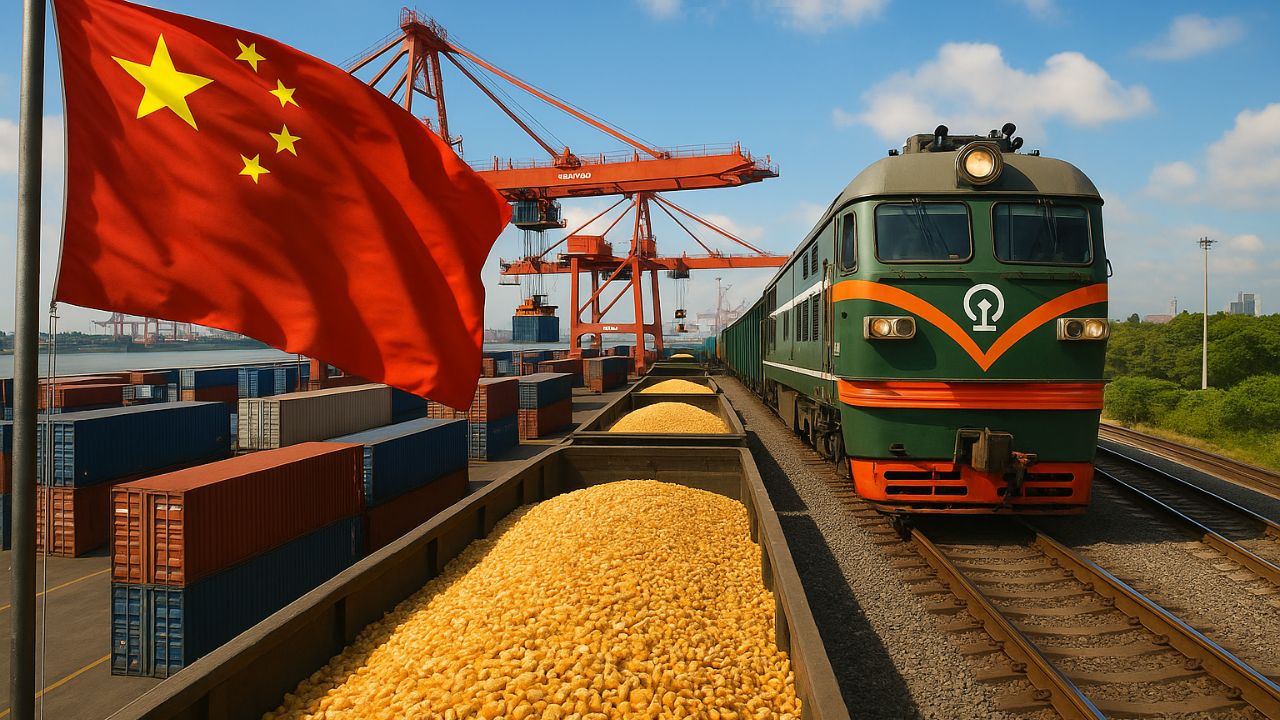


Chinese State-Owned Companies Like COFCO, CM Ports, CRRC, State Grid, and CTG Consolidate Billion-Dollar Investments in Ports, Trains, Energy, and Agricultural Exports Across the Country
The billion-dollar investments from China in Brazil are already directly visible in soybeans, ports, energy, and even passenger trains. Chinese state-owned companies take over strategic operations, acquire significant stakes, and expand logistical capabilities in assets that are central to the flow of grains, oil, and transportation of people.
At the same time, large Chinese groups are starting to control important parts of the Brazilian agricultural export chain, from the origin in the fields to shipping on ships, as well as participating in mobility and energy generation and transmission projects.
This movement reshapes national infrastructure and reinforces China’s role as Brazil’s economic partner.
-
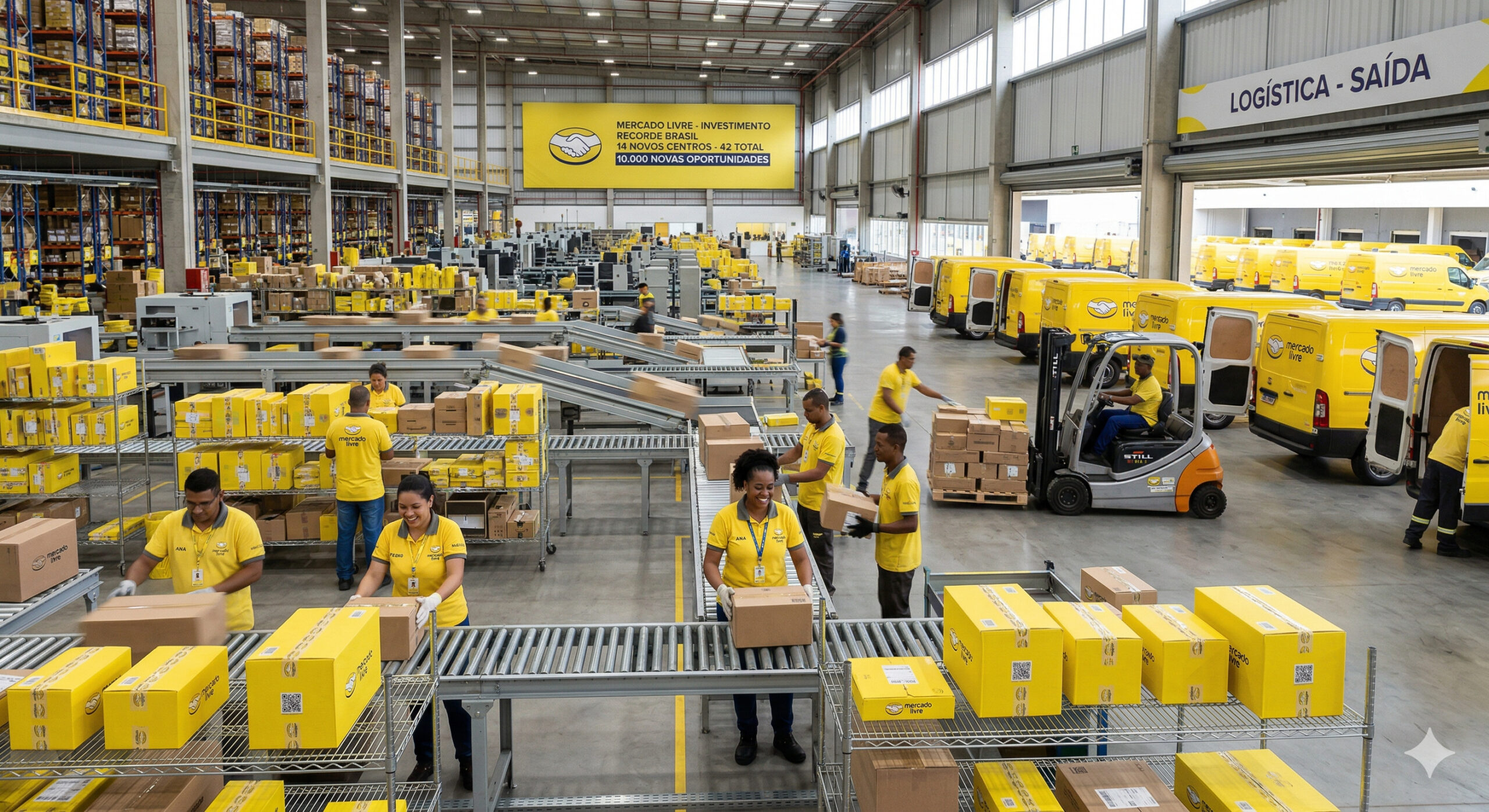
Mercado Livre “opens the vault” and announces a record investment of R$ 57 billion in Brazil in 2026, a value 50% higher than the previous year, with an expansion plan that includes 14 new logistics centers, totaling 42 units in the country and hiring an additional 10,000 employees.
-
How investment in technology can revolutionize the national economy and enhance industrial gains, according to a study that highlights the direct impact on productivity, innovation, and wealth retention within Brazil.
-
The largest food company on the planet, JBS, has just opened a 4,000 square meter laboratory in Florianópolis to develop customized proteins that modulate muscle mass gain, immune response, and metabolic performance.

-
After nearly 30 bids and competition among industry giants, a Spanish company purchases one of the largest airports in Brazil for almost R$ 3 billion and takes over the management of Galeão in a concession that will last until 2039.


Agricultural Exports and the Advancement of COFCO in Santos
One of the clearest examples of this presence is COFCO, a Chinese state-owned company that operates as a major grain trader in the country. The company buys soybeans, corn, and sugar in Brazil and sells to various destinations, including China itself, operating port terminals and logistical structures throughout the chain.
At the port of Santos, COFCO was already operating two terminals and leasing facilities from other companies. In March, it partially inaugurated a third terminal, the TEC, also known as STS11, which is expected to enter full operation next year.
With the new terminal, the company’s capacity in Santos jumps from 4 million to 14 million tons per year, making it the largest COFCO terminal outside of China.
This does not necessarily mean exporting 10 million tons more, as part of the cargo currently goes through terminals of other companies and can be redirected to STS11.
In practice, this movement reduces export costs for COFCO and reinforces the role of billion-dollar investments from China in the Brazilian port structure linked to agribusiness.
Strategic Ports and the Offensive by CM Ports

Another chapter in this advancement is in the container area. About 11 percent of the 14 million containers moved in Brazil go through TCP, the container terminal in Paranaguá, Paraná. Since 2018, TCP has been part of the portfolio of CM Ports, a Chinese state-owned company that is one of the largest container operators in the world.
CM Ports is already ranked among the leading terminal operators in the country and recently signed an agreement with the Brazilian government to invest a significant amount in expanding the terminal in Paranaguá.
This package of billion-dollar investments expands container handling capacity and strengthens the company’s position in Brazilian foreign trade logistics.
CM Ports’ interest is not limited to containers. At the Port of Açu in Rio de Janeiro, which currently has 11 terminals and accounts for about 30 percent of Brazilian oil exports, the Chinese state-owned company signed an agreement in February 2025 to acquire 70 percent of the oil terminal, while the remaining 30 percent stays with the current controlling group.
The deal still depends on regulatory approval, but if completed, the company will control a significant portion of the logistics of Brazilian oil exports, reinforcing the strategic nature of these investments.
Passenger Trains and Projects by CRRC
The billion-dollar investments from China also reach passenger transportation. In 2024, the government of São Paulo auctioned the concession for the intercity train, a project that aims to create a modern rail link between São Paulo and Campinas.
The winning consortium was divided between the Comporte Group, owned by the Constantino family, with 60 percent, and the Chinese state-owned company CRRC, with 40 percent.
The forecast is that the intercity train will require about 14 billion reais in investments throughout the project, with part of this amount coming directly from the Chinese stake.
CRRC will be responsible for part of the implementation of the system and for manufacturing the trains that will operate on the route, consolidating its presence in the Brazilian passenger rail transport market.
In addition, CRRC won a bid in 2025 to supply 44 trains to the São Paulo metro, in a contract worth 3.1 billion reais, with assembly planned in Araraquara, in the interior of the state.
These contracts reveal how the accumulated experience in port, railway, and metro projects in China is exported to countries with infrastructure deficits, such as Brazil.
Energy, Oil, and an Interconnected System
The Chinese presence is also strong in the electric sector. State Grid, a Chinese government company, controls CPFL, which is responsible for a significant share of energy distribution in Brazil. Meanwhile, CTG, or China Three Gorges, is responsible for part of electric power generation in the country.
These companies, in turn, purchase equipment such as solar panels from the Chinese industry, which concentrates a large portion of global production.
In practice, billion-dollar investments in energy create a circuit in which Chinese companies finance, build, and operate assets, supplied by technology and components also produced in China.
In oil, part of the volume arriving at the Port of Açu, the target of CM Ports, comes from operations by Chinese oil companies like CNPC and Sinopec in Brazilian waters.
This arrangement reinforces the logic of an interconnected system, where different state-owned companies complement each other at various stages of the chain, from the field to export.
A New Design for Brazilian Infrastructure
According to infrastructure experts consulted in the discussion of the topic, China’s economic growth has been strongly anchored in large port, railway, and metro projects, forming an ecosystem of companies with high technical capacity and access to financing.
The expansion into countries with infrastructure deficits, such as Brazil, is seen as a natural development of this strategy.
In Brazil, the result is a set of billion-dollar investments in grain and container ports, oil terminals, passenger train lines, distribution networks, and power generation.
In many cases, it is a model in which one Chinese company feeds another, multiplying the revenue of the same controller, which is the Chinese state.
The difference is that now this arrangement occurs on Brazilian soil, with a direct impact on commodity exports, internal logistics, and the energy matrix. The way the country regulates, monitors, and negotiates these investments will influence the balance between infrastructure gains and external dependence.
In your opinion, does the growing presence of China in these billion-dollar investments represent more opportunity or more risk for the future of Brazilian infrastructure?







Que legal. Fico muito feliz em ver que a parceria dos dois países que mais amo está cada vez melhor. Deixo aqui o convite para o meu projeto social de curso de mandarim gratuito, do zero ao avançado. É só buscar Xiao Mandarim que encontra.