





 Portuguese
  English
  Spanish
  4 min of reading
  0 comments


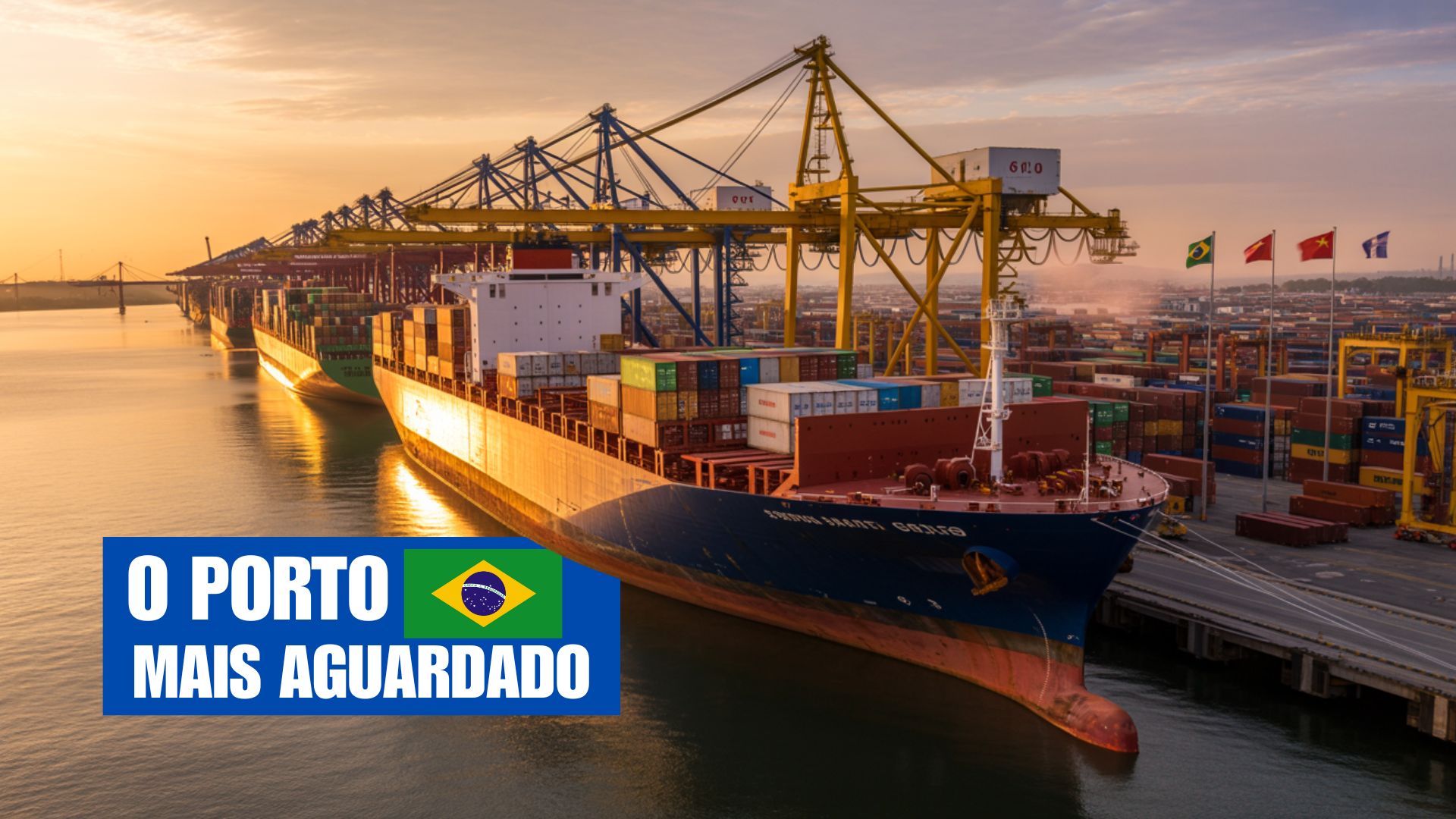
A Billion-Dollar Investment from China in the Port of Santos Promises to Change the Global Agribusiness Route, Expanding the Presence of State-Owned COFCO in Brazil and Rekindling Trade Disputes Among Chinese, Brazilians, and Americans.
China puts more than R$ 1 billion on the table for the construction of a terminal in Brazil and puts the U.S. on alert with a direct threat to its agricultural dominance, says Construction Time channel.
The new bulk terminal being built by the Chinese state-owned COFCO International at the Port of Santos (SP) entered operational phase in 2025 and is expected to progressively ramp up until 2026.
The company’s own capacity in Brazil is expected to increase from around 3 million to up to 14 million tons per year, according to the ramp-up plan released by the company.
-
Lula responds directly to Trump and says that Pix is from Brazil and will not change under pressure from anyone, after a report from the United States pointed out the Brazilian payment system as an American trade barrier.

-
Amazon has just announced a new fee on all deliveries, and your online purchases will become more expensive starting April 17, including for those buying from the United States here in Brazil.

-
He sold his share for R$ 4 thousand, saw the company become a giant worth R$ 19 trillion, and missed the opportunity of a lifetime.

-
Elon Musk’s Starship megafrocket puts $8 billion at risk, raises alarms in the market, and could affect technology, mining, and space internet startups in the coming years.


According to a report published by Construction Time, the initiative is part of the Chinese strategy to expand agricultural supply routes with dedicated assets outside Asia.
The channel attributes a central role to the project in diversifying logistics for grains, focusing on soy and corn shipped from the São Paulo coast.
Expansion at the Largest Port in Latin America
Located on the coast of São Paulo, the Port of Santos closed 2024 with 179.8 million tons handled, a historic record for the port authority.
In 2025, the complex maintained a high pace, sustained by large harvests and by strengthening the supply of berths and storage for solid bulk commodities.
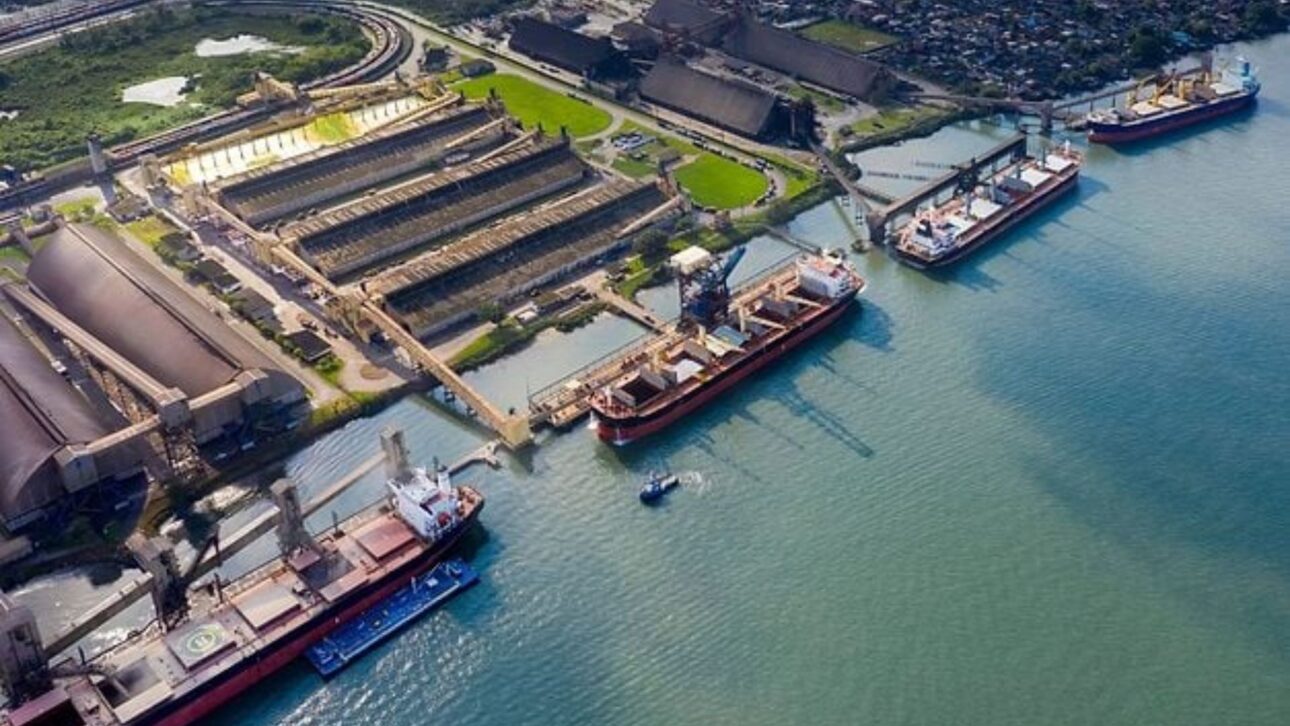
Still according to Construction Time, the development of the terminal occurs in a context of high utilization of existing infrastructure and a search for gains in efficiency in the flow from the Midwest.
Experts consulted by the port sector point out that new capacities in Santos are likely to reduce queues during peak windows and provide shipping predictability.
Structure of the COFCO Terminal in Santos
The project corresponds to STS-11, one of the largest terminals for solid bulk commodities at the port.
Public documents indicate a projected annual capacity of around 14.3 million tons, static storage close to 490 thousand tons, and two berths with road-rail integration.
Construction began in 2023, with phased operation starting in 2025 and full capacity estimated for 2026.
To feed the terminal, COFCO acquired 979 wagons and 23 locomotives and established an operational structure with Rumo, enhancing the rail flow between production hubs in the Midwest and the Baixada Santista.
According to the company, this package adds up to 4 million tons per year of transport capacity dedicated to STS-11.
Why Santos is Strategic
Santos concentrates retroareas and connections to the rail and road networks linking Mato Grosso, Goiás, and Paraná, states with strong production of soy and corn.
Experts in port logistics assert that the location and scale of the complex act as a buffer against seasonal bottlenecks by distributing volumes among different terminals and increasing the loading throughput of ships.
The Construction Time channel also pointed out that, with large assets and dedicated berths, operators can reduce average docking times and standardize operating windows, which tends to decrease logistical costs per ton during periods of higher harvest pressure.
Impact on Agribusiness Geopolitics
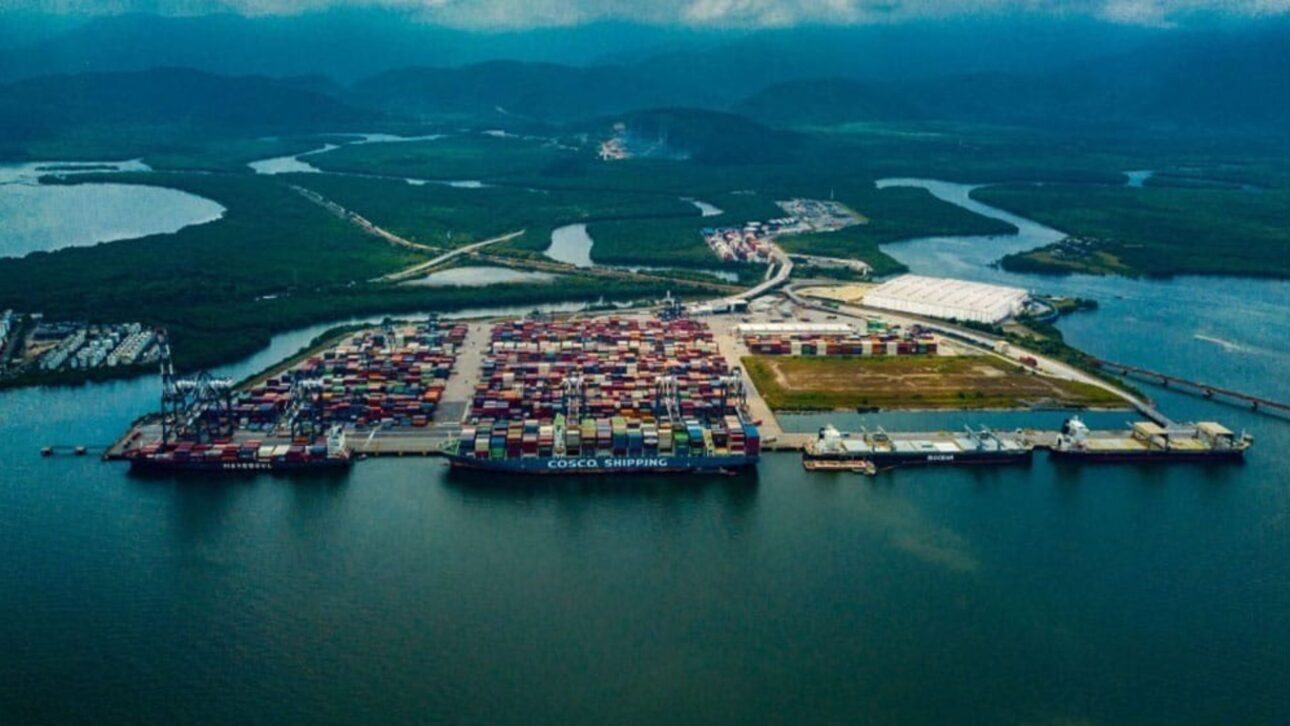
Since 2018, when the trade dispute between China and the United States intensified, foreign trade analysts have recorded greater diversification of sources by Chinese importers.
In line with this trend, the Santos terminal is presented by industry sources as an element of supply security, as it reduces exposure to longer alternative routes and to operators without rail integration in the interior of Brazil.
According to Construction Time, the expansion of infrastructure under the management of a Chinese state-owned company in Brazilian territory is being monitored by U.S. agribusiness agents, who are watching for potential effects on U.S. participation in sales to Asia.
The current assessment among consulting firms is that new terminals strengthen Brazilian competitiveness when exchange rates, port premiums, and harvest conditions are favorable.
Numbers of Brazilian Agribusiness
Brazil exported over 100 million tons of soybeans in 2023, according to data consolidated by official agencies and sector entities.
In 2024, there was a slight decline, but 2025 is expected to resume growth and is projected to exceed 100 million tons again annually, depending on the confirmation of the pace in the fourth quarter.
China remains the main destination, according to foreign trade statistical series.
Investment and Financing
The amounts associated with the terminal vary depending on the methodological approach.
COFCO disclosed R$ 1.64 billion for the port asset and about R$ 1.2 billion in the related rail package, including rolling stock.
In sector communications, the port scope also appears translated as US$ 285 million, a difference explained by exchange rates and stages of work considered in each publication.
Despite different methodologies, the figures converge to a billion-dollar investment in export infrastructure.
Operation and Environmental Criteria
Technical materials from the project and the port authority mention high-throughput loaders, enclosed conveyors, mitigation of particulates and noise, and rainwater utilization.
According to port engineering specialists, these solutions align with ESG practices adopted in large bulk terminals, focusing on environmental control and operational efficiency.








Seja o primeiro a reagir!