





 Portuguese
  English
  Spanish
  7 min of reading
  0 comments


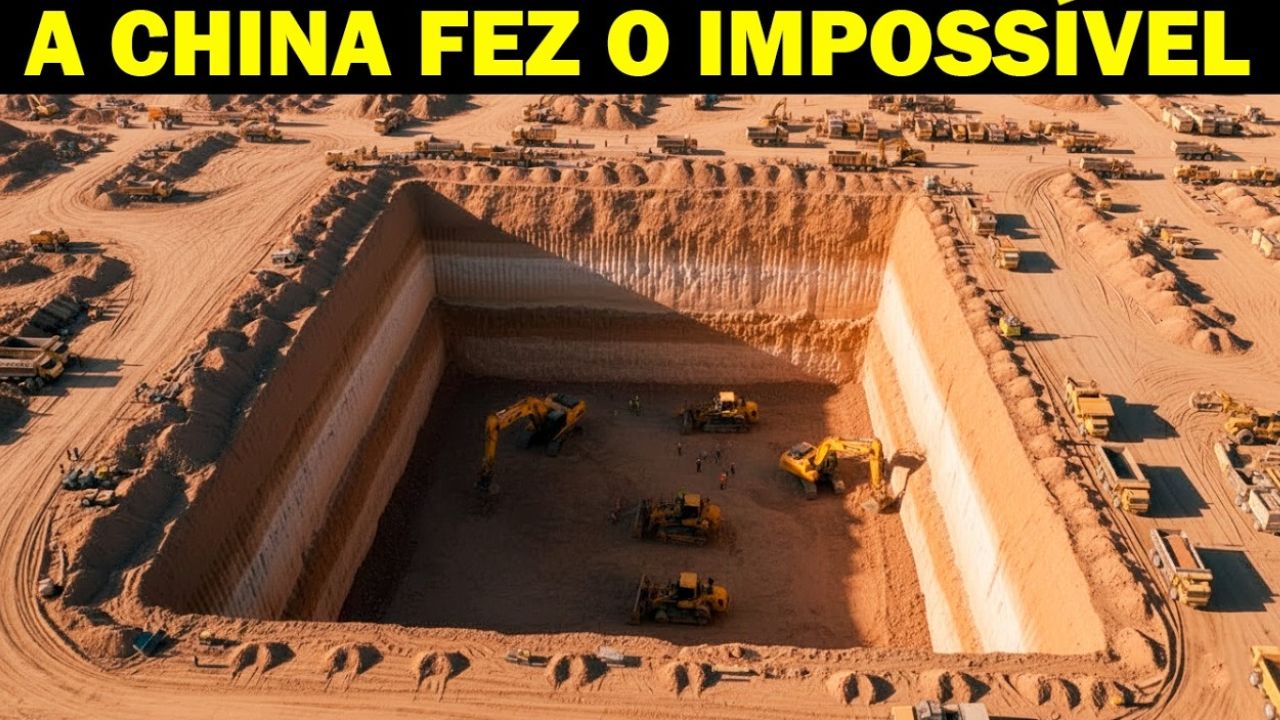
By Combining Clean Energy, Green Wall, and Large-Scale Solar Farm, China Transforms Taklamakan Desert into a Living Laboratory Against Desertification.
Imagine the scene: sand as far as the eye can see, nearly 50 ºC, no shade, no drop of water, and suddenly, thousands of mirrors and panels shining like a second sun, allowing China to transform the desert into a source of energy, forest, and climate experiment at the same time. What seemed like a sea of death is turning into a radical testing ground on how to tackle the advance of deserts on a warming planet.
In the heart of Taklamakan, China transforms the desert into a technological showcase, but also into a warning. Behind the green wall of thousands of kilometers, the solar farm that pumps water without burning fossil fuels, and the highway that cuts through previously impassable dunes, lies a disturbing secret that could jeopardize everything: when you force nature to change too quickly, it eventually demands a price.
The Origin of the “Sea of Death”

Long before China transformed the desert into an engineering laboratory, Taklamakan was already a nearly perfect geographical trap. Two giant mountain ranges, Tian Shan to the north and Kunlun to the south, block moisture coming from the Indian Ocean and cold air masses from Siberia. The result: hundreds of thousands of square kilometers of extreme sand, a place where it rains so little that each square meter receives the equivalent of a small bottle of water per week.
-
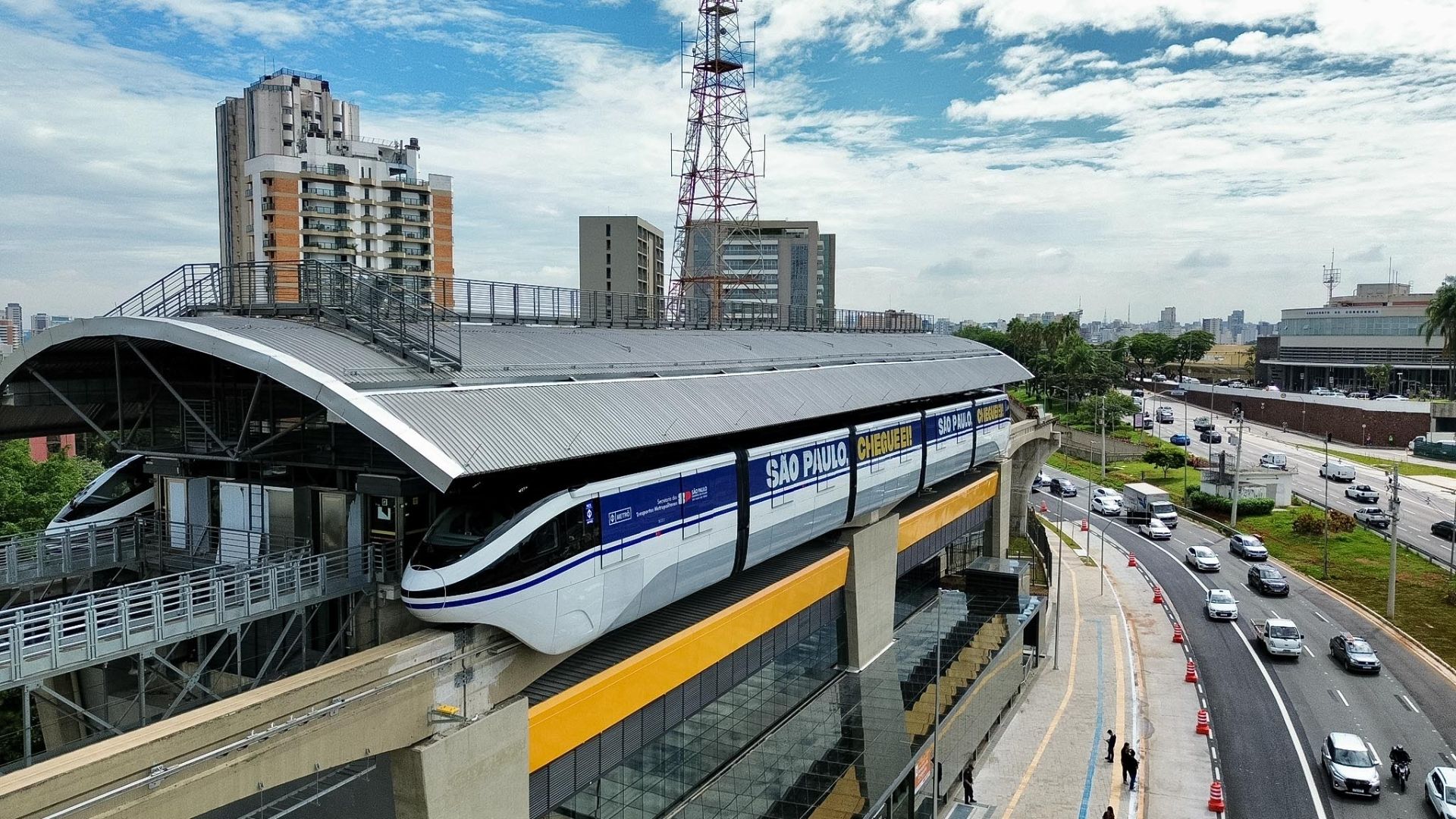
Congonhas receives the monorail promised for the 2014 World Cup after more than a decade of delays and becomes the first airport in Brazil with integrated subway.
-
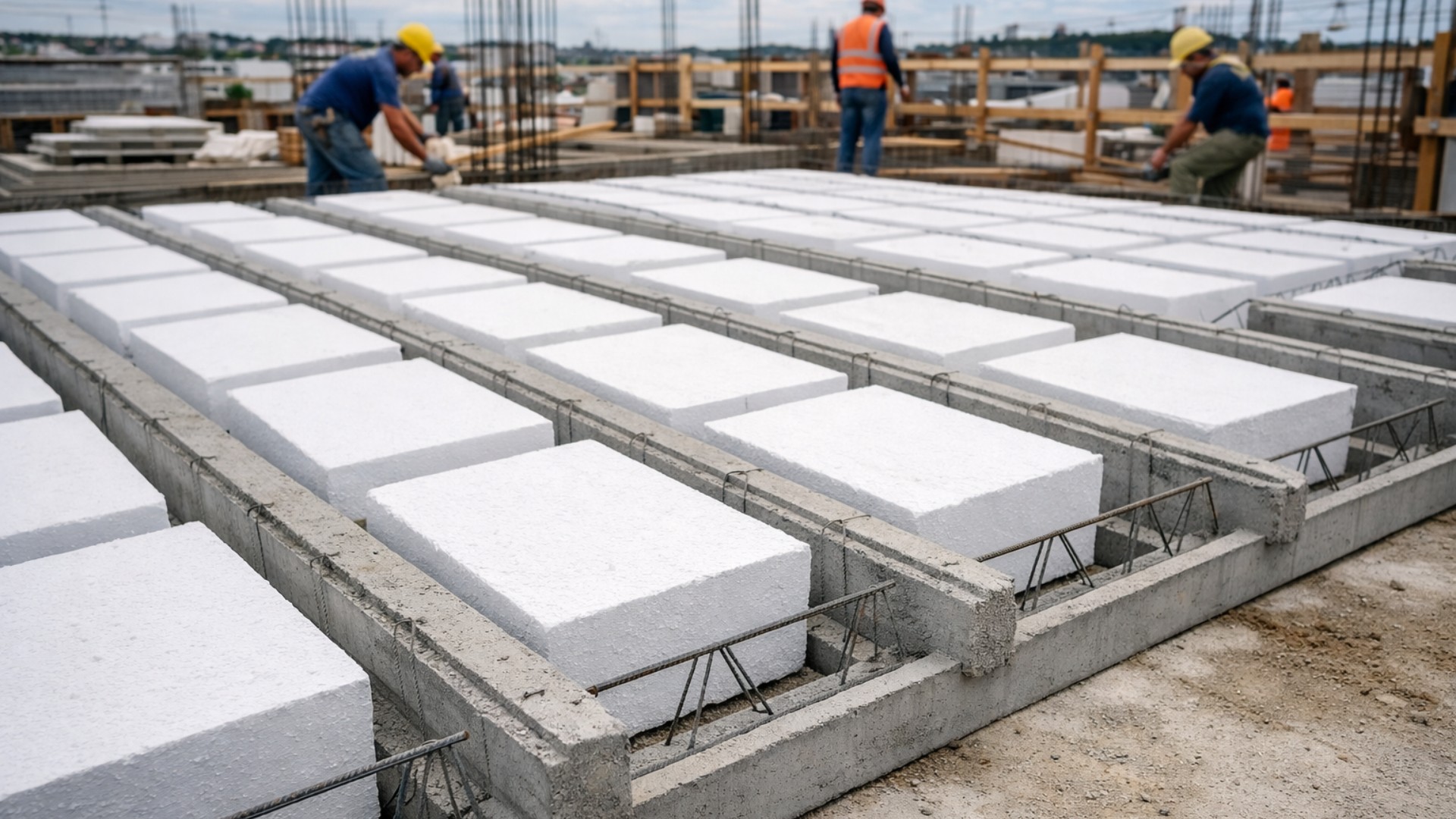
Goodbye, concrete: a new trend in civil construction reduces the weight of the structure by up to 30%, accelerates projects by up to 40%, cuts costs on steel and labor, and improves thermal insulation with EPS.
-
Russian engineers create an innovative propeller blade for aircraft that could completely change the way airplanes and helicopters operate.

-
Couple finishes building PVC chalet on the beach on the last day, with air conditioning and curtains, but discovers the bathroom drain is inverted: water escapes from the drain, risking breaking the floor, and the rush continues before the trip.


In summer, temperatures reach nearly 50 ºC. In winter, the desert freezes below -20 ºC. Sandstorms arise without warning, swallowing entire villages. For decades, Taklamakan advanced like a silent predator, devouring farms, suffocating rivers, and driving entire communities away.
In the 1990s, Beijing experienced more than 80 days a year under dust clouds blown thousands of kilometers away. The feeling was clear: China was being devoured from the inside out by the desert itself.
The Green Wall That Tries to Hold Back the Sand
It was in this scenario that, in 1978, an idea that seemed crazy emerged: if the desert advances, why not build a living barrier? The proposal was to allow China to transform the desert into a green frontier, with a continuous strip of trees across the north of the country.
Thus was born the project known as the Great Green Wall, a protective belt of thousands of kilometers, designed to be built over more than seven decades, with completion expected by 2050.
But how to plant trees in a place where it hardly rains, the wind shifts the dunes every week, and the scorching heat puts even workers at risk?
The answer started with something incredibly simple: common farm straw, used as cutting-edge technology. Millions of bundles were transported by trucks to the heart of Taklamakan. On the ground, engineers and teams drew a giant chessboard, with squares of several meters per side, filled with straw in perfect geometric patterns.
This grid reduces wind speed, stabilizes the dunes, and creates microclimates where the morning moisture lasts a little longer. In the center of each square, a seedling is planted.
Over time, the straw decomposes, becomes fertilizer, and helps roots reach deeper soil layers. What was just sand begins to gain patches of green.
When China Transforms the Desert into a Solar Farm

But there was a huge problem in this equation. Trees need water, and pumping water from underground usually requires fossil fuels. This means more CO₂ and, ironically, more global warming and more desertification.
China transforms the desert, but could, unintentionally, worsen the crisis it tried to resolve. The key was to look up. Taklamakan is among the sunniest regions on the planet, with thousands of hours of strong sunlight per year simply baking the sand.
The solution was to use the desert itself against itself. Along the Tarim Desert Highway, which cuts through Taklamakan, dozens of solar-powered pumping stations were installed.
Hundreds of photovoltaic panels generate electricity to pump water from great depths and irrigate trees through subsurface drip irrigation. The sun moves the water, the water creates life, and life holds the sand in place. Moreover, the panels are installed above ground, creating enough shade for plants to grow beneath them.
The shade reduces soil temperature, retains moisture, and allows resilient species to sprout under this artificial “roof.” The desert literally turns into a solar farm that harvests electricity and vegetation at the same time.
And it doesn’t stop there. In some areas, China transforms the desert into a stage for concentrating solar plants, with thousands of heliostats that follow the sun during the day and direct light to a central tower.
Inside, a fluid like molten salt is heated to extremely high temperatures, generating steam, moving turbines, and producing tens of megawatts of electricity. The trick lies in the ability to store heat, which allows the plant to continue generating energy even at night or on cloudy days.
What was once a scorching void becomes a giant solar battery, powering forests, water pumps, and entire cities.
Roads, Tourism, and the Numbers Behind the “Miracle”
None of this would work if it were impossible to reach the middle of nowhere. That’s why China also transforms the desert with heavy infrastructure. The Tarim Desert Highway, extending hundreds of kilometers, is one such symbol.
It cuts through Taklamakan, connecting oasis cities, traversing mobile dunes, extreme heat, and sandstorms. Beneath the asphalt, layers of gravel, straw, and special materials were placed to prevent the road from being swallowed.
Over time, this highway has ceased to be just a technical corridor and has begun to connect solar farms, research bases, and even ecotourism resorts at the desert’s edges.
Regions that were once synonymous with death now welcome tourists for dune treks, camel rides, and immersion in local cultures. Meanwhile, decades of planting and management have begun to show up in the statistics.
Millions of hectares have been recovered, China’s forest cover has risen significantly, and the number of sandstorms has decreased in several regions, along with the number of days with dust-laden skies.
What was seen as inevitable, the continuous advance of sand, has begun to show signs of retreat in various areas.
The Disturbing Secret Behind the Perfect Forest

However, not all green is synonymous with healthy life. This is where the disturbing side of the miracle appears. To gain scale and quick results, much of the planting has focused on a few species of trees, such as poplars and willows, that grow fast and impress in aerial images.
This strategy helped show that China transforms the desert into patches of forest visible from space, but it brought a serious problem: monoculture in an extremely fragile environment.
These trees consume a lot of water and have a relatively short lifespan. In some outbreaks of pests and diseases, enormous planted areas were lost at once, erasing years of work.
In certain places, desertification continued to expand even with reports indicating an increase in forested area. The reason is simple and frightening: planting the wrong trees, with insufficient rain and heavy irrigation, can further drain the aquifer.
Instead of restoring ecosystems, you create “paper forests,” beautiful in statistics but fragile in reality. Many experts argue that China needs to stop counting trees and start restoring complete ecosystems, with mixtures of native species, grasses, shrubs, and management closer to what nature would do on its own.
Miracle, Mistake, or Laboratory of the Future?
Ultimately, the story of how China transforms the Taklamakan desert is both things at once: a miracle and a warning.
It is proof that humans can redesign the landscape when they combine engineering, money, and political will on a large scale. The same region that was once the “sea of death” now hosts forests, solar plants, and roads that serve as a showcase for the world.
But it is also a reminder that there are no shortcuts when it comes to nature. If the strategy ignores the logic of the ecosystem and focuses only on numbers that are easy to show, the risk is to swap one problem for another.
The most important lesson may be this: to combat desertification and the climate crisis, it is not enough to conquer the desert by force; it is necessary to learn to work with it.
The future will depend less on how many panels, trees, or kilometers of road we build, and more on how well we understand the limits of the planet itself.
And you, after seeing how China transforms the desert, do you think this type of mega-experiment is the solution to the climate issue or a risk that could prove costly down the line?







-

Uma pessoa reagiu a isso.