





 Portuguese
  English
  Spanish
  3 min of reading
  0 comments


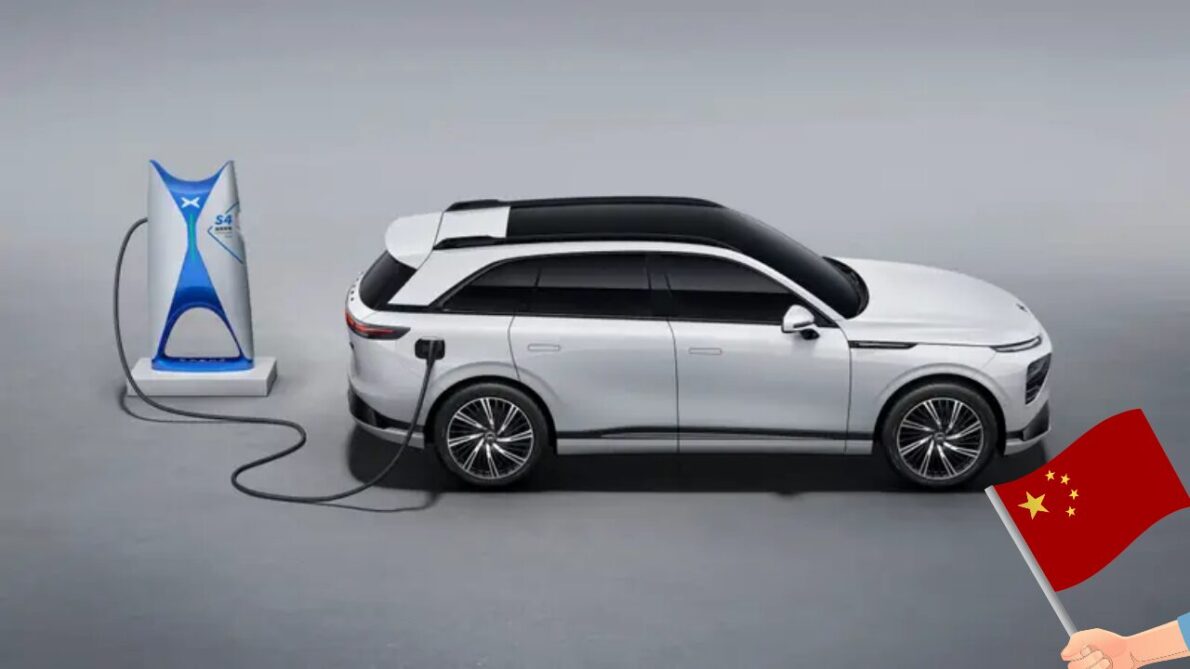
Xpeng Launches Ultra-Fast Charger S5 in China, Offering 200 Km of Range in Just Three Minutes and Expanding Charging Network.
Xpeng, one of the leading electric vehicle manufacturers in China, revealed its latest innovation in the charging sector: the Ultra-Fast Charger S5. This new generation promises to transform how electric vehicles (EVs) are charged, offering a range of 200 km with just three minutes of charging.
S5 Charger: Technology and Performance
The S5 charger from Xpeng is a significant advancement compared to its predecessor, the S4.
The new unit has a maximum power of over 800 kW, a considerable increase from the 480 kW provided by the previous model.
-
The car stored for 38 years: when opening the barn door, what appears is breathtaking and looks like a scene from a movie!

-
Fiat works miracles in the Brazilian market, lowers the price of its 0 km hatch to R$ 69,990, reestablishes the model as the cheapest car in the country, and reignites the battle against Kwid and C3.
-
Chevette with cooking gas: How the gas cylinder ends up being used in cars clandestinely and why this makeshift solution can result in leaks, explosions, damaged engines, and seized vehicles.

-
Fiat launches the new 2027 Toro hybrid with 48V, 176 hp, an electric motor of 15.5 hp, a 0.85 kWh battery, up to 7% fuel savings, 8% fewer emissions, and possible exemption from IPVA.

This additional power is accompanied by an output voltage of one thousand volts and a current of 800 amperes, allowing for much faster and more efficient charging.
The S5 uses a liquid cooling system, similar to the S4, helping to maintain the ideal temperature during the charging process and ensuring the safety and durability of the equipment.
The novelty is that, with the S5, it is possible to add more than 1 km of range in just one second of charging.
Thus, in less than three minutes, the car can have the necessary charge to travel 200 km, an impressive feat for current charging technology.
Expansion of the Charger Network
Since the launch of the S4 in 2022, Xpeng has been working to expand its network in China.
The initial goal was to install two thousand S4 chargers by the end of 2025. Currently, the company already has 1,300 charging points, of which one thousand are high-power. The arrival of the S5 has brought a significant update to these plans.
With the new product, Xpeng has increased its expansion targets. The company plans to have three thousand chargers installed by the end of this year and reach the milestone of ten thousand chargers by 2026.
Of these, 4,500 will be high-power and will feature the advanced liquid cooling system.
This expansion is an attempt to meet the growing demand for fast and efficient charging, especially in a rapidly expanding market.
Competition and Market Trends
The introduction of the S5 by Xpeng does not happen in a vacuum. Other electric vehicle manufacturers are also investing in their own solutions.
Companies like Nio, Mercedes, and Hyundai are developing similar technologies to reduce dependence on Tesla and improve charging infrastructure for EVs.
Nio, for example, is betting on a fast battery swapping system, which offers an alternative to traditional charging.
Mercedes and Hyundai, in turn, are starting their own ultra-fast charger projects to compete in the electric mobility market.
These efforts reflect a broader trend in the sector, where the search for new platforms and technologies aims to reduce costs and offer more competitive prices for consumers.
The Future of Electric Vehicle Charging Equipment
The arrival of the S5 is a significant milestone for Xpeng and the electric vehicle market in general.
With the ability to provide 200 km of range in just three minutes, the S5 could mean a significant change in how drivers use their EVs.
This innovation can facilitate the mass adoption of electric vehicles by reducing the time required to charge batteries, making EVs more convenient and appealing to the public.
Furthermore, the planned expansion of Xpeng’s charger network is a positive step for developing infrastructure in China and potentially in other markets.
With the continuous advancement of charging technologies and the growing competition in the sector, the future of electric vehicle chargers looks promising, with more options and greater efficiency for consumers.








Seja o primeiro a reagir!