





 Portuguese
  English
  Spanish
  4 min of reading
  0 comments


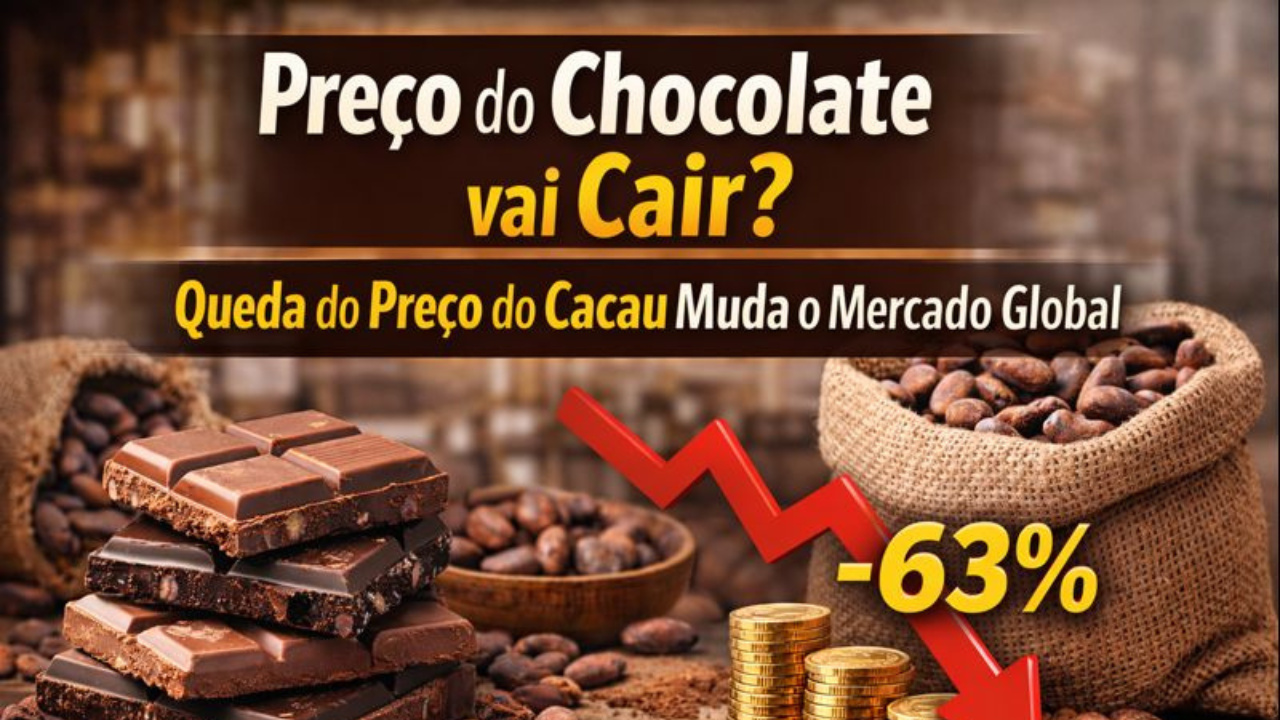
Cocoa Price Drop Excites The Market, But Experts Say Chocolate Prices May Take Months To Fall At Retail.
The strong drop in cocoa prices in the international market has reignited a recurring question among consumers: Will chocolate prices finally fall?
The movement occurs in 2025, with an accumulated decline of 63.1% in global commodity prices, traded mainly on the New York and London exchanges.
The reduction is significant, but according to experts, the impact on the consumer’s wallet is still expected to take time to appear on the shelves.
-
Lula responds directly to Trump and says that Pix is from Brazil and will not change under pressure from anyone, after a report from the United States pointed out the Brazilian payment system as an American trade barrier.

-
Amazon has just announced a new fee on all deliveries, and your online purchases will become more expensive starting April 17, including for those buying from the United States here in Brazil.

-
He sold his share for R$ 4 thousand, saw the company become a giant worth R$ 19 trillion, and missed the opportunity of a lifetime.

-
Elon Musk’s Starship megafrocket puts $8 billion at risk, raises alarms in the market, and could affect technology, mining, and space internet startups in the coming years.


According to analysts from the chocolate industry, the pass-through of the drop is not immediate. This is because the cocoa supply chain is long, involves stocks, old contracts, and different stages of processing.
Thus, although the global cocoa market is entering a new phase of lower prices, chocolate is expected to remain expensive in the short term.
Global Cocoa Market Enters A Turnaround Phase After Two Years Of Tension
After almost two seasons marked by scarcity and record prices, the global cocoa market is beginning to show signs of rebalancing.
Projections from the International Cocoa Organization (ICCO) indicate a surplus of 287,000 tons in the 2025/26 crop year and 267,000 tons in 2026/27.
This scenario contrasts sharply with 2023/24, when the historical deficit of around 400,000 tons led prices to exceed US$ 11,500 per ton.
Currently, prices hover around US$ 4,200, reflecting the combination of recovering supply and weaker industrial demand.
Despite this, the president of the Cocoa Processors Association (AIPC), Ana Paula Losi, warns that the adjustment is gradual.
“Companies have stocks and contracts signed at higher prices.
The price of beans has been falling, but this takes time to reach the final product,” she asserts.
Weaker Demand Weighs More Than Supply In The Drop In Cocoa Prices
While global almond production is recovering, the main factor behind the drop in cocoa prices is the retreat of demand.
In Europe, grinding has fallen by more than 8%. In Brazil, the reduction was even more intense, reaching 14%.
According to experts, the surge in prices between 2023 and 2024, when cocoa prices increased by 150% to 200%, was not fully passed on to retail.
As a consequence, the margins of the chocolate industry were compressed, which slowed purchases and reduced the consumption of raw materials.
West Africa Responds, But Climate Crisis Still Worries
On the supply side, West Africa is showing signs of recovery after two disappointing harvests. Ivory Coast and Ghana, responsible for about 60% of global production, are heading towards volumes closer to normality.
Estimates from the consultancy StoneX indicate that Ivory Coast could reach 1.85 million tons in 2025/26, while Ghana is expected to produce between 600,000 and 650,000 tons.
Nevertheless, the sector remains watchful of the risks posed by the climate crisis, which in recent years has severely affected African farms.
Phenomena like El Niño, irregular rains, dry spells, and the spread of diseases, such as the swollen shoot virus of cocoa, continue to threaten global production stability.
Chocolate Prices: Why The Drop Takes Time To Reach Consumers
Even with the decompression in the bean market, the price of chocolate is not expected to fall quickly.
The production chain involves producers, butter, liquor, and cocoa powder processors, confectionery industry, and retail. Historically, the pass-through takes six to eight months.
According to Bezzon, a sector specialist, when cocoa prices surged in 2024, this same timeframe was observed.
Therefore, any eventual “deflation of chocolate” depends on maintaining prices at lower levels for an extended period.
Less Cocoa In Recipes Has Become A Structural Change
Another relevant factor is that the chocolate industry has made structural adjustments during the crisis.
Major manufacturers have reduced the use of cocoa butter and increased the use of alternative fats, flavorings, and fillings, especially in popular products.
“This does not include premium chocolates, such as bars with 70% cocoa, which have defined percentages,” explains Ana Paula Losi.
According to Bezzon, these changes are here to stay, reducing direct dependence on beans.
Brazil Experiences Double Impact In Global Cocoa Market
Brazil has the installed capacity to grind 275,000 tons of cocoa but processed only about 190,000 tons in 2025, the worst result since the pandemic.
As the country imports beans and exports derivatives, it still suffers from weak demand and high costs.
With the drop in cocoa prices in the domestic market, the pressure on the industry is expected to decrease, but gradually.
Thus, although the global scenario is more favorable, Brazilian consumers will still need to be patient before they see chocolate effectively cheaper.
See more at: Will Chocolate Get Cheaper? Understand The Impact Of The Drop In Cocoa Prices and Falling Cocoa Prices: Understand Why Chocolate Is Getting More Expensive








Seja o primeiro a reagir!