





 Portuguese
  English
  Spanish
  6 min of reading
  0 comments


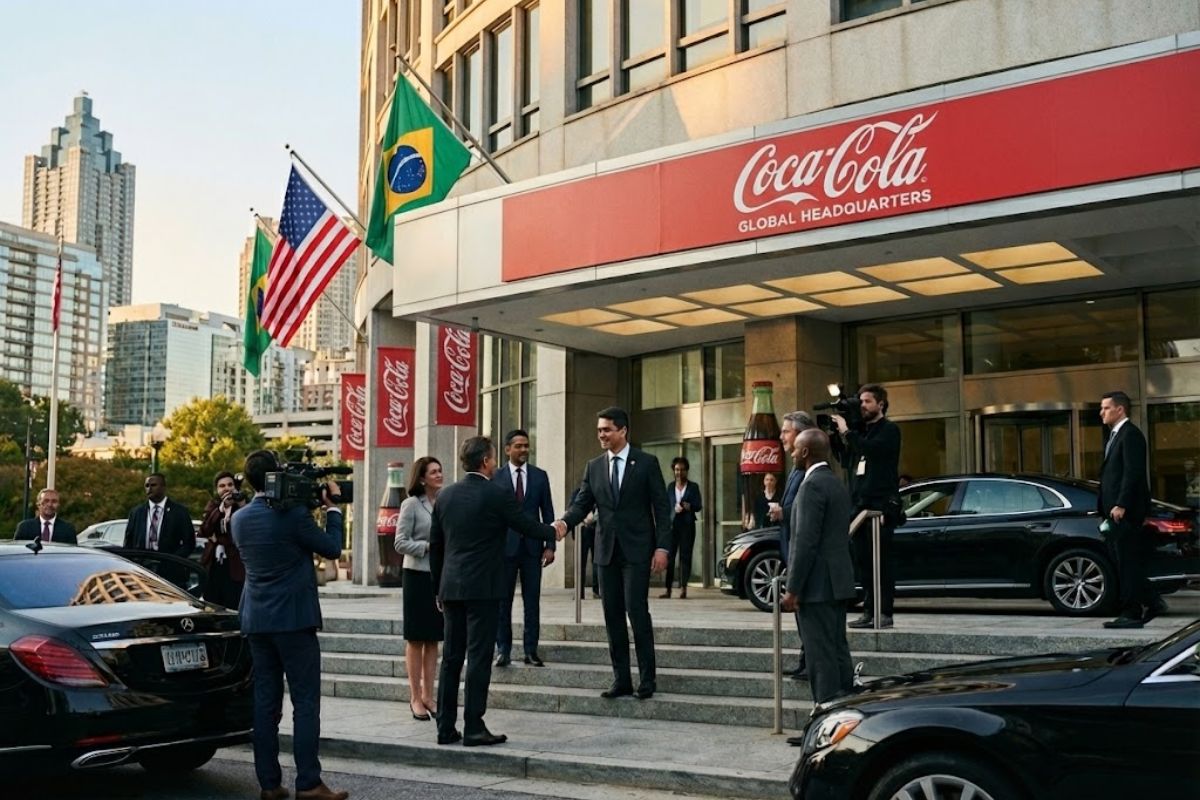
Coca-Cola’s Historic Decision to Make Henrique Braun Global CEO As of March 31, 2026 Replaces James Quincey in Atlanta and Repositions the Company on the Global Financial Market Radar
The change announced by Coca-Cola on December 10, 2025, redesigns the leadership of one of the world’s largest consumer companies. As of March 31, 2026, Brazilian executive Henrique Braun will take over as global CEO, while James Quincey will leave the position after nine years at the helm, transitioning to the role of executive chairman of the board.
The transition marks a planned succession move, maintaining Quincey’s influence on long-term strategy while also opening up space for leadership from Brazil in Atlanta. By elevating Braun, currently Executive Vice President and Chief Operations Officer, Coca-Cola signals to the market its intention to combine continuity in the business model with a new cycle of growth, a focus on technology, and expansion in emerging markets.
Who is Henrique Braun, The Brazilian Who Reaches the Top of Coca-Cola

At 57 years old, Henrique Braun reaches the highest position at Coca-Cola after nearly three decades within the company.
-
Airfare prices may rise with increasing fuel costs, and the government is considering urgent measures to avoid a direct impact on the wallets of Brazilians.
-
Chocolate prices soar nearly 15% and become a luxury item for Easter 2026, with increases surpassing inflation and changes in Brazilian consumption habits.

-
The Federal Revenue issues a good alert for Brazilian taxpayers: 60.9% are already using the pre-filled tax return, automatic refunds via Pix reach millions, and the government plans for a fully automated income tax in the coming years.

-
India announces a plan of $3.06 billion to bring aviation to forgotten regions: 100 new airports, $1.07 billion in subsidies, and regional routes guaranteed for 10 years, from 2026 to 2036, away from the centers.

His journey began in 1996 in Atlanta, in areas of supply chain, new business, marketing, innovation, and bottling operations, consolidating an executive profile shaped by various internal roles.
In recent years, Braun has held central positions in the global structure. Between 2013 and 2016, he led operations in Greater China and South Korea.
From 2016 to 2020, he headed the Brazil business unit, during which he deepened his market knowledge in one of the key consumer countries for the Coca-Cola system.
From 2020 to 2022, he led the operational unit for Latin America, expanding the scope to several countries in the region.
Between 2023 and 2024, Braun served as senior vice president and president of International Development, overseeing seven of the nine global operational units.
Since January 1, 2025, he has held the position of Executive Vice President and Chief Operations Officer, coordinating the operational units across several continents.
The promotion to global leadership consolidates a path built almost entirely within Coca-Cola, in different geographies and roles.
What Changes in Coca-Cola’s Governance With James Quincey Leaving Day-to-Day Operations
With the transition set for March 2026, James Quincey will step down as CEO, but he will not exit the center of decision-making.
He will serve as executive chairman of the board of Coca-Cola, preserving direct influence over strategy, capital allocation, and the company’s positioning as a complete beverage company.
Under his management, Coca-Cola expanded its portfolio beyond traditional soft drinks, incorporating over ten billion-dollar brands and revising its operational model.
The company sought to strengthen its relationship with consumers across different channels and occasions, while also accelerating digital transformation with data-driven marketing and quicker responses to behavioral changes.
During the COVID-19 pandemic, when the closure of bars, restaurants, and events heavily pressured the beverage sector, Quincey’s actions were crucial in adapting the structure to a scenario of abrupt decline in out-of-home consumption.
The new configuration, with Quincey on the board and Braun in execution, aims to preserve this legacy of modernization while opening space for course adjustments under the leadership of the Brazilian executive.
Declared Priorities for the New Global Management of Henrique Braun
The transition is presented by Coca-Cola as a continuation of the modernization process of the past few years, but with a renewed focus on global growth, proximity to the consumer, and intensive use of technology.
The company itself highlights three strategic fronts that should guide Braun’s actions in different regions and beverage categories:
Seek Growth Opportunities Worldwide
Coca-Cola aims to identify expanding markets, emerging segments, and new consumption occasions with greater precision.
This involves analyzing countries with income growth, demographic changes, and space for brand introduction or repositioning, as well as adjusting the portfolio to local specifics.
Bring the Company Closer to Consumer Needs
Another pillar is to maintain a quick reading of changes in behavior and regional preferences for more diversified products, with different profiles of sugar, flavor, and positioning.
The idea is for Coca-Cola to refine its ability to react to trends by categories and channels, without relying solely on centralized decisions in Atlanta.
Leverage Technology as a Business Facilitator
The third front involves intensifying the use of digital tools for commercial decisions, innovation, logistics, and support for bottlers.
This includes everything from data systems to track performance by point of sale to solutions for optimizing supply chains and marketing campaigns in key markets where Coca-Cola operates.
Why the Choice of a Brazilian CEO is Symbolic for Atlanta and Brazil
Henrique Braun’s appointment as global CEO makes him the first executive of Brazilian descent to lead Coca-Cola.
In terms of image, the move reinforces the weight of leadership formed in emerging markets within a company historically associated with North American corporate culture, headquartered in Atlanta.
For Brazil, the decision holds additional significance. Braun has already led the Brazilian business unit and Latin America, directly linking his global ascent to the performance of strategic regions.
The presence of a Brazilian at the top of Coca-Cola is likely to be interpreted as recognition of the country’s and the region’s relevance in generating volume, revenue, and innovation capacity within the system.
At the same time, Coca-Cola‘s governance structure seeks to balance this symbol with a succession designed internally, without disruption.
Braun’s appointment follows the logic of promotion from the COO role, reinforcing the idea of continuity in operations, while Quincey’s continued presence on the board mitigates risks of misalignment during the transition.
Formal Next Steps and Braun’s Place in the Coca-Cola Structure
Until March 31, 2026, Henrique Braun will continue to serve as Executive Vice President and Chief Operations Officer of Coca-Cola, managing the daily operations of the operational units while preparing to take on the position of global CEO.
The company also stated that it intends to nominate him to run for a board position at the Annual General Meeting in 2026.
If elected, Braun will combine the role of CEO with a seat on the board responsible for high-level oversight of Coca-Cola, bringing executive management even closer to governance decisions.
James Quincey, for his part, will leave operational leadership and fully dedicate himself to the role of executive chairman of the board, focusing on strategy, succession, and shareholder relations.
Overall, the reconfiguration concentrates the daily command of Coca-Cola in the hands of Henrique Braun while retaining Quincey’s accumulated experience as an additional layer of strategic oversight, without a sudden break in the continuity that the company is keen to emphasize to the market.
About the New Brazilian CEO of Coca-Cola
Will Henrique Braun be the first Brazilian global CEO of Coca-Cola?
Yes. The company confirms that Henrique Braun will be the first executive of Brazilian descent to assume the highest position in the global operation of Coca-Cola.
Where did Henrique Braun build his career within Coca-Cola?
He built practically his entire career within Coca-Cola, with stints in North America, Europe, Latin America, and Asia, leading units in Brazil, Latin America, and Greater China and South Korea before becoming global COO.
Will Henrique Braun continue as COO until the 2026 transition?
Yes. The company reports that Braun will remain as Executive Vice President and Chief Operations Officer until the date set for the transition to the CEO position on March 31, 2026.
What changes for James Quincey after 2026 at Coca-Cola?
After the transition, James Quincey will leave the CEO role and will focus on the executive chairmanship of the board of Coca-Cola, maintaining direct influence over the company’s major strategic directives.
In your view, does the choice of a Brazilian to lead Coca-Cola in 2026 tend to change how the company relates to emerging markets, or will real power remain concentrated in the board’s decisions in Atlanta?







-

Uma pessoa reagiu a isso.