





 Portuguese
  English
  Spanish
  5 min of reading
  0 comments


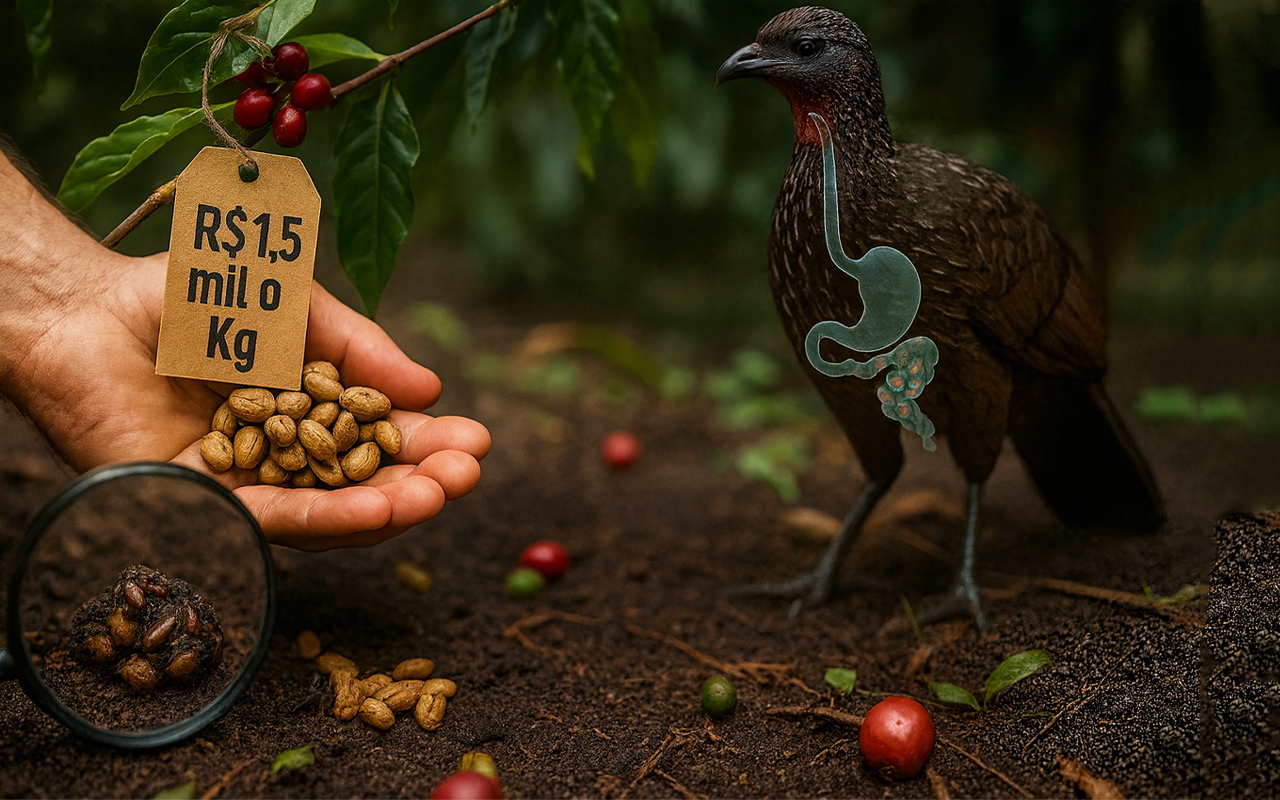
Capixaba Delicacy Produced in Pedra Azul Combines Natural Selection, Fermentation in the Jacu’s Digestive Tract, and Limited Production. High-Priced Coffee, Low Caffeine, and Rural Tourism Explain Its Fame.
The jacu coffee is one of the most curious products of Brazilian agriculture. The native bird of the Atlantic Forest feeds on the ripest coffee cherries and, after digestion, the beans are collected, cleaned, and roasted. The result is a rare, aromatic, and smooth drink, highly sought after by tourists and coffee enthusiasts.
According to reports and the website of Fazenda Camocim itself, where the method is a reference, this production takes place in an agroforestry environment focused on organic and biodynamic management. In 2025, the kilogram of Jacu Bird Coffee is priced at R$ 1,530 in the farm’s official store, a value that explains part of the aura of exclusivity surrounding the product. Tourism portals also highlight the same price range and the visitation experience in Espírito Santo.
The delicacy gained international visibility in articles from AFP and foreign outlets, which describe the jacu as a “natural harvester,” capable of selecting only the best fruits. This detail helps to understand the sensory profile of the coffee, often described as clean, aromatic, and without pronounced bitterness.
-
The village where two rivers run side by side without mixing in Santarém and Alter do Chão reveals some of the most beautiful freshwater beaches on the planet.

-
Brazil’s nuclear submarine with a speed 5 times greater than normal advances after nearly 50 years and R$ 40 billion spent.

-
A Brazilian island charges R$ 0.50 to receive visitors and prohibits any new residents.
-
Why was the Great Wall of China built? The truth that many are unaware of!

What Is Jacu Coffee and How Is It Made in the Atlantic Forest?
The jacu is a wild bird that lives freely in the forested areas of the Pedra Azul region in Domingos Martins. At Fazenda Camocim, the bird consumes ripe fruit in the coffee plots. After the bean passes through its digestive system, the team collects the seeds from the ground, performs manual sorting, cleansing, and roasting. The process is slow, meticulous, and depends on the bird’s feeding behavior.
The capixaba property has highlighted organic and biodynamic practices since the 1990s, with a history linked to the producer Henrique Sloper. Public records and institutional materials reinforce the adoption of regenerative techniques and certifications focused on sustainability.
As the collection is manual and the supply is limited, the annual production of jacu coffee is restricted compared to the farm’s conventional lines. This helps to explain why this variety appears on lists of exotic and high-value coffees in Brazil and abroad.
Price of Jacu Coffee in 2025 and Why It Is So Expensive
The price charged by the official store in 2025 is R$ 1,530 per kilogram. The same price range appears in reports from July 2025 about tourism in Pedra Azul, which mention smaller packages for those who wish to taste the drink without paying for the entire kilogram. Rarity, labor intensity, dependence on the bird, and tourist demand form the set of factors that elevate the value.
In addition to exclusivity, the price reflects sorting costs, drying time, and roasting under special coffee standards. In 2025, the coffee market also experienced volatility in international prices, influencing the context of the premium product.
For the consumer, the point is clear. Those seeking a unique experience find in Jacu Bird Coffee a coffee with a unique history, whose small supply sustains values above the average for the segment.
Low Caffeine and Flavor: What Do the Producer and Science Say?
According to the producer, the jacu consumes part of the caffeine during digestion, resulting in a naturally smoother coffee. In 2022, a peer-reviewed article published in Frontiers in Sustainable Food Systems analyzed bioprocessed coffees and reported a reduction of about 69% caffeine in samples associated with the jacu, along with changes in compounds such as chlorogenic acids.
This finding helps to support the perception of low caffeine and to explain a cup profile with less bitterness. Studies on coffee processing and fermentation also indicate that bioprocessed methods can modify bioactive substances, directly impacting the bitterness sensation and the body of the beverage.
The jacu coffee is often described as aromatic, with balanced acidity and reduced bitterness, making it appealing to those who prefer clean and sweet cups.
Rural Tourism in Pedra Azul ES: How to Experience Jacu Coffee
Fazenda Camocim has become a tourist spot on the Pedra Azul route and maintains a café and guided experiences. Official profiles and recent publications indicate service from Friday to Sunday, from 10 am to 5 pm, as well as contacts for scheduling visits. It is recommended to confirm hours before going.
Those unable to travel can find the product in smaller packages, an option that reduces cost for a taste. Travel guides remind that the farm is located in a mountainous area, with access via dirt road in the final stretch, which is part of the charm of the trip.
Tourism strengthens the local economy and the image of Espírito Santo on the map of specialty coffee. For many visitors, understanding the grain cycle in an agroforestry environment is as relevant as the tasting.
Jacu Coffee vs. Kopi Luwak: Differences, Ethics, and Sustainability
There are parallels with the famous kopi luwak from Indonesia, produced from beans excreted by civets. The central difference highlighted by international reports about the capixaba case is the use of wild birds in an open environment, which avoids confinement practices criticized in other contexts. The ethical discussion is important and should accompany any exotic coffee.
In Brazil, the example of agroforestry and certifications focused on organic and regenerative production helps to counter criticisms and position Jacu Bird Coffee as a product associated with the biodiversity of the Atlantic Forest.
For the conscious consumer, it is worth seeking information about origin, management, and animal welfare whenever evaluating rare coffees. Transparency adds value and credibility.
Where Brazil Fits into Coffee Consumption and Exports
Brazil remains among the global leaders in the sector. In volume, the country is the second largest consumer in the world, only behind the United States, according to ABIC and official publications. This contradicts the idea that Brazilians would occupy only the fourth position.
In foreign trade, data from 2025 shows record revenue in July and fluctuations in shipments amidst a pricing environment. Reports from Cecafé indicate receipts exceeding US$ 1 billion that month, with variations in the quantity exported and a strong appreciation in dollars.
This backdrop helps to contextualize the attention on special and exotic coffees like that of the jacu, which occupy a high-value niche while the supply chain deals with price, climate, and logistics cycles.






-

Uma pessoa reagiu a isso.