





 Portuguese
  English
  Spanish
  3 min of reading
  0 comments


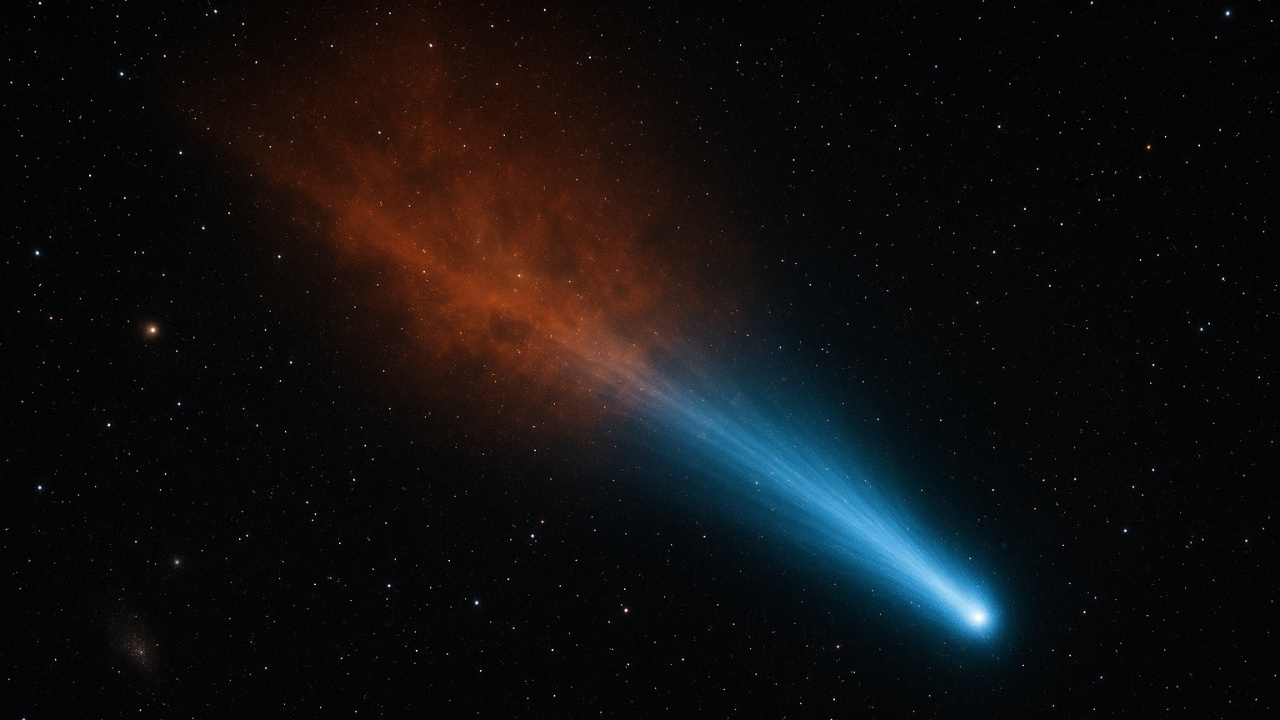
The XRISM Mission Detected X-Ray Emission From Interstellar Comet 3I/Atlas, Revealing Unprecedented Evidence of Interaction With Solar Wind.
What scientists recorded, who conducted the observations, when it occurred, where the phenomenon was detected, how the data was collected, and why it matters are questions that gained prominence after the Japanese mission XRISM.
The object, moving through the constellation Virgo, was monitored for 17 hours in a carefully planned operation.
The motivation for the effort lies in the fact that 3I/Atlas is a rare interstellar object, the third known to cross the Solar System, making it essential for understanding materials formed outside the region that birthed the Sun and the planets.
-
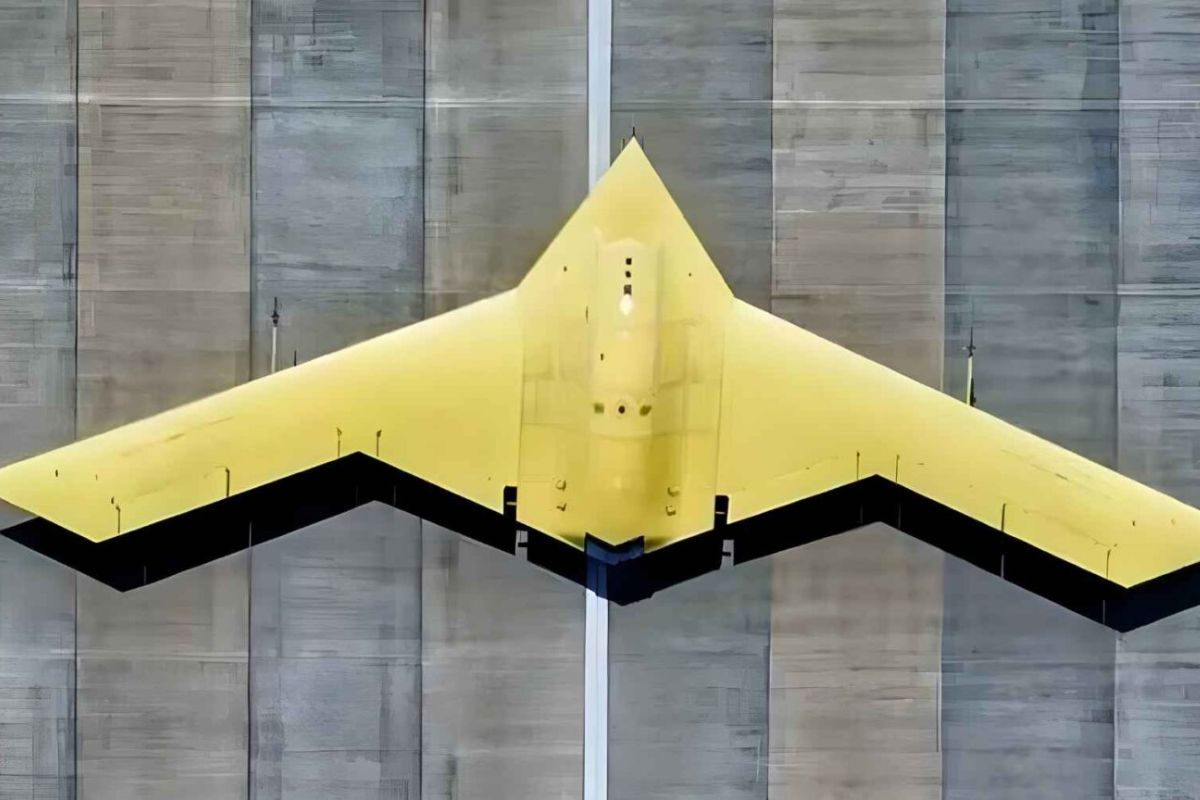
China has just launched for the first time the CH-7, a stealth drone in the shape of a flying wing that flies at 925 kilometers per hour, is nearly invisible to radar, and was designed to monitor battlefields and entire oceans.
-
Found in Giza 100 years ago, an Egyptian dress made of 7,000 beads belonged to a woman from the time of Khufu and impresses with the details preserved after millennia.

-
With 7.4 trillion tons of artificial snow pumped in 10 years, an extreme operation could stabilize the West Antarctic ice sheet and prevent a sea level rise of more than 3 meters, but it would require snow cannons, ocean water, and energy on an almost industrial scale at the end of the world.

-
The US no longer wants to deal with data centers: the state may prohibit projects of 20 MW that consume as much as 15,000 homes, while AI already requires energy from millions of households and even half a liter of water for 50 questions.

Meanwhile, the international team responsible for the mission adjusted the satellite’s orientation 14 times to keep the comet centered in the field of view of the Xtend telescope.
Thus, the initial analyses suggest that this celestial body may exhibit unprecedented behaviors, particularly regarding interaction with solar wind, something never confirmed before in interstellar visitors.
Why Comet 3I/Atlas Is So Important for Science
Identified in July 2025, the Comet 3I/Atlas quickly became one of the most awaited astronomical phenomena among researchers.
On the other hand, studies across multiple wavelengths were crucial to uncovering its composition.
Among these methods, X-Rays hold a strategic position, as they reveal interactions between cometary gases and energetic particles emitted by the Sun.
So far, no interstellar object had shown detectable signs of this type of radiation.
XRISM Captures Faint Glow That May Indicate Real X-Ray Emission
The soft X-ray telescope Xtend captured rapidly processed images that showed a diffuse structure around the comet.
The instrument’s field of view covers an area equivalent to about 3 million square kilometers.
Researchers emphasize that this scale exceeds the instrument’s natural limitations, suggesting that there may be a gas cloud emitting X-Rays after interacting with solar wind particles.
This phenomenon, known as charge exchange reaction, occurs when solar ions capture electrons and release energy as they return to more stable states.
Interaction With Solar Wind May Explain the Phenomenon
The interaction with solar wind is well-known in comets originating from the Solar System.
When solar heat vaporizes the ice of the nucleus, a vast gas cloud forms around the celestial body.
This cloud collides with charged particles from the solar wind, generating X-Ray emissions.
The spectrum collected shows signatures of elements like carbon, nitrogen, and oxygen — exactly those expected in processes of this nature.
These emissions do not correspond to the background glow of space or light reflected by the Earth’s atmosphere.
Uncertainties Remain, but Discovery Opens Pathway for New Studies
Despite the excitement, scientists caution that part of the observed structure may result from instrumental effects.
Thus, rigorous analysis is underway to separate real signals from potential artifacts.
Even with caveats, the observation represents a milestone: it is the first concrete evidence of X-Ray emission from an interstellar object.
Therefore, the case of Comet 3I/Atlas opens new perspectives for understanding how bodies formed in other stellar systems react to the energetic environment of our Sun.









Seja o primeiro a reagir!