Portuguese
  Spanish


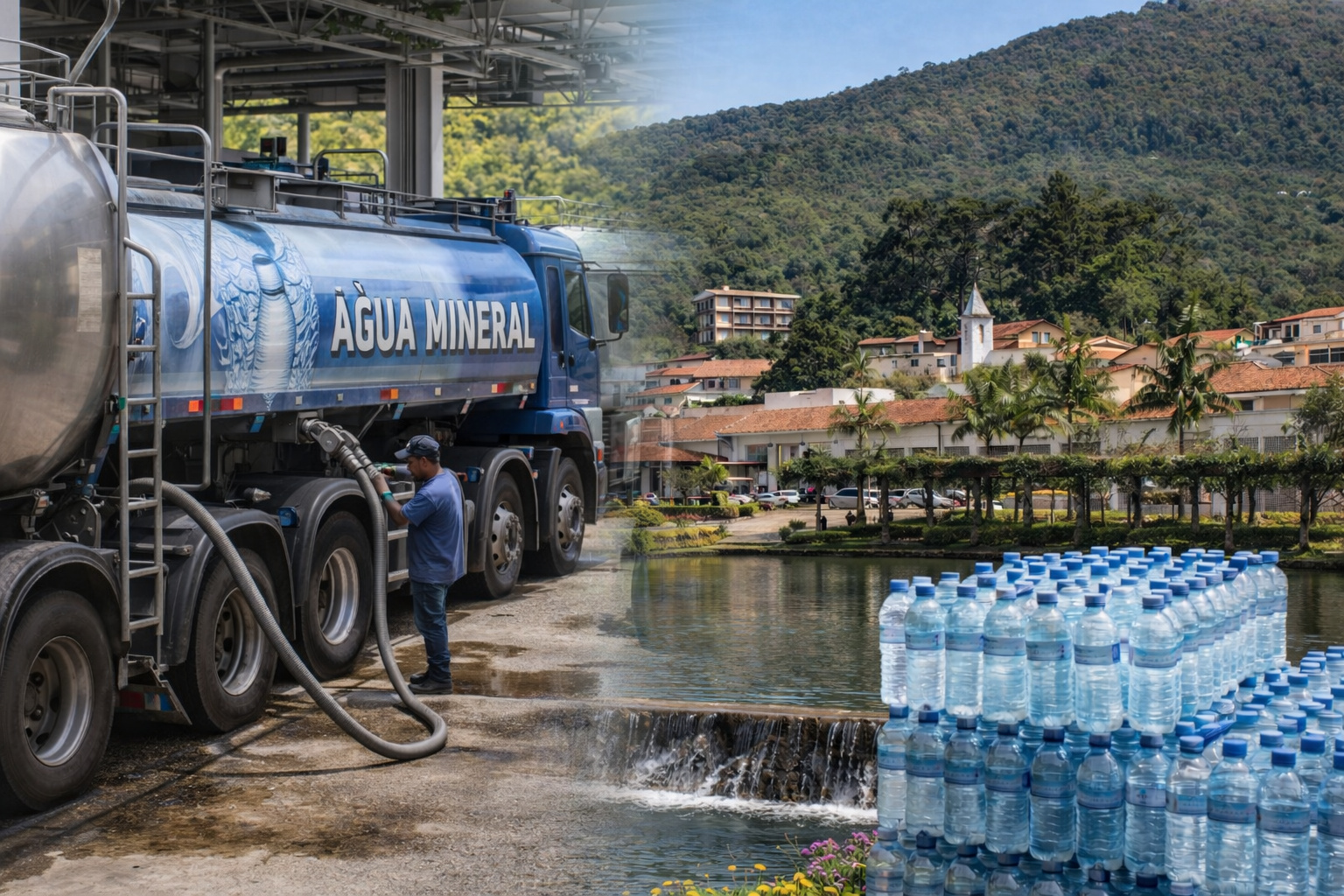

The municipality of São Paulo brings together expressive production, natural tourism, and historical tradition linked to mineral water
A small town in the interior of São Paulo draws national attention for its relevance in the mineral water sector in Brazil.
Moreover, with just over 7,000 inhabitants, Lindóia has been established as a reference in this segment over the decades.
Thus, located about 156 km from the state capital, the city is part of the traditional Circuit of Waters.
In this way, the municipality has also been officially recognized as a Hydromineral Resort, reinforcing its regional importance.
What initially seems like just a tranquil destination reveals, in practice, a significant economic role.
Consequently, its performance in the water sector stands out throughout the national territory.
-
A Brazilian street cleaner built a machine to recycle PET bottles in the hinterlands of Paraíba, transforming the trash he swept from the streets into threads, brooms, and equipment sold even outside Brazil, and began earning about R$ 7,500 per month with his own invention.

-
In a city where every piece of land is worth gold, he began buying plots in the 1960s and built a real estate empire with over a thousand properties.

-
An artist sank over 500 life-sized human statues at the bottom of the Caribbean Sea, and what seemed like macabre art turned into a living reef covered with corals that attracts divers from all over the world.

-
A fossil kept for years in a small museum in Montreal concealed 450-million-year-old soft tissue, a discovery that has only happened once before in history.


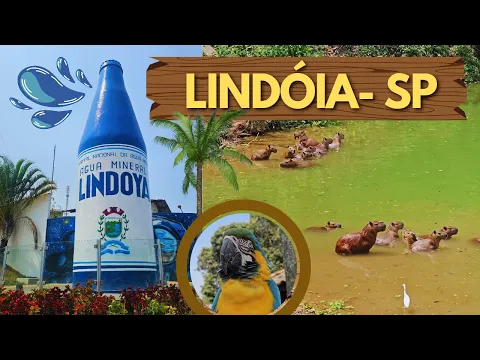

The economic strength of mineral water drives Lindóia
Additionally, approximately 40% of Brazil’s mineral water production is attributed to the city.
In this sense, the local economy is directly boosted by the exploration and commercialization of this resource.
In fact, the name Lindóia, of Tupi-Guarani origin, means “river that does not overflow and warm water to the taste”.
Thus, this historical connection with water has been built over time.

On the other hand, according to records recognized by the Government of the State of São Paulo, the city maintains a strategic position in the water sector.
In this way, its economic relevance continues to be reinforced by regional studies.
Natural tourism strengthens the city’s identity
Moreover, tourism in Lindóia is driven by its natural waters. In this context, visitors are attracted by waterfalls, springs, and wellness spaces.
Thus, throughout the 20th century, the city was consolidated as a destination for tranquility. Consequently, contact with nature became one of the main local attractions.
Therefore, the peaceful environment, combined with abundant water resources, strengthens the tourism vocation of the municipality. Still, the city maintains a welcoming profile characteristic of the countryside.
Historical curiosities involve science and space exploration
Furthermore, historical records indicate that, in 1969, during the Apollo 11 mission, bottles from the local spring were acquired by NASA. However, despite this, there is no confirmation of effective use in space.
On the other hand, another relevant fact occurred in 1926, when the scientist Marie Curie visited the city. On that occasion, she recognized possible therapeutic properties in the region’s waters.
Thus, this information reinforces the historical and scientific value attributed to the municipality. Consequently, Lindóia has been associated with international interest over time.
The city maintains a balance between simplicity and relevance
Finally, even with national projection and relevant historical records, the city preserves a tranquil profile. In this way, urban simplicity continues to be one of its main characteristics.
Thus, Lindóia manages to unite mineral water production, natural tourism, and historical tradition in a single territory. Therefore, the municipality consolidates itself as an example of balance between development and local identity.
In light of this, the city demonstrates that it is possible to maintain cultural roots while occupying a strategic position in the country.
In this sense, could other regions with similar natural resources achieve the same prominence?