





 Portuguese
  English
  Spanish
  2 min of reading
  0 comments


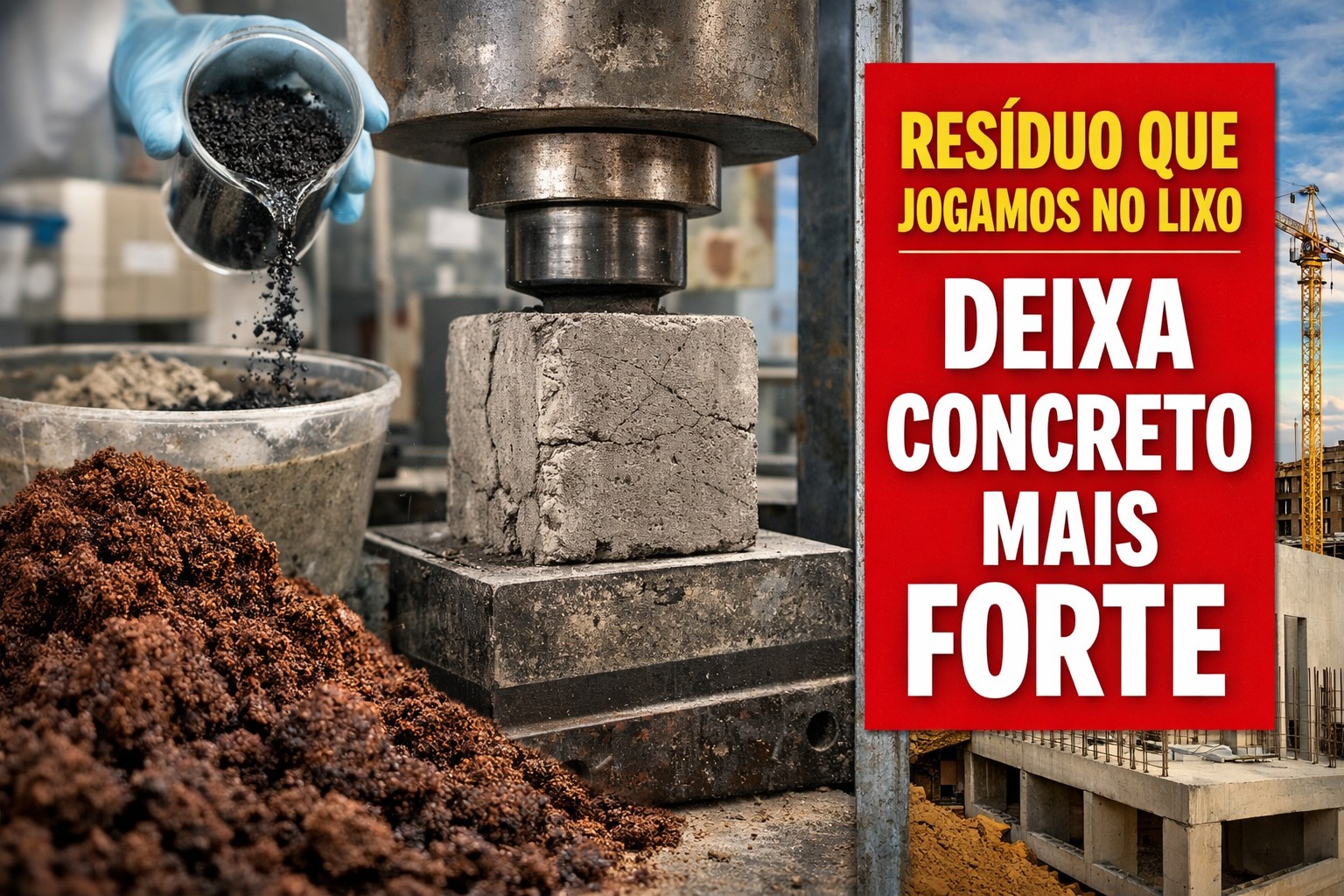
RMIT University Study Reveals That Coffee Grounds Converted Into Biochar Reinforce Concrete, Reduce Use of Natural Sand, and Offer Sustainable Alternative for Global Construction
Present in Brazilian daily life, coffee grounds have gained a new application after researchers from RMIT University demonstrated that the residue can increase cement strength by up to 30% in Australia, while reducing environmental impacts of the construction industry.
Everyday Waste With Structural Potential
The research links the massive disposal of organic waste to the challenge of making the construction industry less dependent on finite natural resources.
According to the researchers, the world produces about 10 billion kilograms of coffee waste per year, mostly destined for landfills.
-
6 sources of free fertilizer that you are throwing away every day and can transform your garden without spending anything.
-
With a water crisis on the radar, Sabesp invests in reclaimed water for data centers and transforms sewage treatment into a solution that saves millions of liters and protects public supply.

-
Foresea achieves 100% offshore waste reuse in 2025, eliminates landfill disposal, and consolidates sustainable strategy with 1,500 tons recycled.
-
With earth, bamboo, straw, and lime mortar, a specialist builds a house for just over $460 and draws attention for its cost being much lower than traditional construction.

In these locations, the decomposition of the grounds releases gases like methane and carbon dioxide, intensifying processes associated with global climate change.
The study proposes repurposing this abundant material, transforming an environmental liability into a resource with technical and structural value.
Process Turns Grounds Into Biochar
To enable repurposing, the team developed a pyrolysis process, where the grounds are heated above 350 °C.
The heating occurs without the presence of oxygen, preventing combustion and resulting in a stable, carbon-rich material.
This product, called biochar, has a porous structure, an essential characteristic for interaction with other cement components.
After processing, the biochar is incorporated into the mixtures, replacing part of the natural sand traditionally used.
Direct Impact on Concrete Performance
Initial tests indicated that concrete with biochar showed strength gains of up to 30% compared to conventional material.
In addition to mechanical performance, the partial replacement of sand reduces pressure on a resource considered increasingly scarce.
Sand is one of the main inputs in construction, with extraction associated with significant environmental impacts.
Thus, the use of coffee grounds simultaneously contributes to structural efficiency and more sustainable construction.
Technical Assessment and Next Steps
According to engineer Shannon Kilmartin-Lynch, repurposing the waste opens new possibilities for the construction sector.
“Our research is still ongoing, but the results show an innovative way to reduce organic waste in landfills,” the engineer stated.
Despite the initial results, the scientists emphasize that the technology is still in the experimental phase.
The next steps include assessing durability, moisture resistance, thermal variations, wear, and water absorption.
Meanwhile, the team is analyzing other organic waste with similar potential, broadening sustainable alternatives for construction materials in the future.
With information from Diário do Comércio.








-

2 pessoas reagiram a isso.