





 Portuguese
  English
  Spanish
 6 min of reading
  0 comments


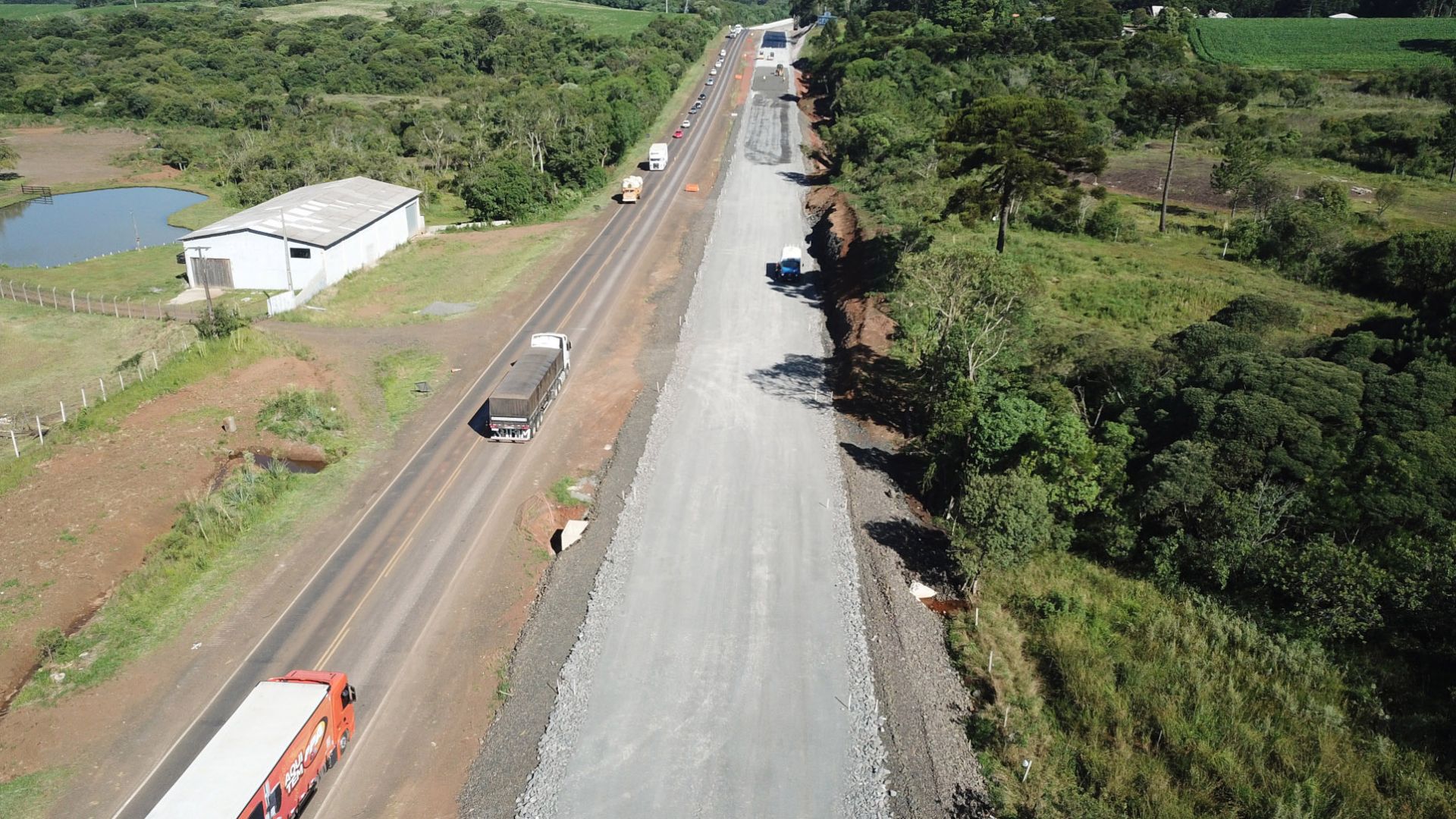
Progress of Work in the Central-South of Paraná Brings Together Rigid Pavement, Overpasses, and a New Bridge, with Million-Dollar Investment, Ongoing Schedule, and Direct Impact on Regional Logistics and the Durability of the Main Road Link Between Strategic Municipalities.
The duplication and concrete restoration of PRC-466, in the section between Turvo and the district of Palmeirinha, in Guarapuava, in Central-South Paraná, reached 13.14% completion, announced this Wednesday (09) the Department of Highways of Paraná (DER/PR).
The project foresees 27.02 kilometers of interventions, includes new overpasses and a second bridge over the Turvo River, and has an investment of R$ 293.7 million.
The estimate provided by the agency is to complete the work by June 2027, considering the schedule released in January 2026.
-
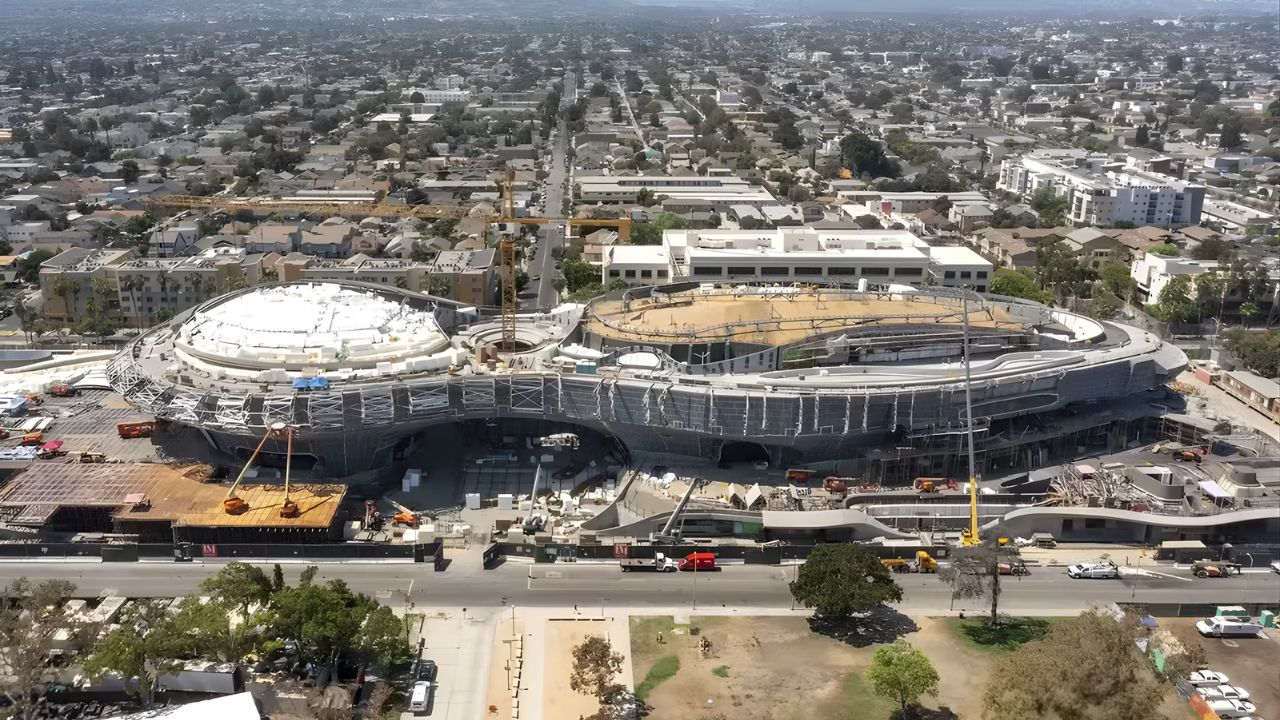
Created by George Lucas with over $1 billion, a futuristic museum in the shape of a spaceship with 1,500 curved panels is about to open in Los Angeles and will house one of the largest private collections of narrative art in the world.
-
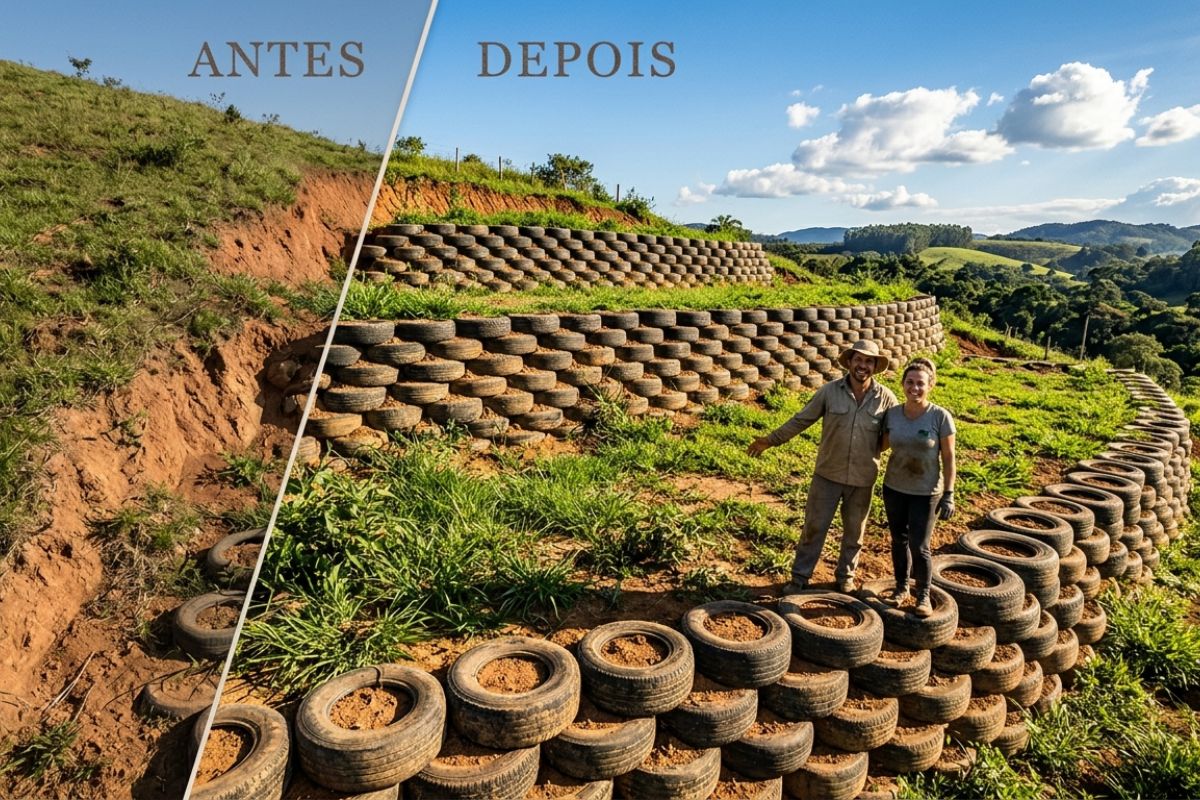
Couple shows how they built a retaining wall on their property using 400 old tires: sloped land turned into plateaus, tires are aligned, filled, and compacted with layers of soil, with grass helping in support and at almost zero cost.
-
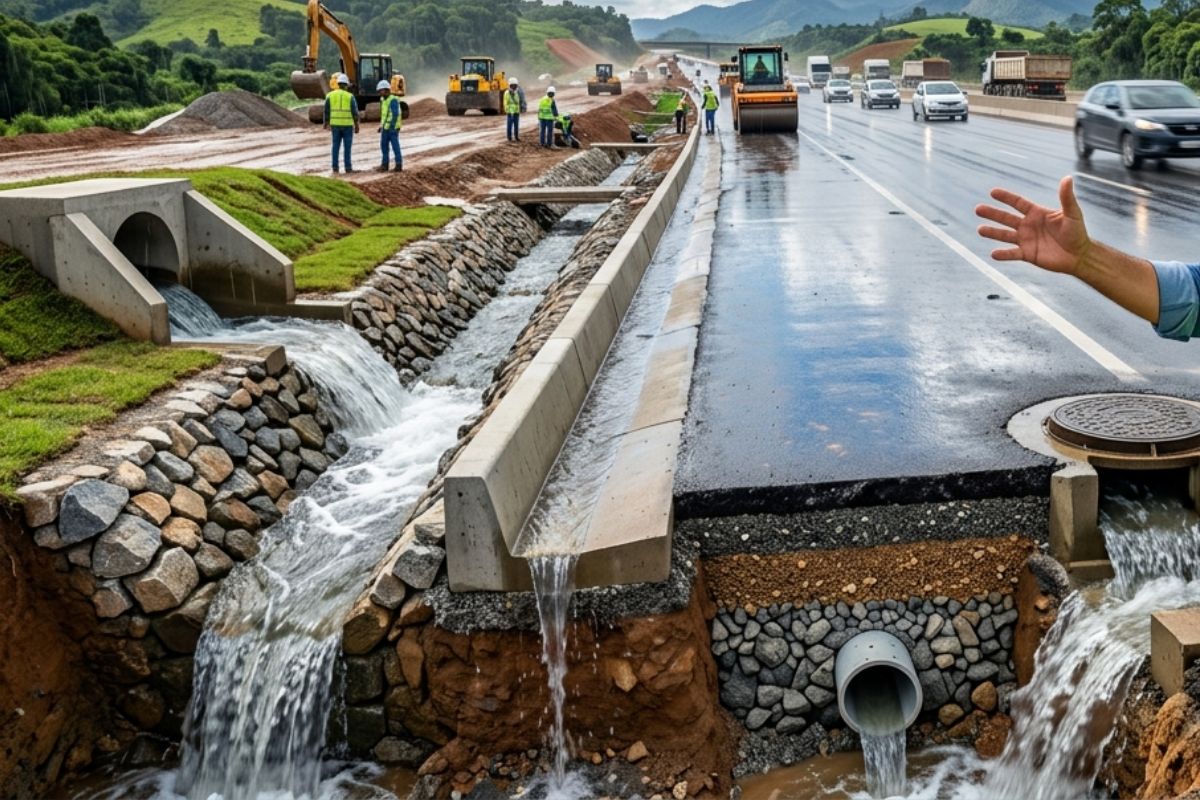
Engineer explains drainage during the rainy season: the difference between surface water and deep water, ditches, gutters, and water outlets on the road, as well as drains and drainage mattresses, to prevent erosion, aquaplaning, and flooding at the construction site today.
-
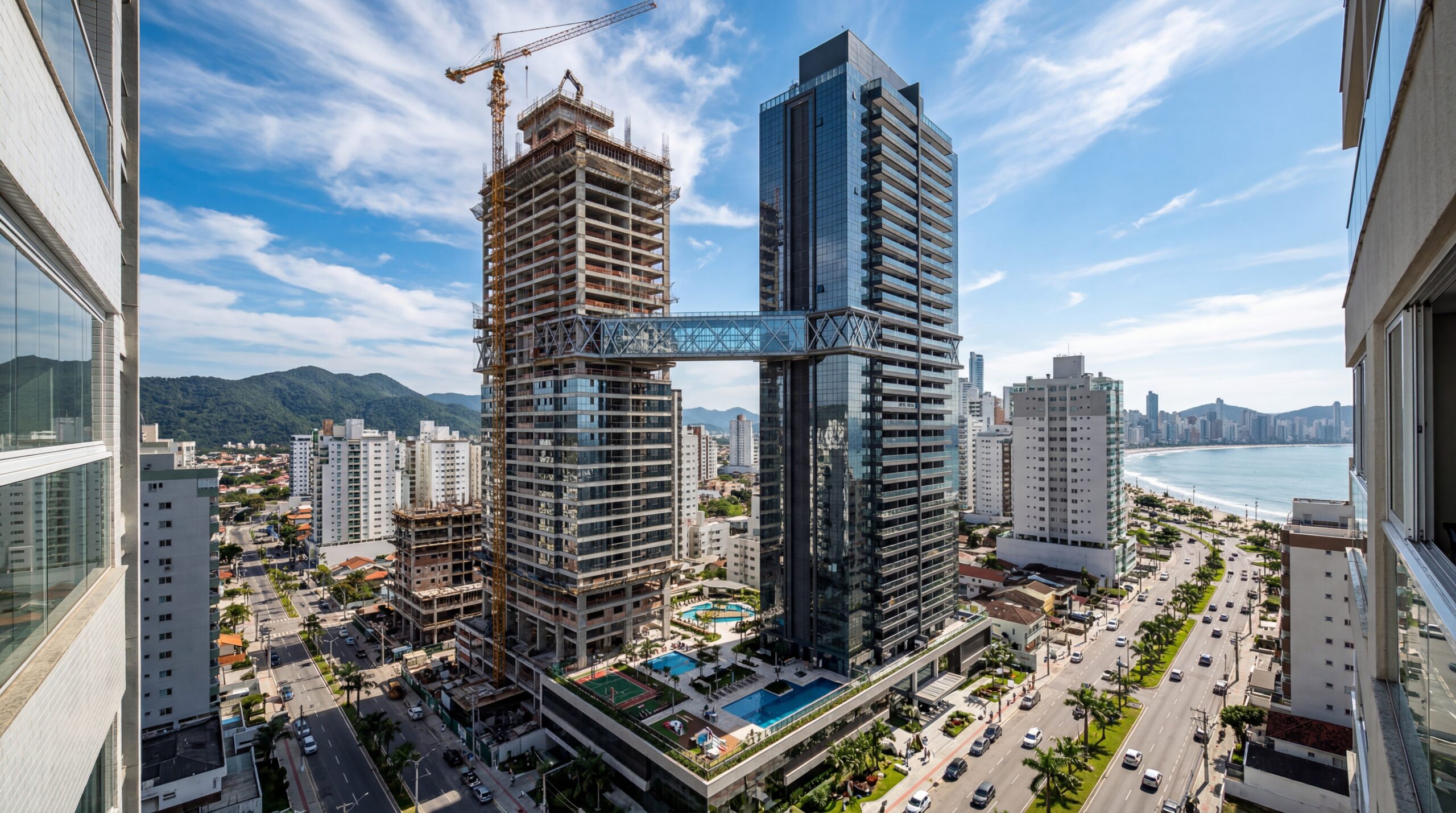
With 55 floors, 177 meters in height, a 15-meter walkway between the twin towers, ventilated facade, and 6,300 m² of leisure space, Ápice Towers already has one tower completed and another nearly at the top.

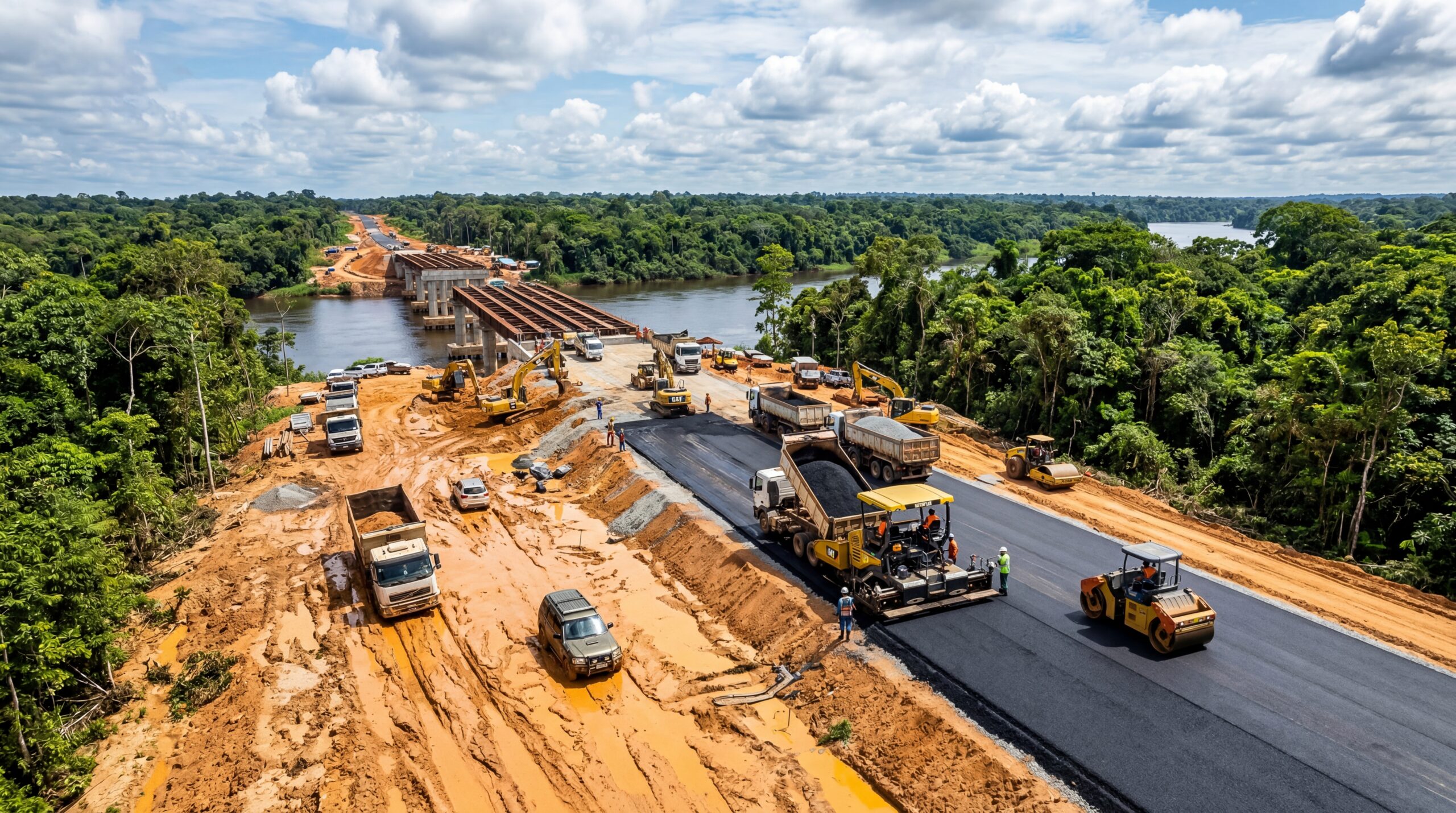
The project starts at the access to the industrial park of Turvo and goes to the end of the urban perimeter of Palmeirinha.
The DER/PR’s proposal is to execute a new lane parallel to the current one and, at the same time, rehabilitate the existing structure, so that the two directions will operate on rigid concrete pavement, with a projected lifespan of 30 years.
Earthworks and Duplication of PRC-466 Advance in the Turvo–Palmeirinha Section
At this stage, the work focuses mainly on earthworks, a stage in which teams move soil to implement the platform for the future concrete lane.
The new lane will be constructed next to the already operational highway, which requires site organization and execution by fronts to maintain circulation while advancing infrastructure.

Meanwhile, the current lane undergoes conservation and maintenance services to be in adequate conditions for receiving the next restoration phase.
The aim is to prepare the existing asphalt pavement to serve as a structural base for a new layer of concrete, reducing deep interventions and shortening the transition to the definitive solution.
Whitetopping Ensures 30-Year Durability for Concrete Pavement
According to DER/PR, the restoration planned for the existing lane will be done through whitetopping, a technique in which asphalt serves as a base for the application of a concrete overlay.
In practice, the method aims to deliver results equivalent to those of a highway fully constructed with rigid pavement, both in performance and in estimated lifespan, according to the agency.
By opting for this solution, the project keeps its focus on durability and stability of the pavement, especially in sections with constant heavy vehicle flow.
DER/PR states that, with the combination of a new concrete lane and the restoration of the old lane using the same technology, the segment will operate with a single quality standard.
Drainage System Strengthens Safety and Lifespan of the Highway
Besides the pavement, the work includes the implementation and expansion of drainage devices, a crucial step for the durability of any highway.
Planned are concrete culverts, deep drains, and other structures that lead water away from the roadbed, reducing the risk of infiltrations and progressive damage to the platform.
DER/PR also reports that an existing concrete cellular gallery under the current lane is being extended.
This type of intervention is often necessary when the geometry of the road changes or when the original drainage needs to be expanded to accommodate the duplication and the new lane arrangement.
Second Bridge Over the Turvo River Enters Structural Phase

One of the central points of the project is the construction of a second bridge over the Turvo River.
According to DER/PR, the structure is in the infrastructure phase, with the execution of concrete bases, and is expected to enter the next phase with the start of the mesostructure, when the pillars that support the deck begin to be assembled.
The new bridge is designed to accommodate the duplicated design of the highway, following the implementation of the parallel lane.
As a result, traffic is expected to gain more capacity and separation between flows, especially in areas where crossings by bridges often act as bottlenecks.
Diamond-Shaped Overpasses Replace Roundabouts and Improve Traffic Flow
The construction package also includes two new overpasses, both in the Diamond model, as detailed by DER/PR.
In this format, entries and exits from the highway occur via the right lane in each direction, with roundabouts connecting the overpass and allowing movements between local and long-distance traffic.
One overpass will be built in Turvo, at the junction with Avenida XV de Novembro.
The other will be in Palmeirinha, at the junction with Rua Manoel Moreira de Campos.
The agency predicts that the structures will replace at-grade roundabouts, a solution often used to organize intersections, but which can increase conflict points between vehicles and reduce flow when demand grows.
For now, services related to the overpasses are concentrated in the beam yard, where the manufacturing of precast beams takes place that will later be launched into the structures.
This type of production, done away from the final installation location, is common to accelerate stages and standardize components.
Complementary Services Include Lighting, Signage, and Road Safety
The project includes at-grade returns, bus stop shelters, pedestrian walkways, road lighting, horizontal and vertical signage, and installation of safety devices.
The proposal, according to DER/PR, is to deliver a more structured corridor for regional travel and connections to urban areas along the route.

Additionally, the goal is to improve the organization of accesses and crossings.
Even with the duplication, part of these improvements depends on the simultaneous advance of multiple fronts, such as drainage, earthworks, and special works.
Therefore, the stages tend to occur in parallel, with different points of the section receiving interventions at distinct times.
Other Works on PRC-466 Add Up to Billions in Investments
The Turvo–Palmeirinha section is one of the ongoing interventions on PRC-466.
In another front, between Pitanga and Turvo, DER/PR reports that the duplication and concrete restoration have reached 11.84% completion, with measurements from December.
The total investment for this segment is R$ 514,230,020.00.
In this section, the agency points out earthworks as the main service in progress and includes, in the scope, overpasses, bridges, and a footbridge, along with the use of whitetopping on the existing lane.
The announced forecast is to complete this segment by April 2027.
Meanwhile, the concrete duplication between Guarapuava and Palmeirinha, considered complementary for the link to Pitanga, appears to be in its advanced stage.
In an update released by the State News Agency (AEN), the work reached 87% completion, with an investment of R$ 139,785,485.97 for 11.52 kilometers.
The same update indicates a forecast to complete the services by the end of February 2026 and notes that the second bridge over the Coutinho River has already been completed.
With three simultaneous works on the same highway, PRC-466 is undergoing extensive reconfiguration, combining rigid pavement, drainage adjustments, and interventions in intersections.
In practice, the challenge is to advance the schedule without losing control over safety in the worksite and traffic conditions in the municipalities crossed by the road.






-

Uma pessoa reagiu a isso.