





 Portuguese
  English
  Spanish
  4 min of reading
  0 comments


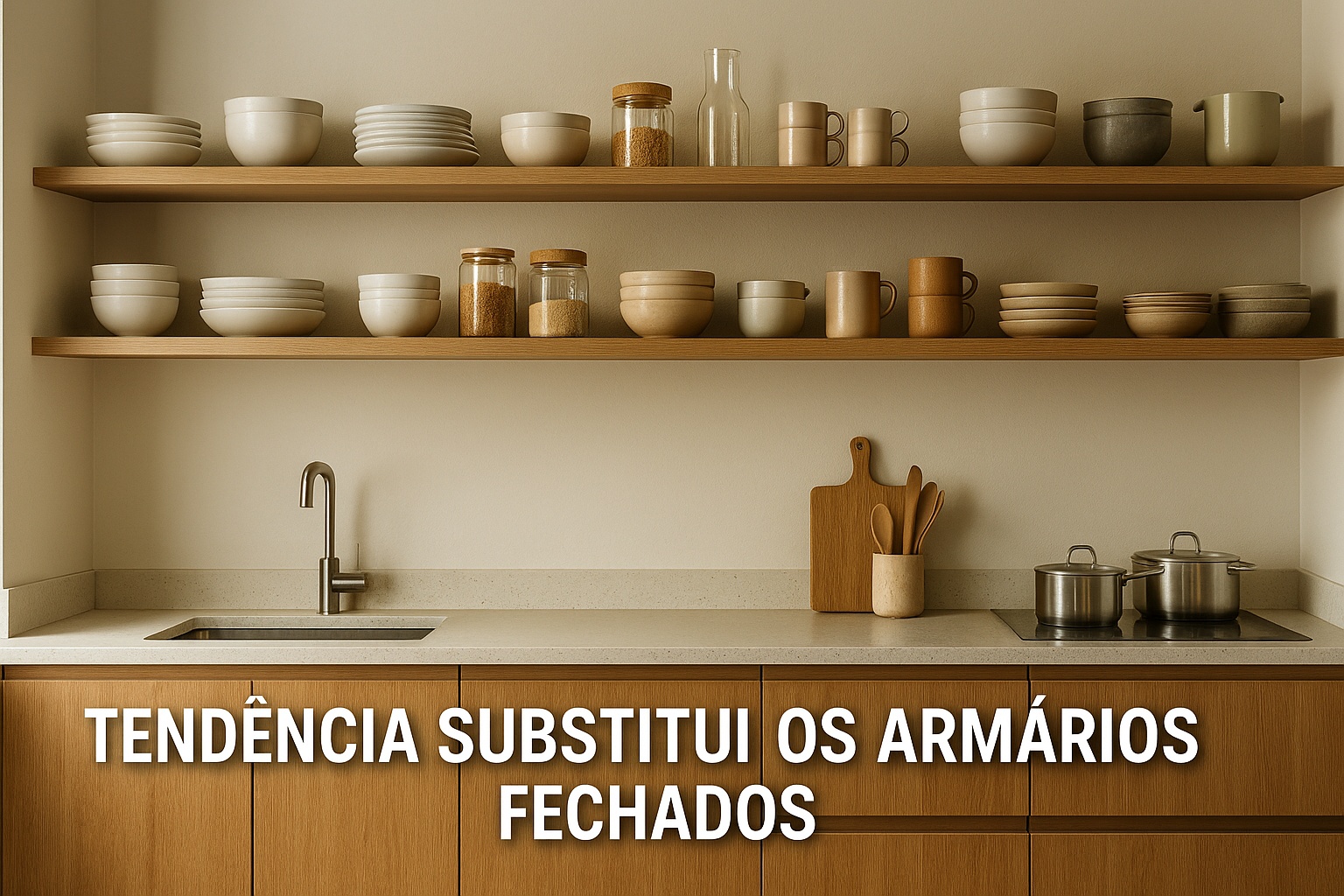
Open Shelf Trend Comes to Brazilian Kitchens With Lower Cost, More Visual Lightness, and No Risk of Mold or Warping, Threatening to Replace Traditional Cabinets.
For decades, kitchen cabinets have dominated residential projects in Brazil, occupying entire walls and serving as an essential structure for storing utensils, dishes, and food supplies. However, the advancement of functional design, coupled with the search for savings, visual lightness, and practicality, is promoting a silent and profound change in the heart of the home. The trend of open shelves, already established in contemporary architectural projects in the United States and Europe, is making a strong entrance into the Brazilian market and promises to redefine the way we store and organize the kitchen.
The movement is not just aesthetic. In a period when the price of custom cabinetry is rising, spaces are getting smaller, and daily routines demand agility, open solutions are gaining prominence. Instead of doors that hide everything, the proposal now is to expose, integrate, and facilitate. The result is a lighter, more dynamic, and accessible environment, at a much lower cost than traditional closed structures.
Immediate Practicality and More Agility in Daily Life
The main argument in favor of open shelves is functionality. Instead of opening doors, searching the back of tall cabinets, and dealing with compartments that aren’t always functional, essential items remain within reach.
-
A promise made to their father led three men to unearth a forgotten house that had been swallowed by time for over 70 years, in a story of memory, abandonment, and reconstruction that seems straight out of a movie.
-
A strong earthquake in Indonesia affects houses and schools, causes panic, triggers a tsunami alert, and records a rise in sea level of up to 30 centimeters in some areas.

-
The Argentine government celebrates the lowest poverty rate in 7 years, but experts warn that the methodology has changed, real wages have fallen, unemployment has risen, and the number of people on the streets of Buenos Aires has increased by 57% since Milei took office.

-
7.8 magnitude earthquake in Indonesia frightens the population, triggers tsunami alert, and hits an island with over 200,000 inhabitants this Thursday.


Pans, plates, glasses, and utensils are visible and accessible. The act of cooking becomes more fluid, reducing steps and speeding up the pace of daily cooking.


Architects point out that this agility is one of the reasons why cafes, restaurants, and professional kitchens adopted the solution far ahead of residential kitchens.
Now, with the popularization of kitchens integrated with the living room and social area, the concept is migrating to apartments, compact houses, and contemporary projects that prioritize efficiency and clean aesthetics.
Greater Visual Amplitude and Goodbye to Mold
In addition to practicality, the visual impact is striking. Without large suspended volumes, the walls gain lightness, and spaces appear larger. The absence of closed modules allows for the circulation of natural light, creating brighter and airier environments.
For small kitchens, typical of new urban developments, this solution makes a real difference in the perception of space.
Hygiene and durability also come into play. Traditional cabinets, especially when made from less resistant materials or installed close to sources of heat and steam, can suffer from mold, warping, and rust on hardware.
Open shelves, by not creating closed chambers susceptible to moisture buildup, help minimize this problem. The result is a cooler kitchen, with surfaces that breathe and a structure that remains intact longer.
Personality, Style, and Unbeatable Cost-Benefit
Aesthetics is another point that wins over the public. Shelves allow objects to go from being merely utilitarian to becoming part of the decor. Special dishes, glasses, cookbooks, organizing jars, and even sentimental items take center stage.
The kitchen ceases to be just a work area and takes on the role of an affectionate showcase, inviting residents and visitors to see it as a living and personalized space.

The cost-benefit is one of the drivers of this phenomenon. While high-end custom furniture can require significant investments, shelves offer an accessible and modular alternative. It is possible to find models available for retail online starting at R$ 78, making the trend viable for different consumer profiles. In times of tighter budgets, financial flexibility weighs heavily in the decision.
How to Apply the Trend Without Losing Functionality
While shelves can completely replace cabinets in compact or minimalist projects, families with a larger volume of utensils might adopt a hybrid model.
The most common recommendation among interior designers is to reserve shelves for frequently used items, keeping closed space for dry goods, bulky appliances, and visually less attractive objects.
The arrangement also influences the final result. Combining shelves at different heights brings dynamism to the environment. Complementing the composition with plants, vases, small lamps, and organizing jars enhances the cozy and biophilic aspect—a trend that integrates natural elements and creates a sense of well-being.
By adopting this style, the resident not only reorganizes their kitchen. They transform their routine, expand the perception of space, save money, and give more prominence to daily life.
In the fast-paced rhythm of cities, living is reinvented, and with it, solutions that prioritize simplicity, comfort, and authenticity emerge.
The big question now is whether traditional closed cabinets will continue to dominate future projects or if, given the functional and economic appeal of open shelves, we will see more Brazilian kitchens adopting the light, practical, and accessible look that has already conquered the world.









-

Uma pessoa reagiu a isso.