





 Portuguese
  English
  Spanish
  4 min of reading
  0 comments


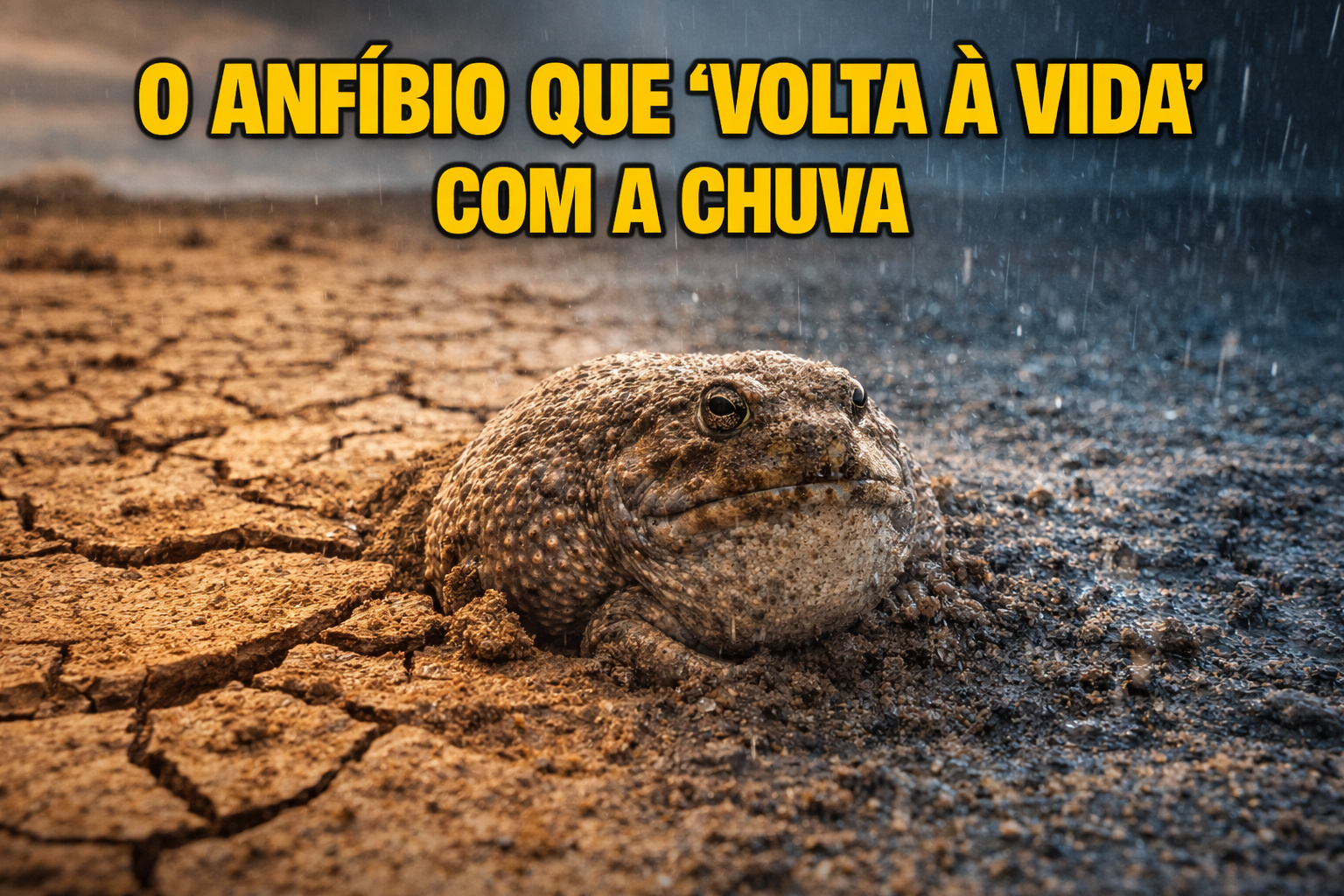
Capable of Surviving Buried for Years Without Water, the Cyclorana Platycephala Reduces Its Metabolism to the Extreme and Reactivates Completely with Rain.
The Cyclorana platycephala, known as the Australian Desert Frog, represents one of the most impressive cases of extreme physiological adaptation ever documented among vertebrates. In regions where rain can disappear for years and the soil turns into compact dust, this amphibian has developed a radical strategy: it literally dehydrates itself, buries deeply, and enters a metabolic state so reduced that, for long periods, it appears biologically inactive. When water returns, the body reacts within hours, resuming vital functions as if time had been paused.
This behavior is neither folklore nor narrative exaggeration. It is a well-documented process in zoology, known as extreme estivating, studied in detail for decades and described in scientific journals such as the Journal of Zoology.
Living in Deserts Forces the Cyclorana Platycephala to Challenge the Limits of Physiology
The natural habitat of the Cyclorana platycephala is arid and semi-arid areas of Australia, where rains are unpredictable and dry spells can extend for several consecutive years. Unlike typical amphibians, which depend on constantly moist environments, this species evolved in a scenario where water is a rare and temporary resource.
-
The Himalayas continue to grow to this day, with tectonic plates advancing 5 cm per year, mountains rising up to 10 mm annually, and the 2015 earthquake that killed 9,000 people may have increased the risk of an even larger seismic mega-event.

-
At an altitude of 400 km by astronauts from the International Space Station, Paris transforms at night into a golden mesh so precise that it reveals the outline of the Seine River, avenues, and entire neighborhoods like a luminous map drawn over the Earth.

-
iPhone 17 reaches historic low price with 256 GB, 120 Hz display, and drops to R$ 5,703 on Shopee, featuring A19 chip, dual 48 MP cameras, battery life of up to 30 hours, and advanced AI features.

-
Trip to Mars getting closer: Pulsar Fusion, from the UK, advances with plasma ignition in fusion engine and could drastically reduce space travel time, making crewed missions faster, safer, and economically viable.


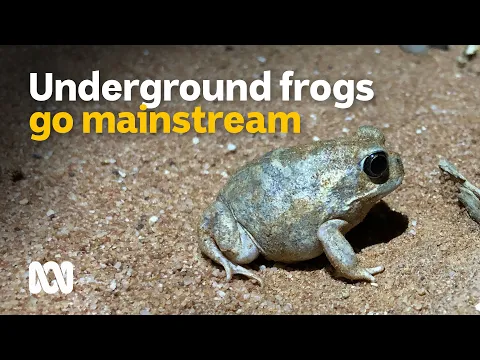

During the rainy season, the frog emerges, feeds intensively, reproduces rapidly, and accumulates energy reserves. When the environment begins to dry out, it neither migrates nor dies. Instead, it digs tunnels in the soil, reaching depths of over a meter until it finds more stable layers of temperature and residual moisture. It is at this point that the transition occurs to one of the most extreme metabolic states known among vertebrates.
Extreme Estivation Reduces Metabolism to Nearly Indetectable Levels
Upon entering estivation, the Cyclorana platycephala undergoes a profound metabolic reduction. Heart rate drops drastically, oxygen consumption plummets, and physiological functions enter a minimal maintenance mode. The animal virtually ceases to move, eat, or interact with the external environment.
In this state, the loss of bodily water is strictly controlled. The frog produces a protective mucus layer and can form a type of “cocoon” around its body, reducing evaporation. Studies show that metabolism can drop to a minimal fraction of normal, allowing the animal to survive solely on internal reserves for months or even years, depending on the duration of the drought.
Near-Total Desiccation Does Not Mean Biological Death
One of the most impressive aspects of the Cyclorana platycephala is its tolerance to desiccation. During long periods buried underground, the frog loses a significant portion of its bodily water, reaching levels that would be lethal for most vertebrates. Tissues remain functionally preserved even under extreme dehydration conditions.
This is only possible because the animal’s cells activate biochemical protection mechanisms, including protein stabilization, strict osmotic control, and nearly complete reduction of cellular processes that could generate oxidative damage. The organism enters a state of “biological pause,” in which aging, tissue wear, and metabolic degradation are drastically slowed down.
Rain Reactivates the Organism in a Few Hours
When the rains finally return and the soil becomes moist again, one of the most impressive phenomena in amphibian biology occurs. Water seeps into the ground, reaches the frog’s body, and initiates a rapid rehydration process. Within a few hours, vital functions such as active breathing, circulation, and muscular activity are restored.
The Cyclorana platycephala then emerges from the ground apparently “revived.” It quickly resumes movement, feeding, and reproducing, making the most of the brief period of water abundance. From a functional perspective, there are no signs of permanent damage caused by the long period of inactivity, something that continues to intrigue physiologists and evolutionary biologists.
Accelerated Reproduction to Take Advantage of Short Water Windows
The survival strategy of the Cyclorana platycephala does not end with reactivation. As soon as it emerges, the animal enters an extremely accelerated reproductive cycle. Eggs are deposited in temporary pools created by the rains, and the development of tadpoles occurs rapidly, before the water disappears again.
This synchronization between prolonged estivation and explosive reproduction guarantees the continuity of the species even in highly unstable environments. It is a direct evolutionary response to one of the most hostile scenarios on the planet, where timing activity wrong can mean local extinction.
What Science Learns from This Extreme Amphibian
The Cyclorana platycephala has become a natural model for studies on desiccation tolerance, metabolic reduction, and cellular preservation. Understanding how its tissues withstand long periods of dehydration has potential applications in areas such as medicine, organ preservation for transplantation, and aging biology.

Furthermore, the study of extreme estivation helps understand the real limits of vertebrate life in hostile environments, providing clues about how organisms can survive severe climate changes and prolonged periods of water scarcity.
An Amphibian That Redefines the Concept of Survival
The Cyclorana platycephala not only survives the desert — it adapts to it radically. By burying itself for years, reducing its metabolism to a minimum, and fully reactivating its organism with the simple arrival of rain, this frog challenges traditional concepts of activity, rest, and even continuous life.
More than just a biological curiosity, it serves as a powerful reminder that nature is capable of pushing physiology far beyond what seemed possible, turning waiting, pausing, and endurance into strategies as effective as strength or speed.







-

-

-

-

9 pessoas reagiram a isso.