





 Portuguese
  English
  Spanish
 4 min of reading
  0 comments


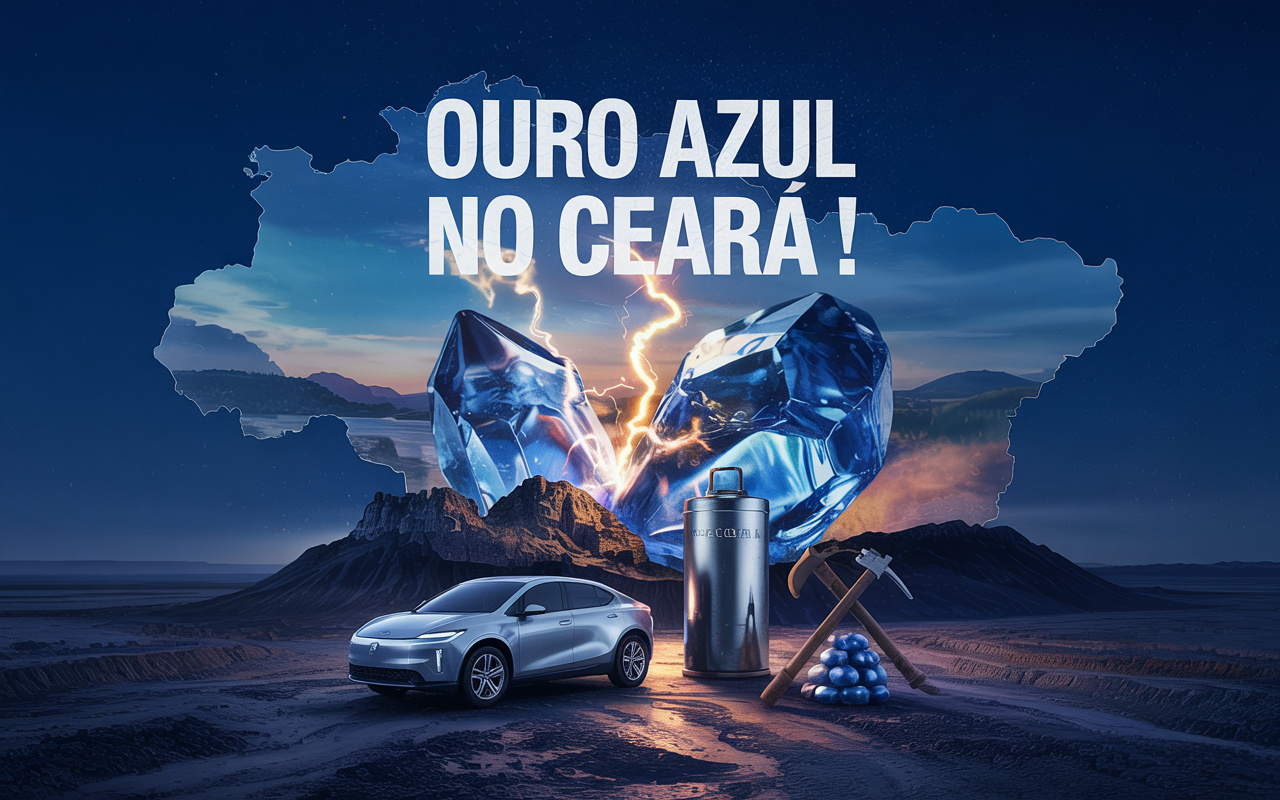
Brazil Can Gain Prominence in Cobalt Mining with Discovery in Ceará. Researchers from UFC Reveal Deposits of “Blue Gold” in Ocara, an Essential Metal for Electric Car Batteries.
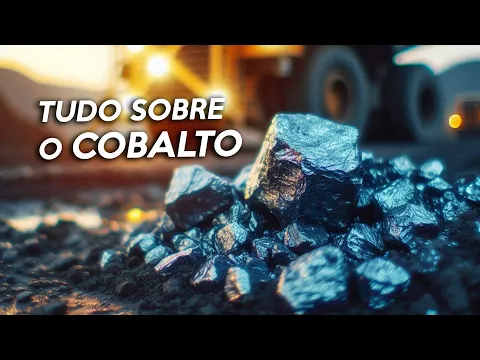
A new study conducted by geologists from the Federal University of Ceará (UFC) revealed something that could transform the future of Brazilian mining: significant deposits of cobalt in Ceará soil, a metal also known as blue gold for its growing importance in the high-tech industry.
The discovery occurred during the analysis of five large manganese deposits in Brazil, all of which showed the presence of cobalt as a byproduct—with a highlight on a specific point in the municipality of Ocara, about 160 km from Fortaleza.
Cobalt in Ceará: A New Chapter for National Mining
The main location studied, the Lagoa do Riacho deposit, is situated in Ocara, a city with about 25,000 inhabitants, where there is already an active manganese mine. The presence of cobalt at considerable levels in the region could position Ceará as a national and even international reference in the production of this strategic mineral.
-
After China, it’s now the turn of the USA to ‘secure’ a share of Brazil’s natural resources: the country buys critical rare earths for R$ 3 billion and enters the center of the global technology dispute.
-
Rare earths are in everything, from cell phones to bullet trains, and what almost no one realizes is why they have become the target of such a delicate global war.
-
Brazil extracts 26.3 million tons of ore from what was previously treated as waste, transforming residues into wealth, producing over 3 million tons of sand, and demonstrating how national mining is relearning to generate value.
-
A $3.5 billion megaproject in Latin America pumps desalinated seawater at 1,050 liters per second over 194 km to keep a copper supermine in the Andes operational for another 20 years.


According to Evilarde Uchôa, a doctoral student in Geology at UFC and a geologist at the Geological Survey of Brazil, it is still not possible to accurately estimate the total volume of the reserves, but the initial data confirm the importance of the discovery as a starting point for future studies and investments.
In addition to Ocara, other cities in Ceará have also registered signs of cobalt presence, such as Chorozinho, Horizonte, Pacajus, Acarape, Aracoiaba, Pacoti, Pentecoste, and Caucaia—demonstrating that “blue gold in Brazil” may have one of its largest hubs in the northeastern state.
Blue Gold in Brazil: What Makes Cobalt So Valuable?
Cobalt is considered one of the most strategic minerals of the 21st century, being essential for the production of rechargeable batteries used in electric cars, electric bicycles, laptops, and cell phones, in addition to:
- High-Temperature Resistant Metal Superalloys, used in aircraft turbines and thermal power plants;
- Magnetic Alloys used in high-performance electric motors;
- Chemical Catalysts important for the production of fuels and industrial products.
This versatility, combined with the scarcity of locations with viable exploration, has transformed cobalt into a geopolitical asset—with particular emphasis on its role in the global decarbonization process.
Automotive Pole and Strategic Location Favor Ceará
The timing of the discovery is especially opportune. Ceará is preparing to host an Automotive Pole in the city of Horizonte, which is set to manufacture electrified vehicles. The proximity of the mineral reserves to this new industrial hub creates a strategic local supply chain that can:
- Reduce logistical costs;
- Increase the competitiveness of national vehicles;
- Attract new companies in the battery chain.
According to Professor Felipe Holanda dos Santos from the Department of Geology at UFC, the state’s geographical position and its growing infrastructure make cobalt in Ceará a highly promising asset for the clean energy sector.
Cobalt Reserve in Brazil: Reality or Potential?
According to data from the Ministry of Mines and Energy, Brazil has approximately 70,000 tons of estimated cobalt reserves—a considerable amount, but still underutilized industrially. The vast majority of global production comes from the Democratic Republic of the Congo, raising concerns about human rights, political instability, and market monopoly.

In this context, finding cobalt deposits within national territory, especially in association with already active manganese mines, as is the case in Ceará, represents a huge competitive and environmental advantage.
Responsible Extraction and Scientific Partnerships
Despite the enthusiasm, UFC researchers emphasize that cobalt extraction needs to be conducted responsibly. Evilarde Uchôa highlights that any mining operation requires:
- Strict waste management;
- Emission control;
- Environmental recovery plans;
- Active participation of the local community;
- Monitoring of social and ecological impacts.
One of the most promising alternatives pointed out is precisely the utilization of cobalt as a byproduct of manganese extraction, avoiding the opening of new mines and minimizing additional environmental impacts.
IFRN Can Lead Beneficiation Technology
As part of the study’s developments, discussions have begun with the Center for Reference in Mineral Technology at IFRN (Federal Institute of Rio Grande do Norte) to develop, in partnership, a technological route capable of recovering cobalt associated with manganese.
This route aims to beneficiate the ore efficiently and environmentally safely, using separation and purification methods that reduce energy consumption and waste generation.
Next Step: Create a Mineral Formation Model
In addition to geological mapping, researchers are developing a geological model to explain the formation of cobalt ore in the region. This model may guide future explorations in new areas of Ceará and in other Brazilian regions.
If confirmed, this model could become a national reference for the prospecting and exploration of cobalt, which would expand technical knowledge about the resource and facilitate the attraction of public and private investments.









-

-

2 pessoas reagiram a isso.