





 Portuguese
  English
  Spanish
  5 min of reading
  1 comment


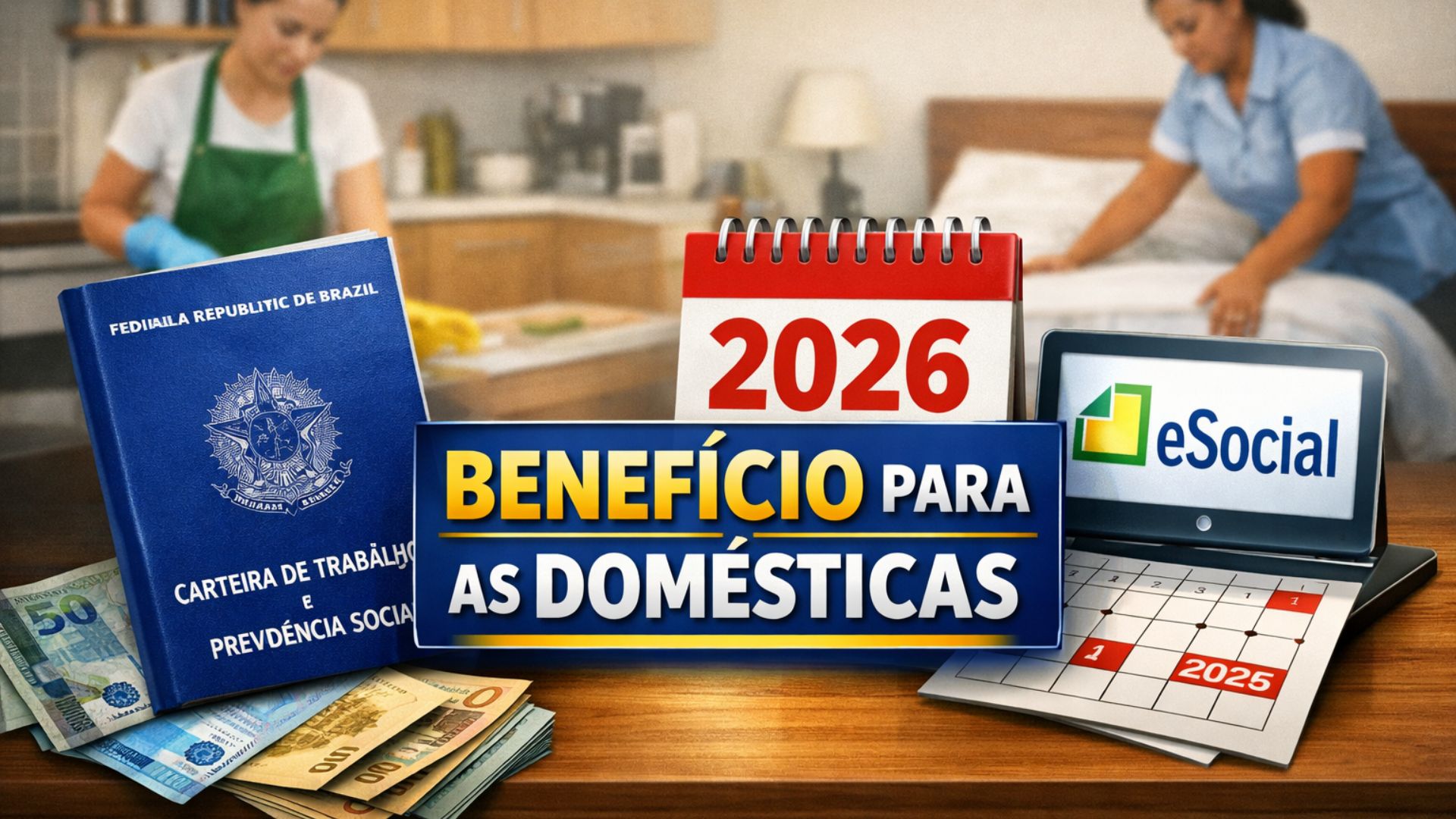


Payment of Salary Abono in 2026 Requires Attention to Rules, Formal Criteria, and Registers in eSocial, with Values Proportional to the Time Worked in 2024 and a Scheduled Calendar Defined by Caixa Econômica Federal.
Domestic workers with a signed carteira need to pay attention to the Salary Abono from PIS expected for 2026, calculated based on the information from the base year of 2024 and paid by Caixa Econômica Federal.
The benefit can act as an income boost and, for those who meet the requirements, the amount is proportional to the time worked in the considered year.
The payment is intended for professionals with a formal link who meet the criteria established by the rules of the abono.
-
Lula responds directly to Trump and says that Pix is from Brazil and will not change under pressure from anyone, after a report from the United States pointed out the Brazilian payment system as an American trade barrier.

-
Amazon has just announced a new fee on all deliveries, and your online purchases will become more expensive starting April 17, including for those buying from the United States here in Brazil.

-
He sold his share for R$ 4 thousand, saw the company become a giant worth R$ 19 trillion, and missed the opportunity of a lifetime.

-
Elon Musk’s Starship megafrocket puts $8 billion at risk, raises alarms in the market, and could affect technology, mining, and space internet startups in the coming years.


Therefore, checking the conditions and records in eSocial is a decisive step to avoid setbacks in withdrawal.
Salary Abono from PIS Enters the Radar of Domestics in 2026
The salary abono from PIS is an annual benefit that can complement the income of workers who fall within the eligibility rules.
In the 2026 cycle, the analysis considers the base year of 2024, when registration time, average income, length of service, and the regularity of labor information are verified.
In practice, this means that the worker can meet the requirements during 2024 and have the payment released according to the calendar defined for 2026.
Still, the right depends on the verification of the data that reaches the official systems, making it essential to monitor the registration situation.
Base Year of 2024 Defines Who Can Receive the Benefit
To be entitled to the abono in 2026, the worker needs to meet the rules considering what occurred in 2024.
The evaluation is based on the history of registration in PIS, the average income limit, the minimum length of remunerated activity, and the correct submission of information by the employer.
This set of conditions serves as a filter.
Even when the professional worked formally, the release may be blocked if there is data inconsistency, delay in submission, or failures in the linkage registration.
Four Mandatory Criteria to Be Entitled to the Abono in 2026
The first requirement is registration time.
The worker must have been registered in PIS for at least five years.
Additionally, the average monthly income counts.
In 2024, the professional needs to have received, on average, up to two minimum wages per month, according to the program’s parameter.
The third point is the length of service in the base year.
To be considered, the worker must have engaged in remunerated activity with a signed carteira for at least 30 days in 2024, even if in non-consecutive periods.
Finally, the criterion that often causes headaches is updated and correctly informed data.
The labor information must have been submitted by the employer correctly to the systems used to register the linkage, such as eSocial and, when applicable, RAIS.
Calculation of the Amount Explains Why Not Everyone Receives the Total
The value of the salary abono is proportional to the time worked in the base year.
Those who engaged in remunerated activity for all 12 months of 2024 tend to receive the full amount indicated for the benefit in the 2026 calendar.
Those who worked for less time receive it proportionally.
The calculation rule follows the logic of 1/12 of the benefit for each month worked in the base year, which reduces the final amount when there were fewer months of linkage in the analyzed period.
Therefore, even if the worker meets the other requirements, the amount can vary significantly from case to case.
What defines the amount, in this case, is the number of months effectively considered in the year of 2024.
Calendar of PIS 2026 Foresees Payments Starting in February
The payment of the abono follows a schedule defined by Caixa Econômica Federal.
The calendar usually considers the month of birth of the beneficiary or the ending number of the NIS, according to the rules applied to the cycle.
The forecast presented in the base text is that the payments will start in February 2026.
The releases should progress in a staggered manner until July 2026, respecting the established schedule for the benefit.
As the release is staggered, monitoring the official calendar and confirming the correct payment date helps avoid unnecessary trips, expectations outside the deadline, and doubts about delays.
Error in eSocial Can Block Withdrawal Without Prior Notice
Even when the worker meets the requirements, a recurring problem can prevent the release.
The main issue involves labor information sent incorrectly or incompletely by the employer.
This includes records with inconsistent data, failures in the submission of the linkage, discrepancies in admission and termination dates, or information that does not appear correctly in the system.
In these situations, the worker may believe that everything is fine due to having a signed carteira and regular contributions.
Still, the benefit may not be released if the registration is not validated in processing.
Therefore, in addition to checking income and length of service criteria, it is essential to confirm that the 2024 linkage appears correctly in the records.
When there is an error, the correction depends on the adjustment of the information by the employer in the responsible system.
This process can cause delays and complications if the verification is left until the last minute.
Salary Abono Can Reinforce the Budget Throughout the Year
The salary abono can help compose the budget, especially when essential expenses pressure day-to-day life.
When the worker meets the rules and the data is correct, the amount acts as a supplement to income.
This resource can be used to cover fixed expenses and emergencies during the period.
To avoid the risk of losing the payment, it is worth monitoring the calendar, confirming whether the criteria are met, and checking if the information has been accurately registered.
This monitoring reduces the chance of surprises at the time of withdrawal and allows for earlier action if there are registration pending issues.









Fake news !
Infelizmente empregada doméstica não tem direito ao pis