





 Portuguese
  English
  Spanish
  4 min of reading
  91 comments


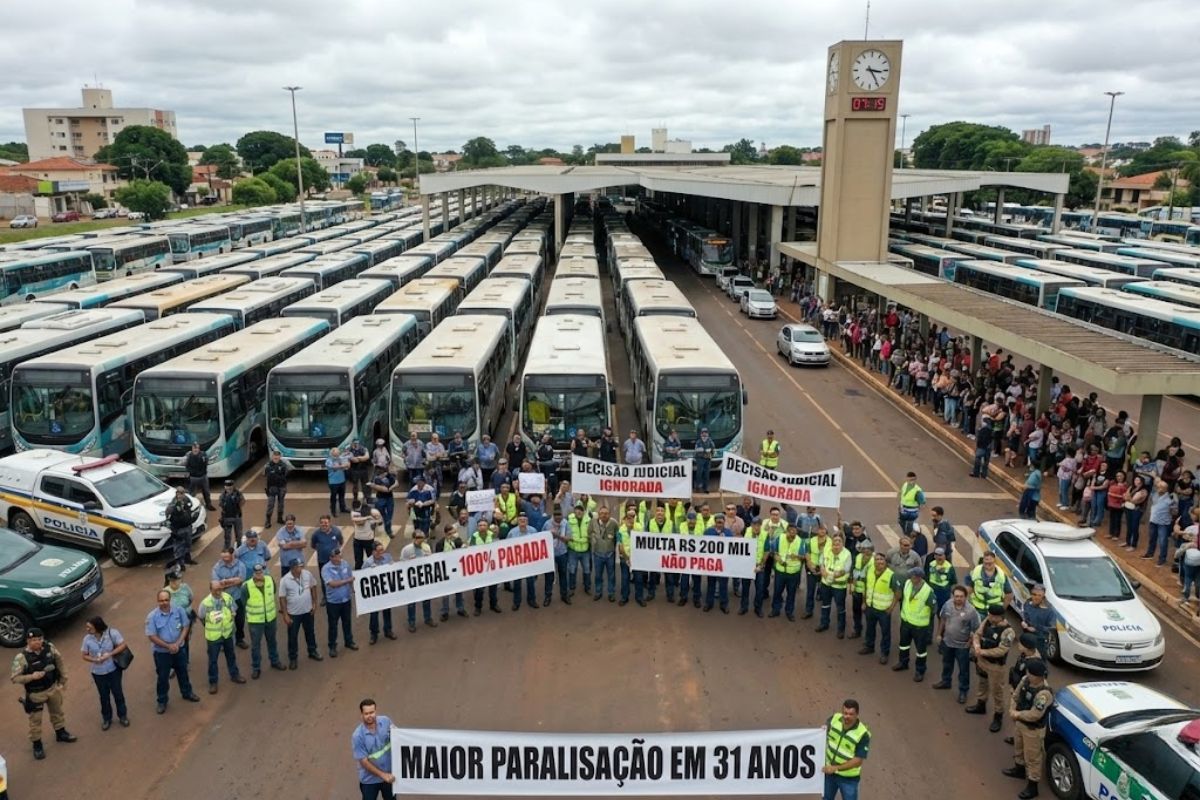


In Assembly This Wednesday (17), Drivers Decided to Maintain Full Strike, Ignore Fine of R$ 200 Thousand, and Stay Stopped Until They Receive Overdue Salaries, Pushing Campo Grande Into the Biggest Bus Stoppage in 31 Years and Leaving Passengers Without an Alternative for Urban Transport in Neighborhoods, Peripheries, Schools, and Hospitals.
This Wednesday (17), the strike of the collective transport drivers in Campo Grande reaches its third day with 100% of the fleet stopped, even after a court ruling for a staggered return of the buses starting at 6 AM and imposing a fine of R$ 200 thousand on the union.
The decision to maintain the total stoppage was made in an assembly on the steps of the TRT-24, right after the hearing where the judge raised the fine and ordered the partial resumption of service, pushing the city into the biggest bus stoppage in 31 years, while workers continue to demand overdue salaries.
Assembly Rejects Partial Return and Maintains 100% of the Strike
The assembly held on the steps of the TRT-24, right after the hearing with the Labor Court, ended with a clear decision: the drivers decided to maintain the strike with 100% of the fleet stopped.
-
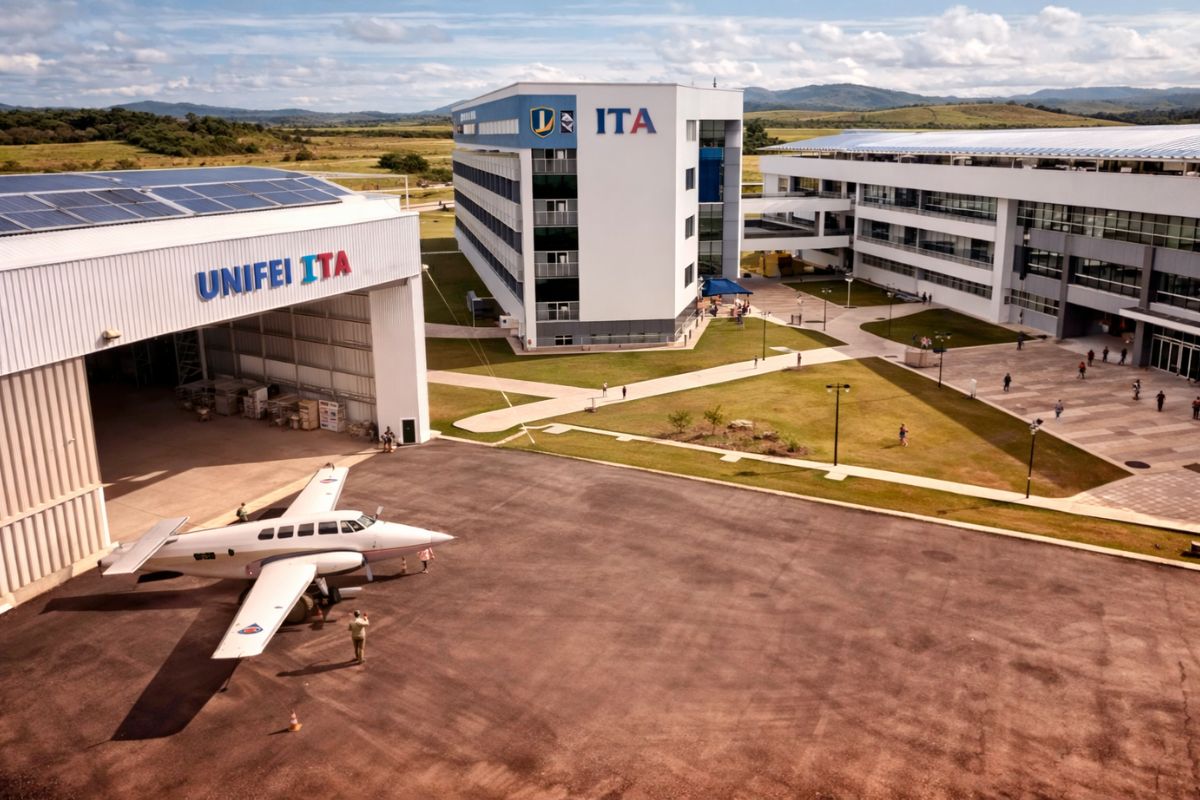
The institute that trained the greatest aerospace engineers in Brazil has just opened its first campus outside São Paulo after 75 years: ITA Ceará will have R$ 445 million, new courses in energy and systems, and classes are expected to start in 2027.
-
Luciano Hang, owner of Havan, goes to Juiz de Fora after the tragedy in February, brings R$ 1 million, hands out R$ 2,000 cards, and donates up to R$ 15,000 to victims in the region.

-
The Brazilian passport allows legal residence in dozens of countries without the need for a prior visa, and most Brazilians are unaware that they can apply for residency directly upon arriving in nations in South America, Africa, and even Europe.

-
Petrobras sends a message to Brazilian truck drivers after fuel collapse and reveals plan to have 100% domestic diesel.


Even in the face of the court order that mandated a staggered return of the buses starting at 6 AM, the category opted not to comply with the ruling.
In the meeting, the president of the union, Demétrio Freitas, even suggested the return of 40% of the workforce as a way to partially fulfill the decision.
The proposal, however, was rejected by the majority of the workers, who approved the continuation of the total stoppage and decided not to show up at the garages.
Union Faces Fine of R$ 200 Thousand and Insists on Receiving Salaries
After the assembly, Demétrio emphasized that the choice to maintain the strike was collective and made by the workers who attended the hearing.
According to him, the category decided to remain stopped even with the fine of R$ 200 thousand imposed on the union and other penalties that may arise.
He made it clear that the priority is the payment of the overdue amounts. According to the leader, “until they receive what is conditioned, they will not return.”
For the union, there is no atmosphere to end the strike without the salaries being regularized, even if this means prolonging the stalemate with the court.
Strike Leaves Population Without Buses for Three Consecutive Days
The continuation of the total strike means that Campo Grande will be left without buses for three consecutive days, as the union already admits, complicating the routine of those who depend daily on public transport in the city.
Demétrio stated that “this is not what we want” to leave the city without buses, but reiterated that every worker needs to be paid.
Without salaries up to date and without a concrete proposal from the Guaicurus Consortium, the movement’s orientation is to maintain pressure and keep the stoppage until there is a solution presented at the negotiation table.
Guaicurus Consortium Admits a Debt of R$ 1.3 Million with Drivers
On the other side of the table, the president of the Guaicurus Consortium, Themis Oliveira, acknowledged that there are still significant amounts to be paid to the workers.
According to him, more than R$ 1.3 million remains to be paid regarding 50% of the November salary, an amount that depends on transfers to be negotiated with the city hall.
Themis stated that the consortium will continue talking with the public authorities and negotiating all the time to try to unlock the payments and end the strike.
He emphasized, however, that the decision to maintain or not the stoppage rests solely with the drivers and declared that he cannot intervene in the choice of the category.
City Approaches the Largest Bus Stoppage in 31 Years
As the strike enters its third day this Wednesday (17) with no deal in sight, Campo Grande is heading toward the largest public transport stoppage in 31 years.
The last major interruption of service lasted 72 hours during the administration of Juvêncio César da Fonseca, a scenario that is now putting pressure back on public authorities, companies, and users.
While the union, consortium, and city hall exchange public statements and promise to negotiate, the strike keeps the entire fleet of buses off the streets, conditioned on the payment of overdue salaries to the drivers.
And you, do you think the drivers are right to maintain the total strike even with the fine of R$ 200 thousand, or has the stoppage gone beyond the limit for those who depend on the buses?










Parabéns aos trabalhadores!!! Se não tem salário não tem trabalho, simples assim. Achou ruim? Vá a pé.
Vamos ver se o STF vai obrigar os motoristas a voltar a trabalhar ou fazer o sindicato pagar os motoristas.
Oi