





 Portuguese
  English
  Spanish
  4 min of reading
  7 comments


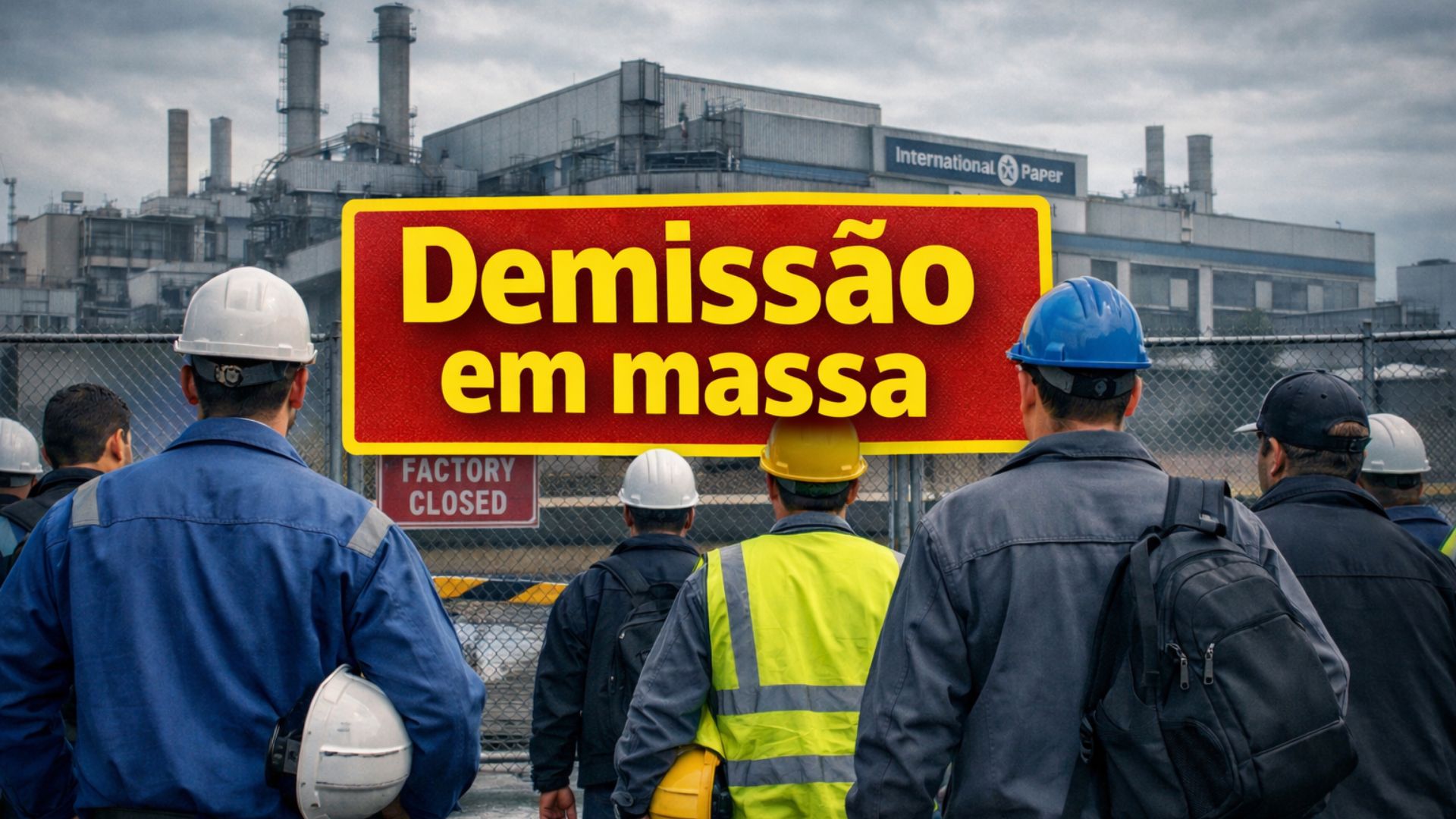


Closing of Two Packaging Plants Affects Cities and Hits 218 Workers. Production Will Be Relocated and Company Talks About Reducing Costs in Light of Weaker Demand, While Restructuring Continues.
International Paper announced it will close two packaging units in the United States, in Compton, California, and in Louisville, Kentucky, with operations expected to be halted by January 2026.
According to the company, the decision is part of a move to reduce costs and consolidate operations amid weaker demand.
In total, 218 workers will be affected by the measure, while production is expected to be transferred to nearby facilities and customers will continue to be served by other units.
-
The institute that trained the greatest aerospace engineers in Brazil has just opened its first campus outside São Paulo after 75 years: ITA Ceará will have R$ 445 million, new courses in energy and systems, and classes are expected to start in 2027.

-
Luciano Hang, owner of Havan, goes to Juiz de Fora after the tragedy in February, brings R$ 1 million, hands out R$ 2,000 cards, and donates up to R$ 15,000 to victims in the region.

-
The Brazilian passport allows legal residence in dozens of countries without the need for a prior visa, and most Brazilians are unaware that they can apply for residency directly upon arriving in nations in South America, Africa, and even Europe.

-
Petrobras sends a message to Brazilian truck drivers after fuel collapse and reveals plan to have 100% domestic diesel.


218 Workers Affected and Divided by Unit
According to the Reuters news agency, layoffs were made in November, and the number of affected employees was divided between 125 people in Compton and 93 in Louisville.
International Paper stated it intends to minimize the impact on workers by resorting to mechanisms such as attrition, retirements, and the filling of existing vacancies in other locations within the group, in addition to exploring internal transfer possibilities.
Production Transfer and Customer Service
In the announcement, the company indicated that the closure is part of a strategic initiative focused on growth in North America, aimed at reorganizing its packaging industrial network.

The company also stated that “all customers will be served” by nearby locations after the plants close, signaling that supply will be redirected without planned interruptions in service, although with logistical and capacity changes among units.
Immediate Uncertainty and Measures Mentioned by the Company
Although the title of the move is the closing of the factories, the immediate effect for workers is the uncertainty about the fate of jobs and how the transition will occur by January.
The company itself said it will seek to reduce job losses through reallocations and voluntary exits, but acknowledged the direct impact on the local workforce by linking the closure to the need to adjust costs to the level of demand.
In coverage on the subject, there is also mention of transition support, such as relocation assistance and severance benefits, presented as part of the measures aimed at those affected.
Weaker Demand and Operational Consolidation
The context of the announcement includes a period of broader adjustments at International Paper, one of the largest companies in the paper and packaging industry.
Reuters highlighted that the closure comes at a time of weaker demand and efforts for operational consolidation, with the company citing the need to reduce costs in a scenario of pressure on volumes.
The market reading for the sector has been marked by companies trying to adjust installed capacity, redesign service routes, and increase efficiency, especially when the demand for certain types of packaging does not keep pace with what had been planned in previous cycles.
Restructuring, Acquisitions, and Asset Sales on the Radar
The recent trajectory of International Paper helps explain why the announcement of two factories, although localized, gained international attention.
Reuters pointed out that the company had been making relevant strategic moves, such as acquiring the British DS Smith and selling its global cellulose fibers unit for US$ 1.5 billion, in addition to recording a quarter with losses after a significant accounting write-off related to the fiber transaction.

These elements appear as a backdrop to a more concentrated repositioning in packaging, while the company tightens costs in assets considered less efficient within its portfolio.
Local Impact in Compton and Louisville
The closure of factories, especially when it involves specific communities like Compton and Louisville, tends to generate repercussions that go beyond the corporate environment.
In practice, the deactivation of industrial plants can affect the local economy, supplier chains, and the regional employment dynamic, even though the company claims that customers will be served by nearby units.
In Louisville, local vehicles reported the official information that 93 jobs are directly affected and emphasized that the decision was communicated via a company statement, without detailing, at this first moment, how many workers would effectively be transferred to other facilities.
Details Not Included in Initial Statements
In the case of Compton, California, the unit has the largest share of impacted positions, with 125 workers.
The company’s public announcement did not detail in the statement which nearby facilities will absorb the production flow from each plant, only stating that customer service will continue from other locations.
This lack of detail leaves some practical questions open for those who live the daily life of the factories, such as the transition schedule by sector, the fate of specific lines, and the extent of relocation offers.
History of Closures in 2025
International Paper also has a history of industrial adjustments in 2025, making the November announcement part of a larger reorganization movement.
In February, Reuters had already reported that the company intended to close four units in the US and cut about 1% of the global workforce, citing declining demand for packaging products.
The repetition of closure announcements throughout the year helps explain why the Compton and Louisville case received attention: it fits into a sequence of capacity and industrial footprint decisions, rather than being an isolated event.









É uma verdadeira **** esses anúncios que aparecem no meio da matéria
Quando o balanço não fecha na iniciativa privada é realizada a reengenharia, no setor público fazem o contrário, só aumento de impostos, tornando o povo pagador e pobres.
EmpreGa ???