





 Portuguese
  English
  Spanish
  3 min of reading
  0 comments


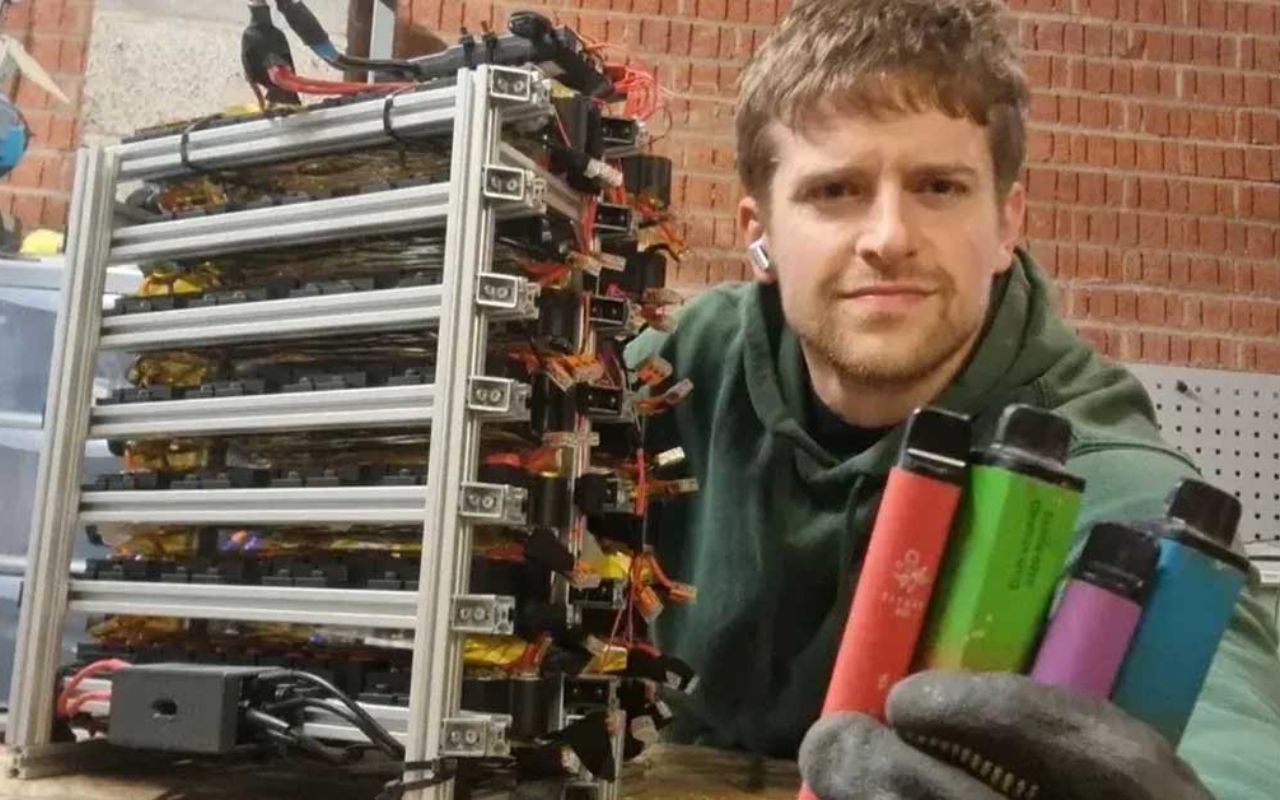
Engineer Chris Doel Utilizes Batteries From 500 Discarded Vapers To Create System Capable Of Powering Electric Car In Technological Recycling Experiment.
A curious technological experience showed that discarded electronic devices can still be useful. British engineer Chris Doel developed a project in which he repurposed batteries from about 500 vaping devices to generate enough energy to power an electric car.
The experiment was conducted to demonstrate the potential for reusing the lithium-ion cells found in these devices.
Instead of allowing the devices to be discarded as electronic waste, the engineer decided to disassemble them and extract the small internal batteries. These cells were then gathered to form a unique energy system.
-
This simple tool eliminates the need for a plumb line with each row, speeds up brick laying by up to 40%, and any laborer can align the wall by themselves, but almost no one in Brazil uses it on construction sites.

-
Won R$ 72 million in the British lottery, but lost it all for not claiming: October ticket in Bexley was forgotten, the 180-day deadline passed, and the fortune will fund local community projects in London.

-
Mixing vinegar with detergent in a blender has become the most talked-about cleaning trick on the internet because it solves a problem that everyone has in the kitchen in seconds and uses only two ingredients that you already have at home.

-
The largest fortress on the planet is located in a city with 10 km star-shaped walls, 300 hectares protected, an aqueduct with 843 arches and 7 km long, strategic forts, and a UNESCO title that intrigues specialists.


As a result, the outcome was a handmade battery capable of powering a functional electric vehicle.
Electric Car Reached Up To 56 Km/h During Tests
Even being an experiment, the system showed real results. The electric car used in the project managed to reach a maximum speed of approximately 56 km/h.
The power generated by the improvised battery was close to 5 kW, a relatively low value when compared to modern electric cars.
Still, the vehicle demonstrated operational capability during tests. The recorded range was about 29 kilometers on a single charge.
These numbers primarily reflect the safety limitations imposed on the repurposed battery system.
Current Limit Was Necessary To Avoid Risks
During the development of the project, the engineer needed to take some precautions.
The electric car can require electric currents of up to 350 amperes in certain situations.
However, the cells taken from the vaping devices were not designed to withstand that level of load.
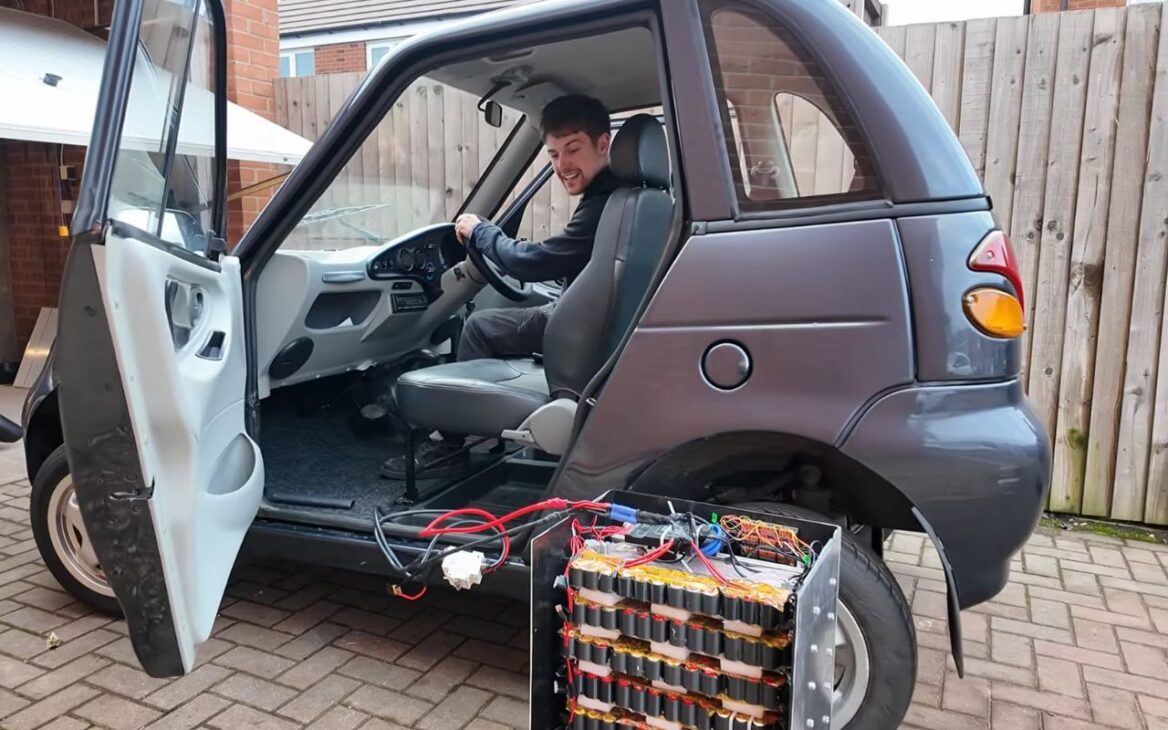
To avoid overheating or damage to the batteries, Doel limited the electrical flow to about 60 amperes.
This restriction helped keep the system safe, although it reduced the vehicle’s performance.
Battery Was Built With 500 Lithium-Ion Cells
The central element of the project was the battery created from 500 individual cells taken from the vaping devices.
Each of these devices contains small lithium-ion batteries, technology quite common in portable electronics.
By gathering these cells, the engineer managed to assemble an energy set capable of storing approximately 2.5 kWh of energy.
The resulting system began to operate at about 50 volts of voltage, a value close to the 48 volts used in the original batteries of the electric car.
This compatibility facilitated the adaptation of the new energy system to the vehicle.
G-Wiz Was Chosen To Facilitate Modifications
To put the experiment into practice, the engineer used a G-Wiz, a small electric car known for its simple structure.
The model is technically classified as a heavy electric quadricycle and has simpler systems than modern electric vehicles.
This simplicity allowed the battery created with vaping cells to be installed without facing major technological obstacles.
In more modern vehicles, advanced software and battery management systems could prevent this type of modification.
Regenerative Braking System Continued Functioning
Even with the improvised battery, the electric car maintained an important feature: regenerative braking.
This system allows recovering part of the energy generated during braking and sending it back to the battery.
In tests conducted by the engineer, the system managed to feed back about 10 amperes of current to the battery set formed by the vaping cells.
This helped slightly improve the vehicle’s energy efficiency during the experiment.
Project Highlights The Importance Of Recycling Electronic Devices
Besides the curious aspect, the experiment also raises a relevant discussion about the disposal of electronic devices.
The vaping devices contain lithium-ion batteries that often end up discarded without reuse.


By using these components to power an electric car, the engineer showed that part of this material still has energy value.
Even so, he emphasizes that handling lithium cells requires adequate technical knowledge.
Improper contact with these batteries can cause overheating, short circuits, or even fires.
Thus, the project functions both as a demonstration of creativity and as a warning about the importance of responsible recycling of electronic waste.
Source: AutoPapo







-

-

2 pessoas reagiram a isso.