





 Portuguese
  English
  Spanish
  3 min of reading
  0 comments


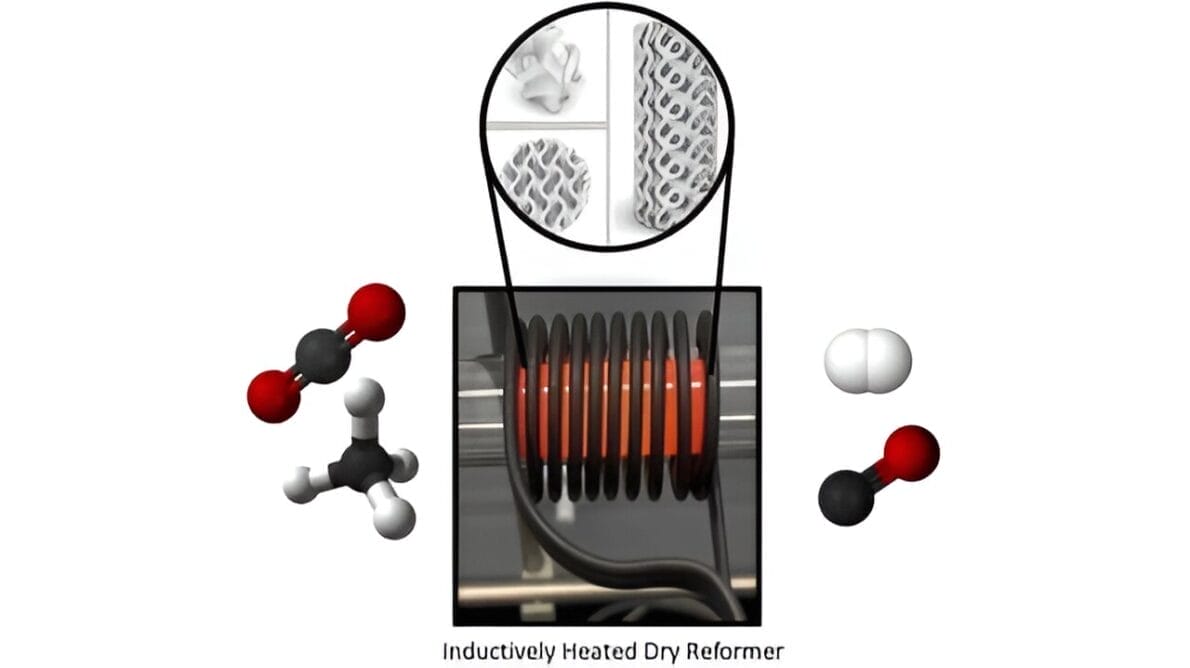
The Modular And Electrified Reactor Developed By Monash Engineers Can Reduce Carbon Emissions By Up To 60% In Key Industries.
Technological innovation has been a key piece in the search for more sustainable and efficient solutions across various industries, and one of the most recent advances is the development of an electric reactor that promises to revolutionize sectors such as chemical manufacturing, fertilizer production, and hydrogen generation.
This electrified reactor, designed by engineers at Monash, provides an alternative to traditional high-temperature industrial processes, reducing emissions, increasing efficiency, and cutting costs.
How The Electrified Reactor Works
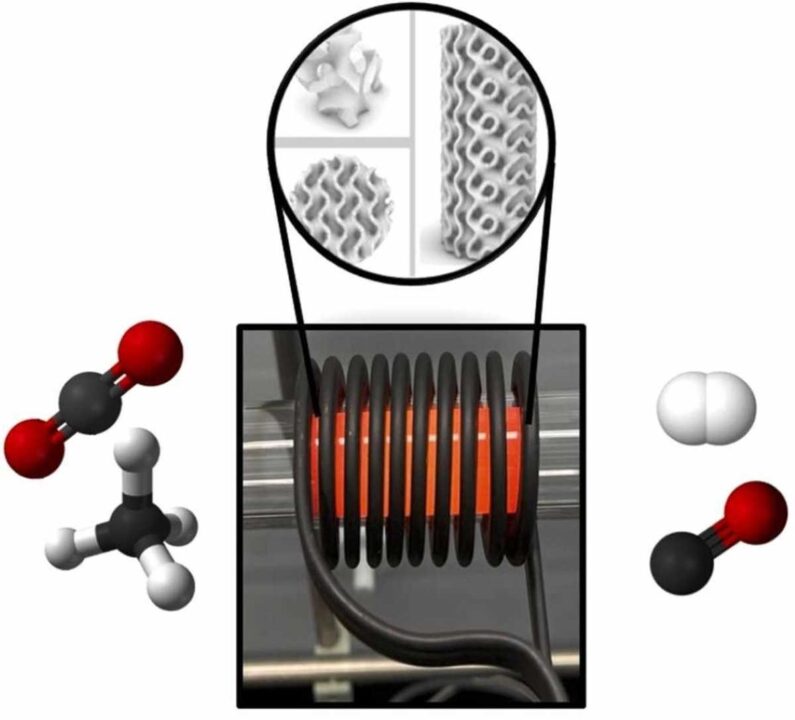
The reactor stands out by providing a sustainable solution for the dry reforming of methane (DRM), used for the production of important chemicals such as methanol, ammonia, and synthetic fuels.
-
Goodbye pet hair on clothes: a washer with an internal filter promises to remove up to 5 times more hair than regular machines and uses an XL trap dryer system to capture what remains.

-
The most overlooked waste in the electricity bill doesn’t come from the refrigerator or the air conditioner; it escapes through almost invisible cracks in doors and windows, operating all day long and can steal up to 20% of the energy used for climate control, while a low-cost seal takes just a few hours to eliminate this loss.

-
German engineers had an idea that no one had tried before: to hide the hydrogen tank inside the tractor’s wheels so that the machine can operate all day in the field without needing diesel.
-
China has created its first space exploration school, an academic structure with 14 areas, 22 new subjects, and a focus on interstellar propulsion to prepare for missions beyond the Moon and Mars.

Traditionally, these industries have relied on fossil fuels to generate the necessary reactions, which occur at temperatures above 900 °C, significantly contributing to global carbon emissions. Now, with the use of the electrified reactor, these industries can move away from fossil fuel combustion and adopt a cleaner and more efficient approach.
According to a study published in the journal Applied Catalysis B: Environment and Energy, the electrified reactor developed by the engineers is powered by renewable energy and can reduce carbon emissions by up to 60%, while improving the efficiency of industrial processes.
Compared to conventional methods, which achieve a conversion rate of 75% in methane processing, the new reactor achieves an impressive 96% conversion, making it a significantly more efficient option.
The Importance Of The Invention
Professor Akshat Tanksale, research leader and Deputy Director of the ARC Research Hub for Carbon Utilization and Recycling, emphasized the importance of innovations like this in the context of industrial decarbonization.
“Industries can now sustainably power their reactions, cutting operational costs and reducing their emissions,” said Professor Tanksale.
He also highlighted that the reactor offers exceptional efficiency, enabling performance that is much superior compared to traditional processes based on fossil fuel combustion.
In addition to high efficiency, the electrified reactor has a key feature: its compact and modular structure, facilitating integration into existing industrial infrastructures.
This allows it to be quickly implemented and scaled across different industrial sites without the need for major disruptions in products.
This flexibility makes the reactor a practical solution for many industries looking to decarbonize their operations quickly and efficiently.
Another central point of the innovation is the use of 3D printed monoliths, which maximize the surface area of the reactor to increase its efficiency.
Through precisely applied catalyst coating techniques, engineers have been able to optimize the reactor’s performance, pushing the limits of what is possible in methane reforming.
This advancement in technology enables the industrial production of chemicals and fertilizers to become more sustainable, without compromising productivity or profitability.
This new technology is poised to play a vital role in the transition to a lower carbon emission future, providing industries with a way to improve their efficiency and reduce costs at the same time.
The adoption of innovative solutions like the electrified reactor can be a game changer on the path to industrial sustainability.










Seja o primeiro a reagir!