





 Portuguese
  English
  Spanish
  4 min of reading
  0 comments


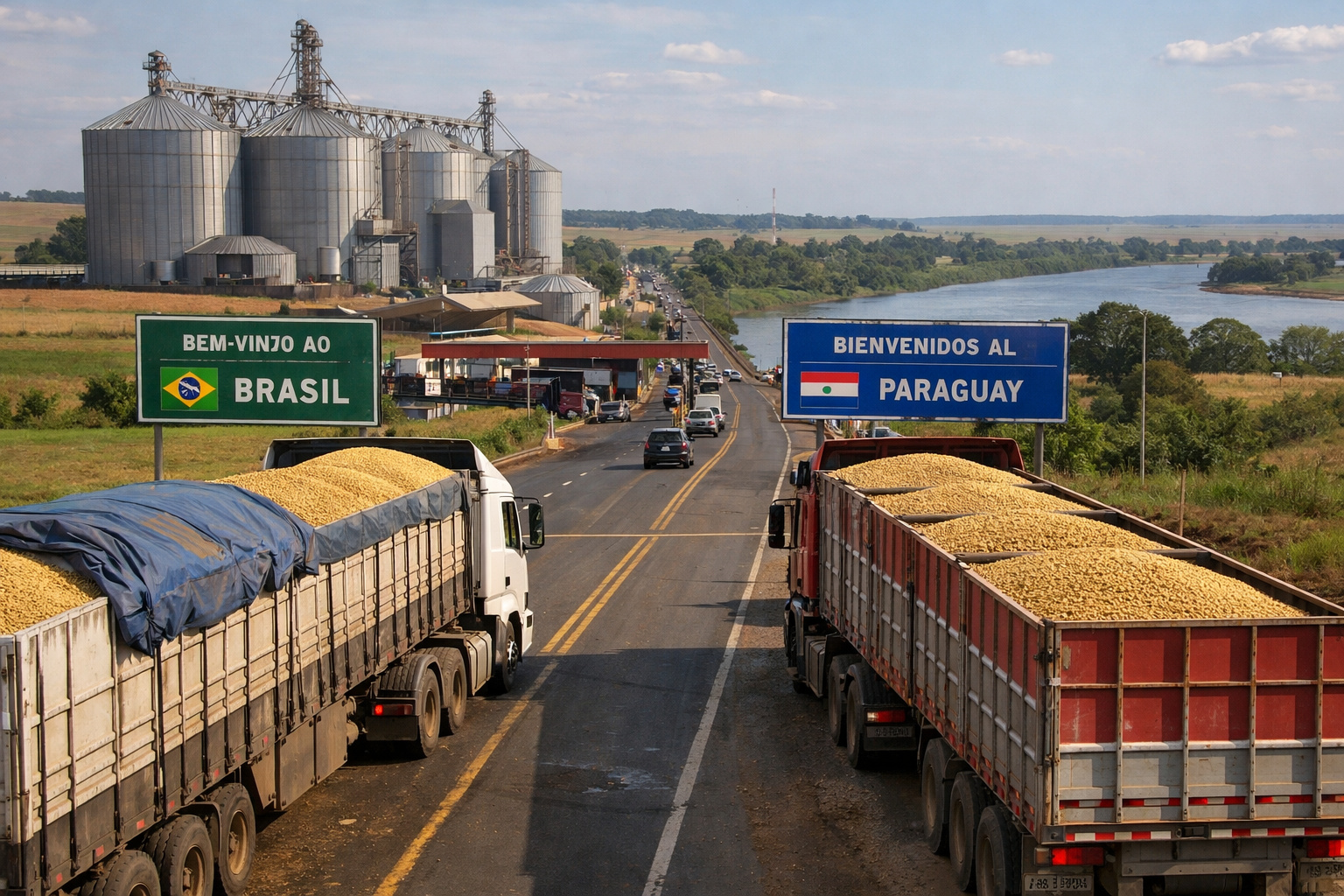
Even Though Brazil Is the Largest Global Soybean Producer and Exporter, It Has Started to Import Record Volumes of Paraguayan Grain, a Movement That Reveals Cost Pressures, Price Arbitrage, and Growing Difficulties Faced by the National Producer
Brazil is, by a wide margin, the largest producer and exporter of soybeans in the world. Nevertheless, a recent piece of data has drawn the attention of the agricultural market and raised relevant questions about the sector’s dynamics: the country has increased its imports of Paraguayan soybeans by 472% between 2023 and 2025. The movement seems contradictory at first glance, but when analyzed in depth, it reveals a combination of high costs, logistical bottlenecks, and price limits imposed by the very structure of the market.
According to data from the Agrostat system of the Foreign Trade Secretariat (Secex), Brazilian imports of Paraguayan soy jumped from 176.1 thousand tons to 1.007 million tons in the analyzed period. This information was disclosed by Canal Rural, in an article signed by economy and politics commentator Miguel Daoud, who closely follows the structural transformations of Brazilian agribusiness.
Although Paraguay ranks only sixth in the global soybean production ranking—with about 10 million tons per harvest—the neighboring country has been consolidating as a competitive alternative for the Brazilian industry, especially at times when domestic prices deviate from international parity.
-
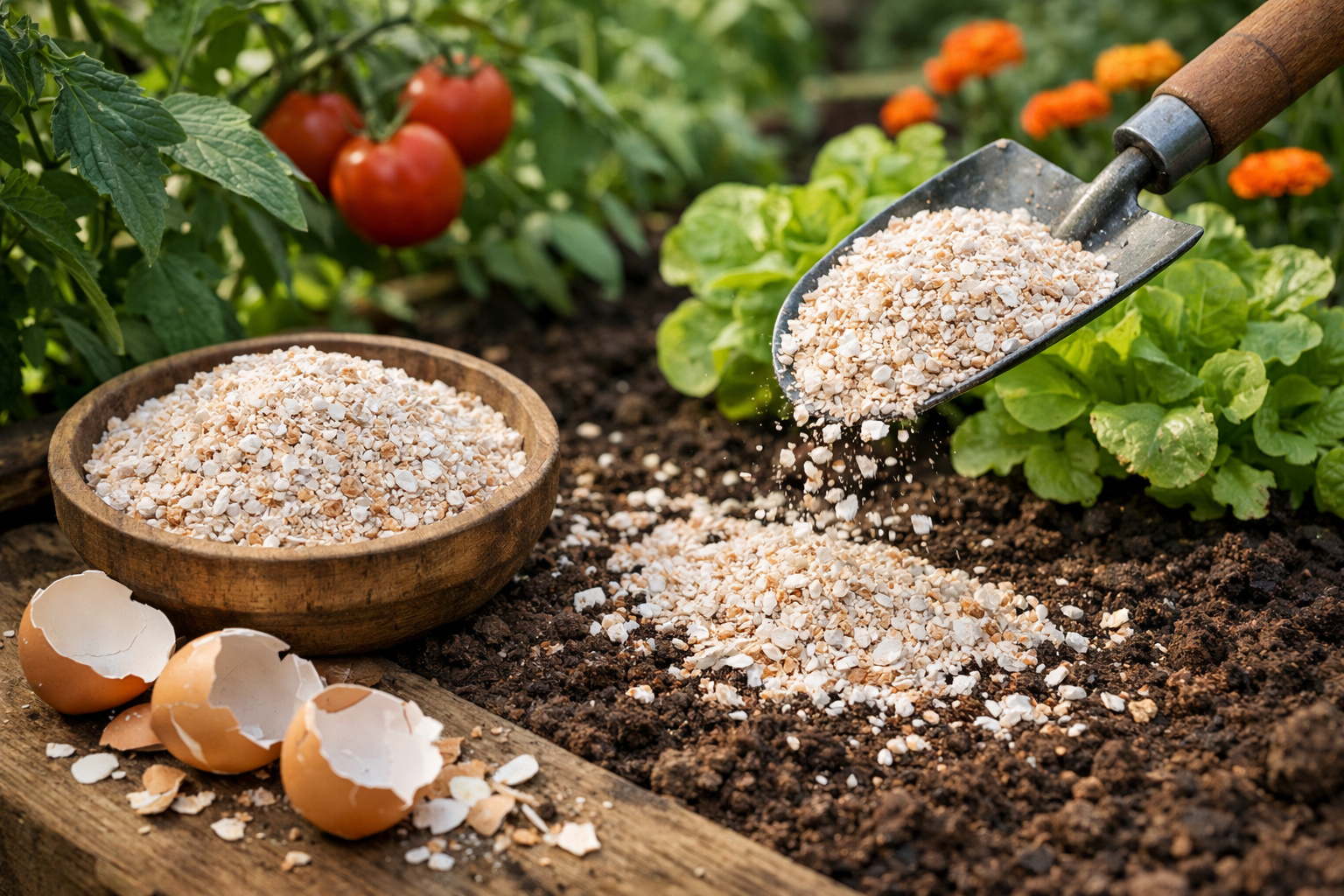
The eggshell that almost everyone throws away is made up of about 95% calcium carbonate and can help enrich the soil when crushed, slowly releasing nutrients and being reused in home gardens and vegetable patches.
-
This farm in the United States does not use sunlight, does not use soil, and produces 500 times more food per square meter than traditional agriculture: the secret lies in 42,000 LEDs, hydroponics, and a system that recycles even the heat from the lamps.

-
The water that almost everyone throws away after cooking potatoes carries nutrients released during the preparation and can be reused to help in the development of plants when used correctly at the base of gardens and pots, at no additional cost and without changing the routine.

-
The sea water temperature rose from 28 to 34 degrees in Santa Catarina and killed up to 90% of the oysters: producers who planted over 1 million seeds lost practically everything and say that if it happens again, production is doomed to end.


Imports Increase Not Due to Soybean Scarcity, But Due to Lower Costs
It is important to highlight, first and foremost, that the increase in imports is not related to soybean scarcity in Brazil. On the contrary, the country continues to harvest large crops. The decisive factor, according to analysis by Miguel Daoud, lies in the difference in production and logistics costs between the countries.
Brazilian crushers have started seeking soybeans from abroad because, at certain times, imported soybeans are cheaper than domestic ones, even after the inclusion of freight, taxes, and internalization costs. This scenario occurs, especially when domestic prices attempt to rise above the international level to compensate for the increased costs faced by Brazilian producers.
Moreover, neighboring countries like Paraguay—and, at times, Argentina—operate with a leaner cost structure, combining lower financial burden, more efficient logistics, and less pressure on land leases. As a result, the industry uses imports as a price containment valve, preventing sharper increases in the domestic market.
In practice, whenever the domestic market tries to sustain higher prices, the possibility of importing cheaper soybeans acts as a ceiling, limiting the grain’s appreciation in Brazil.
High Prices Are Not Synonymous with Profit in Brazilian Fields
This movement dismantles a frequently repeated idea by those unfamiliar with the agribusiness reality: that Brazilian producers are “making a lot” just because soybean prices rise at certain times. As explained by Miguel Daoud, in an analysis published on Canal Rural, this reading is simplistic and does not reflect what happens in the fields.
What is currently observed is a scenario of high costs, compressed margins, and increasing financial pressure, even when nominal prices seem higher. Producing soybeans in Brazil has become significantly more expensive in recent years.
High interest rates increase working capital and harvest financing costs. Logistics, in turn, weighs heavily on the final cost, both in freight and storage. Furthermore, exchange rates directly influence the price of inputs, many of which are dollar-denominated, such as fertilizers and pesticides.
As a result, the increase in domestic soybean prices does not necessarily represent real gains for the producer. In many cases, it is merely a market reaction aimed at covering higher costs, without generating an effective expansion of margin.
Rigid Leases Stifle Producer Margins
One of the most relevant structural factors in this context is the weight of land leases. A significant portion of Brazilian producers cultivates on leased land, imposing a high and inflexible fixed cost.
In this model, the lease value must be paid regardless of the soybean price, weather conditions, or harvest productivity. This creates a rigid cost floor, dramatically reducing the producer’s ability to adjust in adverse scenarios.
When interest rates, logistics, and leasing rise simultaneously, domestic prices react to try to cover expenses, not to increase profitability. The result is a higher price “on paper,” but tight margins in practice.
This reality helps to explain why, despite global leadership in production, Brazil is seeing an increase in delinquency in the fields and bankruptcy petitions among rural producers. If profitability were truly high, this movement would not be occurring.
What exists today, as highlighted by Miguel Daoud in his analysis on Canal Rural, is a producer pressured between rigid costs and a price ceiling imposed by arbitrage via imports. This is not a distortion but the functioning of the economy, with the producer bearing most of the adjustment.
Will Brazil be able to maintain its global leadership in soybean production if internal costs continue to push the industry to seek the grain increasingly from abroad?









-

-

2 pessoas reagiram a isso.