





 Portuguese
  English
  Spanish
  6 min of reading
  1 comment


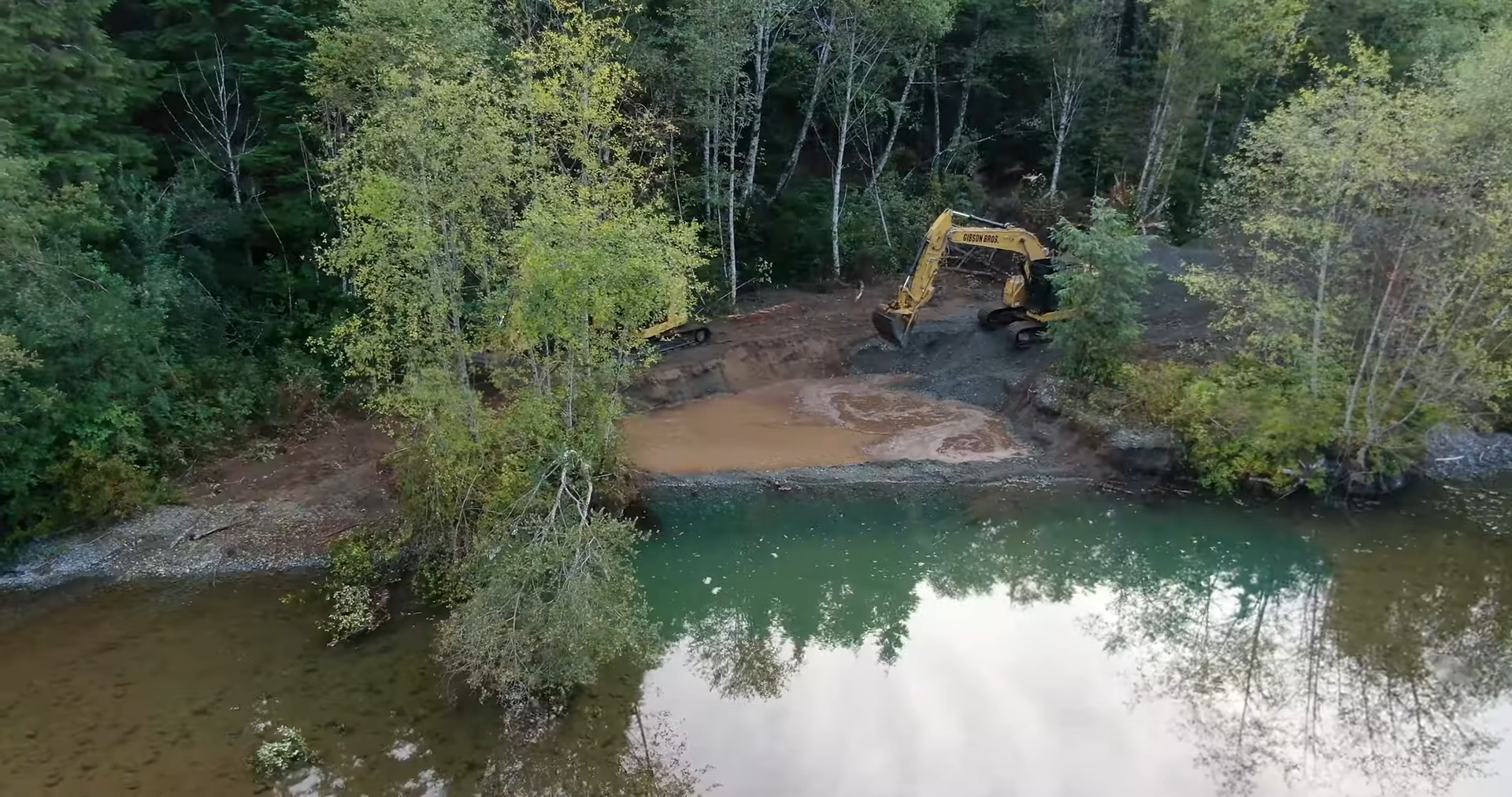


Excavators Removed Dikes and Returned Natural Curves to the Skjern River in Denmark, Reverting a Major River Straightening and Restoring Ecosystems After Decades of Degradation.
For much of the 20th century, the Skjern River ceased to be a river in the ecological sense of the word. Located in western Denmark, it was drastically straightened, channeled, and confined by dikes in the name of an ideal of progress that dominated European hydraulic engineering: transforming winding rivers into straight, fast, and “controllable” channels. The aim was simple yet ambitious — drain swamps, gain agricultural land, and eliminate flooding. The result, however, was one of the greatest environmental disasters ever produced by river engineering in the country.
Decades later, what seemed irreversible began to be undone. Instead of building new structures, Denmark made a rare decision: to use excavators, tractors, and heavy machinery to remove old engineering, return natural curves to the river, and allow the water to reclaim its historical space. Thus, the restoration project of the Skjern was born, now considered one of the largest and most successful cases of river renaturalization in Europe.
The “Straightening” of the River and the 20th Century Mindset
Between the 1950s and 1960s, the Skjern was the target of one of the largest river straightening projects ever carried out in Denmark. Natural curves were cut, meanders eliminated, and the river was transformed into a practically straight channel with rigid banks and accelerated flow. At the same time, extensive drainage systems dried adjacent wetlands, converting former swamps into agricultural fields.
-
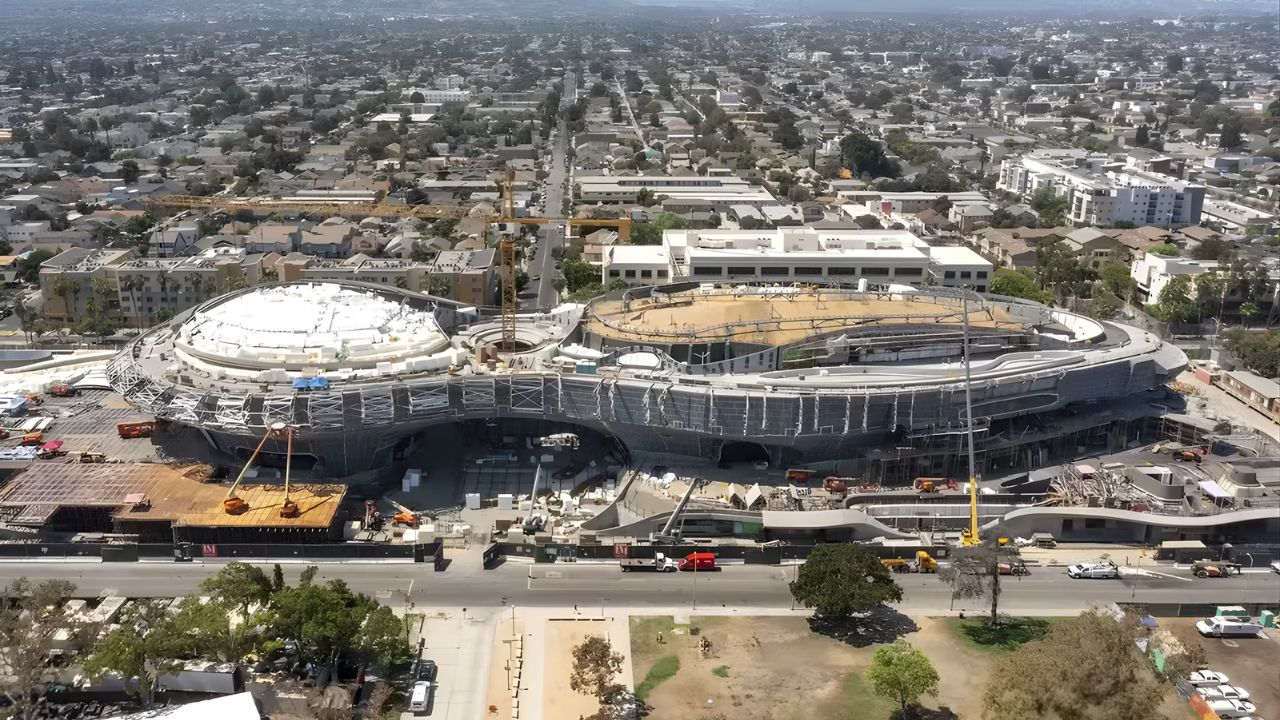
Created by George Lucas with over $1 billion, a futuristic museum in the shape of a spaceship with 1,500 curved panels is about to open in Los Angeles and will house one of the largest private collections of narrative art in the world.
-
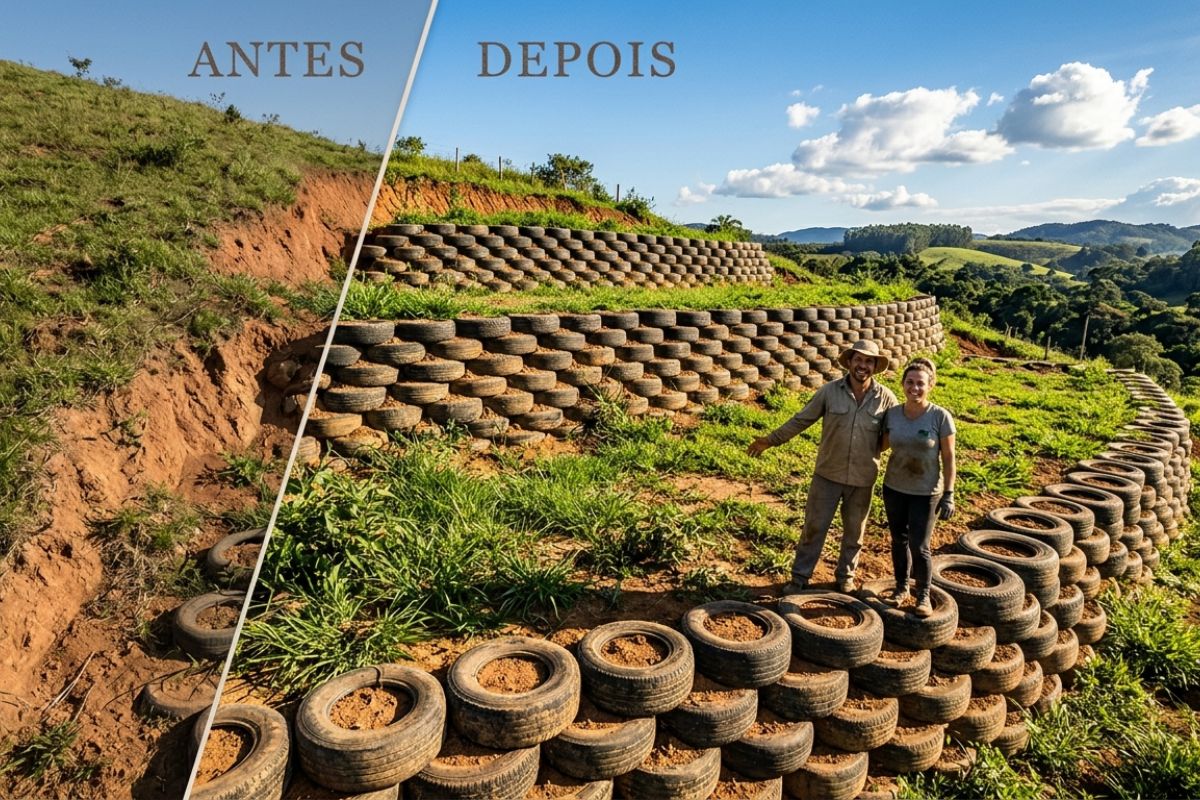
Couple shows how they built a retaining wall on their property using 400 old tires: sloped land turned into plateaus, tires are aligned, filled, and compacted with layers of soil, with grass helping in support and at almost zero cost.
-
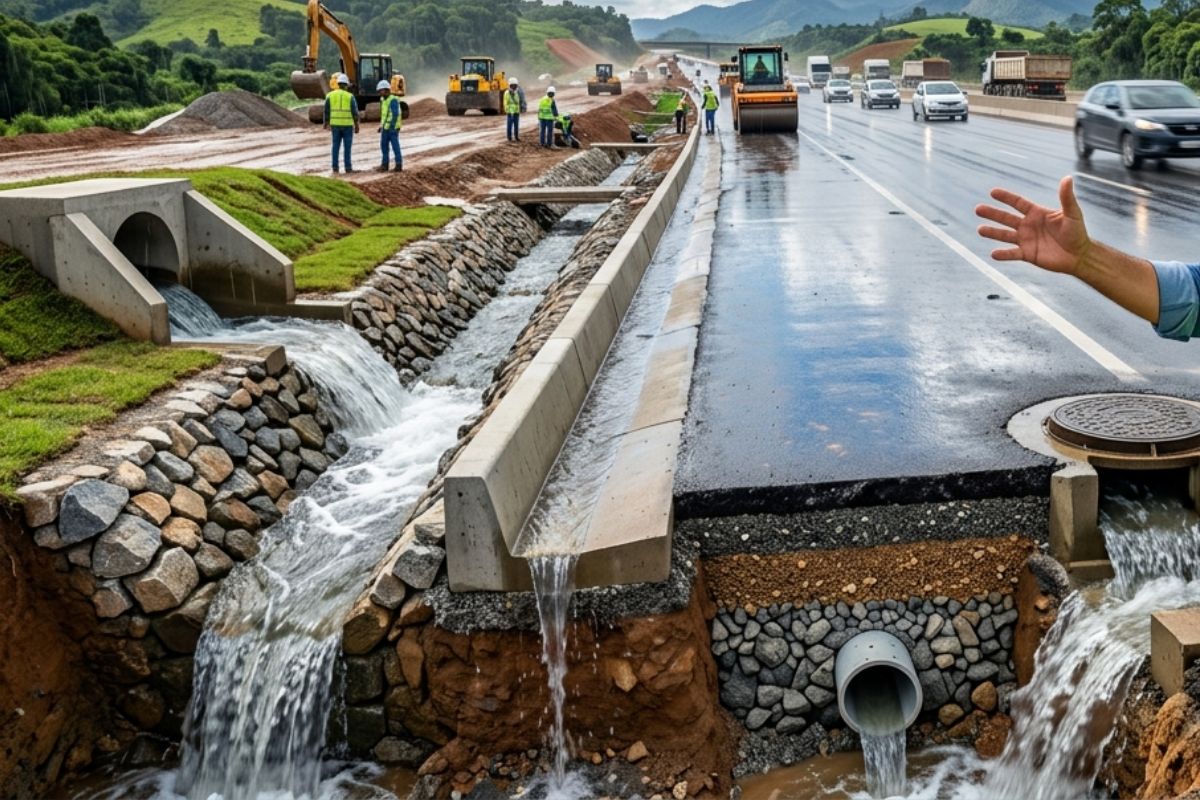
Engineer explains drainage during the rainy season: the difference between surface water and deep water, ditches, gutters, and water outlets on the road, as well as drains and drainage mattresses, to prevent erosion, aquaplaning, and flooding at the construction site today.
-
With 55 floors, 177 meters in height, a 15-meter walkway between the twin towers, ventilated facade, and 6,300 m² of leisure space, Ápice Towers already has one tower completed and another nearly at the top.


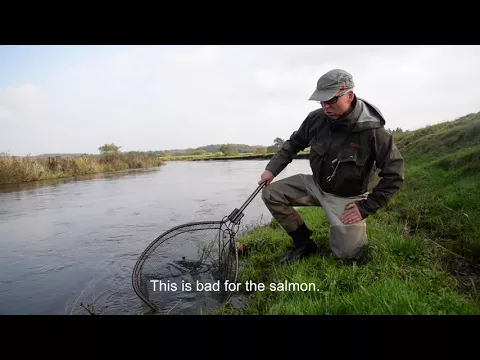

At the time, this intervention was viewed as a triumph of modern engineering. Winding rivers were considered inefficient, unpredictable, and unproductive. The dominant logic dictated that the faster the water flowed, the better. Little was known or considered about the ecological role of curves, floodplains, and the natural dynamics of rivers.
The Skjern began to serve a purely hydraulic function. It ceased to be an ecosystem and became a drainage channel.
The Environmental Collapse That Came After
The impacts of straightening did not take long to appear. With accelerated flow, the river lost its ability to deposit sediments evenly. Erosion increased, the water became muddier, and aquatic habitats disappeared. Fish species saw a severe decline, migratory birds lost feeding areas, and wetlands, critical for biodiversity, virtually vanished.
Furthermore, the project failed even in its original objectives. Flooding did not disappear; it merely shifted downstream, where the water arrived with more force and less response time. Farmers began to face new problems, and the costs of maintaining the channels and dikes grew continuously.
What had been marketed as progress began to be recognized as a structural error in environmental planning.
The Shift in Mindset: When Undoing Became the Solution
From the 1980s and 1990s onward, Denmark underwent a profound change in how it viewed its rivers. Scientific studies showed that straightened rivers lose resilience, biodiversity, and self-regulation capacity. At the same time, public pressure for environmental recovery and better quality of life grew.
In the case of the Skjern, it became clear that point adjustments would not solve the problem. It was not enough to reinforce dikes or dredge the riverbed. It was necessary to undo the original intervention and return the river to its natural geometry.
This decision was anything but simple. The project required expropriations, negotiations with landowners, high investments, and, above all, political courage to admit that a major past project needed to be reversed.
Excavators Enter the Scene to Undo “Progress”
The restoration of the Skjern was not a symbolic process. It was a large-scale heavy engineering operation. Excavators removed dikes, opened old buried meanders, and dug new channels following natural river patterns.
Instead of imposing a new rigid layout, engineers worked with geomorphological models, recreating curves, low-velocity zones, seasonal flooding areas, and connections with the water table. Large volumes of soil were moved to allow the river to reclaim its natural valley.
The principle was clear: the river should behave like a river, not like a channel.
The Restoration of Floodplains
One of the most important elements of the project was the restoration of floodplains. For decades, these areas had been drained and protected by dikes for agricultural use. In the new approach, they were deliberately reconnected to the river.
This means accepting that, during certain periods of the year, water will overflow and occupy these areas again. Far from being a problem, this controlled overflow reduces flood peaks, recharges aquifers, deposits nutrients, and creates extremely rich habitats for wildlife.
Engineering stopped fighting against the water and began to work with it.
The Return of Life to the Skjern River
The effects of the restoration began to appear faster than many expected. A few years after the completion of the main works, the biodiversity of the Skjern showed significant recovery. Migratory fish returned to use the river, birds returned to the restored wetlands, and riverside vegetation expanded naturally.

Aquatic insects, the base of the river food chain, reappeared in densities not observed for decades. The river once again began to function as a complete ecosystem, not merely as a conduit for water.
Most importantly, this recovery occurred without the need for continuous interventions. Once the river’s form was restored, nature took control of the process.
An International Benchmark Project
The restoration of the Skjern quickly drew attention beyond Denmark. Experts in river engineering, ecology, and urban planning began to study it as an example of successful large-scale renaturalization.
The project demonstrated that:
- heavily altered rivers can be recovered,
- removing infrastructure can be more effective than reinforcing it,
- and accepting natural flooding reduces long-term risks.
Today, the Skjern is cited as a model in discussions about climate adaptation, flood management, and the restoration of degraded ecosystems throughout Europe.
Economic and Social Impact Beyond the Environment
Although the initial focus was environmental, the restoration brought positive side effects. The region began to attract nature tourism, birdwatchers, recreational fishing, and educational activities. The river ceased to be a problem and became a territorial asset.
Moreover, the reduction in costs for maintaining dikes and channels offset part of the initial investment. In the long run, the restored system proved to be cheaper and more resilient than the old artificial model.
A Symbol of New River Engineering
The Skjern represents a profound shift in the relationship between engineering and nature. For decades, engineering sought to dominate rivers, correct their “flaws,” and impose absolute control. The Danish project shows that engineering can also mean removing, retreating, and giving back space.
Excavators that once served to straighten are now used to reconstruct curves. Dikes that symbolized safety are now removed in the name of resilience. What seemed like a setback revealed itself as progress.
When Admitting Error Becomes Progress
Few countries have the political and technical willingness to admit that significant projects of the past were mistakes. The restoration of the Skjern River shows that recognizing historical flaws does not weaken a nation — on the contrary, it demonstrates environmental maturity and vision for the future.
By returning natural curves to the river, Denmark not only restored an ecosystem but also redefined its approach to water management for the 21st century.
In a context of climate change, extreme events, and increasing pressure on water resources, resilient rivers are essential.
The Skjern, now free to expand and adapt, is better prepared to face floods, droughts, and seasonal variations than when it was a rigid channel.
The project proves that restoring nature can be one of the most efficient means of climate adaptation.
The Skjern as Proof That the Irreversible Can Be Undone
For decades, it was believed that the straightening of the Skjern was permanent. Today, the river flows again in curves, occupies its floodplains, and sustains abundant life. What seemed irreversible was, in fact, a technical choice that could be revisited.
The case of the Skjern leaves a powerful lesson: when there is knowledge, investment, and political will, even the greatest engineering mistakes can be corrected. And often, the path to the future begins by undoing the past.









Ótimo texto, muito bem escrito e assunto muito relevante.👍👏👏👏