





 Portuguese
  English
  Spanish
  4 min of reading
  0 comments


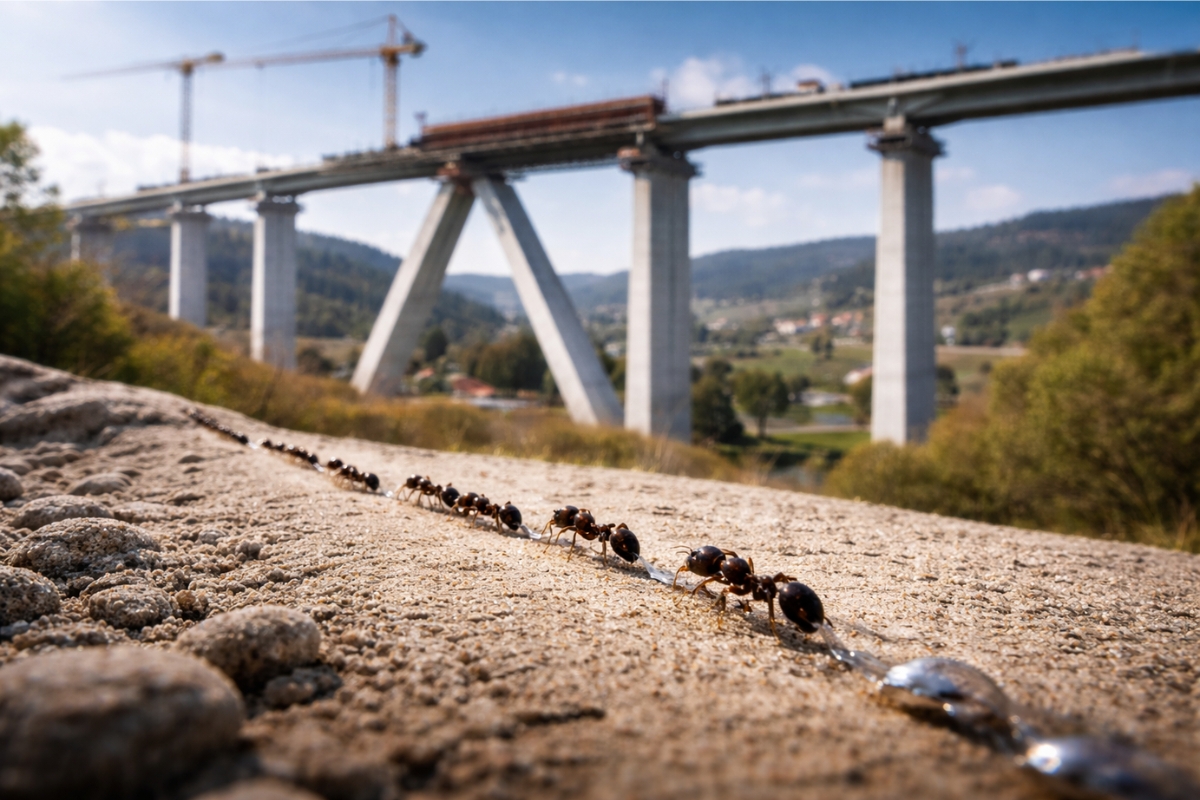
The Technique Uses Ant Colony Optimization to Test Thousands of Combinations and Cut Material While Maintaining Safety Standards in Structural Design
The crossing of Argentine ants along two paths between the nest and food became the basis for a powerful computing idea. From the chemical trail left on the ground, a method was born that today helps to seek out more cost-effective and efficient concrete bridge designs.
This path led to Ant Colony Optimization (ACO) algorithms. From the 1990s onwards, the technique began to be used in routing, logistics, and also in fine-tuning real structures, such as bridge piles.
Two Bridges, One Nest, and a Discovery That Became Technology
In classic tests, a nest was connected to a food source by two bridges. In some situations, both paths were of equal length; in others, one was shorter.
-
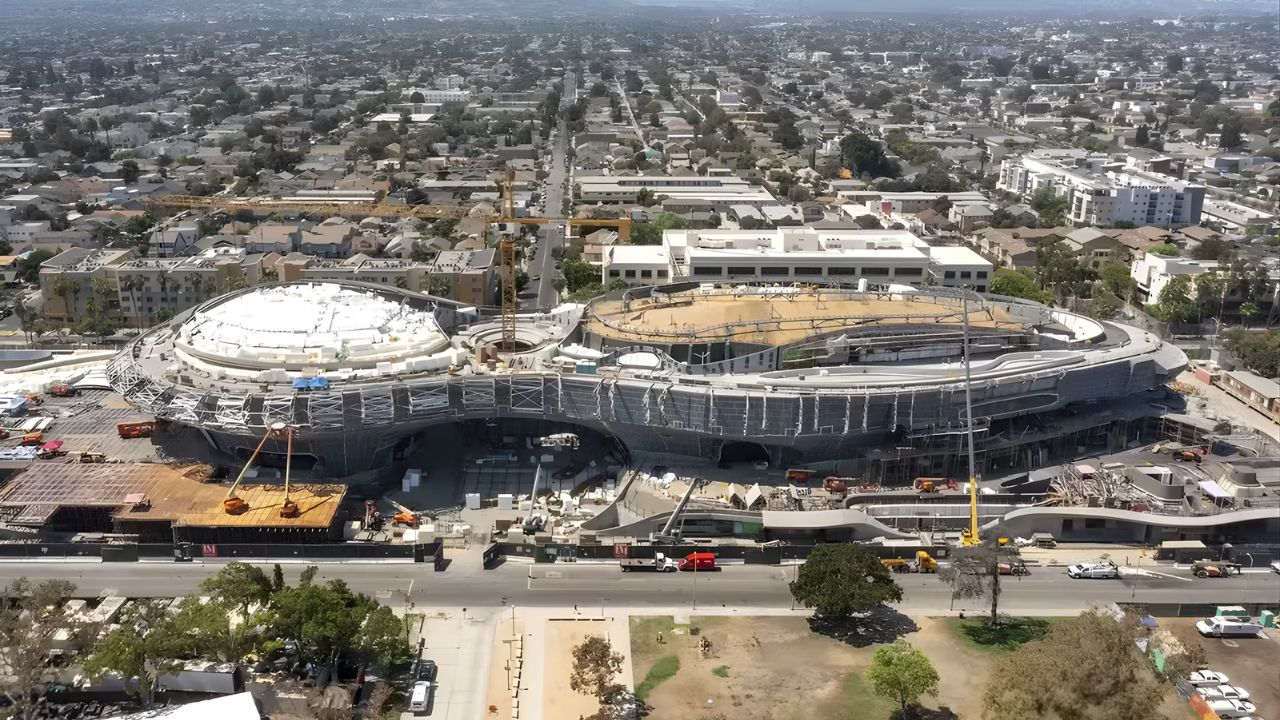
Created by George Lucas with over $1 billion, a futuristic museum in the shape of a spaceship with 1,500 curved panels is about to open in Los Angeles and will house one of the largest private collections of narrative art in the world.
-
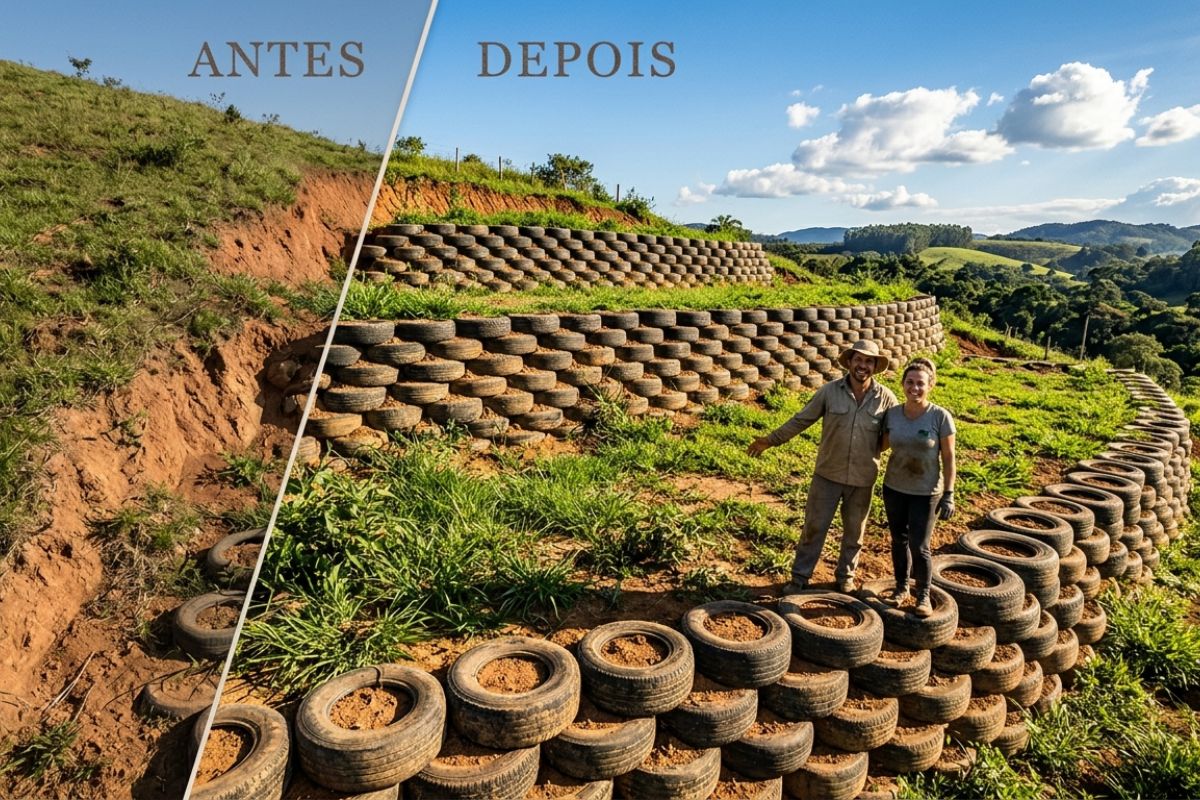
Couple shows how they built a retaining wall on their property using 400 old tires: sloped land turned into plateaus, tires are aligned, filled, and compacted with layers of soil, with grass helping in support and at almost zero cost.
-
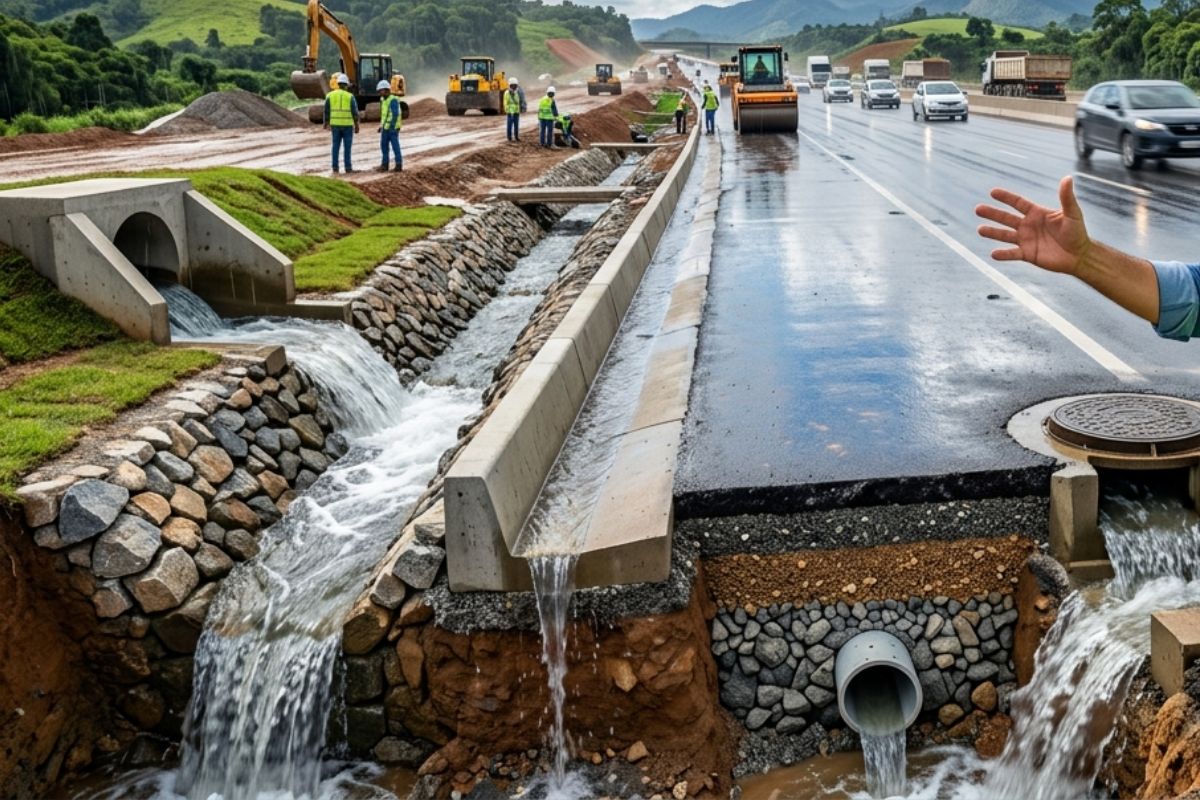
Engineer explains drainage during the rainy season: the difference between surface water and deep water, ditches, gutters, and water outlets on the road, as well as drains and drainage mattresses, to prevent erosion, aquaplaning, and flooding at the construction site today.
-
With 55 floors, 177 meters in height, a 15-meter walkway between the twin towers, ventilated facade, and 6,300 m² of leisure space, Ápice Towers already has one tower completed and another nearly at the top.


At first, the ants spread out and chose paths almost at random. As they walk, they leave a trail of pheromones, a chemical mark that can be followed by other ants.
Over time, the faster path gets more traffic and accumulates more pheromone. This increases the likelihood that new ants will choose the same route, reinforcing a dominant path without any central command.
Pheromone on the Ground Becomes a “Shortcut” Without Anyone Directing

The mechanism is simple and efficient. The more ants pass a point, the stronger the signal becomes, and the more appealing it is to the rest of the group.
This reinforcement creates a repetition effect. The shortest path tends to be taken more often in less time, which accelerates the accumulation of pheromone and consolidates the choice.
The result is a sort of natural highway that emerges from individual actions but delivers a robust collective solution.
ACO Creates Digital Pheromone and Makes the Computer “Learn” the Best Path
The idea was transformed into an algorithm in the early 1990s. Instead of real insects, artificial ants come into play, exploring possible alternatives for a problem.
Each virtual ant constructs a solution by choosing steps, routes, or design combinations. When a solution improves, the algorithm deposits more digital pheromone on the decisions that led to that outcome.
At the same time, part of this virtual pheromone gradually disappears, like evaporation. This prevents the system from getting stuck in old answers and keeps space to test new possibilities until it converges to near-ideal options.
The Algorithm Enters the Calculation of Hollow Bridge Pillars

In structural design, a concrete bridge involves many variables. Considerations include the geometry and dimensions of the piles, concrete choices, amount of steel, and foundation details, all adhering to safety requirements.
Testing all combinations through trial and error is not feasible. The solution is to let the algorithm explore the design space and seek configurations that reduce costs without deviating from performance and strength regulations.
In a study using this approach, 15 hollow rectangular piles were optimized. Heights ranged from 20 to 60 meters for viaducts with spans of 40 to 60 meters, with the algorithm tailored to the structural problem.
Savings Over 20% in Concrete and Steel Without Losing Safety
The application of ACO to this type of pile allowed for material reduction. The cut in concrete and steel was over 20% compared to traditional methods, while maintaining strength and service requirements.
Less material also means less associated production impact. The gain appears in reduced CO₂ emissions and a decrease in total cost, especially when the viaduct consists of multiple piles.
To reach this point, the process was executed with populations of around 50 virtual ants for approximately 100 stages, totaling hundreds or thousands of iterations until stabilizing on optimal solutions within constraints.
The Future of Concrete Could Be Determined by “Swarms” of Algorithms
ACO is part of a group of bio-inspired techniques used to solve challenging optimization problems. Its good performance in routing, logistics, and structures shows how simple rules can turn into powerful engineering tools.
These methods also combine with other strategies, such as genetic algorithms, threshold searches, and simulated annealing, to automate stages and accelerate design choices.
The same logic that guides the traffic of ants on the ground can influence decisions that reduce costs and materials in large concrete structures while meeting the project’s technical requirements.
The practical application is clear: observing natural behavior helped create a tool capable of seeking more efficient designs, with the potential for savings when the method is applied to viaducts with many piles.









-

-

-

-

-

10 pessoas reagiram a isso.