





 Portuguese
  English
  Spanish
  4 min of reading
  1 comment





An Embraer Airplane Crashed in Kazakhstan, Killing 38 People. Investigations Point to Possible Russian Attack with Pantsir-S System. FAB and Embraer Follow the Investigations While the Region Faces Political Tensions. The Truth About the Incident Awaits Official Confirmation.
In the world of aviation, where every minute can mean the difference between safety and tragedy, a recent incident involving a Brazilian model from Embraer has raised a series of questions and international suspicions.
The crash of an Azerbaijan Airlines aircraft near the city of Aktau in Kazakhstan not only left victims but also many doubts about what really happened in the skies over that country.
FAB Joins the International Investigation
-
USA and China compete for Brazil over resources that could be worth trillions — rare earths put the country at the center of a global dispute

-
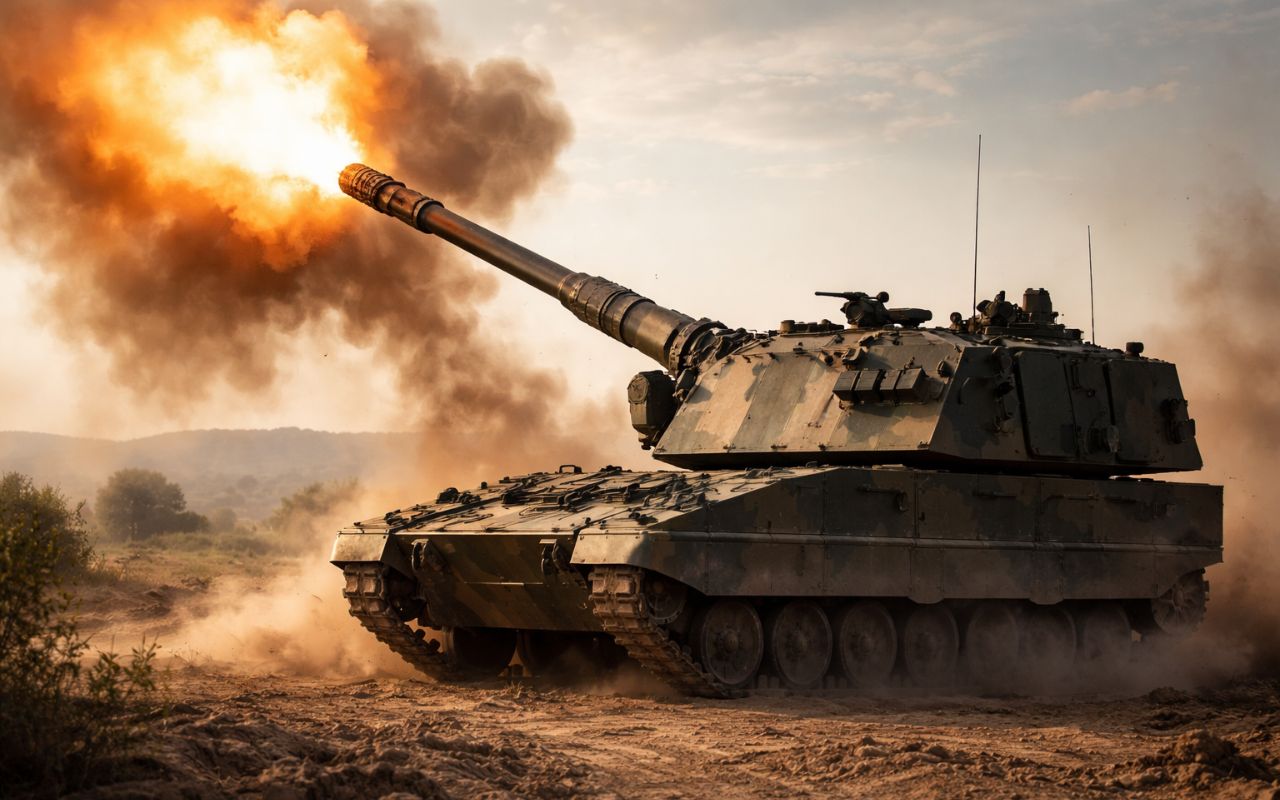
The German “steel monster” weighing 55 tons fires up to 10 projectiles per minute at over 40 km and avoids counterattacks on the battlefield by moving quickly to escape enemy attacks; meet the Panzerhaubitze 2000.
-
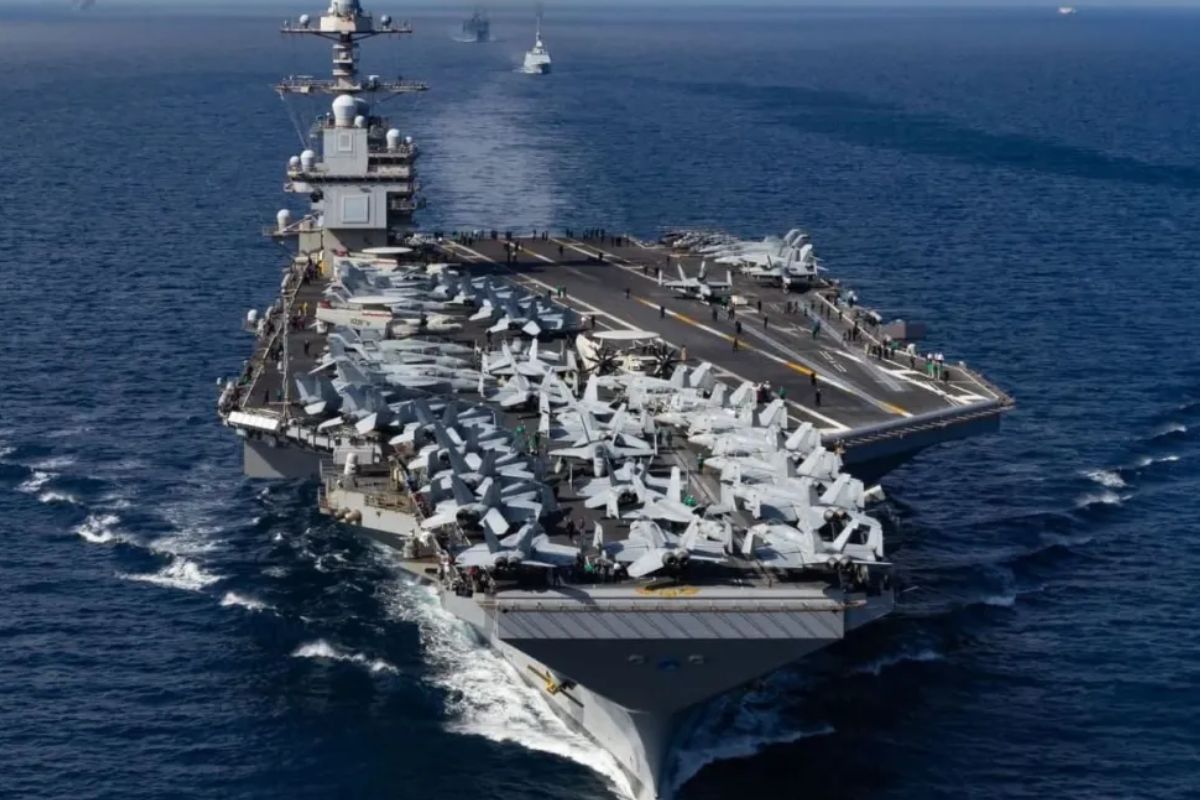
USS Gerald R. Ford, the largest aircraft carrier in the world, returns to sea after a fire in the laundry in the Red Sea; repaired in Crete, it resumes missions of Operation Epic Fury against Iran.
-
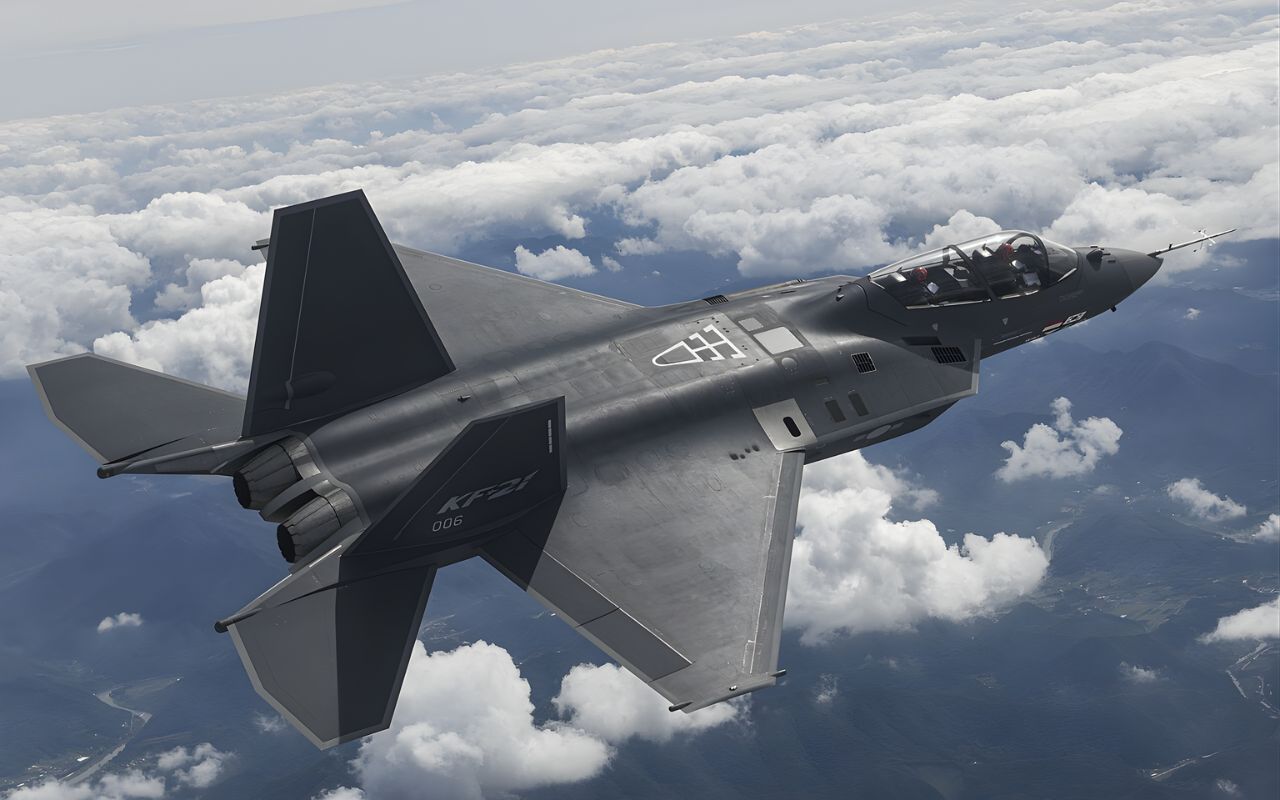
Military power: South Korea’s new KF-21 fighter jet will be a key component in replacing the aging aircraft of the air force, placing the country on the map of air military powers.

The Brazilian Air Force (FAB) confirmed that it is in contact with authorities in Kazakhstan to follow up on the investigations regarding the accident.
In a statement, FAB emphasized that, according to the protocols of Annex 13 of the Convention on International Civil Aviation, it is the responsibility of the country where the accident occurred to lead the investigations.
Since the Embraer 190 is manufactured in Brazil, Brazil may participate as a technical representative.
“The Center for Aeronautical Accident Investigation and Prevention is available to provide technical support if necessary,” FAB stated.
So far, the priority has been to ensure support to Kazakh authorities and preserve evidence at the crash site.
Additionally, Brazilian experts are analyzing the available data to assess whether maintenance issues, design, or other technical factors could have contributed to the incident.
The integration of civil aviation systems between Brazil and Kazakhstan has been highlighted as crucial for the investigations.


The Accident and Initial Suspicions
Flight J2-8243, which departed from the Azerbaijani capital Baku headed to Grozny, Russia, crashed near Aktau.
The aircraft was carrying 67 people, of whom 38 died and 29 survived. According to Azerbaijan Airlines, the plane attempted to make an emergency landing due to adverse weather conditions in Grozny.
However, images of the accident and preliminary reports raised the possibility of external interference.
Agencies indicated that the Russian defense system might have mistaken the plane for a Ukrainian military drone and shot down the aircraft.
Despite the accusations, the Kremlin denied involvement and stated that it is awaiting the results of the investigations to position itself.
Preliminary Investigations
According to the Reuters agency, sources indicated that the Russian Pantsir-S system was responsible for the shots that hit the plane.
The same investigation points out that the aircraft’s GPS was compromised by electronic warfare systems, forcing an altitude oscillation for over an hour.
Despite this, no country involved has officially confirmed the hypothesis of a deliberate attack.
Images released show holes in the aircraft’s fuselage, which reinforces the theory of an external attack.
Nevertheless, Russia initially suggested that the plane might have collided with birds before experiencing mechanical issues due to heavy fog.
Civil aviation experts highlight that the region of the incident is known for its vulnerability to military interference, especially due to its proximity to conflict zones between Russia and Ukraine.
Kazakh authorities ensured that they are cooperating with international agencies to determine the causes of the accident.
International Repercussions
The airline Azerbaijan Airlines took drastic measures following the incident, suspending flights to eight Russian cities due to safety risks.
Among the affected locations are Sochi, Volgograd, and Samara. The decision reflects the increasing tension in the region, which is already facing instability caused by the conflict between Russia and Ukraine.
Furthermore, the episode sparked discussions in the European Parliament, with some members calling for additional sanctions against Russia if its responsibility for the incident is confirmed.
Human rights organizations have also expressed concern about the risks to civilians in conflict zones.

Official Statement from Embraer
Embraer deeply regrets the incident and highlighted that it is collaborating with authorities.
“Our thoughts are with the families and friends of the victims. We remain committed to supporting the investigation to clarify the causes of the incident,” the company stated in an official communication.
The Brazilian manufacturer also announced that it is reviewing its technical support processes in conflict zones and strengthening communication with its international partners to prevent future incidents.
Next Steps
With three countries leading the investigations – Azerbaijan, Kazakhstan, and Russia – the expectation is that the results will be announced soon.
However, the possibility of political interference may delay the conclusions.
In the meantime, experts and international authorities remain vigilant for any information that could clarify the true causes of the accident.
The International Civil Aviation Organization (ICAO) also declared that it is closely monitoring the case and emphasized the importance of more robust protocols in areas with active military conflicts.
In a scenario marked by geopolitical tensions and technological advances, how can we prevent similar tragedies from occurring? Share your opinion in the comments.







A Rússia com com certeza vai conseguir fazer com que os analistas lá presentes nas investigações coloquem no relatório que a queda foi causada por “pássaros”. Agora a pergunta que fica, seria possível instalar nas aeronaves civis uma proteção contra ataque eletrônicos ao sistema de voo delas?