





 Portuguese
  English
  Spanish
  5 min of reading
  0 comments



FGTS Has a Scope That Few Know: Courts Confirm That Workers Can Use the Fund to Cover Medical Treatment for Serious Illnesses of Parents and Children
The Service Time Guarantee Fund (FGTS) was created by Law No. 8,036/1990 with the purpose of serving as a financial reserve for workers, ensuring resources in specific situations such as dismissal without just cause, retirement, home purchase, or in cases of serious illnesses. Over time, the FGTS has become an essential instrument of social protection in Brazil. The withdrawal in health situations was designed as a way to alleviate the financial impact of high-cost treatments that can compromise the family’s income. Traditionally, the rule only allowed for withdrawals by the account holder in the event of a diagnosis of certain diseases. However, a recent evolution in jurisprudence has been changing this scenario.
The List of Serious Illnesses Provided by Law
Article 20 of Law No. 8,036/1990 establishes that the worker can withdraw FGTS in situations of “serious illnesses.”
The Federal Savings Bank regulates this procedure and even provides a standard medical report for requests to be analyzed.
-
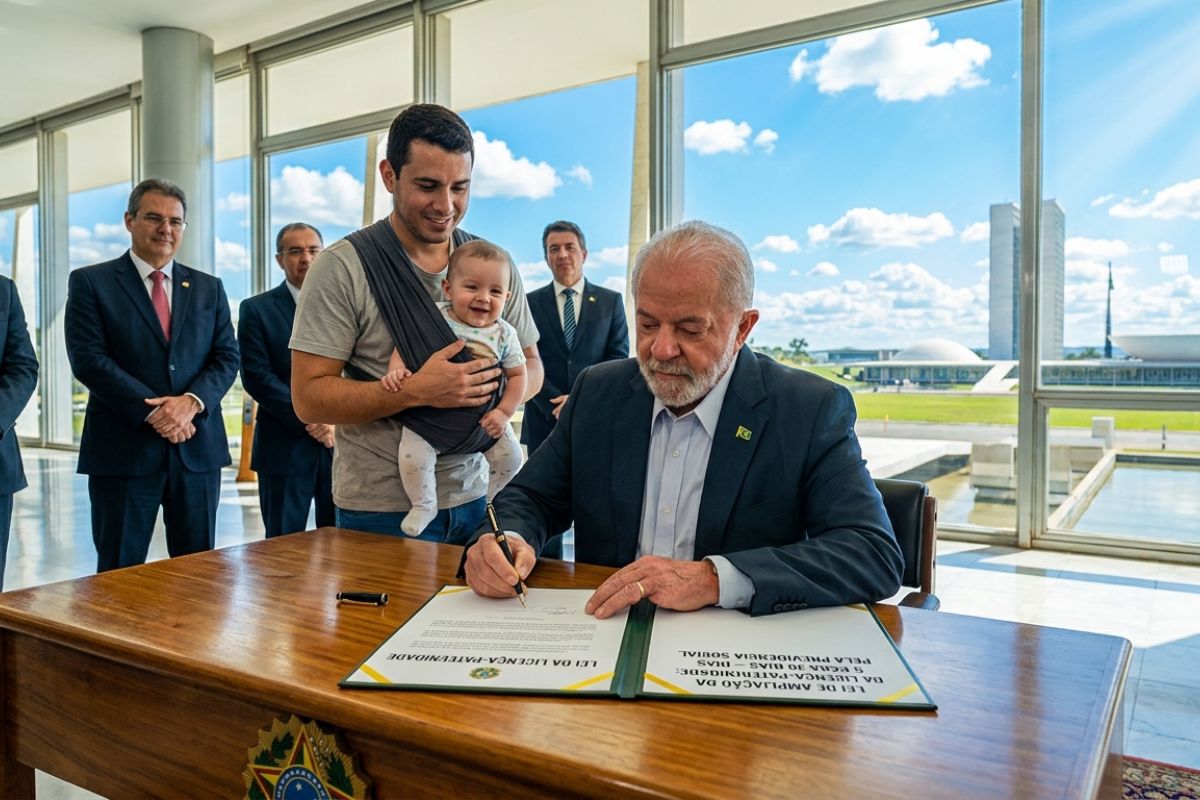
Government enacts new law: paternity leave increases from 5 to 20 days with gradual increases until 2029, and Social Security pays the paternity salary; companies no longer bear the absence cost, estimated at R$ 5.4 billion.
-
End of the 1-hour lunch break in the CLT? Current labor law maintains the break, allows for negotiated reductions, and defines rules for working hours and home office in Brazil.

-
Employee Fired After Accumulating 114 Days of Medical Leave in One Year, Labor Court Upholds Company’s Decision

-
Employee Fired While Treating Depression Wins in Court and Vale Is Required to Rehire Him Following Decision Based on the CLT and INSS Benefits

Among the traditionally recognized illnesses for withdrawal are:
- Cancer (malignant neoplasm);
- HIV/AIDS;
- Parkinson’s Disease;
- Multiple Sclerosis;
- Leprosy;
- Active Tuberculosis;
- Severe Heart Disease;
- Severe Liver Disease;
- Mental Alienation;
- Terminal Stage of Life;
- Autism Spectrum Disorder (level 3).


This list, however, has been interpreted by the courts as illustrative, not exhaustive. That is, other conditions that are equally incapacitating or require high-cost treatments may be included to allow for FGTS withdrawal.
The ‘New Thing’ That Few Know: Inclusion of Parents and Children as Indirect Beneficiaries
In recent years, the judiciary has begun to recognize that FGTS withdrawal can also be permitted when the serious illness does not directly affect the worker, but rather their close dependents, such as children or parents.
This interpretation is based on the principle that FGTS is a family protection reserve, not just individual. If the fund exists to ensure dignity for the worker and their family, it should also serve to cover medical expenses when the lives of dependents are at risk.
Federal regional courts have already ruled in favor of workers who requested withdrawals to cover treatments for children diagnosed with severe autism, cancer, or rare diseases, as well as for parents in situations of prolonged hospitalization. In some of these rulings, the judges emphasized that denying the withdrawal would violate the dignity of the human person and the right to health.
Judicial Decisions That Consolidate This Understanding
A landmark case was judged by the 3rd Region Federal Court in 2021, which recognized the right of a worker to withdraw FGTS to cover treatment for their child diagnosed with Autism Spectrum Disorder.
The court understood that the list of serious illnesses could not be interpreted rigidly, as social reality requires broader responses.
Another relevant precedent involves requests for withdrawals to treat elderly parents in terminal conditions. Judges have granted the right on the grounds that the social function of FGTS is precisely to support the worker and their family in extreme situations.
These decisions consolidate a movement that strengthens the social character of the fund, going beyond a strictly patrimonial view.
The Financial Impact for Workers
The expansion of FGTS’s scope has significant practical effects. The costs of healthcare treatments in Brazil are high, and even families with private plans face substantial expenses with medications, therapies, and transportation.
A survey by the Brazilian Association of Health Plans (Abramge) indicates that medications for chronic use in serious illnesses can easily exceed R$ 5,000 per month. In cases of hospitalization or specialized therapies, annual expenses can reach hundreds of thousands of reais.
In this context, the FGTS withdrawal represents an immediate relief, allowing families to access resources accumulated over years of formal work to ensure the health of their loved ones.
How to Request the FGTS Withdrawal in Cases of Serious Illness in the Family
The procedure still depends on case-by-case analysis. To request, the worker must present:
- Official medical report proving the illness of the dependent;
- Documents proving the dependency relationship, such as birth certificates or guardianship documents;
- Request to the Federal Savings Bank.
In situations where the bank administratively denies the withdrawal, it is possible to appeal to the judiciary, and it is precisely in these cases that recent jurisprudence has expanded the rights of workers.
The Force of Human Dignity in Decisions
A central point in all decisions is the principle of dignity of the human person, as stated in the Federal Constitution.
Judges understand that property cannot be placed above life and health. If FGTS exists to be used in times of need, denying the withdrawal when a child or parent is seriously ill would be contradictory to its own function.
Moreover, the judiciary emphasizes that the right to health is one of the pillars of the Constitution and that it is the responsibility of the state — and consequently labor laws — to provide protection means in emergency situations.
Paths for the Future
Even though this interpretation has already been consolidated in various decisions, experts argue that it is necessary to update the legislation to provide more clarity and security to workers. Today, many still face denials from the Federal Savings Bank and have to resort to the judiciary.
A legal amendment could explicitly expand the list of indirect beneficiaries to include parents, children, and other dependents, without relying solely on judicial decisions. This change would bring more predictability and avoid excessive litigation.
Until this occurs, precedents continue to be an instrument of progress, paving the way for more families to access the fund’s resources in critical moments.
The evolution of legal understanding regarding FGTS shows that the Brazilian system is adapting to new social demands. The family is not composed only of the account holder, but of all those who depend on them.
Ensuring that parents and children can be assisted with FGTS resources reinforces the legislation’s commitment to the comprehensive protection of families and the absolute priority of health.










Seja o primeiro a reagir!