





 Portuguese
  English
  Spanish
  8 min of reading
  0 comments


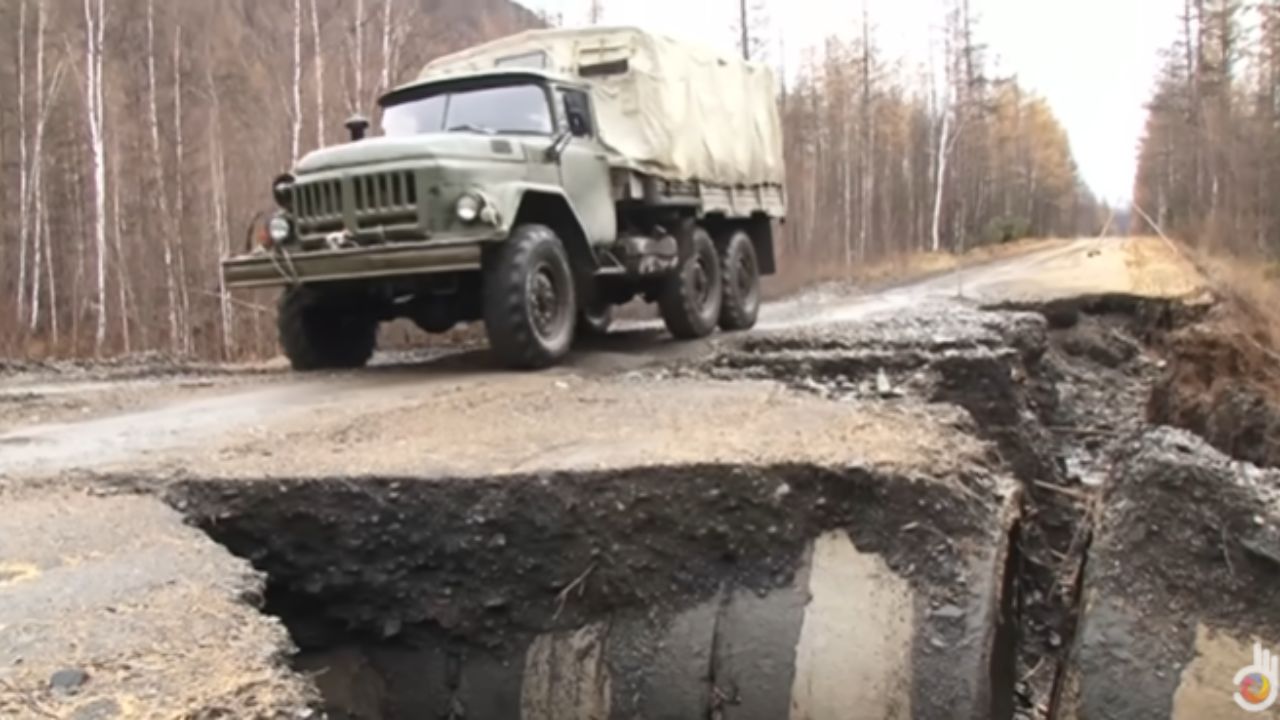
Mud, Ice And Bears Make The Deadly ‘Highway Of Hell’ A Dirt Road In Siberia Where The M56 Siberia Is The Most Dangerous Road In The World For Siberian Truck Drivers
Facing the deadly ‘Highway of Hell’ is not just driving on a bad road; it’s plunging into a 1,200-kilometer corridor where dust, mud, ice, and fear walk together inside the cabin. Here, a miscalculation can mean getting stuck in the mud for days, tipping over with the load, being robbed by armed bandits, or simply disappearing in the 65-degree-below-zero cold.
Meanwhile, this route that starts in Neryungri and goes to Yakutsk continues to be the vein that keeps Siberia alive.
Truckers like Igor, a veteran of the Afghan war, travel with old trucks, tires being destroyed by the stones, and the total responsibility for entire loads, with no insurance, no guaranteed rescue, and under the weight of Stalin’s bloody legacy, which left along the deadly ‘Highway of Hell’ ghosts of Gulags, crosses by the roadside, and horror stories whispered at night.
-
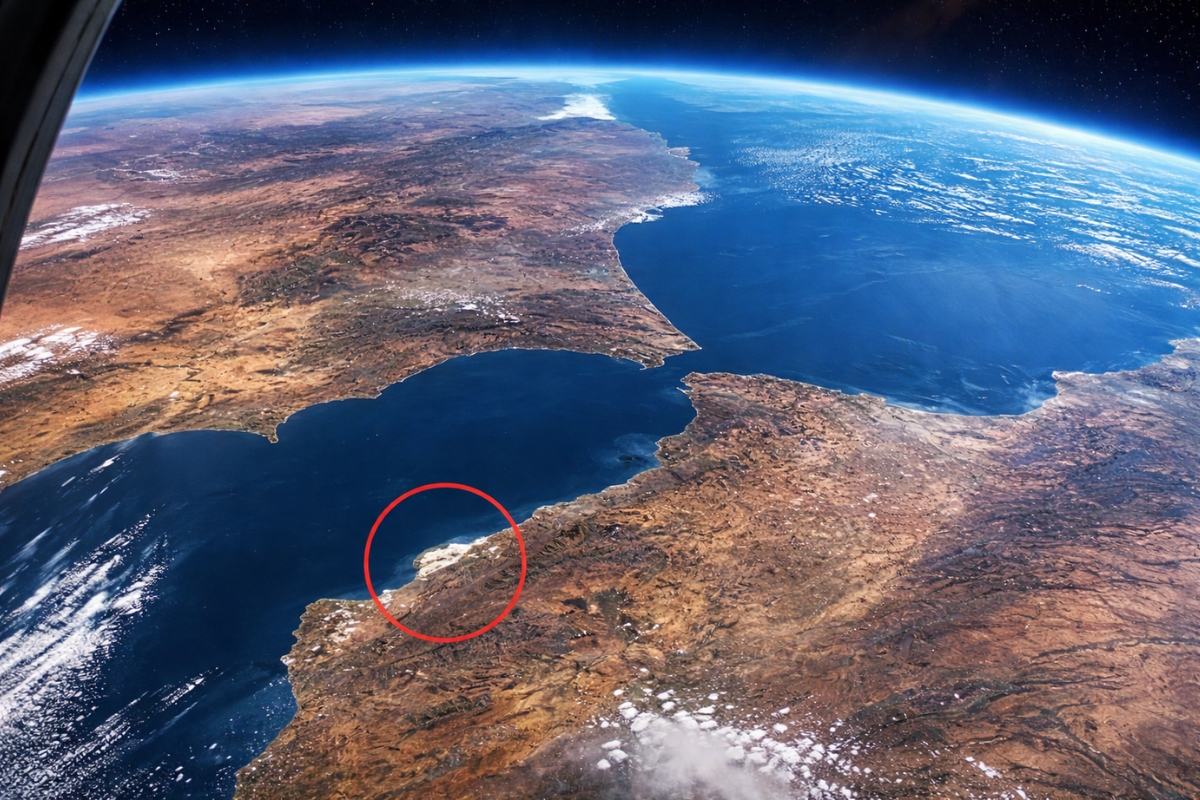
According to an analysis by NASA, only one human-made structure is visible from space, and it is not the Great Wall of China or the Pyramids of Egypt.
-
After 377 years of history, the Brazilian Army will have its first female general: Colonel Claudia Cacho has been promoted to brigadier general by Lula and will receive the sword and command baton this Wednesday in Brasília.

-
A Mercado Livre customer opened their package and found 32 resumes of people looking for jobs crumpled as protective paper inside the box, exposing names, addresses, documents, and phone numbers of dozens of candidates.

-
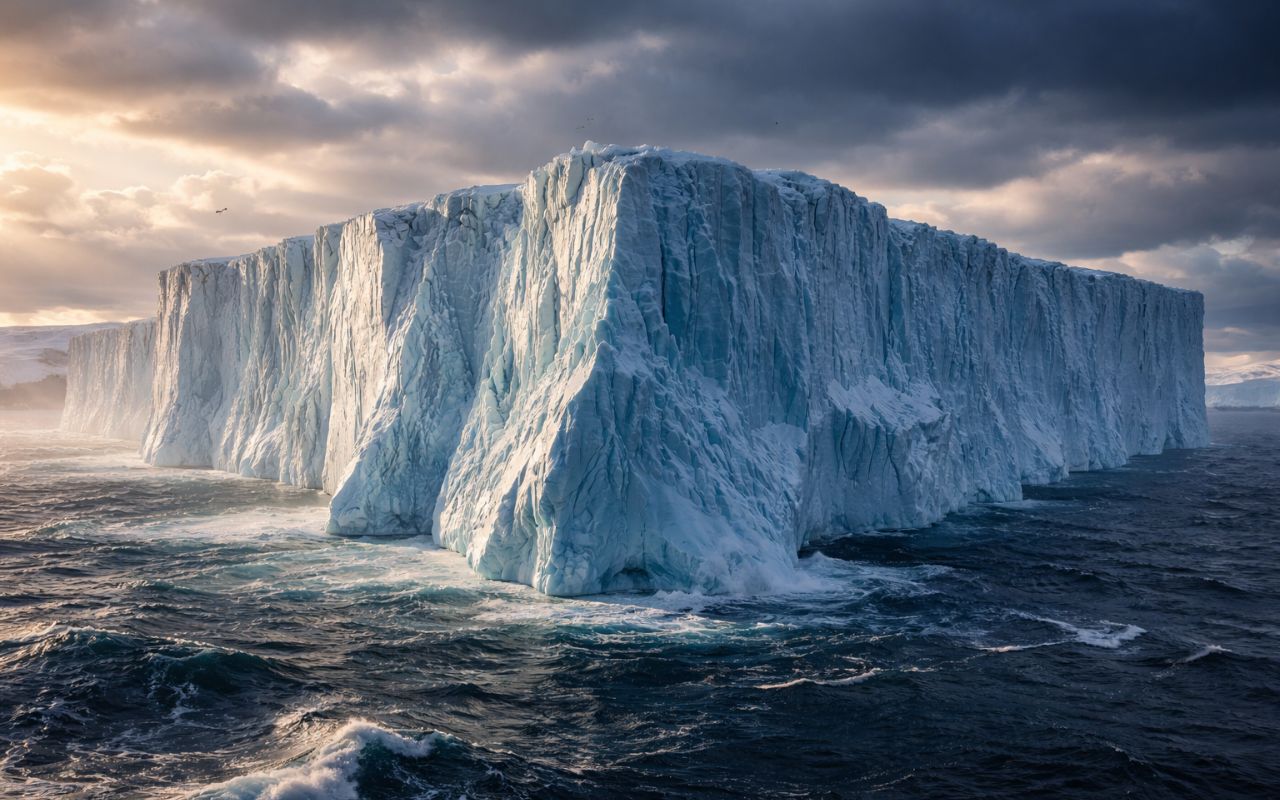
Iceberg A23a, one of the largest in the world, is undergoing accelerated collapse and may disappear: what explains the end of the ice giant?

Where The Deadly ‘Highway Of Hell’ Begins And Why It Is So Necessary

The so-called deadly ‘Highway of Hell,’ known as the M56, seems harmless on the map, but in practice, it’s a different story. It is a dirt road that spans over 1,200 kilometers connecting Neryungri to Yakutsk, in the heart of Siberia, the last stop before the “great frozen north.”
Everything that reaches the northern cities passes through there: food, fuel, beer, clothes, materials, dreams of quick wealth, and also frustrations.
Built during the Stalin era, this route was born in an environment where human lives were disposable. The cold is so extreme that at -65°C, asphalt simply doesn’t work.
The solution was to dump thousands of tons of stones in the place, creating a rigid surface that vibrates non-stop, destroys trucks from the inside, opens cracks in the chassis, and pulls out rivets as if they were toys.
The road itself is a constant enemy, draining the energy of drivers and destroying even the “giants” of metal that dare to venture there.
Suffocating Dust In Summer, Murderous Mud In Spring

In summer, the deadly ‘Highway of Hell’ turns into a tunnel of dust. The 35°C that catch Igor at the beginning of the trip bring no comfort. The heat raises a dense, thick cloud that engulfs everything. There is so much dust that drivers cannot see oncoming vehicles, and this causes an almost inevitable succession of accidents.
But this dust doesn’t only kill drivers. It mixes with exhaust gases and falls on the pines, like a toxic cocktail that slowly suffocates the forest.
The dead trees even earned a nickname: “drunken pines.” Nature, just like the truckers, silently pays the bill for each trip.
When the rain comes, the reality changes brutally. The dust disappears, but the soil liquefies. What was road becomes fine, watery, deep mud, capable of swallowing trucks up to the height of the doors.
At this stage, the deadly ‘Highway of Hell’ shows its other face: mud traps that hold drivers for days, lines that stretch for up to 100 kilometers, and people who sleep, eat, and despair inside the cabin. A single stuck truck can paralyze everything.
Igor, 18 Tons Of Beer And 72 Hours To Survive
In the midst of this chaos is Igor, 42 years old, a veteran of the Afghan war. He carries 18 tons of beer, a product more popular than vodka in that region, and has only 72 hours to deliver the load without breaking a single bottle.
The truck is Japanese, used, tired, but it’s all he has. If something goes wrong, it’s Igor who pays: there is no insurance, no “way around it,” just debt and loss.
He prays before leaving, wishes for luck, crosses the last rays of sun before freezing, and dives into the deadly ‘Highway of Hell’.
The routine is brutal: hours swallowing dust, then mud, then deep holes, blown tires, and stretches where, if he stops, he won’t get out anymore. The rule is clear: keep moving, no matter the cost.
To endure, Igor lives on improvisation. To avoid falling asleep at the wheel after 18 hours of driving, he turns up the radio and resorts to a bizarre but functional recipe: he mixes coffee with Coca-Cola, a cocktail that, according to him, “nothing beats” for keeping his eyes open.
The body demands rest, but the road, the clock, and the bank account won’t allow it.
Vibrations, Torn Tires, And Trucks Destroyed By The Road Itself
The thousands of cubic meters of stone dumped on the route to try to stabilize the surface had a perverse side effect: they created a ground that vibrates non-stop.
The result is a series of mechanical damages. Tires are torn, blown out, and pile up along the road. Igor ends up replacing up to 20 tires a month, and the road is littered with abandoned carcasses, a rubber graveyard that follows every curve.
It’s not just the tires that suffer. Chassis crack, rivets disappear, trailers twist. An unlucky driver has been waiting for help for two days, with the container fallen into the ditch after the truck couldn’t withstand the vibrations.
The calculation is cruel: everything lost on the deadly ‘Highway of Hell’ comes out of the trucker’s pocket. A whole month of work can turn to dust in seconds, and debts remain.
Along the route, small makeshift garages emerge that become points of survival. There, mechanics find cracks, reinforce structures, and recover what they can.
It’s like taking the truck to a field hospital on the edge of a battlefield, just to endure a few more kilometers of suffering.
Bandits, Black Market, And Fuel Theft At The End Of The World
If the road wasn’t dangerous enough on its own, life around the deadly ‘Highway of Hell’ adds another layer of risk. Drivers travel armed. It’s not paranoia, it’s necessity. Local bandits block the road, choose their victims, steal money, cargo, fuel, and anything they can take.
“Locals do what they like; they are bandits,” summarize the truckers who have passed through ambushes in isolated stretches more than once.
But the danger doesn’t come only from organized crime. The system itself creates a parallel economy. Fuel sold officially by the roadside costs up to three times more than in Moscow.
To survive, truckers who work for the state divert part of their diesel quota and resell it on the black market, hidden in discreet spots.
They receive miserable salaries, equivalent to less than 300 euros a month, and secure the rest “on the side.” It’s a risky game: if they are discovered, they are fired on the spot, but if they don’t do this, they can’t pay their bills. The deadly ‘Highway of Hell’ doesn’t forgive either in the economy, the mechanics, or the morals.
The Bloody Legacy Of Stalin And The Ghosts Of The Gulags


Along the route, marks of the Soviet past remain open like wounds. Remnants of Gulags appear abandoned by the roadside, old cabins, wooden structures, remnants of a system that sacrificed millions of prisoners in forced labor in Siberia.
Many died from cold, hunger, and exhaustion, and the deadly ‘Highway of Hell’ still cuts through the territory where these camps existed.
Drivers tell stories of ghosts of dead prisoners and truckers. There’s the story of the man who, on a freezing night of minus 45 degrees, went to fix the transmission axle under the truck, got stuck, and spent four days there, invisible to passersby.
When he was finally found, he had been dead for a long time. By the roadside, small cemeteries remind the victims of accidents, solitary crosses that watch over the night.
It’s no wonder that many drivers avoid sleeping in certain stretches. They prefer to stop where other truckers are camped, sharing food, stories, and fear.
The feeling is that the deadly ‘Highway of Hell’ is not just a physical place, but a corridor where the past still whispers and charges an emotional toll from those who dare to pass.
Topolinoye, Reindeer, Bears, And A Winter Of 65 Degrees Below Zero
Further ahead, the road connects to even worse routes, like the Kolyma highway and access to villages like Topolinoye, nestled in a mountainous region where the Eveny, a traditional reindeer-herding people, live.
There, the deadly ‘Highway of Hell’ seems just the first level of difficulty: beyond it lie ice tracks, swamps of quicksand, and climbs where any misstep ends in tragedy.
Nikolai, a driver who also acts as a forest guard, knows this all too well. He has been brutally attacked by a bear, nearly to the point of death.
His face was torn, his back bitten, his hand destroyed, his shoulder dislocated, and his testicles almost ripped off. Since then, he lives by a golden rule: never be more than two meters away from his rifle, because a surprise encounter with a bear leaves no time to think.
Winter in Topolinoye is a sentence of endurance. In a few weeks, temperatures drop to 65 degrees below zero, yet entire families continue northward to find their herds of reindeer.
They use adapted Russian vehicles, part truck part tractor, facing mud, snow, ice, and the constant risk of breakdown in the middle of nowhere. When a vehicle fails, the only way out is to improvise or join another convoy, carrying people, weapons, skins, and whatever is possible.
A Road That Devours People, Trucks, And Yet Cannot Stop
In the end, the deadly ‘Highway of Hell’ is both a curse and a salvation. Without it, entire cities would be left without food, without fuel, without work.
With it, life goes on, but always by a thread. Igor arrives in Yakutsk exhausted, with the 18 tons of beer intact, only to unload and immediately return, without sleeping, hostage to a clock that never stops and a road that never forgives.
Meanwhile, underpaid workers raise entire stretches six meters high to try to escape the spring floods. Hunters face bears and wolves.
Reindeer herders cross frozen plains toward the freedom their ancestors defended. Children grow up seeing stuck trucks, blown tires, and crosses by the roadside as part of the landscape.
Amid all this, the deadly ‘Highway of Hell’ continues, noisy, vibrating, dangerous, mixing dust, mud, blood, vodka, diverted gasoline, dreams of wealth, ghosts from the past, and a silent question at every curve: who will be the next not to return?
And you, would you have the courage to face a trip down the deadly ‘Highway of Hell’ knowing all that happens along these 1,200 kilometers of extremes in Siberia?




-

Uma pessoa reagiu a isso.