





 Portuguese
  English
  Spanish
  3 min of reading
  164 comments


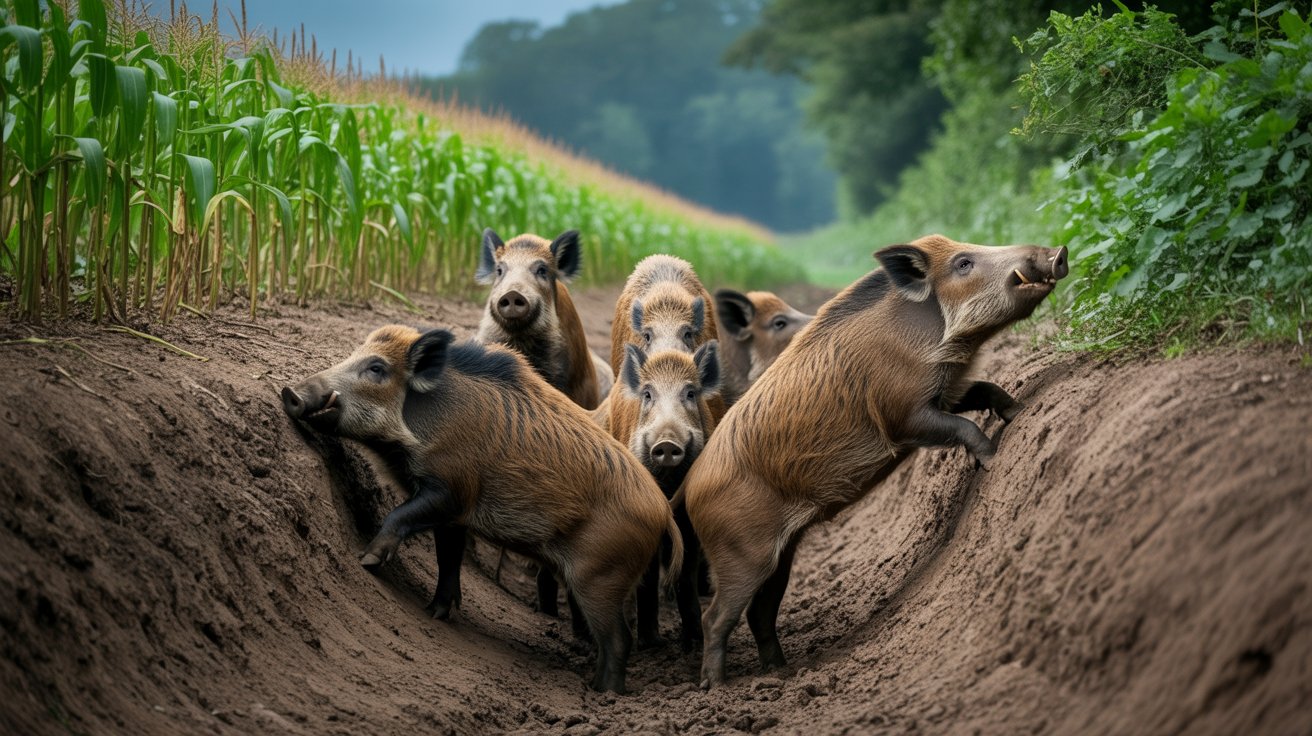


Rural Producers From Various Regions of Brazil Have Started to Adopt Deep Moats Around Crops as a Way to Stop the Advance of Wild Boars and Javaporcos. The Technique, Which Requires Heavy Machinery and Planning, Has Proven to Be Effective in Combating the Recurring Damages Caused by These Wild Animals.
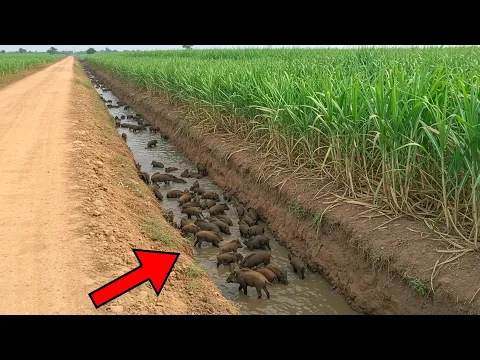
With the intensification of wild boar attacks in rural areas, farmers are resorting to physical solutions that do not require maintenance or technology. The digging of deep moats around crops has become a viable alternative to contain the invasion of these animals. In some properties, videos capture entire groups being trapped or falling into the holes.
Species such as wild boars, javaporcos, catetos, and peccaries primarily advance in areas close to forests, destroying crops of corn, soybeans, beans, cassava, and sugarcane. These animals travel in large groups, trample the crops, and transmit diseases, causing damages that can exceed thousands of reais in a single night.
The moats, with an average depth of 1 meter to 1.5 meters, form natural barriers that animals cannot easily overcome. Even if they fall, many cannot get out. Unlike fences, which can be broken, the moat does not depend on electricity or monitoring, functioning continuously and silently.
-
Hidden marks on the walls of the site associated with the Last Supper of Jesus for centuries have been deciphered in Jerusalem, revealing medieval inscriptions left by pilgrims, European nobles, and travelers from the Middle East.
-
One of the most important lakes in the United States for birds, the balance of nature, and the climate has dried to historic levels, leaving boats stranded, revealing salt flats, and showing how the lack of water can transform an entire landscape.
-
It’s not Cristiano Ronaldo or Messi: the richest football player in the world is only 27 years old, has a fortune of 100 billion reais, and is the nephew of a sultan from an Asian country that few people know about.

-
At 77, the king of one of the most famous and powerful crowns on the planet is said to be under pressure to leave the throne, while behind the scenes there are already talks of a new coronation that could cost R$ 260 million.


Advantages, Challenges, and Expansion of the Technique Across the Country
Expansion of the Technique Among Producers
Videos and reports shared on social media show various producers adopting the method. In some cases, metal grids are attached to the moats to reinforce containment. The technique is already spreading in states like São Paulo, Minas Gerais, and Paraná, especially in farming regions near native forest reserves.
Costs and Difficulties in Execution
Despite its effectiveness, digging kilometers of moats in medium or large properties requires a high investment. In hard or uneven terrain, costs per linear meter increase significantly. Additionally, construction requires skilled operators, fuel, time, and good logistical planning.
Maintenance and Risks
The moats can accumulate water and suffer siltation during heavy rain periods. There are also operational risks: employees and agricultural vehicles need to be extra cautious to avoid accidents. In terrains with multiple accesses, it is necessary to create elevated passages, which further increases the total cost of the project.
Threats Continue and Producers Seek Lasting Solutions
In addition to wild boars, capybaras are also seen as pests in certain regions. Territorial and voracious, these rodents remain in crops as long as there is food, particularly harming early-stage crops. Their presence also promotes the emergence of weeds and other secondary pests.
Although not regulated as an official management technique, the digging of moats has proven effective in practice, according to field reports. This alternative emerges as an emergency resource in the face of a lack of effective public policies for controlling invasive fauna.
The information was shared by producers in videos and reports compiled by the “Fatos Rurais” channel and other platforms focused on agriculture.

And you, do you think that this moat technique is the ideal solution to contain wild boars in crops or do you believe that the problem requires more structured actions from the government?





Acredito que precisa de políticas públicas e orientações eficazes. Essas valetas podem prejudicar outras espécies de animais e pessoas.
Mais uma vez as pessoas tentam odesenvolver soluções e investir por deficiência e das autoridades.
Acho ótimo! Mas era melhor matá-los, pois é a única ação capaz de acabar com eles, pois não pertencem ao Brasil e vai causar danos ambientais.
Pobres javalis. Eles não contam com a simpatia popular. Como não podem comprar alimentos no supermercado, devoram o que encontram. De forma sádica, caçadores colocam matilhas de cães ferozes em cima de filhotes de javalis, uma cena de selvageria explícita inenarrável.
Agora as capivaras, animais da fauna nativa, também estão sendo vistas como “inimigas” do agronegócio.
Enquanto isso, o latifúndio improdutivo, a extração ilegal de madeira (escondem as toras no leito dos rios) e os políticos corruptos continuam a ser a verdadeira praga em nosso país. Não, eu não sou comuna nem voto na esquerda, só não sou ****.
Os javalis não são do Brasil, vão causar danos ambientais irreversíveis.