





 Portuguese
  English
  Spanish
  3 min of reading
  0 comments



Discrepancies Between Federal Agencies Fuel Disputes in the Judiciary, Hinder Investments, and Affect the Country’s Productivity.
The lack of alignment among federal regulatory structures has become a direct obstacle for the port sector in Brazil. The result appears in lawsuits, differing interpretations, and a scenario of legal uncertainty that hampers infrastructure expansion.
This environment interferes with the pace of projects and reduces predictability for those who need to invest. The impact arrives at the economy, with delays and loss of productivity.
The assessment was presented by Caio Morel, executive director of the Brazilian Association of Container Terminals, Abratec. The topic was discussed during the IV National and II International Congress of Labor Magistracy, held in Foz do Iguaçu, PR, at the end of November.
-
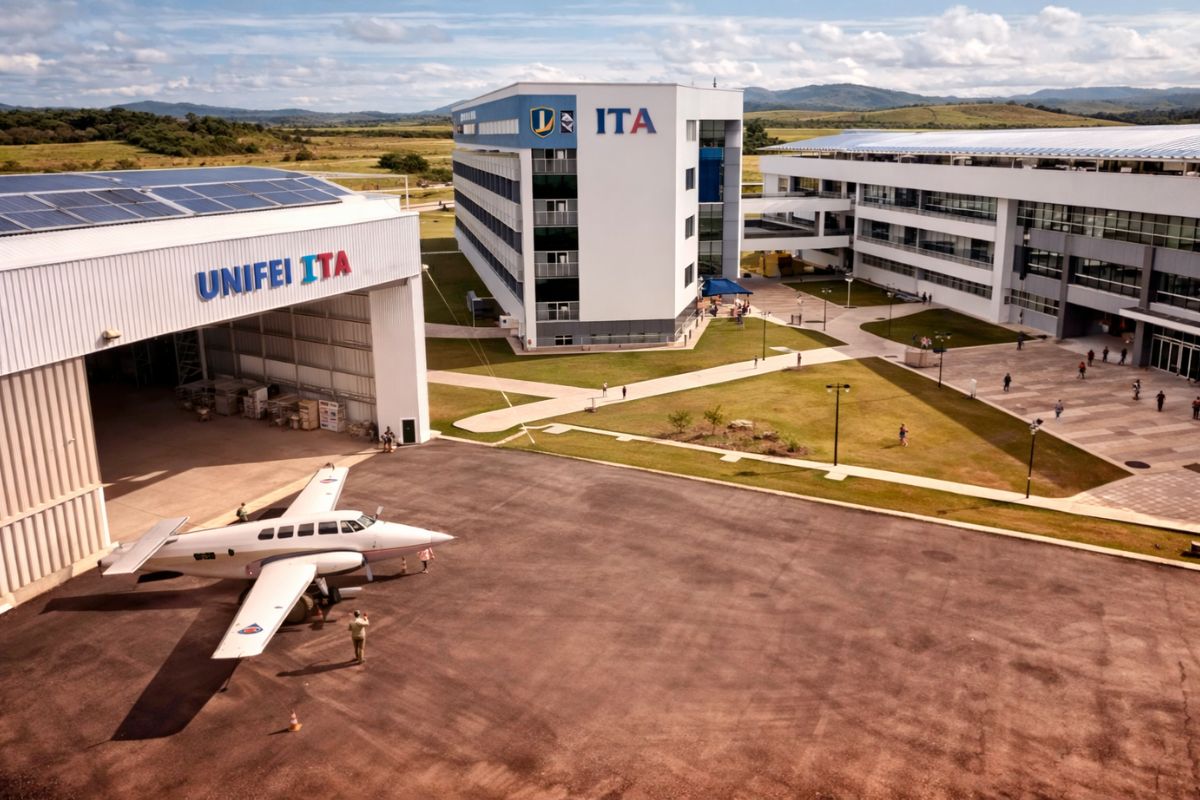
The institute that trained the greatest aerospace engineers in Brazil has just opened its first campus outside São Paulo after 75 years: ITA Ceará will have R$ 445 million, new courses in energy and systems, and classes are expected to start in 2027.
-
Luciano Hang, owner of Havan, goes to Juiz de Fora after the tragedy in February, brings R$ 1 million, hands out R$ 2,000 cards, and donates up to R$ 15,000 to victims in the region.

-
The Brazilian passport allows legal residence in dozens of countries without the need for a prior visa, and most Brazilians are unaware that they can apply for residency directly upon arriving in nations in South America, Africa, and even Europe.

-
Petrobras sends a message to Brazilian truck drivers after fuel collapse and reveals plan to have 100% domestic diesel.


What Happened and Why This Caught Attention
The central problem lies in the existence of various national regulators with conflicting views. This opens space for disputes and leads judges to adopt different interpretations, which creates conflicting decisions.
The divergence becomes even more sensitive when it occurs within the same court. The scenario increases the difficulty of planning, operating, and expanding terminals in a sector that relies on predictability.
The practical consequence is a market with more risk and less clarity. In infrastructure, this type of uncertainty tends to weigh directly on decision-making.
Where the Conflict Appears in the Container Sector
An example cited involves the regulation of containers. There are differing understandings on the subject between the Secretariat of Economic Monitoring, Seae, linked to the Ministry of Finance, and the Administrative Council for Economic Defense, Cade, linked to the Ministry of Justice and Public Security.
With federal agencies pointing in different directions, the Judiciary receives conflicting arguments. This favors decisions that do not follow a standard, which increases instability.
The effect is a cycle of disputes that feeds on itself. Each new decision opens up room for more contestation and more uncertainty in the sector.
Why the Judiciary Ends Up Being Confused
When federal regulators do not unify understandings, the Judiciary begins to deal with divergent readings on the same issue. Judges can choose one line of interpretation or another, which leads to contradictory sentences.
This fragmentation complicates the creation of a stable environment for the port sector. The insecurity increases because the outcome of a case can vary significantly depending on the path taken.
Even when the discussion occurs within the same court, different decisions can arise. This reduces predictability for companies and operators.
What Changes in Practice for Investments and Port Operations
The described regulatory environment has a direct effect on investments. Projects depend on permits and authorizations, and the need to go through various agencies makes the process slower.
When permissions do not progress, the investment remains halted, even with resources already set aside. The consequence is a delay in the execution of improvements and expansion.
The halt impacts operational capacity and compromises efficiency. In economic terms, this pressures competitiveness and affects the country’s productivity.
What May Happen From Now On
The indicated solution involves the need for federal agencies to unify their understandings. With more aligned rules, the trend is to reduce disputes and lessen the chance of conflicting decisions.
A scenario with more clarity enhances predictability for investments and facilitates the processing of authorizations. This helps unlock projects and reduce delays.
The topic gained space in institutional debates held at the end of November in Foz do Iguaçu, PR, where the Labor Justice Yearbook 2025 was also launched.
The port sector remains pressured by discrepancies among federal regulatory structures, directly reflecting on legal security. The confusion in the Judiciary increases risk and complicates long-term decisions.
Until there is alignment between Seae and Cade on sensitive issues like the regulation of containers, the environment is likely to keep hindering authorizations and holding back investments, impacting productivity.










-

-

-

-

6 pessoas reagiram a isso.