





 Portuguese
  English
  Spanish
  5 min of reading
  0 comments


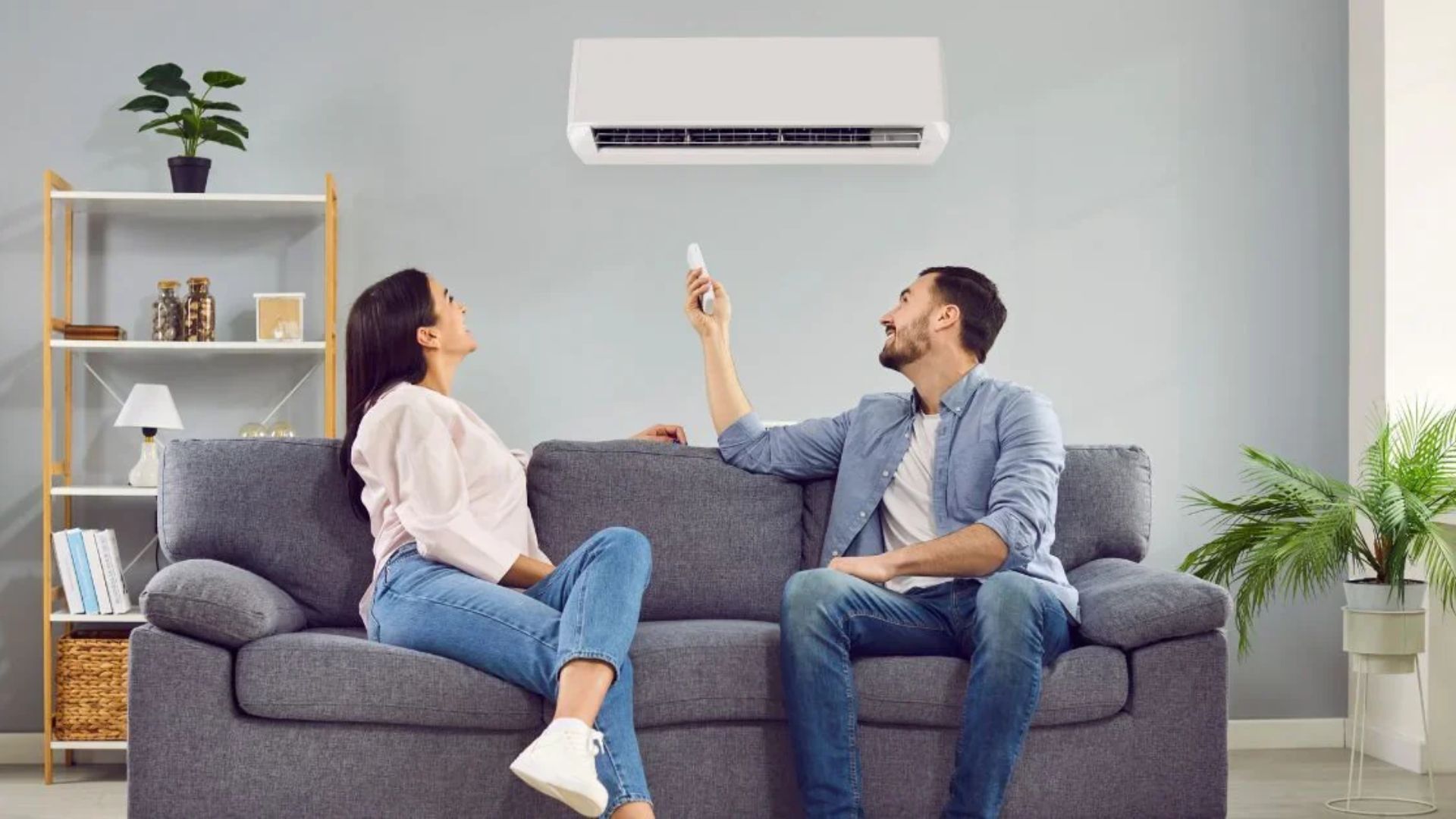
Portable Models Gain Space With Simple Installation, Mobility, and Lower Initial Cost, Becoming a Practical Option to Face More Intense Heat Waves in the Country.
With more intense heat waves and periods of high temperatures becoming more frequent, portable air conditioning has taken up an increasingly larger space in Brazilian homes and is beginning to compete for attention with traditional fixed models, such as splits.
The ability to move the unit from one room to another, combined with simplified installation and lower initial cost, helps explain why the equipment has become a go-to for those seeking quick relief from heat without doing renovations at home.
Unlike fixed units, which require prior determination of where they will be installed, portable units offer flexibility of use.
-
Brazil’s nuclear submarine with a speed 5 times greater than normal advances after nearly 50 years and R$ 40 billion spent.

-
A Brazilian island charges R$ 0.50 to receive visitors and prohibits any new residents.

-
Why was the Great Wall of China built? The truth that many are unaware of!

-
At 73.8 meters tall, the world’s tallest teapot-shaped building has 15 floors, ensures stability, and impresses with an internal space of 28,000 cubic meters.


The same equipment can cool the bedroom at night and be moved to the living room or home office during the day, accommodating the residents’ routines.
This trend especially benefits those living in compact apartments or rented properties, where larger interventions are usually avoided.
Heat Waves and Demand for Portables

The successive heat waves recorded in the country have increased the demand for air conditioning systems capable of providing rapid responses.
In this context, portable air conditioning has been seen as a way to cool only the environment in use, without the need to keep multiple units running at the same time.
While fixed models are typically designed to remain in the same spot in the house for years, portable units adapt to changes in routine, rearrangement of furniture, and even relocation—an important advantage for those who move more frequently.
For many consumers, the appeal lies precisely in the ability to have thermal comfort without being tied to a permanent installation.
Easy Installation and Lower Initial Cost
One of the main attractions of portable units is the simple installation, which does not require construction or structural interventions.
Generally, it is enough to position the unit near a window, attach the exhaust hose to the sealing accessory, and plug it into the outlet.
The procedure is usually completed by the consumer themselves, without the need for specialized technical assistance.
In fixed models, the scenario is different. Installing a split involves wall drilling, passage of pipes, securing the outdoor unit, and often electrical adjustments.
This raises the overall project cost and requires scheduling with qualified professionals, as well as approvals in condos and, in some cases, stricter facade rules.
The result is that the total entry cost of a fixed unit tends to be higher, even when the sticker price is competitive.

In the case of portable units, the investment usually focuses on the purchase of the equipment, as there are no significant costs for extra materials, infrastructure, or installation labor.
Portables in Rented Properties and Compact Spaces
Among tenants, portable air conditioning appears as an alternative to avoid permanent changes to the property, which may require the owner’s approval and are not always authorized.
Since the unit does not require wall breaking or installation of an external unit, it can be easily moved to another address in the future.
In smaller apartments, another weighing factor is the rational use of units.
Instead of installing multiple air conditioning points, some consumers opt for a single portable that serves different rooms at different times of the day.
This strategy avoids multiplying equipment and utility bills, even if the individual consumption of the portable is, in many cases, slightly higher than that of a split of the same capacity.
Energy Efficiency and Technology Advancements
Although the energy consumption of portables is still generally higher than that of the most efficient fixed models, newer units come with functions aimed at reducing this impact.
Among them are energy-saving modes, automatic temperature adjustments, fan speed control, and timers.
Additionally, many models have begun to use refrigerants that are less harmful to the ozone layer, in line with current environmental regulations.
This update aligns the product with practices already adopted by fixed units, which are also gradually replacing old fluids with options that have less potential environmental damage.
In small and medium environments, when the BTU power is suitable for the size of the room and there is good sealing of doors and windows, the portable can deliver satisfactory performance, maintaining a more stable temperature during the hottest hours.
Practicality and Essential Care in Use
The possibility of storing the unit when temperatures drop or when summer ends also weighs in the choice of some consumers.
Unlike the split, which remains fixed to the wall, the portable can be moved to a less visible corner or even to another room of the house when not in use.

On the other hand, the correct use of the exhaust hose is essential for performance.
If the hot air returned outside the environment does not have a proper exit, the efficiency of the unit decreases and the feeling of comfort diminishes.
Therefore, even though it is simple, the installation process must follow the manufacturer’s guidelines.
Another point noted by consumers is the level of noise.
As the compressor is inside the unit, rather than in an external unit as with splits, the portable tends to be more acoustically noticeable.
In bedrooms, this characteristic may influence the choice, especially for those with light sleep or who work from home.
Growth in Demand for Portable Models
With the combination of more intense heat, the search for immediate solutions, and more residents being at home throughout the day, portable air conditioning has established itself as one of the main bets for summer in many households.
The quick installation, the mobility between rooms, and the lack of structural changes help explain the rise of this type of equipment.
For those needing to cool the environment quickly, without facing renovations, without relying on condo approval, and with the freedom to move the unit whenever necessary, portables stand out as a practical and expanding solution in the market.
What will weigh more in consumers’ decisions in the coming months: practicality, savings, or thermal performance?







-

-

-

-

-

-

15 pessoas reagiram a isso.