





 Portuguese
  English
  Spanish
  7 min of reading
  0 comments


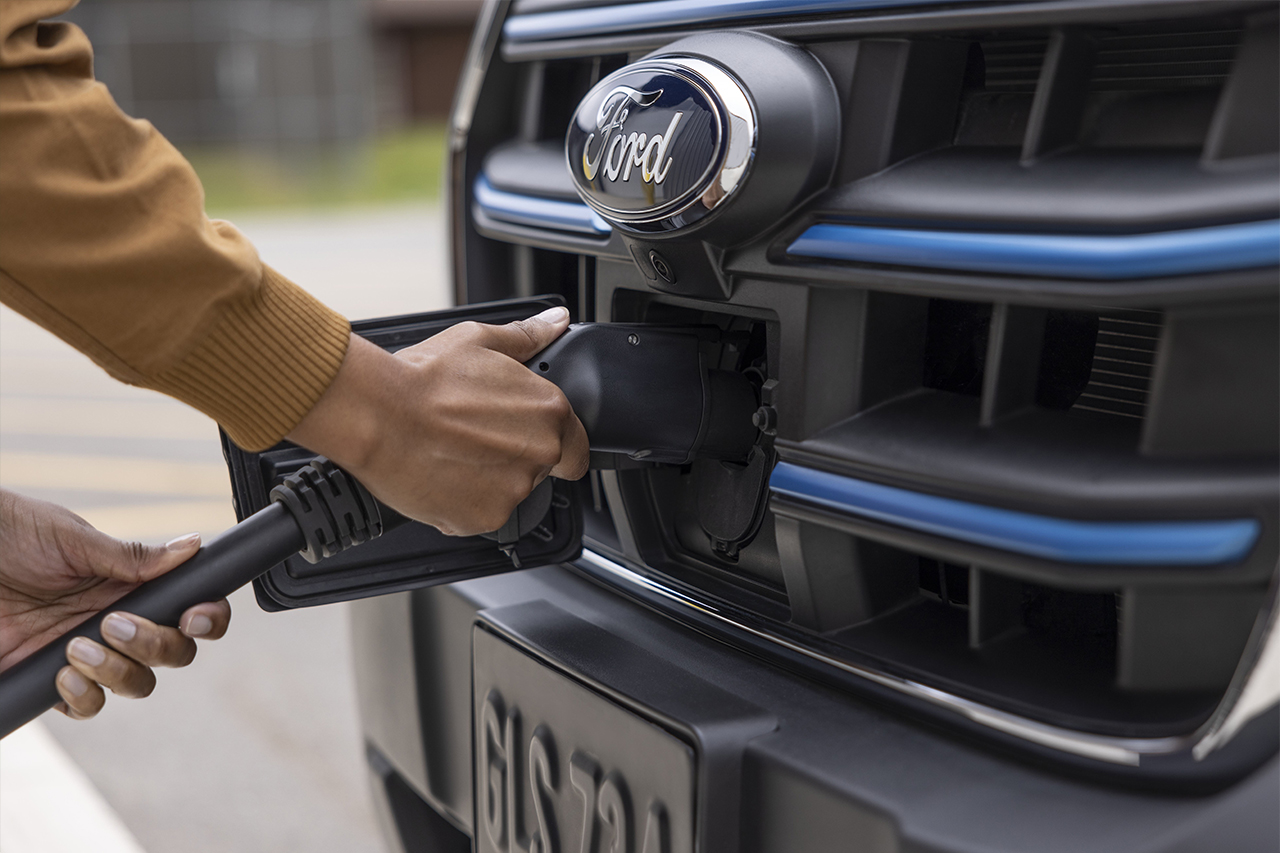
Ford Announced a US$ 5 Billion Investment for the Launch of a New Universal Platform to Popularize the Automaker’s Electric Cars. The Plan Begins with a New Electric Pickup Truck Coming in 2027.
Ford announced an investment of US$ 5 billion to kick off what CEO Jim Farley called a “Model T Moment”. The historical reference is not without reason. Just as the Model T popularized the car in the last century, the goal now is to popularize electric vehicles with lower prices, more efficient production, and global scale. The company aims to move out of the premium niche and compete on volume, where buying decisions are more sensitive to price and cost of ownership.
This repositioning arises from a frank assessment of recent performance. The brand’s early efforts, like the F-150 Lightning, generated visibility but did not deliver the expected volume in a market that rapidly migrated to smaller, more affordable products. The focus shifts to more compact and affordable EVs, with dedicated engineering from the start and clear profitability goals in the first year of sales.
The competitive backdrop is challenging. Chinese manufacturers like BYD and Geely have advanced globally with streamlined portfolios, low-cost batteries, and extremely agile manufacturing. Ford’s response combines aggressive pricing, design simplicity, and a redesigned supply chain to reduce time, parts, and labor per vehicle.
-
With a price almost R$ 100 thousand lower, the Haval H9 surpasses the SW4 for the first time in March, but Toyota still leads in the accumulated total for 2026; the Chinese SUV bets on technology and premium finishing to compete at the top.
-
6 used cars that cost less than a new Honda CG 160 Titan and still provide trunk space, four seats, and comfort that many new motorcycles cannot offer.
-
Caoa Chery Tiggo 5X skyrockets in sales in Brazil: a 2,318% increase and waiting lists of up to 4 months to acquire the model.
-
Goodbye falls: Singaporean company Omoway begins production of a motorcycle that doesn’t fall and surprises the market by offering automatic balance technology that reduces accidents and transforms the urban riding experience.

What is the Universal Electric Vehicle Platform
The heart of the turnaround is a universal electric vehicle platform created from scratch to support various types of body styles without increasing the technical base cost. The concept is modular, with common electrical and software architecture, which facilitates over-the-air updates, standardizes components, and minimizes rework between projects. The goal is to use the same backbone for pickups, crossovers, and shared-use vehicles.
In practice, the platform aims to reduce complexity. Fewer unique parts, more reused modules, and an assembly line designed for faster builds. Ford claims that the next vehicles will take about 40% less time to build compared to equivalent combustion projects. This logic directly impacts the final cost and allows for the offering of versions with competitive equipment while maintaining margin.
Another technical pillar is the broad adoption of LFP batteries. The lithium iron phosphate chemistry sacrifices some energy density in exchange for durability, thermal stability, and lower cost per kWh. In vehicles focused on price, flotas, and urban use, this equation tends to be more appealing, as the range remains sufficient for daily routines and total ownership costs decrease.
Product Line and Prices: Mid-Size Pickup Truck at US$ 30,000 in 2027 and More
The first product of the new phase will be a medium electric pickup truck with a target price of US$ 30,000, scheduled for 2027. The strategy is to target a segment that combines utility, appeal to those who work with the vehicle, and a base of consumers already accustomed to compact and mid-sized pickups. With competitive entry pricing, Ford seeks to generate volume traction from the launch.
Following that, the same platform is expected to produce a SUV crossover and a vehicle oriented towards ridesharing and shared mobility, both priced below US$ 40,000. This price point is relevant because it is significantly below the average ticket of a new car in the U.S. In other words, the consumer who is currently hesitant to switch to electric due to price will have options closer to what they already pay.
The pricing policy can only be sustained with lean engineering and disciplined production. The modular design, use of LFP, and electronic standardization reduce costs and simplify the offering. Ford indicates that each new EV must be born affordable and profitable. The message is clear: it’s not enough to sell more, it’s necessary to sell with a healthy margin to sustain technology expansion.
Where Will It Be Produced and What Changes in the Factories
To accommodate the new family, Ford will invest US$ 2 billion in converting the plant in Louisville, Kentucky, in the U.S., which will stop producing the gasoline Escape, a model that is being discontinued. The factory will begin assembling the new electric models with a reduced hourly workforce, a direct result of process efficiency and a less complex project.
The supply of batteries will be reinforced with the Marshall, Michigan facility dedicated to LFP. By internalizing a critical part of the supply chain, the automaker aims to mitigate price risks, strengthen supply predictability, and reduce dependence on imports. This point is vital when the regulatory environment fluctuates and tariffs can abruptly alter the final cost.
In addition to the Kentucky–Michigan axis, the production ecosystem includes the complex in Tennessee and repositioned suppliers to meet the new cadence. In all cases, the directive is to standardize where possible and regionalize where it makes sense, reducing logistics costs and adding resilience to external shocks.
Timeline, Risks, and Uncertainties
While focusing on compact EVs, Ford maintains plans for a successor to the F-150 Lightning, now expected for mid-2028. Production is planned for a US$ 5.6 billion complex in Stanton, Tennessee, designed for high volumes. Ford itself recognizes that the demand for large electric pickups is still maturing, which is why the schedule has been adjusted.
There are also macro variables that are beyond the company’s control. Recent changes in U.S. policy, such as the end of the US$ 7,500 tax credit on EV purchases and uncertainty over manufacturing subsidies, may alter the investment and pricing rationale for consumers. Ford states it has communicated adjustments to timelines to suppliers and employees and continues to lobby to preserve productive incentives.
Another risk is competitive. Chinese rivals are ramping up production quickly and have access to supply chains optimized for EVs. To compete, Ford needs to execute the transition with discipline, ensuring that the promised engineering costs are confirmed in the factory and that distribution can deliver the right product, at the right price, to priority markets.
What Changes for the Consumer in Brazil
For the Brazilian audience, the main news is the prospect of more affordable electric vehicles in the global landscape. When a player the size of Ford plans a US$ 30,000 pickup truck and a crossover below US$ 40,000, it creates room for competitors to follow the trend. Even if the models take time or do not arrive officially, the pressure for price and total cost of ownership tends to influence the market.
The adoption of LFP batteries directly benefits those who drive a lot. This chemistry generally offers good robustness and tolerance to frequent recharging cycles, which is attractive for fleets, rideshare drivers, and urban services. If costs fall as expected, the payback between fuel and electricity may become shorter, especially for high-mileage urban trips.
Still, it is essential to consider tariffs, import logistics, and the ecosystem of public and residential charging. Without formal announcements of arrival in Brazil, the moment is to monitor timelines, evaluate local incentives, and track price evolutions. The most immediate impact may appear in corporate programs and mobility partnerships, which tend to adopt lower-cost technologies first.
Questions That Remain for the Coming Months
The exact range and charging capabilities of the new models have yet to be detailed. As the platform is universal, it is likely there will be different battery and motor configurations, balancing cost and range. For those who drive daily in the city, the combination of LFP with home charging may be sufficient, but consumers who travel long distances will pay close attention to official numbers.
Another question involves global availability. Ford mentions competing with China in various markets, but natural prioritization should begin with the U.S. and regions with greater charging infrastructure maturity. The export strategy will depend on demand, exchange rates, trade agreements, and the capacity of American plants and partners to meet additional volumes.
Finally, there is the topic of driver assistance. Hands-free driving features, like those Ford offers in some markets, depend on mapping, regulation, and connectivity. Bringing these functions to more countries requires specific approvals. In the short term, advancements in price and efficiency are likely to weigh more heavily on purchasing decisions than the availability of these systems.
Why This Key Shift from Ford Matters
If Ford delivers on its promises, we will see a domino effect on price, scale, and value perception of electric vehicles. An electric pickup truck for US$ 30,000 and a crossover below US$ 40,000 shift the conversation from aspirational to practical. With a universal platform, LFP battery, and faster production, the automaker is attempting to rewrite its own cost curve and bring the EV closer to the average buyer.
For the market, this means real competition with those who currently dominate the offering of affordable EVs. For the consumer, it means more options with lower costs of use and technologies that are already integrated into the software. For the ecosystem, it means pressure for infrastructure and consistent public policies, as incentives and tariffs continue to influence the final bill.







Seja o primeiro a reagir!