





 Portuguese
  English
  Spanish
  7 min of reading
  0 comments



From Car Salesman to Industry Owner, Marco Marques Begins Producing Trims in His Mother’s Backyard, Serves 17 Manufacturers, Earns R$ 220 Million Per Year and Shows in Practice How Vision, Discipline, and Risk Management Build an Automotive Empire.
Being just another face at the sales counter was never an option for Marco Marques. In his early twenties, he worked as a car salesman at a dealership for a major manufacturer, hearing daily the desires and complaints of those wanting to customize their cars without hassle. It was there that the transformation of car salesman to industry owner began, a path that would lead him to create a company capable of earning R$ 220 million per year with automotive parts.
What started as a simple production of trims in the backyard of his parents’ house turned into the largest and most successful automotive accessories industry in Brazil.
Today, Kitoplastic serves 17 manufacturers, maintains modern industrial structures, invests in painting and plastic injection technology, and reveals, step by step, what was necessary for a former car salesman to become an industry owner to build a multimillion-dollar business without losing the perspective of someone who has been on the other side of the counter.
-
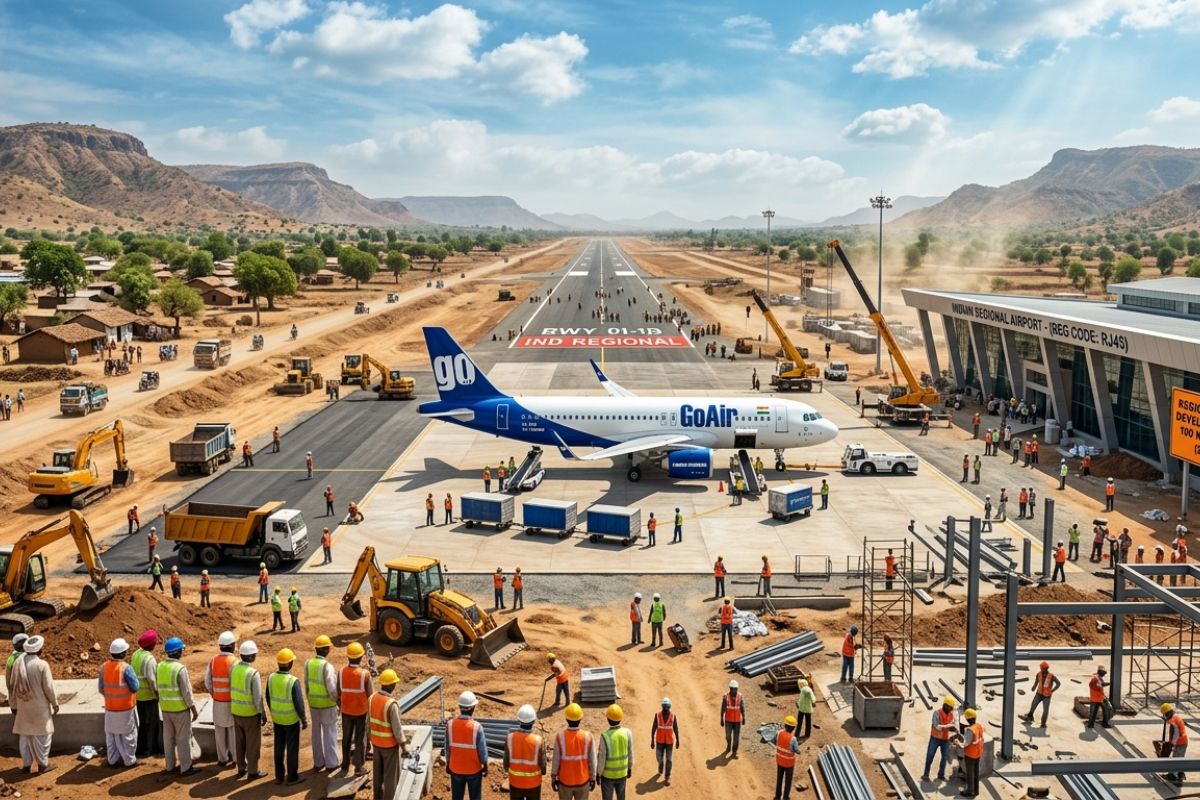
India announces a plan of $3.06 billion to bring aviation to forgotten regions: 100 new airports, $1.07 billion in subsidies, and regional routes guaranteed for 10 years, from 2026 to 2036, away from the centers.
-
Brazil blocked a proposal from the United States at the WTO that would make the exemption from tariffs on digital products like streaming and ebooks permanent, favoring American tech giants at the expense of developing countries.

-
IPTU exemption for seniors in 2026: see how to secure the benefit.

-
The institute that trained the greatest aerospace engineers in Brazil has just opened its first campus outside São Paulo after 75 years: ITA Ceará will have R$ 445 million, new courses in energy and systems, and classes are expected to start in 2027.


From The Dealership Counter to The Mother’s Backyard
Before becoming a reference in automotive accessories, Marco worked as a salesman at a dealership for a major Japanese brand.
Every day, he saw customers asking for extra details, trims, customizations, and solutions that were not always simple or cheap.
It was in this direct contact with the consumer that the salesman noticed a market space that still had no owner.
The turning point came when he decided to move from theory to practice. In 2000, he stopped being just a car salesman to an industry owner in training, starting to produce automotive trims in his parents’ backyard.
There was no sophisticated structure, just a willingness to test a simple idea: create a piece that would be easier to install, more user-friendly for sellers, and more appealing for buyers.
The Insight That Transformed Trims Into A Million-Dollar Business
At the time, many imported diesel cars arrived in Brazil with original trims that required drilling the door to install.
It was a more time-consuming process, with higher risks and results that were not always perfect. Marco saw the opportunity to develop a piece that did not require drilling and already came painted, ready for application.
This vision changed everything. He first thought about who would sell the piece, not just about who would manufacture it, making life easier for the seller at the dealership and for the customer seeking practicality.
The result was direct: dealerships began to prefer his product, as did consumers, who had a simpler and more efficient solution.
What had started on the sidewalk and in the backyard began to take shape as a company, bringing the path of car salesman to established industry owner closer and closer.
The Factory That Starts Small and Becomes a Reference


With the increase in demand, the makeshift structure in the backyard could no longer keep up. The company grew, acquired warehouses, plastic injection machines, assembly, painting, and logistics areas.
In a short time, Kitoplastic transitioned from an almost artisanal scale to a robust industrial model capable of serving manufacturers in different regions.
In the production area, the journey begins with ABS plastic pellets. The material is fed into the equipment, undergoes a drying process to remove moisture, and then moves to a heated funnel, where the screw pushes the melted plastic into the mold.
A cycle of injection, a robot that picks the piece by suction, and a conveyor belt that receives the still-hot trim show how much the operation has transitioned from homemade to industrial.
Today, the company operates with continuous painting lines, modern booths, and partnerships with technology suppliers.
The conveyor speed is constant; the piece enters, receives cleaning, primer, and paint treatments, and comes out ready for assembly.
The comparison to the beginning is inevitable. If Marco had waited to have a state-of-the-art booth to start, he would still be just a car salesman, not an industry owner.
From R$ 8 Thousand Per Month to R$ 220 Million Per Year
The numbers help to understand the scale of the journey. In the beginning, revenue was around R$ 8 thousand per month, close to R$ 96 thousand per year.
Over time, the customer base grew, the manufacturers multiplied, and the volumes skyrocketed. The company began supplying well-known brands spread across the country.
Today, the business that started from the vision of a car salesman to an industry owner reaches an annual revenue of R$ 220 million.
In the journey between these two extremes, there was considerable risk, constant reinvestment, product reinvention, diversification of parts, and much hard-earned learning.
The current factories have specialized teams, from the team installing double-sided tape and assembling trim kits to the painting area, the plastic injection sector, and paint development.
Every detail of the operation shows how much the dream has grown, but also how much the perspective of the former salesman remains present, thinking about how to make life easier for those at the forefront.
Diversification, Risk, and the Mistake of Depending on Few Clients
One of the greatest lessons from this trajectory is in risk management. Initially, the company had a high concentration of revenue from a few manufacturers.
The discontinuation of a single model demonstrated the danger of putting all eggs in one basket. From then on, one directive became clear: it is necessary to sell to many CNPJs, not just a few large buyers.
Today, the company serves 17 manufacturers and maintains displays and parts at dealerships of several brands. There are trims and accessories displayed on custom supports for manufacturers like Jeep, Renault, Kia, Hyundai, General Motors, Nissan, Fiat, Chery, and Volkswagen.
Instead of betting only on the giants, the focus has shifted to serving everyone from those selling 100 thousand cars to those selling 5 thousand, with the same standard of technical and commercial attention.
This strategy reinforces the mentality that the path from car salesman to industry owner is not made only of large, isolated deals, but of a solid foundation supported by many different clients.
The more dispersed the client list, the lesser the impact when a contract is terminated or a model disappears from the market.
People, Culture, and a Team Growing Together

The numbers are impressive, but it is the human structure that keeps the business running. In one of the offices, there are about 210 people working in the financial, tax, accounting, commercial, and customer service areas.
In the commercial department, teams are dedicated to managing all the manufacturers and dealerships served, ensuring that demands are heard and addressed promptly.
Stories of employees with many years at the company show that the culture was not built solely with machines and investments.
Shared challenges, bold goals, and joint achievements create bonds that sustain the company from within.
The journey of the sales manager, for example, with nearly a decade at the company, symbolizes this growth side by side, where victories are seen as a direct result of collective effort.
Mentality, Routine, and Emotional Balance of Those in Charge
Behind the company’s growth is also the personal routine of the entrepreneur. Marco works an average of 14 hours a day but ensures that this time is of quality.
He sleeps early, maintains a healthy routine, and seeks to balance intensity with rest to sustain the pace over the years.
In his view, positive mentality is not just a catchphrase; it is a practical management tool. He talks about energy, good vibes, waking up and going to sleep with the feeling of having done the maximum possible that day. This balance also reflects in the way he deals with good and bad news.
No exaggerated euphoria when closing a big contract, nor absolute despair when losing an important project. The idea is to bring the fact to analysis, evaluate whether the price is adequate, whether the deadline is feasible, or if, in some cases, that deal might not even be that interesting.
Another internal rule is not to let frustration take over. When something goes wrong, he advocates that the period of disappointment be short, almost timed.
,The question is not “why did this happen to me,” but “what will I do now from this point.” This way of thinking helps maintain focus on the next step, not just on the mistake.
Lessons for Those Who Want to Move from Employee to Entrepreneur
One of the lessons Marco repeats to those dreaming of entrepreneurship is to start where they are. In his view, before opening a CNPJ of their own, the ideal is to learn to be an entrepreneur within the company they work for today.
Observing closely areas such as purchasing, sales, logistics, finance, and legal gives a 360-degree view of the business that no book alone can offer.
The journey from car salesman to industry owner was only possible because he used the dealership environment as a real classroom, understanding customer behavior, identifying a concrete need, and testing a simple solution in his mother’s backyard.
When the time came to expand, he already knew what the market wanted, how operations worked, and which mistakes he needed to avoid.
In the end, the story shows that no one is born ready. What differentiates those who remain employees from those who can become car salesmen to industry owners is the ability to see opportunities in everyday life, endure difficulties without giving up at the first fall, and build, step by step, a solid foundation of customers, processes, and people.
And you, after learning about this journey from car salesman to industry owner that earns high with automotive parts, what is the first practical step you could take today to get closer to the business you want to have in the future?








-

-

-

-

-

11 pessoas reagiram a isso.