





 Portuguese
  English
  Spanish
  6 min of reading
  6 comments


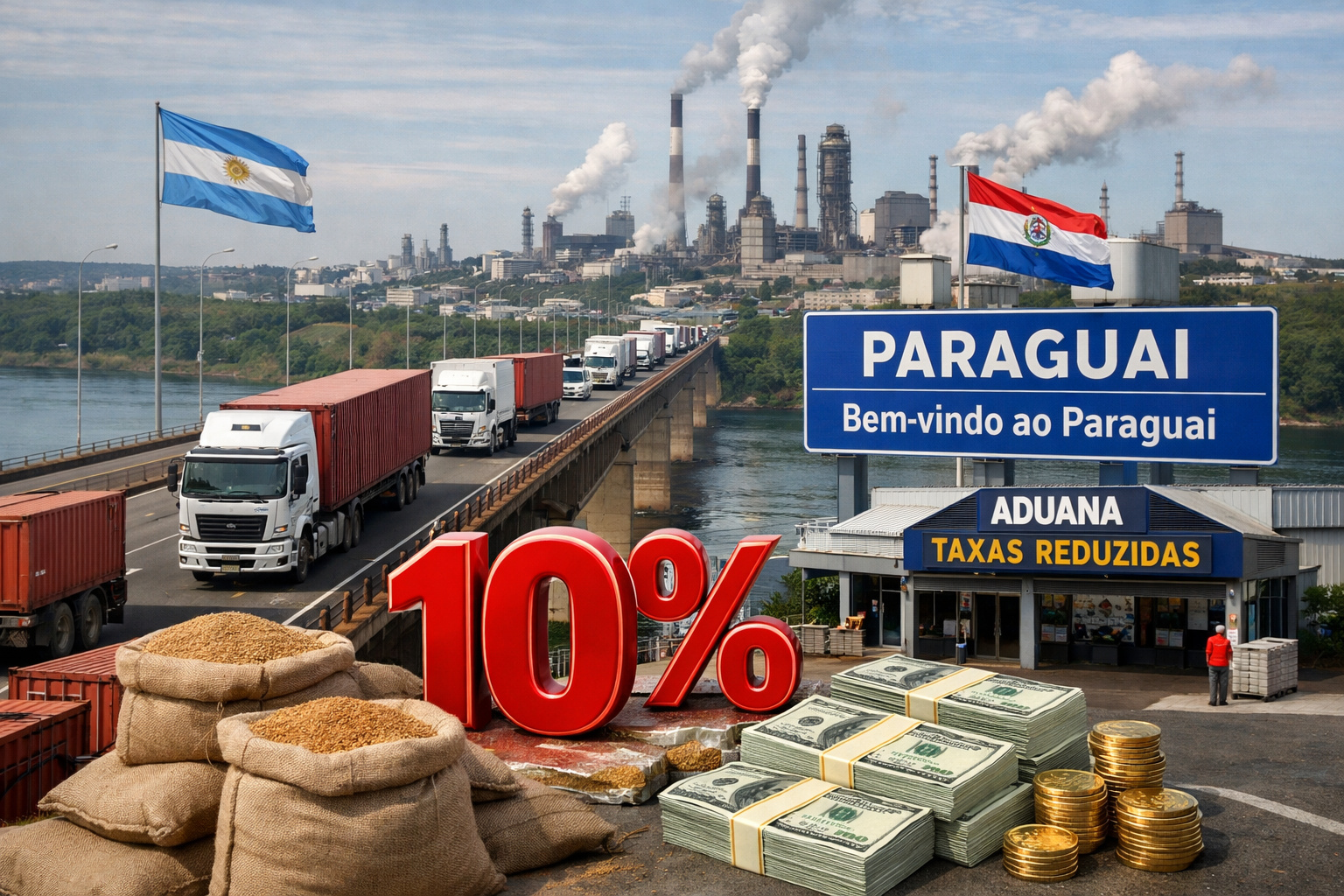


Pressed By High Taxes, Declining Consumption, and the Advance of Imports, Argentine Companies Accelerate the Productive Migration to Paraguay, Attracted By the Maquila Regime, Reduced Operational Costs, and Easy Access to International Markets
The combination of high tax burden, retracted internal consumption, and aggressive advance of imports has caused a structural change in the industrial map of the region. Increasingly, Argentine industries are evaluating — and realizing — the transfer of production lines to Paraguay, in a move that goes beyond seeking tax benefits and reflects a strategy of survival and export repositioning.
This displacement occurs even in the face of the government’s promise by Javier Milei to reduce the tax pressure by 2026, within a package of reforms considered of “second generation.” However, for a large part of the private sector, the wait has become unfeasible. The urgency imposed by the decline in domestic consumption, coupled with the invasion of imported products, has accelerated decisions that were previously only studied on paper.
The information was disclosed by the El Cronista website, which closely follows the movement of Argentine entrepreneurs towards Paraguay, based on official data, interviews with representatives of the productive sector, and regional economic analyses. According to the outlet, the phenomenon is not isolated, nor restricted to a single sector, but reveals a structural medium- and long-term trend.
-
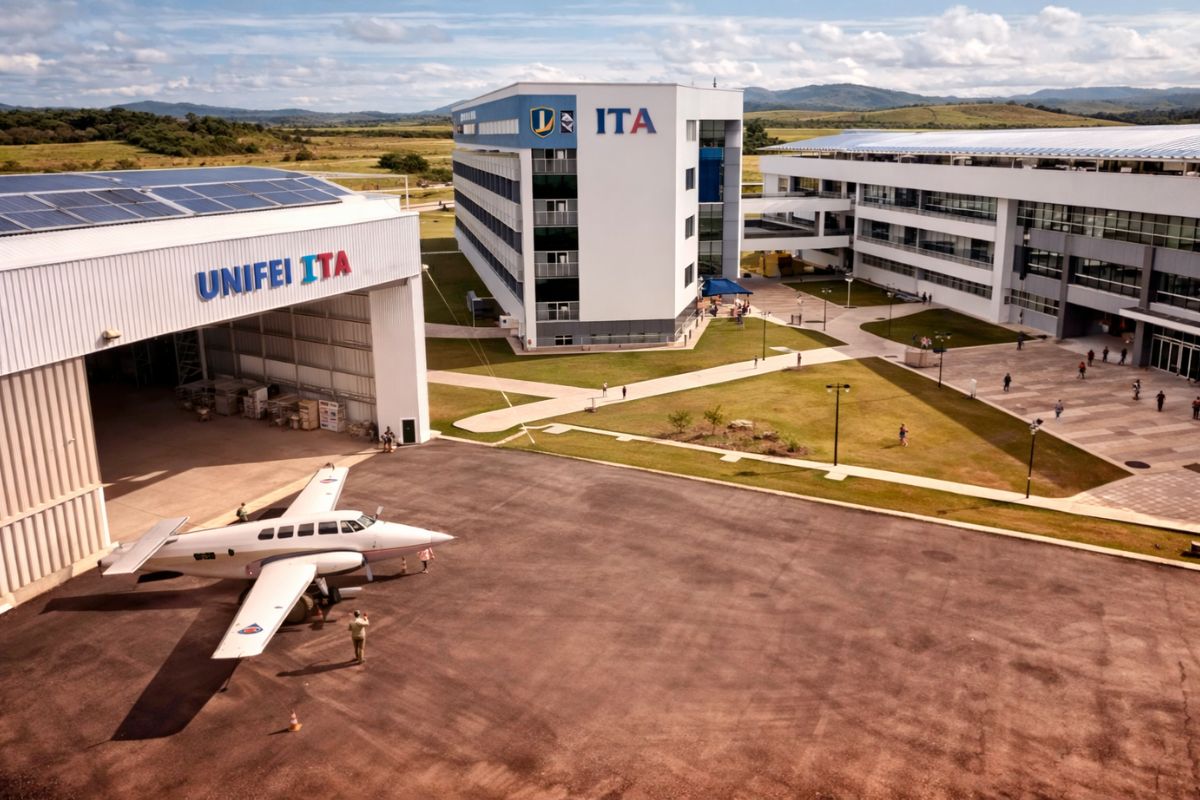
The institute that trained the greatest aerospace engineers in Brazil has just opened its first campus outside São Paulo after 75 years: ITA Ceará will have R$ 445 million, new courses in energy and systems, and classes are expected to start in 2027.
-
Luciano Hang, owner of Havan, goes to Juiz de Fora after the tragedy in February, brings R$ 1 million, hands out R$ 2,000 cards, and donates up to R$ 15,000 to victims in the region.

-
The Brazilian passport allows legal residence in dozens of countries without the need for a prior visa, and most Brazilians are unaware that they can apply for residency directly upon arriving in nations in South America, Africa, and even Europe.

-
Petrobras sends a message to Brazilian truck drivers after fuel collapse and reveals plan to have 100% domestic diesel.


Meanwhile, Paraguay is consolidating its image as a industrial and export platform, taking advantage of a more predictable macroeconomic environment and a regulatory framework aimed at attracting foreign capital.
The Contrast Between Argentina and Paraguay in the Business Environment

While Argentina faces difficulties in overcoming its status as a Standalone Market — a status that limits the influx of large flows of international investment as long as the country risk does not break the barrier of 500 points —, Paraguay is advancing consistently in the global financial scenario.
Recently, the Standard & Poor’s agency granted the country the much-anticipated Investment Grade, recognition that Moody’s had already anticipated in 2024 by raising Paraguay’s sovereign rating to Baa3. This classification places the neighboring country in a category of lower international financial risk, reducing the cost of capital and increasing the interest of global investors.
Paraguayan President Santiago Peña celebrated the achievement as a result of “serious and consistent” work over the past few years. The recognition was so significant that Javier Milei publicly congratulated Peña through social media, in a gesture that highlights the contrast between the recent trajectories of the two countries.
This contrast also appears in labor market numbers. During the first two years of the current liberal administration in Argentina, 20,134 companies closed down, resulting in the loss of 280,984 formal jobs. Simultaneously, the country faces a stagnation of value-added exports, reducing its external competitiveness.
In this scenario, Paraguay is increasingly seen by Argentine entrepreneurs as a true “launch platform”, especially for operations aimed at the international market.
The Textile Sector Leads the Industrial Relocation
Among all segments, the textile sector has become the vanguard of this migratory movement. Considered one of the most affected by the current Argentine economic model, the sector simultaneously suffers from trade opening, declining internal consumption, and the surge of imports.
Only in recent months, purchases on platforms like Shein and Temu have grown by about 300%, flooding the local market with low-cost products. Unlike previous cycles, such as in 2018 and 2022, when imports increased in a heated market context, the current scenario is marked by the absence of demand.
“Give me market” has become the cry for help from industrialists, who see Chinese products entering with minimal tariffs, while the purchasing power of Argentine consumers remains weakened. Even large entrepreneurs in the sector express skepticism regarding the effectiveness of producing in Paraguay to supply Argentina, should internal consumption not recover.

According to data from ProTejer, 50.3% of the final price of clothing in Argentina corresponds to national, provincial, and municipal taxes throughout the production chain. Even after investments of US$ 1.4 billion since the beginning of the pandemic, the sector lost 5,000 jobs just this year, highlighting the loss of momentum of local industry.
“The Argentine industry produces quickly and with quality; the problem lies in the variables outside the factory,” summarizes a representative from the sector, highlighting that the tax burden and logistic costs nullify productive efficiency.
The Maquila Regime and the Paraguayan “Unbeatable Combo”
In addition to the traditional real estate boom, which attracted Argentines seeking safe dollarization, Paraguay has begun to concentrate productive investments in strategic sectors. The main attraction is a fiscal framework considered unbeatable by foreign entrepreneurs.
The crown jewel is the Maquila Regime, recently modernized by Law No. 7547, of September 2025. This system allows foreign companies to outsource their production in Paraguay under highly advantageous conditions.
Among the main benefits are:
- Zero tariff for importing raw materials and inputs;
- Single taxation of 1% on the added value in Paraguayan territory (or on the invoice value, whichever is greater);
- Ease of access to international markets with the “Made in Paraguay” seal.
In the general tax plan, the country applies 10% income tax, 10% personal income tax, and 10% VAT. In Argentina, these same taxes reach 35%, 35%, and 21%, respectively.
Additionally, there are labor costs about 50% lower, unions considered more flexible, significantly cheaper electricity, and a decisive logistical advantage. “Bringing a container from China costs around US$ 3,500, while a land freight from Buenos Aires to Salta reaches US$ 7,500,” reported an industrialist.
Industrial Migration Spreads to Other Sectors
Although the textile sector is the most emblematic case, industrial migration is beginning to spread to agribusiness, food, metallurgy, and auto parts. Suppliers of electric harnesses and automotive components have already transferred part of the production to supply assembly plants located in Paraguay.
The Association of Automotive Component Manufacturers (AFAC) warned that five companies in the sector closed their doors in the last year and a half. By October, exports grew only 2.3%, totaling US$ 1.104 billion, while imports advanced 8.5%, reaching US$ 9.543 billion.
The entity points to Asian competition, which operates with prices considered “non-transparent” and strong state support in their countries of origin, as one of the main factors of imbalance.
According to Daniel Rosato, president of the Argentine Small Industries Association (IPA), Paraguay has intensified its diplomatic agenda with Argentine entrepreneurs. A business mission to the neighboring country is already being prepared for March 2026, focusing on attracting SMEs.
The Social Cost and the Risk of Productive Disintegration
Despite the attractiveness, the decision to migrate is not without criticism. Entrepreneurs acknowledge that, although Paraguay offers a favorable environment for capital, the model has also deepened social polarization and has failed to create a robust middle class.
Still, faced with the advance of retail imports, underpriced wholesale prices, the liberalization of used clothing imports, and the increase in smuggling, migration emerges as the last resort to avoid bankruptcy.
“It’s not a massive movement; these are structured companies capable of managing operations abroad,” noted a textile entrepreneur, emphasizing that not all production can be easily transferred, especially those with higher degrees of sophistication.
While the Argentine government prioritizes reducing the circulation of pesos to contain inflation, the productive sector warns of a silent flight of knowledge, innovation, and technology. The risk, according to industrialists, goes beyond the immediate loss of jobs and involves the disruption of value chains built over decades.
Foreign Investment Strengthens Paraguay’s Position
According to the Central Bank of Paraguay (BCP), the total stock of Foreign Direct Investment (FDI) reached US$ 10.395 million at the end of 2024, a growth of 3.8% compared to 2023.
The number of investing countries reached 68, with emphasis on Brazil, the United States, the Netherlands, Uruguay, and Spain. Additionally, Chile, Argentina, the Cayman Islands, and the British Virgin Islands significantly increased their participation, reinforcing Paraguay’s role as a regional capital attraction hub.
In light of the flight of industries from Argentina and Brazil to Paraguay, driven by lower taxes, cheap energy, efficient logistics, and a more predictable investment environment, do you believe this cross-border movement represents merely a survival strategy for companies or a definitive warning that the industrial model of neighboring countries urgently needs to be revised to avoid loss of jobs, technology, and competitiveness?








O grande problema do Brasil é os IMPOSTOS, um dos mais caro do mundo, a política **** só se preocupam com vantagem e falcatruas prós próprios políticos, fazendo panelinha pra se protegerem Ja os brasileiros entra eleições sai eleições e NÃO APRENDE A VOTAR e COVRAR seus candidatos,BRs sempre foram acomodados, e sempre votam nos mesmos.
Daí dá nisso um país vizinho ao contrário da maioria dos vizinhos da América do Sul, vai crescendo e muito.
Se continuar com essa filosofia industrial, antes,e inclusive melhora-las
logo logo será uma China Sul Americana, enquanto os outros estão estacionados com políticas corruptas, impostos alto, carga trabalhista caríssimas, a tendência dos países Vizinhos irem ladeira abaixo e o Paraguai comendo pelas beiradas, fazendo a lição de casa vai crescendo 3 se tornará uma grande exportador para o mercado mundial, e quando os outros continuam no mais do mesmo, principalmente o Brasil.
Que N vai mudar tão cedo ,aliás vai piorar, quem tem seu rico dinheirinho a hora de fazer a prova e partir pro país viZinho é essa e aproveitar todos os benefícios que ele oferece.
O TAXAAD ESTÁ DESTRUINDO AS INDÚSTRIAS NACIONAIS E MULTINACIONAIS.
IMPOSTOS, IMPOSTOS E IMPOSTOS PARA MANTER A COMPRA DE VOTOS DO PT.
Só pode ser brincadeira… sério que vocês estão preocupados é com a Argentina?? Enquanto centenas de empresas pequenas, medias e grandes, brasileiras, estao indo também para o Paraguai, e as gigantes fechando no Brasil e indo para os USA???