





 Portuguese
  English
  Spanish
  8 min of reading
  0 comments


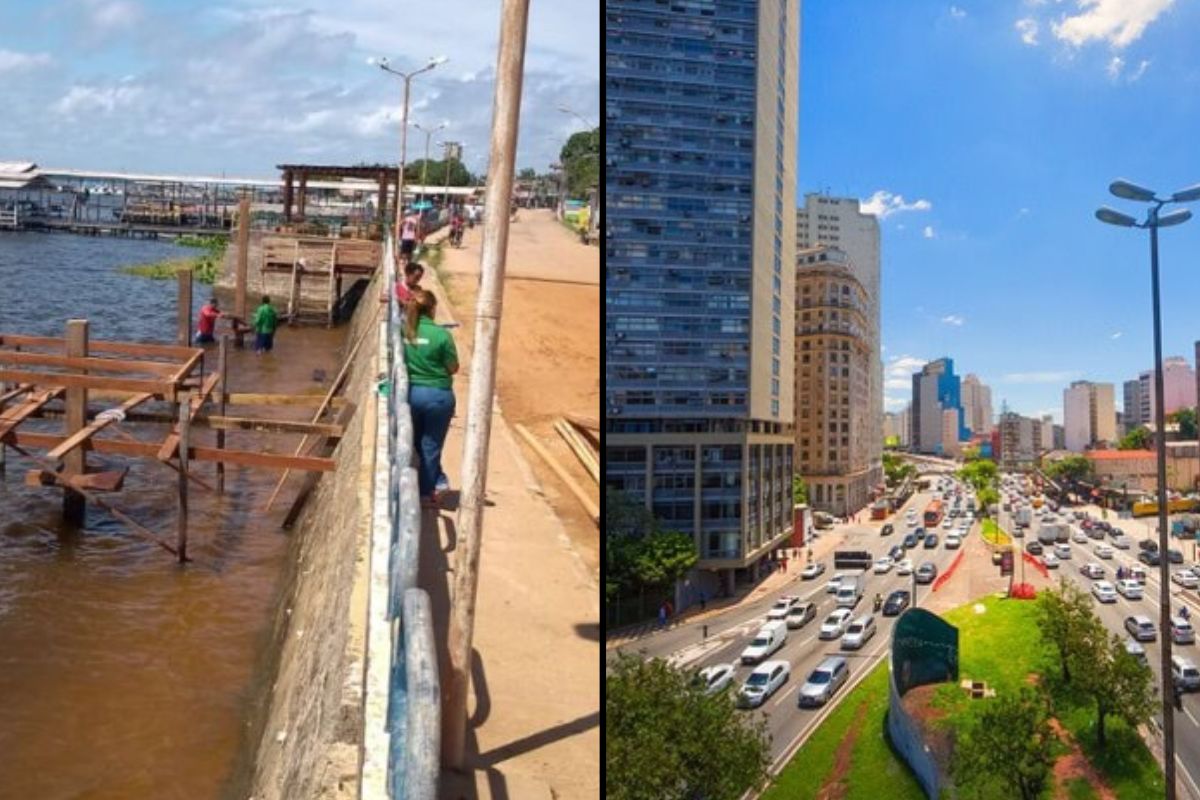
From Worst to Best HDI in Brazil, the Distance Between Melgaço in Pará and São Caetano do Sul in Greater São Paulo is Clearly Evident in the Statistics. However, Observing the Daily Lives of These Two Municipalities Reveals Dimensions of Reality That Cannot Be Captured by a Simple Number Between 0 and 1.
On one side, an Amazonian municipality with a large riverside population and logistical challenges in providing basic public services. On the other, a small, highly urbanized city with high revenue and a strong presence of services. From worst to best HDI in Brazil, the contrast helps to understand how education, health, and income are organized in Brazilian territory and which aspects are not captured by the indicator.
From Worst to Best HDI in Brazil: What the Numbers Indicate
The Human Development Index considers three main dimensions: education, longevity, and average income. The closer the value is to 1, the higher the level of human development indicated for that location.
In the Brazilian case, Melgaço has an HDI of 0.418 and São Caetano do Sul has 0.862. In Melgaço, the average years of schooling are 5.51 years, life expectancy is below 72 years, and the per capita income is around 135 reais.
-
“No one will make us change the Pix,” says Lula after the US report.

-
Lula responds directly to Trump and says that Pix is from Brazil and will not change under pressure from anyone, after a report from the United States pointed out the Brazilian payment system as an American trade barrier.

-
Amazon has just announced a new fee on all deliveries, and your online purchases will become more expensive starting April 17, including for those buying from the United States here in Brazil.

-
He sold his share for R$ 4 thousand, saw the company become a giant worth R$ 19 trillion, and missed the opportunity of a lifetime.


In São Caetano do Sul, the average years of schooling are approximately double, life expectancy is about seven years higher, and the per capita income is about fifteen times higher than in Melgaço.
Thus, from worst to best HDI in Brazil, the data shows significant differences in education, health, and income, which are directly reflected in the daily lives of the population.
Melgaço: Geographical Dispersion, School Dropout, and Limited Access to Health
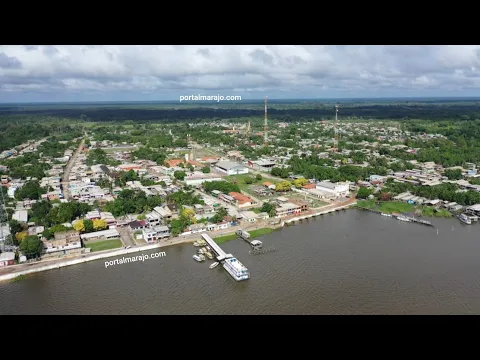

Melgaço is located in the Marajó archipelago, in an area of Amazon rainforest. Of its approximately 28,000 inhabitants, nearly 80% live in rural areas, in riverside communities often accessible only by boat. This territorial dispersion makes access to public services a constant challenge.
In the community of Maria Benedita, a mother of 14 children, the basis of sustenance comes from the forest: açaí, fruits, farming. The main complaints are not about food production, but about the availability of education and health.
Residents report periods when schools operate with few school days in the month and the absence of high school in certain areas, causing youth to drop out of studies.
According to the data, 14.6% of children between 6 and 14 years old are out of school, the dropout rate in high school is 21.2%, and about 20% of people over 15 years old are illiterate.
These indicators explain much of Melgaço’s position in the HDI ranking, as education is one of the core components of the index.
In health, the situation is also challenging. The only hospital in the municipality has structural limitations: deactivated surgical center, damaged equipment, poor condition beds, and the need to refer procedures to neighboring cities.
The infant mortality rate in Melgaço is 22.68 deaths per thousand live births, a figure higher than the national average and greater than that recorded in São Caetano do Sul.
Moreover, basic sanitation is practically nonexistent, with open sewage even in urban areas. A hospital boat intended for riverside care is reported by residents as underutilized.
State and federal agencies report transfers and support actions, while the local government mentions resource limitations and management difficulties in health care.
São Caetano do Sul: Structured Services, High Revenue, and Aging Population
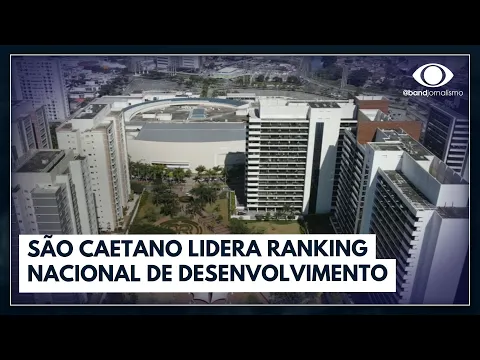
On the opposite end, São Caetano do Sul illustrates the best HDI in Brazil with a combination of structured services and local revenue capacity.
The local government states that all children aged 6 to 14 are enrolled, with municipal schools catering from Early Childhood Education to the end of Elementary Education.
The local public network offers music workshops, English conversation, theater, science labs, and well-equipped physical spaces, characteristics that even attract middle- and upper-class families to public schools.
The illiteracy rate among people over 15 is estimated at 1.2%, a very low rate in the national context.
In school meals, the guideline is to restrict ultra-processed foods, ban sugar for children under 3 years old and maintain gardens at all schools.
These gardens are maintained by low-income mothers linked to municipal programs, generating income and bringing families closer to the school routine.
In the health sector, São Caetano do Sul has units with specialized consultations, exams, physiotherapy, and 24-hour pharmacy in the same space, in addition to high-cost equipment, such as magnetic resonance imaging.
According to local management, the average waiting times for exams and specialist consultations are around 30 days.
The municipality also has a relatively elderly population, with a higher proportion of people over 60 years than the average in many Brazilian cities. Physical activity and sports programs for seniors, such as running groups in parks, seek to respond to this demographic profile.
Municipal Budget, Revenue, and Differences in Investment Capacity
One of the factors that help explain the gap from worst to best HDI in Brazil is the financing structure of municipalities.
In São Caetano do Sul, if the 2023 budget were divided by the number of inhabitants, the amount per person would be around 15,000 reais. In Melgaço, the municipal spending per resident in 2023 was about 5,000 reais.
The difference is mainly due to the tax base. São Caetano do Sul has a diversified economy, a strong service sector, and significant tax revenue from IPTU and ISS.
These taxes account for about 60% of the municipal budget; the remainder comes from state and federal transfers. This composition allowed, for example, to eliminate the urban bus fare, a decision that requires relatively stable finances.
Melgaço, on the other hand, has an economy focused on extractivism and high informality. The municipality does not charge IPTU, collects approximately 6% of what it spends, and depends almost entirely on federal and state transfers, such as the Municipal Participation Fund.
The local administration states that the budget is insufficient to meet all demands and recognizes specific difficulties in health care.
Economists studying the fiscal situation of Brazilian municipalities point out that the Federative Pact, created to distribute revenues among the Union, States, and municipalities with the aim of reducing regional disparities, has not managed to level these differences to the desired scale.
Among the proposals discussed by specialists are revising criteria for tax distribution, allowing flexibility of earmarked resources, and rethinking the number of municipalities to evaluate whether reducing administrative structures could free up more funding for education and health.
What the HDI Does Not Capture in Melgaço: Environmental Services and Riversider Lifestyles

Although Melgaço has the lowest HDI in the country, the indicator does not record some relevant aspects of the municipality.
More than 90% of its territory is covered by native vegetation, according to land use and cover surveys. In area, the preserved forest portion is greater than that of the Federal District itself, contributing to climate and rainfall regulation in other regions.
The açaí economy is an example of this interface between forest and income. Riversiders like Carlos de Almeida report that managing açaí palm groves generates significant income during certain periods, while also encouraging the maintenance of vegetation cover.
Part of the production is exported, while another part is consumed by families throughout the year.
Moreover, the riversider lifestyle, with a strong bond to rivers and forest, appears in accounts as a factor of personal satisfaction, even amidst the scarcity of public services.
Many residents state that they would not trade their life in Melgaço for large urban centers, as long as the forest is preserved and essential services are improved.
These environmental and cultural dimensions do not directly enter into the HDI calculation, which remains focused on education, income, and longevity.
In this sense, from worst to best HDI in Brazil, Melgaço illustrates how certain municipalities can have low scores on the index while also playing a strategic role in environmental conservation.
What the HDI Does Not Capture in São Caetano: Urban Change and Displacement of Low-Income Residents
On the other hand, São Caetano do Sul also has elements not fully captured by the HDI. Historically marked by industries, the city underwent a process of economic and urban transformation over the past decades, with a reduction in industrial presence and an increase in medium and high-standard residential profiles.
In areas previously occupied by factories, shopping centers and high-value vertical condominiums have emerged. Urban research indicates that as the city appreciated, some low-income residents began to move to neighboring municipalities, maintaining work ties with São Caetano but residing outside its territory.
Next to the city limits, there are communities with more precarious infrastructure, absence of sewage networks in some areas, and flooding, whose residents often work in São Caetano do Sul but are accounted for in the statistics of other municipalities.
This configuration helps to understand why São Caetano’s indicators are high: the city combines high revenue, well-structured public services, and a relatively homogeneous socioeconomic profile within its limits.
At the same time, the immediate surroundings register distinct realities, with lower levels of infrastructure and income.
From Worst to Best HDI in Brazil: A Useful but Incomplete Indicator
The comparison between Melgaço and São Caetano do Sul shows that the HDI is an important tool for visualizing inequalities in education, health, and income, but it does not exhaust the local reality.
In Melgaço, the index highlights school dropout, low average education, health limitations, and modest income, while not directly incorporating the municipality’s contribution to the preservation of the Amazon or the relevance of the environmental services provided.
In São Caetano do Sul, the HDI records high levels of education, income, and longevity, but does not show, with the same level of detail, the urban processes that led part of the low-income population to live in neighboring municipalities, even though they maintain daily work relationships with the city.
Thus, from worst to best HDI in Brazil, the indicator helps to guide public policies, but needs to be analyzed alongside other data, such as land use patterns, economic structure, mobility flows, and the environmental functions of each municipality.
And you, when looking at these two extremes of the worst to best HDI in Brazil, do you believe it is more urgent to discuss how resources are distributed among municipalities or how to complement the HDI with other indicators to better reflect the reality of places as different as Melgaço and São Caetano do Sul?








Seja o primeiro a reagir!