





 Portuguese
  English
  Spanish
  5 min of reading
  0 comments



Galaxy A56 Achieves Lowest Price Ever Recorded in Brazil, Featuring Artificial Intelligence, Advanced Display, and Triple Camera. Exclusive Offer at Magalu Catches the Eye of Consumers Seeking a Premium Midrange Device with Extended Lifespan.
The Galaxy A56 has reached its lowest historical price in the national retail market: R$ 1,672 via Pix with an exclusive coupon from Canaltech at Magalu, as published on August 27, 2025.
This price reduction places Samsung’s premium midrange device on the radar for those seeking advanced features — such as 120 Hz AMOLED display, 50 MP triple camera, and AI package — at a value below what is charged by direct competitors.
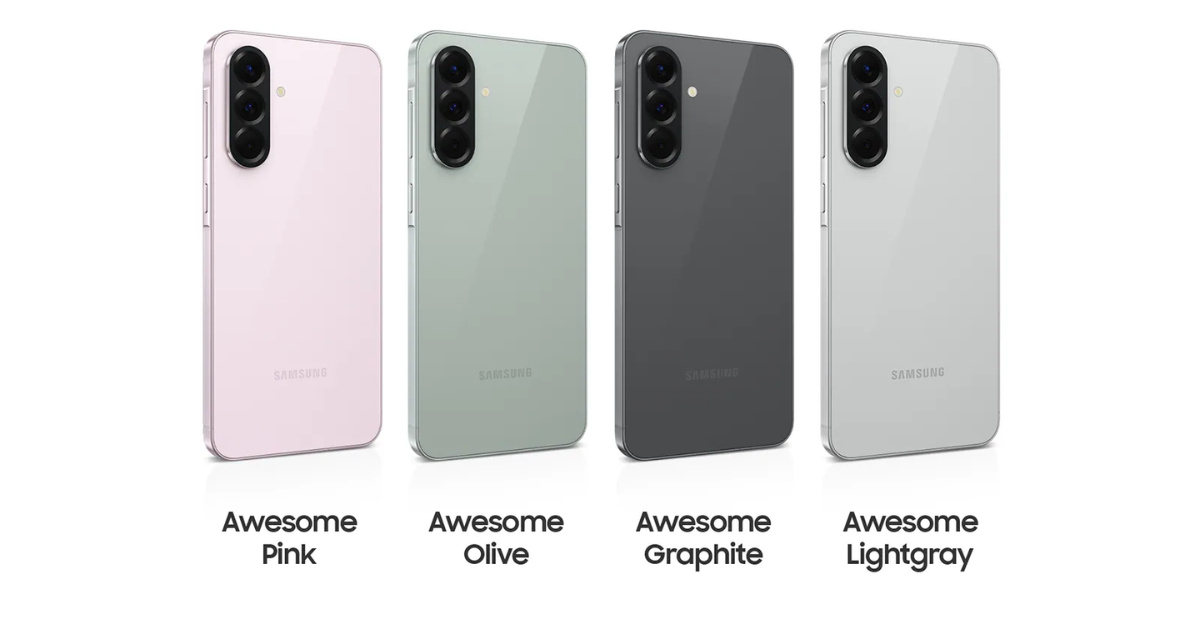
Falling Prices and Availability
The offer was announced as a promotional event tied to coupon use and payment via Pix at Magazine Luiza.
-
The oceans are darkening all over the planet – what is happening?

-
An engineer designs a solar plane to fly on Mars at an altitude of 1,000 meters and a speed of 300 km/h, covering 16,000 kilometers in a Martian year, 900 times the distance traveled by the Ingenuity helicopter in three years on the planet before experiencing a rotor failure, and NASA is already funding the feasibility study.

-
A new phenomenon of contactless magnetic friction intrigues scientists and questions a theory that has been valid since the 17th century.

-
An impressive phenomenon in Northern Brazil causes rivers of different colors to flow side by side, revealing secrets about sediments, currents, and biodiversity.


In recent research, the retailer’s website itself displayed higher prices for the same line, reinforcing the opportunity aspect of the price + coupon combination.
This is a clear snapshot of the current market moment, with the Galaxy A series in a phase of strong commercial aggression.
AI in Midrange: Features Coming to A56
For the first time, Samsung brings a wide array of Galaxy AI to the midrange segment.
On the A56, features like Circle to Search, Object Eraser, custom filters, and Best Face are integrated into One UI, bringing the experience closer to what is seen in flagship models.
The aim is to streamline everyday tasks and enhance photos and videos without relying on third-party apps.
Display and Cameras Stand Out
The A56 uses a 6.7-inch Super AMOLED panel with FHD+ resolution and 120 Hz refresh rate. In outdoor environments, the Vision Booster of 1,200 nits improves readability.
In the optical set, the main camera of 50 MP with stabilization is accompanied by a 12 MP ultrawide and a 5 MP macro lens. On the front, there is 12 MP for selfies.
This combination seeks balance between definition, field of view, and versatility without sacrificing file size or battery life.
Performance and Battery
Internally, the Galaxy A56 runs on the Exynos 1580 with 8 GB of RAM, designed to deliver smooth performance in multitasking and casual gaming.
In international tests, the chip appears as a direct evolution over the Exynos 1480, maintaining a focus on energy efficiency and AI support on the device.
The 5,000 mAh battery supports 45 W charging, above the standard 25 W seen in some midrange devices, shortening the time spent on the charger.
Durability and Support of the Galaxy A56
In addition to performance, the device focuses on build quality and longevity. The metal structure and Corning Gorilla Glass Victus+ enhance protection against drops and scratches.
The IP67 certification ensures resistance to water and dust under specific laboratory conditions.
On the software side, Samsung promises up to six generations of Android updates and six years of security updates, a policy that extends the device’s lifespan and sustains its resale value.
Direct Comparison: Galaxy A36
Within Samsung’s own lineup, the Galaxy A36 is the closest internal competitor.
Although it shares key points such as a 6.7-inch display at 120 Hz, IP67 protection, and 45 W charging, the A36 uses a rear setup with an 8 MP ultrawide, below the 12 MP of the A56.
In terms of hardware, the A36 is powered by the Snapdragon 6 Gen 3, which prioritizes efficiency and connectivity, whereas the A56 relies on the Exynos 1580 focused on built-in AI.
Both come with extended software policies, but the A56 includes a broader AI package and superior optical performance in the ultrawide category.
External Rival: Moto G56
In the Android ecosystem, the Moto G56 falls within the same price range and offers good battery life with above 5,000 mAh. The most noticeable difference lies in the 6.72-inch LCD display.
Even with 120 Hz, this type of panel typically offers less deep blacks and lower contrast compared to the Super AMOLED on the A56.
In photography, the rear of the G56 combines 50 MP with 8 MP for the ultrawide, a configuration similar in numbers to the A36 but inferior to the A56 in terms of breadth and integrated AI processing in One UI.
System and Updates
The Galaxy A56 arrives with Android 15 and One UI 7 out of the box. Samsung has already initiated the cycle for One UI 8 based on Android 16, with beta and phased schedules for product families.
The trend is for the A56 to be among the eligible models, aligned with the policy of six generations of OS.
The pace and order of distribution, however, depend on the region and firmware adjustments, a common practice during major updates.
Market Context
The combination of aggressive pricing with AI package, high refresh rate display, and 50 MP triple camera makes the A56 one of the most complete midrange devices in this segment.
Compared to rivals with LCDs and shorter support cycles, the longevity differential and the native One UI feature set help explain the demand for promotions like the one at Magalu.
For those monitoring prices, it represents a rare entry point for a device with IP67, Victus+ glass, and 45 W charging in the same package.


Who Is It For?
Consumers prioritizing AMOLED display, software stability over several years, and real-use AI tools are likely to benefit the most from the Galaxy A56.
Users who spend a lot of time watching videos, on social media, and casual photography find an interesting balance between performance, battery life, and image quality, with the added bonus of a 12 MP ultrawide, absent in some direct competitors.
This difference can be decisive for those wanting a device that remains current longer without migrating to flagship lines.
Given this scenario, the drop to R$ 1,672 changes your buying plan or are you still waiting for a bigger discount to add a premium midrange device with AI to your cart?






Seja o primeiro a reagir!