





 Portuguese
  English
  Spanish
  4 min of reading
  0 comments


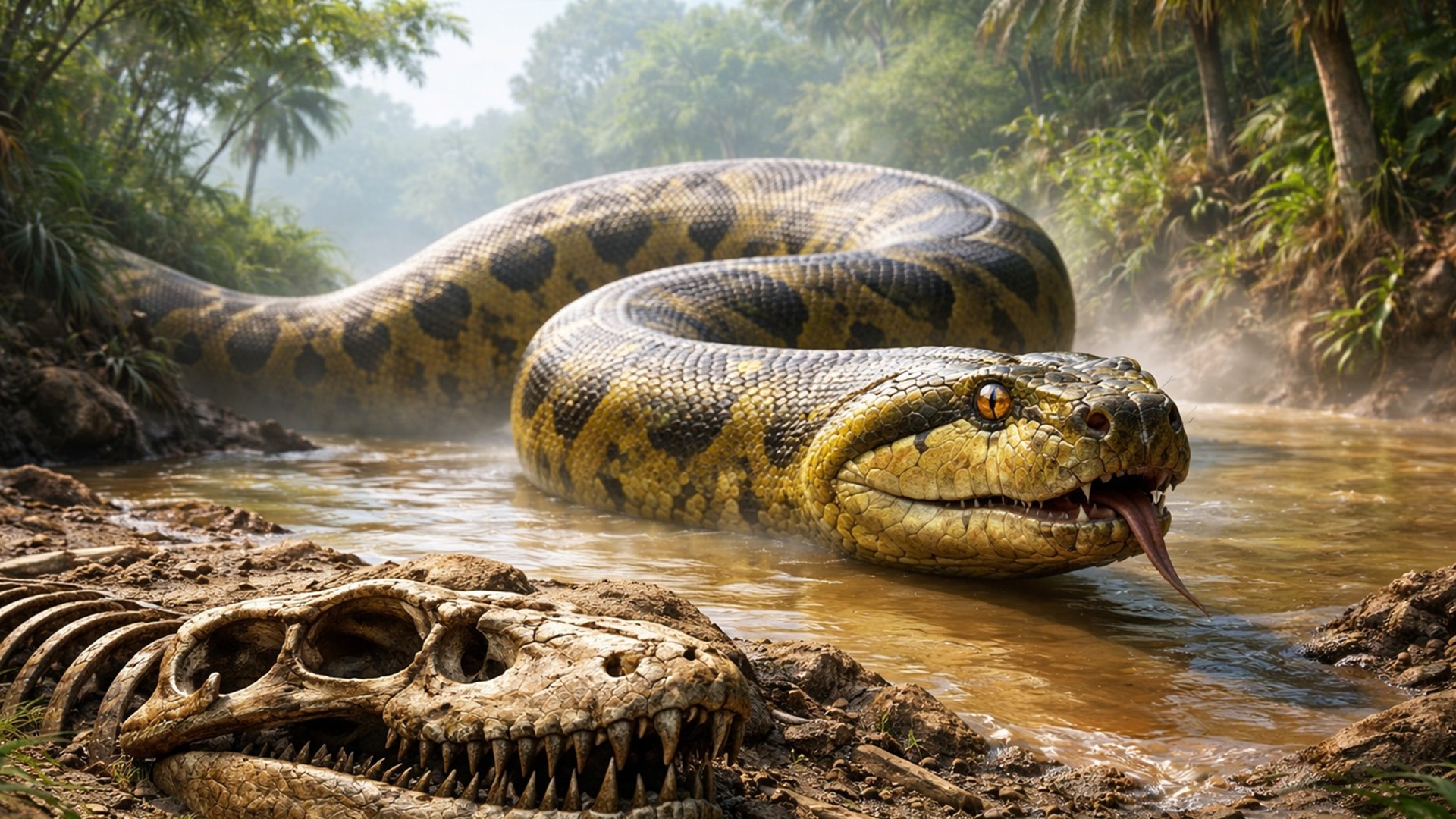
Fossil Evidence Analyzed From 183 Vertebrae Found in Falcón State, Venezuela, Indicates That Anacondas Had Already Reached Their Maximum Size 12.4 Million Years Ago and Maintained Stable Dimensions Even After Climate Changes That Extinguished Other Giant Reptiles of the Miocene
Research led by the University of Cambridge analyzed 183 fossil vertebrae in Venezuela and concluded that anacondas reached their maximum size 12.4 million years ago, maintaining a stable size to this day, despite environmental changes that eliminated other Miocene giants.
Fossil Evidence Indicates Body Stability Over Millions of Years
Fossil evidence from Venezuela shows that anacondas reached giant sizes over 12 million years ago and have remained remarkably consistent since then. The study concludes that gigantism emerged early in the evolutionary history of the group and was not followed by further expansion.
A research group examined fossils of giant anacondas from South America and determined that these snakes reached their maximum body size about 12.4 million years ago. The findings indicate maintenance of large size throughout the known evolutionary history.
-
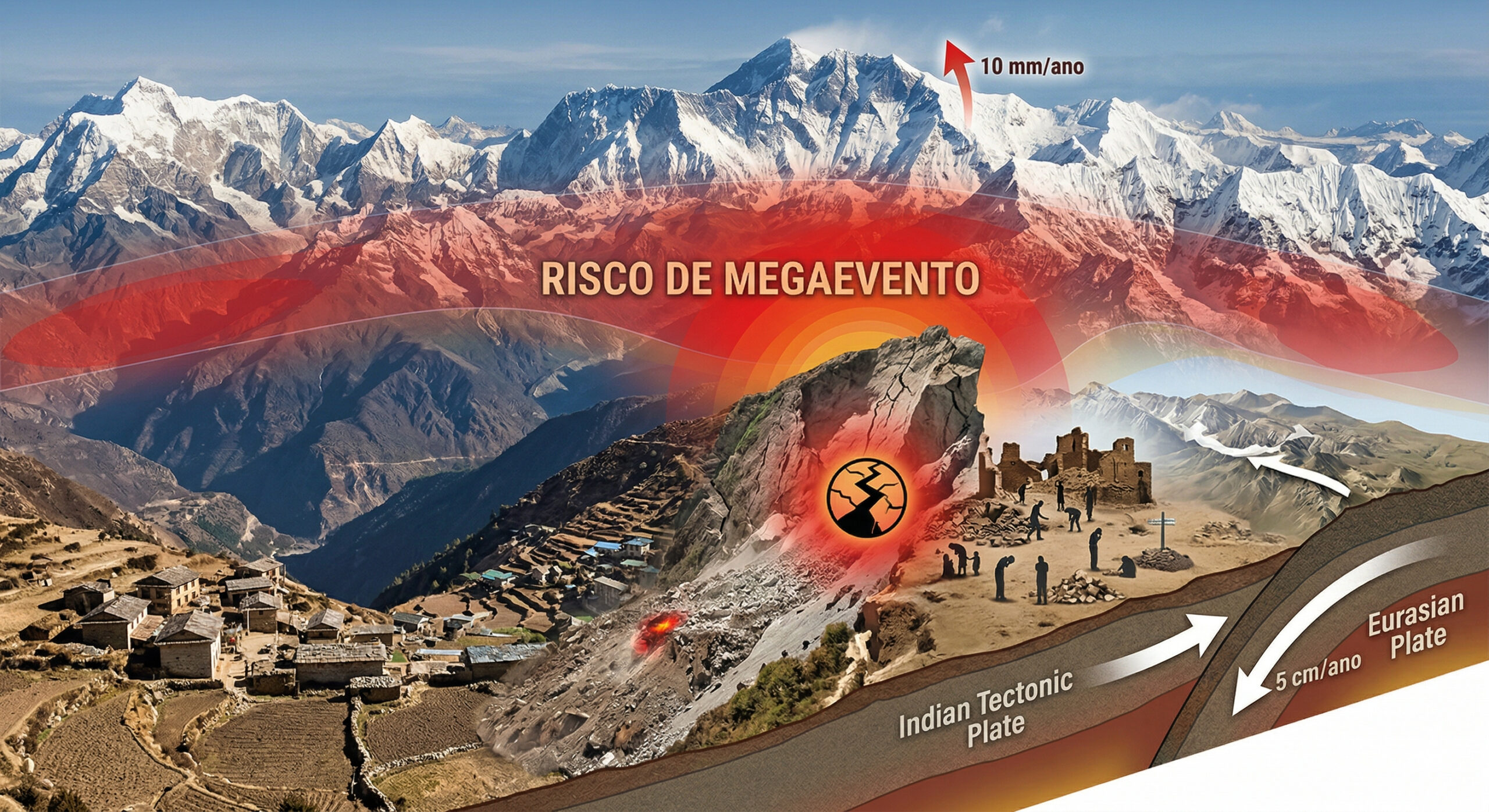
The Himalayas continue to grow to this day, with tectonic plates advancing 5 cm per year, mountains rising up to 10 mm annually, and the 2015 earthquake that killed 9,000 people may have increased the risk of an even larger seismic mega-event.
-
At an altitude of 400 km by astronauts from the International Space Station, Paris transforms at night into a golden mesh so precise that it reveals the outline of the Seine River, avenues, and entire neighborhoods like a luminous map drawn over the Earth.

-
iPhone 17 reaches historic low price with 256 GB, 120 Hz display, and drops to R$ 5,703 on Shopee, featuring A19 chip, dual 48 MP cameras, battery life of up to 30 hours, and advanced AI features.

-
Trip to Mars getting closer: Pulsar Fusion, from the UK, advances with plasma ignition in fusion engine and could drastically reduce space travel time, making crewed missions faster, safer, and economically viable.


During the interval between 12.4 and 5.3 million years, known as the Middle to Late Miocene, many animals grew larger than their modern counterparts. Higher global temperatures, extensive wetlands, and abundant food contributed to this pattern.
Despite this context, anacondas did not exceed the size observed today. The fossil record analyzed does not indicate additional growth after the initial emergence of gigantism, contradicting expectations based on the warmer climate of the period.
Comparison with Other Giant Reptiles of the Miocene
Other giant reptiles of the Miocene included the 12-meter black caiman, Purusaurus, and the 3.2-meter giant freshwater turtle, Stupendemys. These species disappeared later, unlike the anacondas of the genus Eunectes.
The study points out that while these large reptiles went extinct, anacondas survived while maintaining their giant size. Instead of shrinking or disappearing, they persisted with dimensions similar to today’s over millions of years.
The persistence of gigantism suggests a high capacity for environmental resilience. The research associates the survival of anacondas with the continuity of suitable habitats and prey availability over geological time.
Vertebra Measurements Reveal Length of Ancient Snakes
The team measured 183 fossilized vertebrae from anacondas, representing at least 32 snakes discovered in Falcón State, Venezuela. The measurements provided a quantitative basis to estimate body length.
Anacondas have over 300 vertebrae in their spine. Therefore, measurements of individual fossilized vertebrae provide reliable indications of the total length of the snake, even when the complete skeleton is not preserved.
Currently, anacondas are among the largest snakes in the world. They typically reach four to five meters in length, with rare individuals measuring up to seven meters.
By combining the measurements from the Falcón fossils with records from other South American sites, the scientists concluded that ancient anacondas also measured approximately four to five meters, a size similar to what is observed today, reinforcing body stability.
Scientific Publication and Methodological Approach
The research was published on December 1 in the Journal of Vertebrate Paleontology. The study used detailed metric analyses and comparison with additional fossil records from South America.
To confirm the results, the lead author applied a second approach called ancestral state reconstruction. The technique uses a phylogenetic tree of related snakes to estimate the body length of ancestors and modern species.
The analysis included relatives such as tree boas and rainbow boas. The results showed that early anacondas already measured four to five meters when they emerged during the Miocene, with no evidence of later phases of growth.
Survival of Anacondas Amid Environmental Changes
According to Andrés Alfonso-Rojas, other giant species have gone extinct since the Miocene, likely due to cooling global temperatures and habitat reduction. However, giant anacondas survived and maintained their large size.
He stated that anacondas developed large body sizes shortly after emerging in tropical South America, about 12.4 million years ago. Since then, the size has not changed, as indicated by fossil measurements.
Currently, anacondas live in swamps, marshes, and large river systems such as the Amazon. During the Miocene, northern South America was similar to the current Amazon basin, allowing for broader territorial occupancy.
Although the distribution has restricted over time, suitable habitat and sufficient prey still exist, including fish and capybaras, to sustain the large size of modern anacondas.
Expectations Contradicted by the Fossil Record
Before this research, scientists presumed that ancient anacondas would have grown larger than the current ones, due to the warmer climate of the Miocene and the sensitivity of snakes to environmental temperature.
The study, however, found no evidence of anacondas measuring seven or eight meters in length during this period. Even with higher global temperatures, the maximum body size remained within the range currently observed.
This result was considered surprising by researchers, as it contradicts expectations of progressive gigantism associated with warmer climates. The analyzed fossil record does not support this hypothesis.
Fossil Collection and Institutional Contribution
The fossils used in the study were collected over several field seasons by collaborators from the University of Zurich and the Urumaco Paleontological Museum in Venezuela.
Before this work, there was not enough fossil material to determine when anacondas became giants. The large number of vertebrae analyzed allowed establishing a clear timeline for the onset of gigantism.
The research concludes that the gigantism of anacondas is an ancient, stable trait resilient to significant climate changes, differing from the fate of other giant reptiles of the Miocene that did not survive environmental transformations.









-

-

-

-

-

-

58 pessoas reagiram a isso.