





 Portuguese
  English
  Spanish
 4 min of reading
  0 comments


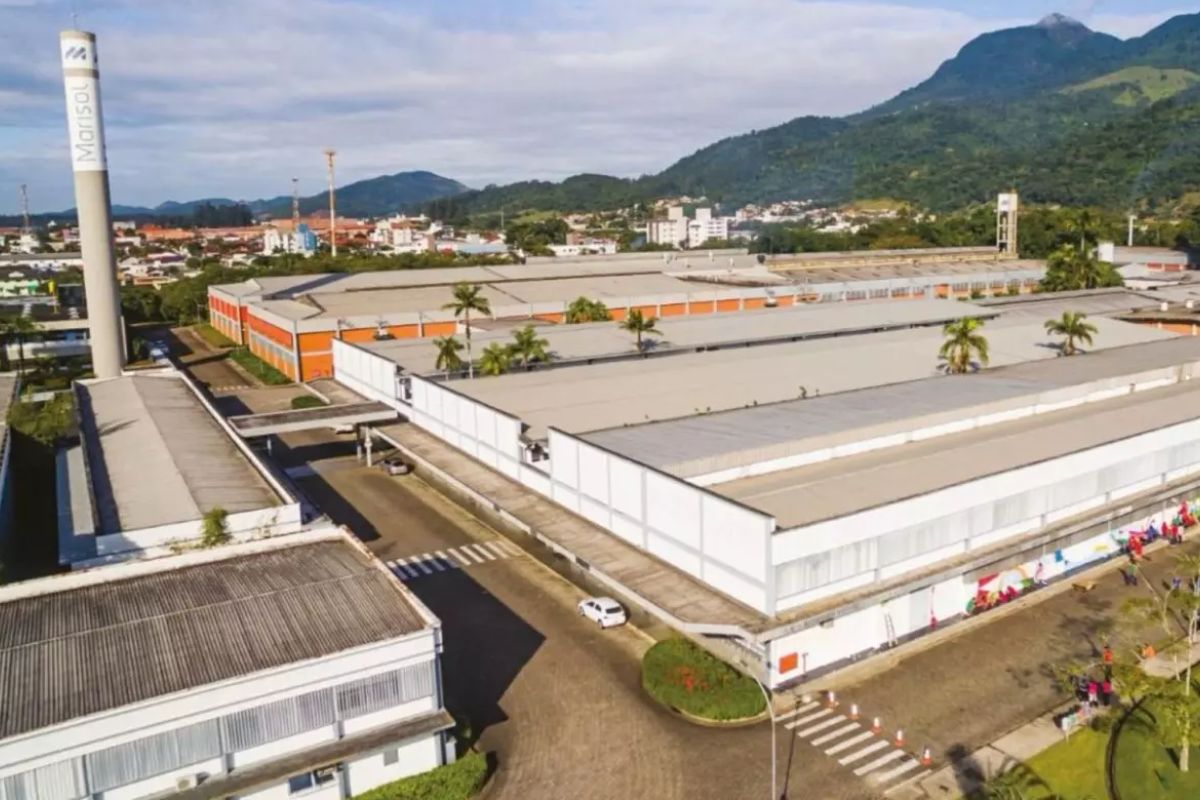
Marisol Settles Historical Debt Linked to Debentures with Asset and Property Payment, Regains Financial Balance and Prepares for Gradual Resumption of Operations in Jaraguá do Sul
Marisol started 2026 free from a historical debt of R$ 254.2 million, a move that, according to the company itself, restores balance to its financial structure and marks the beginning of a new growth cycle. The liability was classified as historical precisely because of its weight and duration, and the settlement opens space for the company to reorganize priorities, look to the future, and reinforce confidence in its planning.
With 61 years of history in Jaraguá do Sul, the Santa Catarina giant, owner of brands like Lilica Ripilica, Tigor T. Tigre, Marisol, Mundo Ripilica, Lov’it, Hapier, and Pakalolo, completed the full settlement of non-operational debentures linked to the acquisition of shares owned by third parties.
The operation closes a sensitive chapter of the historical debt and is treated internally as a turning point, aligned with the goal of gradually resuming operational activities and seeking expansion from 2026.
-
He sold his share for R$ 4 thousand, saw the company become a giant worth R$ 19 trillion, and missed the opportunity of a lifetime.

-
Elon Musk’s Starship megafrocket puts $8 billion at risk, raises alarms in the market, and could affect technology, mining, and space internet startups in the coming years.

-
Airfare prices may rise with increasing fuel costs, and the government is considering urgent measures to avoid a direct impact on the wallets of Brazilians.
-
Chocolate prices soar nearly 15% and become a luxury item for Easter 2026, with increases surpassing inflation and changes in Brazilian consumption habits.


How the Historical Debt Was Settled
According to a market announcement, the historical debt was settled through a Payment Agreement with Asset Transfer, a structure in which the creditor is paid with goods and assets instead of cash.
In Marisol’s case, the settlement of the debentures involved the transfer of non-operational properties and financial assets of the company and its parent holding.
These debentures had a non-operational origin and were linked to the acquisition of shares belonging to third parties, which helps explain why the liability was seen as a separate factor from day-to-day operations.
By using assets not directly linked to production to settle the historical debt, the company preserves its operational base while simultaneously eliminating a significant long-term commitment.
Historical Debt Solved and New Financial Balance
With the liability solved, Marisol claims to have regained financial balance and created more solid conditions for planning the resumption.
In practice, this means that the remaining financial commitments are, according to the company, compatible with the current operational capacity, which reduces pressure on cash flow and short-term decisions.
In its communication to the market, the company highlights that the end of the historical debt of R$ 254.2 million marks the beginning of a new cycle, where management will prioritize efficiency, profitability, and the development of new business models.
Instead of focusing efforts on solving the old liability, the focus now is on reorganizing the portfolio, strengthening operations, and building a trajectory of sustained growth over the coming years.
Gradual Resumption and Focus on Growth in Jaraguá do Sul
Marisol indicates that, with the historical debt resolved, there is room for a gradual resumption of operational activities.
The announced path involves an organized reactivation, without rush, but with a clear direction: to strengthen the company’s presence starting from Jaraguá do Sul, the city where the company was founded and has built its history over six decades.
In this new cycle, the communicated strategy is to prioritize efficiency and profitability, paying attention to the quality of operations and the rational use of resources.
Rather than rapid expansion at any cost, the resumption is described as gradual, aligned with the company’s current capacity and the reality of the market in which it operates.
The settlement of the historical debt serves as the starting point for this reorganization, allowing investment decisions to be made based on a more stable financial structure.
Strong Brands and Portfolio Positioned for Resumption
While eliminating a historical debt, Marisol preserves a portfolio of recognized brands in the market.
The company continues to own names like Lilica Ripilica, Tigor T. Tigre, Marisol, Mundo Ripilica, Lov’it, Hapier, and Pakalolo, which gives it significant intangible assets for any resumption and expansion plan.
The company indicates that the current scenario allows it to start investing in people, projects, and strategic partnerships, signaling that strengthening the brands and seeking new business formats are part of the plan.
In a context where the historical debt no longer occupies the center of the agenda, the trend is for management’s energy to focus more on product development, market relationships, and designing channels that make sense for the company’s new moment.
Next Steps After the End of the Historical Debt
With the historical debt of R$ 254.2 million settled, the company states that its other financial commitments are aligned with current cash generation capacity.
This creates a more favorable environment to plan for expansion in 2026, within a logic that combines gradual growth and financial discipline.
Marisol’s own discourse points to a balance between caution and ambition: on one hand, the need to consolidate the new level of indebtedness; on the other, the intention to resume investments in people, projects, and partnerships, taking advantage of the relief brought by the payment agreement.
Ending a historical debt does not solve all challenges, but it significantly changes the foundation upon which the company begins to make strategic decisions.
And you, do you think that the end of this historical debt is enough to place Marisol back in a consistent growth cycle in the coming years?






-

-

-

-

6 pessoas reagiram a isso.