





 Portuguese
  English
  Spanish
  5 min of reading
  0 comments


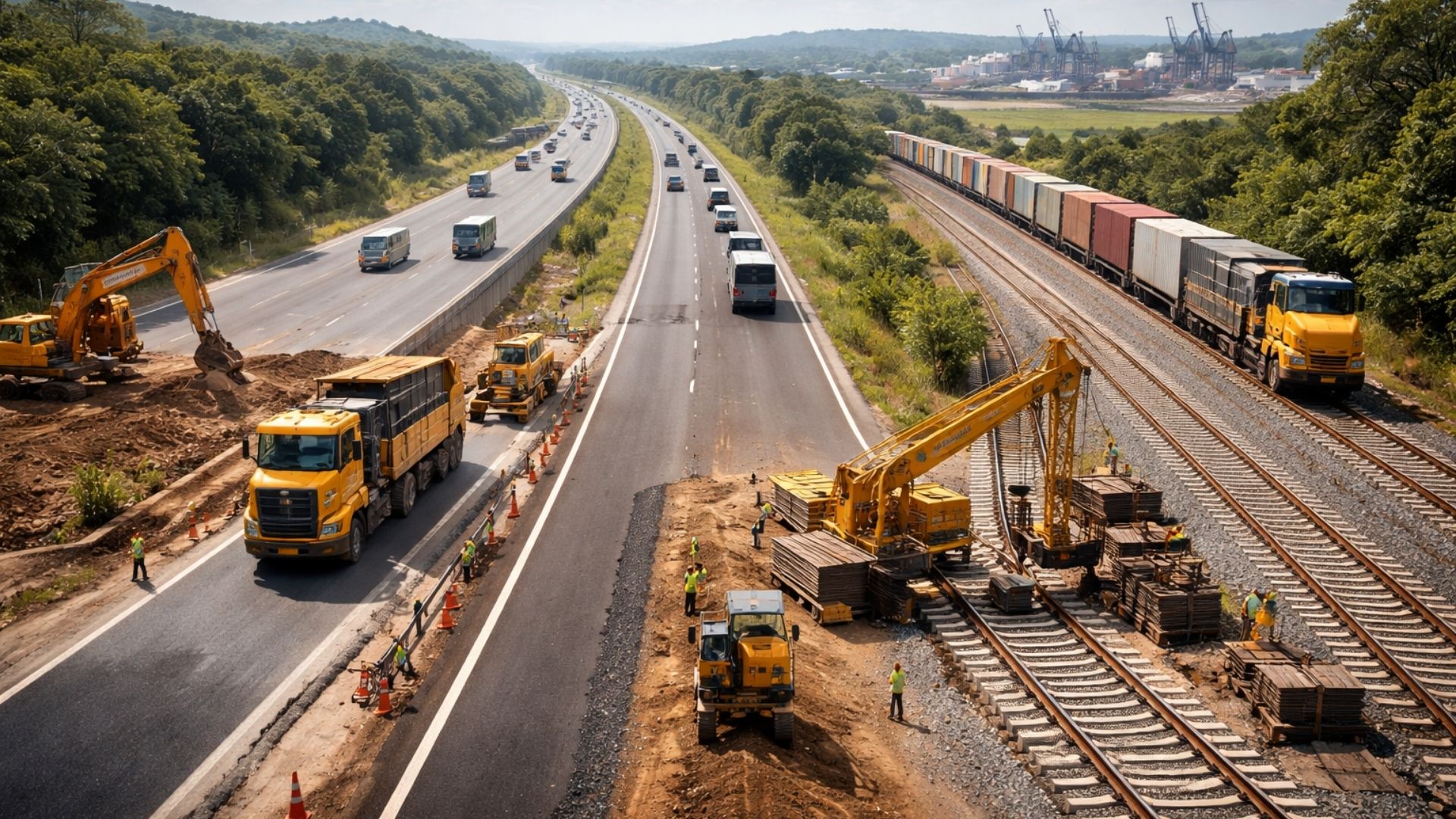
Federal Plan Bets on Highway and Railway Concessions, Expands the Role of BNDES and Reorganizes Rules to Unlock Billion-Dollar Investments in Logistics, Focused on Agriculture Corridors, Port Axes and Strategic Regions of the Country.
The federal government is preparing a new cycle of highway and railway concessions, with plans to auction 14 highway sections and eight railway sections, in a portfolio that totals nearly US$ 300 billion in investments over the contracts.
The central strategy to sustain the pace is to expand the role of BNDES both in structuring and in financing, reducing uncertainties for investors in long-term projects, according to a report published by O Globo newspaper.
In the highway sector, the pipeline released by the Ministry of Transport gathers corridors with a strong logistical weight, including connections in the Southeast, export routes, and axes associated with agribusiness and port areas.
-
“No one will make us change the Pix,” says Lula after the US report.

-
Lula responds directly to Trump and says that Pix is from Brazil and will not change under pressure from anyone, after a report from the United States pointed out the Brazilian payment system as an American trade barrier.

-
Amazon has just announced a new fee on all deliveries, and your online purchases will become more expensive starting April 17, including for those buying from the United States here in Brazil.

-
He sold his share for R$ 4 thousand, saw the company become a giant worth R$ 19 trillion, and missed the opportunity of a lifetime.


The development bank appears as a key player by offering credit and participating in the financial engineering of the concessions, with mechanisms designed to smooth exposure to interest rate fluctuations during the construction cycle.
BNDES at the Center of the Strategy to Unlock Concessions
The Ministry of Transport is working with the expectation that BNDES will increase, in 2026, the volume of credit allocated to highway and railway projects compared to what was observed in 2025, according to an investigation by O Globo newspaper.
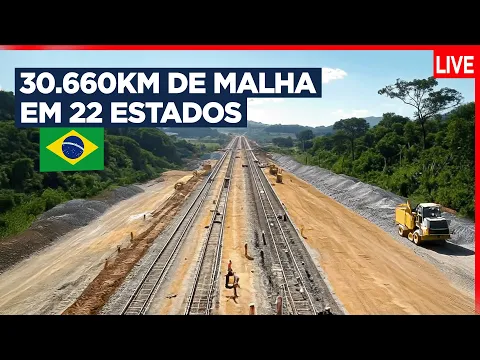

The internal reading is that the presence of the bank serves as a stability factor for the market and facilitates the formation of consortia in large-scale projects with returns diluted over time.
The Executive Secretary of the Ministry of Transport, George Santoro, stated that the proximity of the electoral calendar does not represent an obstacle to the schedule.
“Zero,” he said when asked about the impact of the elections on the planned auctions, in an interview with O Globo newspaper.
Still, Santoro acknowledged that there could be some delay if demands at the Federal Court of Accounts increase, which is responsible for authorizing the bids.
According to him, the current modeling of the concessions aims to correct failures observed in past experiences, such as insufficient risk analyses and revenue projections considered overly unrealistic.
In this context, he highlighted that the financial engineering prepared by BNDES includes instruments capable of mitigating interest rate shocks.
“BNDES ends up <strong anchoring the market's expectations,” he stated.
“The bank has a highly experienced team specialized in infrastructure, and when it supports a project, it attracts private investors,” he added.
Strategic Highways and Restructured Concessions
The portfolio of the Ministry of Transport includes projects at different stages for 2026, including new concessions and competitive processes for existing contracts, known in the sector as optimized concessions.
In this model, the contract is re-tendered with reformed rules, and the current operator can maintain the concession if it matches the best proposal presented.
Among the highlighted projects is the Rota dos Sertões, on the BR-116 between Bahia and Pernambuco.
The Rotas Gerais is also included, which involves sections of BRs 116 and 251 in Minas Gerais.
The pipeline also includes the Rota Agro Central, which integrates sections of BRs 070, 174, and 364 between Mato Grosso and Rondônia, deemed strategic for the flow of agricultural production.
In the South, the Rota Integração do Sul appears, with sections of BRs 116, 158, 290, and 392 in Rio Grande do Sul.
The list also includes the Rota Portuária do Sul, the Rota 2 de Julho, in Bahia, and projects in Santa Catarina grouped under the brand of Rodovias Integradas, as noted by O Globo newspaper when detailing the concession pipeline.
Financing, Guarantees and Greater Risk Appetite
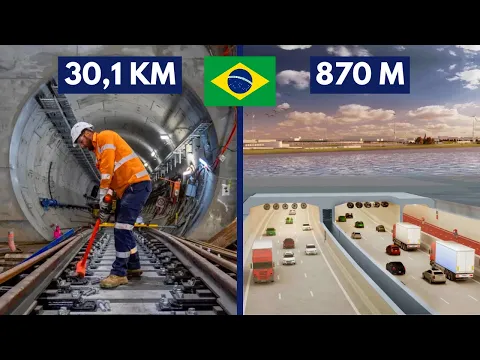
In detailing the credit policy, the Director of Infrastructure and Energy at BNDES, Luciana Costa, stated that the institution’s focus is to support “self-sustaining projects.”
According to her, this is the case for highway concessions where tolls are the main source of funds to repay the financing.
Before the start of construction, she explained, all risks of the venture are measured, and each project receives a specific package of guarantees.
“Unlike the past, where financing was provided to the concessionaire, the bank now takes on more project risk,” she claimed.
According to the director, this change has been occurring since 2023 and gained momentum as the auctions remained competitive.
Luciana Costa expressed confidence that there would be no losses for the bank, emphasizing that the projects are well-structured.
She highlighted that the contracts provide alternatives to deal with unforeseen circumstances, such as the entry of additional revenue streams and, if necessary, the use of bank guarantees.
Railways Gain Traction with Focus on Freight and Passengers
In the railway sector, the Ministry of Transport plans the concession of eight segments, with an estimated investment potential of around US$ 140 billion over the contracts.
Among the projects are the MG-RJ Corridor, the Southeast Railway Ring, the Oeste Network, the Ferrogrão, and various corridors from the Sul Network, in addition to extensions of the North-South Railway.
The planning also includes concessions focused on passenger transport starting in 2026.
The connection between Brasília and Luziânia is identified as the first project of this type.
Infrastructure, Risks and the Role of the State
Experts assess that the acceleration of concessions responds to a structural restriction in the public sector.
Marcus Quintella, director of FGV Transportes, stated that private investors only enter projects that offer returns on invested capital.
“The State does not have the money to make investments and this will not change anytime soon,” he said. “It is necessary to improve the concession models to attract private capital,” he added.
Quintella cited a CNT survey indicating that 62% of Brazilian highways are classified as fair, poor, or terrible.
According to Letícia Queiroz, partner at the Queiroz Maluf Reis law firm, the concessions policy has undergone changes over the years and has solidified as a State policy. “The modeling has been refined across various governments,” she stated.
She noted that the projects are more robust, with detailed risk matrices and a greater capacity to attract new investors, especially in the railway sector, which requires significant initial investments.








Seja o primeiro a reagir!